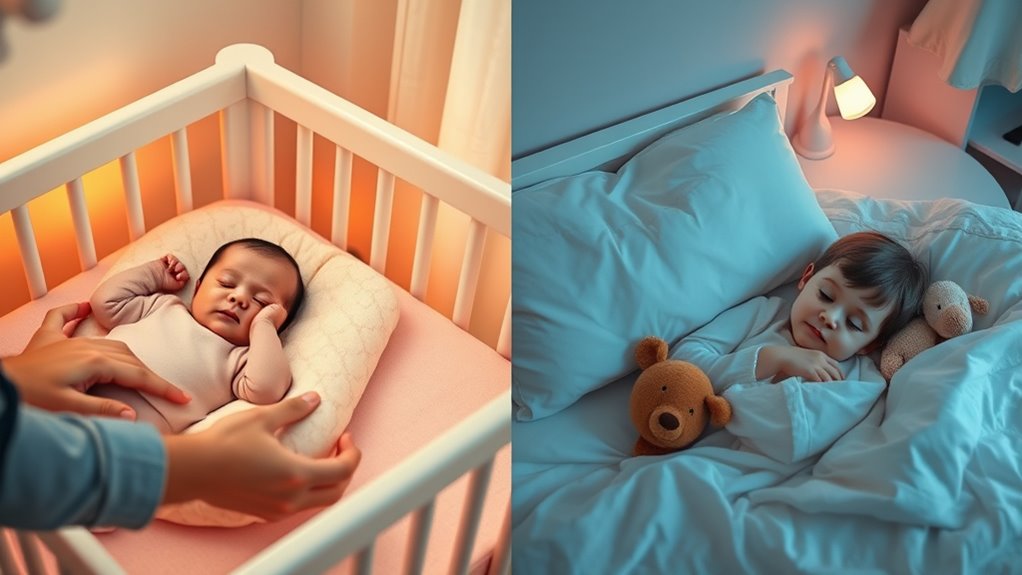

Deciding between co‑sleeping and independent sleeping depends on your family’s needs and comfort. Co‑sleeping can foster closeness, ease nighttime care, and strengthen emotional bonds, but it may slow sleep independence. Independent sleeping promotes self-soothing and establishing routines, yet might reduce closeness at night. Consider safety guidelines and your child’s development when choosing. We’ll explore how to balance these options for a sleep environment that works for your family’s unique situation.
Key Takeaways
- Consider your family’s safety preferences and follow safe sleep guidelines when choosing between co-sleeping and independent sleep.
- Co-sleeping enhances bonding and eases nighttime care but may delay sleep independence and training.
- Independent sleeping promotes self-soothing skills and consistent routines, supporting long-term sleep development.
- Balance emotional closeness with safety and sleep quality to make a choice aligned with your parenting values.
- Gradual transitions can help shift from co-sleeping to independent sleep while maintaining family comfort.

Deciding between co-sleeping and independent sleeping can be a challenging choice for parents, as both options have their benefits and drawbacks. If you’re considering bed sharing, you’ll discover several benefits that might influence your decision. Bed sharing can foster a sense of closeness and security for your baby, helping them feel safe and comforted during the night. Many parents find that it makes nighttime nursing easier, allowing for quicker responses to their baby’s needs without leaving the bed. This convenience can lead to more restful nights for both parent and child, especially in the early months when frequent feedings are common. Additionally, sharing a sleep space may strengthen the emotional bond, giving your little one a sense of closeness that promotes trust.
Bed sharing fosters closeness, security, and easier nighttime nursing for your baby.
However, it’s important to recognize that bed sharing isn’t without its challenges, particularly when it comes to sleep training. Sleep training challenges can arise because co-sleeping might make it harder for your baby to learn independent sleep habits. When a child is used to falling asleep next to a parent, shift to solo sleep can sometimes lead to longer periods of fussiness or resistance. It may also make it more difficult for you to establish consistent bedtime routines or enforce boundaries that encourage independent sleeping later on. Parents often find that they need to balance the comfort of shared sleep with strategies to gradually encourage independence, which isn’t always straightforward.
Furthermore, safety considerations play a significant role in this decision. While many families successfully co-sleep, it’s vital to follow safe sleep guidelines to reduce risks such as Sudden Infant Death Syndrome (SIDS). This includes ensuring the mattress is firm, avoiding soft bedding, and keeping the sleep area free of pillows or heavy blankets. If safety concerns or personal comfort levels are a priority, you might lean toward independent sleep arrangements, where you can more easily control the environment and reduce risks. Research also shows that understanding the sleep training process can help parents establish routines that promote healthier sleep patterns over time.
Ultimately, your choice depends on your family’s needs, your comfort level, and your parenting philosophy. While bed sharing offers benefits like ease of nighttime care and emotional closeness, it can present sleep training challenges that might delay your child’s ability to fall asleep independently. On the other hand, independent sleeping may promote self-soothing skills but could require patience and consistency to help your child adjust. Weighing these factors carefully will help you create a sleep environment that supports your child’s development and your peace of mind.
Frequently Asked Questions
How Does Co-Sleeping Affect a Child’s Independence?
Co-sleeping can influence your child’s independence by shaping their attachment security. When you share a bed, your child may feel more secure and develop trust, which benefits emotional growth. However, it might also slow independence development if they become overly reliant on closeness. Balancing comfort and encouraging self-reliance helps your child build confidence while maintaining a strong sense of attachment security.
What Are the Safety Concerns Associated With Co-Sleeping?
You should be aware of bed sharing risks like suffocation hazards and accidental falls. Unsafe sleep environments, such as soft bedding or pillows, increase suffocation dangers for your baby. Always place your child on a firm mattress without loose blankets or stuffed animals. Keep the sleep area free of smoke and avoid bed sharing if you or your partner are under the influence of substances. Prioritize safe sleep practices to protect your little one.
Can Parents Switch Between Co-Sleeping and Independent Sleeping Easily?
You can switch between co-sleeping and independent sleeping with some planning, as progression flexibility varies by family. It requires parental adaptation, patience, and consistent routines to ease your child into new sleeping arrangements. Be prepared for some adjustments and setbacks, but stay calm and supportive. Clear communication and gradual changes help make the process smoother, allowing you to choose what works best for your child’s needs and your family’s comfort.
How Does Co-Sleeping Impact Parents’ Sleep Quality?
Co-sleeping can disrupt your sleep, leading to frequent awakenings and difficulty reaching deep rest. You might experience sleep disruption due to your child’s movements or needs during the night, which can cause parental fatigue over time. While it offers closeness, it may also compromise your sleep quality, making it harder to feel rested and alert during the day. Being mindful of these effects helps you balance your child’s needs with your well-being.
Are There Cultural Differences Influencing Sleep Arrangements?
Cultural norms and parenting traditions heavily influence your sleep arrangements. In some cultures, co-sleeping is common and seen as fostering closeness, while others prioritize independent sleeping for independence. You might find that your cultural background shapes your comfort level and decisions about your child’s sleep setup. Understanding these cultural differences helps you make choices aligned with your values, but always consider your child’s safety and well-being first.
Conclusion
Ultimately, whether you choose co-sleeping or independent sleeping, remember you’re planting a seed of trust and comfort in your child’s heart. Think of it as nurturing a delicate flower—you need to provide the right environment for it to flourish. Trust your instincts and stay flexible, knowing that your love and care will guide your little one through each stage. Whatever path you take, it’s your unwavering support that will help your child grow strong and secure.