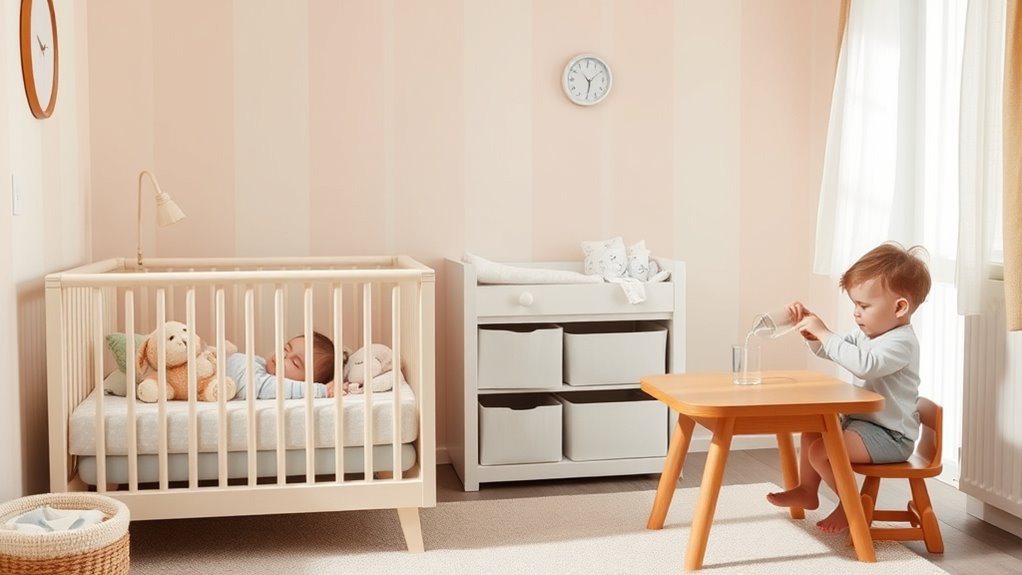

To successfully establish routines for your baby or toddler, set predictable schedules for meals, naps, and bedtime. Use consistent cues like songs or signals to signal shifts, creating a sense of security. Be flexible enough to adapt as your child’s needs change, while maintaining overall stability. Incorporate calming activities beforehand and observe your child’s natural rhythms. Keep in mind, a steady routine helps foster healthy growth, emotional security, and makes daily life more manageable—exploring these tips further can make a big difference.

Turn the school run and nap time into listening time
- Thousands of audiobooks, podcasts and originals
- Listen on your phone, tablet or Echo — also offline
- Cancel anytime
Key Takeaways
- Set consistent times for meals, naps, and bedtime to create predictability and promote healthy habits.
- Use routine cues like songs or specific activities to signal mealtime and nap times.
- Maintain a calming environment for naps and ensure routines are adaptable as your child grows.
- Incorporate calming activities such as stories or baths before transitions to reinforce routines.
- Balance routine consistency with flexibility to accommodate your child’s evolving needs and natural rhythms.

Creating consistent routines for your baby or toddler can make daily life smoother and help your child feel secure. One of the most important aspects of establishing routines involves managing feeding schedules and nap times. When you set predictable times for meals and rest, your little one knows what to expect, reducing fussiness and promoting better sleep and eating habits. A predictable feeding schedule helps your child develop a healthy appetite and prevents unnecessary hunger or overeating. It also supports your own planning, so you can prepare meals and snacks ahead of time, ensuring your child’s nutritional needs are consistently met.
Consistent feeding schedules promote healthy eating habits and simplify meal planning for busy parents.
Similarly, establishing regular nap times is vital for your child’s development. Consistent nap routines help regulate their internal clock, making it easier for them to fall asleep and wake up refreshed. When you create a quiet, calming environment for naps and stick to set times each day, your child begins to associate specific cues with rest, which can make napping more predictable and less stressful. Over time, this regularity can lead to longer, more restorative naps, reducing crankiness and making your daily schedule more manageable for you.
To effectively implement these routines, consider your child’s natural rhythms and preferences. For example, if your baby tends to get hungry around 7 a.m., aim to serve breakfast around that time each day. Likewise, observe when they start showing signs of sleepiness so you can put them down for naps before they become overtired. Consistency is key, but flexibility is also important when necessary. Life can be unpredictable, so adapt your schedule as your child grows and their needs change. The goal is to create a routine that feels natural for both of you, rather than rigid rules that cause stress.
In addition to timing, establishing calming pre-sleep and pre-meal routines can reinforce the signals that it’s time to rest or eat. For example, a warm bath, reading a story, or singing a lullaby before naps can become comforting cues that help your child transition smoothly. These routines not only promote consistency but also foster a sense of security and trust, which are foundational for healthy development.
Ultimately, by prioritizing consistent feeding schedules and nap times, you’re setting a strong foundation for your child’s overall well-being. These routines support their physical growth, emotional security, and ability to develop healthy sleep and eating habits. While it may take some time and patience to establish these routines, the benefits—peaceful days, better sleep, and happier moments—are well worth the effort.
Frequently Asked Questions
When Should I Start Establishing Routines for My Baby?
You should start establishing routines for your baby around 6 to 8 weeks, when they begin hitting key development milestones. Consistent feeding schedules help your baby feel secure and support their growth. By creating a predictable daily pattern, you’ll also make caregiving easier and foster healthy sleep habits. Remember, flexibility is key, and adjusting routines as your baby develops guarantees they stay comfortable and happy.
How Flexible Should Routines Be During Travel or Vacations?
During travel or vacations, you should keep routines flexible to accommodate new environments and activities. Focus on maintaining core elements like meal and sleep times, but adapt them as needed. Allow for flexibility during travel, understanding that adapting routines away from home helps your baby feel secure and comfortable. By staying gentle and responsive, you help your little one adjust smoothly while enjoying your trip.
What Are Signs My Toddler Is Ready to Change Routines?
When your toddler starts acting out of sync or shows new behavior cues, it’s like a weather shift—time to pay attention. Watch for developmental milestones like increased independence or changing sleep patterns. If they resist routines or display unusual fussiness, it’s a sign they’re ready to adapt. Trust these signs, like a compass guiding you, and gently adjust routines to match their evolving needs, fostering growth and stability.
How Do I Handle Resistance to New Routines?
When your toddler resists new routines, stay consistent and patient. You’ll face consistency challenges and emotional resistance, but gentle reassurance helps. Keep routines simple, predictable, and flexible enough to accommodate their feelings. Offer comfort and explanations, and give your toddler time to adjust. Consistency builds trust, making shifts smoother over time. Remember, your calm and persistent approach encourages cooperation and eases their emotional resistance.
Can Routines Help With Sleep Regressions or Night Wakings?
Think of routines as a lighthouse guiding your child through stormy nights. They can indeed help with sleep regressions and night wakings by providing bedtime consistency and predictable nap schedules. When your little one knows what to expect, they feel more secure, easing their passage back to restful sleep. Stick to a calm, consistent routine, and over time, you’ll see fewer night wakings and smoother sleep patterns.
Conclusion
By establishing routines, you’re planting seeds of security and trust that will blossom in your little one’s heart. These daily rhythms become the steady drumbeat guiding their growth, turning chaos into harmony. With patience and consistency, you’ll create a safe haven where your baby or toddler feels loved and protected. Remember, just like a gentle lullaby soothes a restless night, your routines will help your child flourish in a world of comforting predictability.
Fall Picks
fall essentials
As an affiliate, we earn on qualifying purchases.