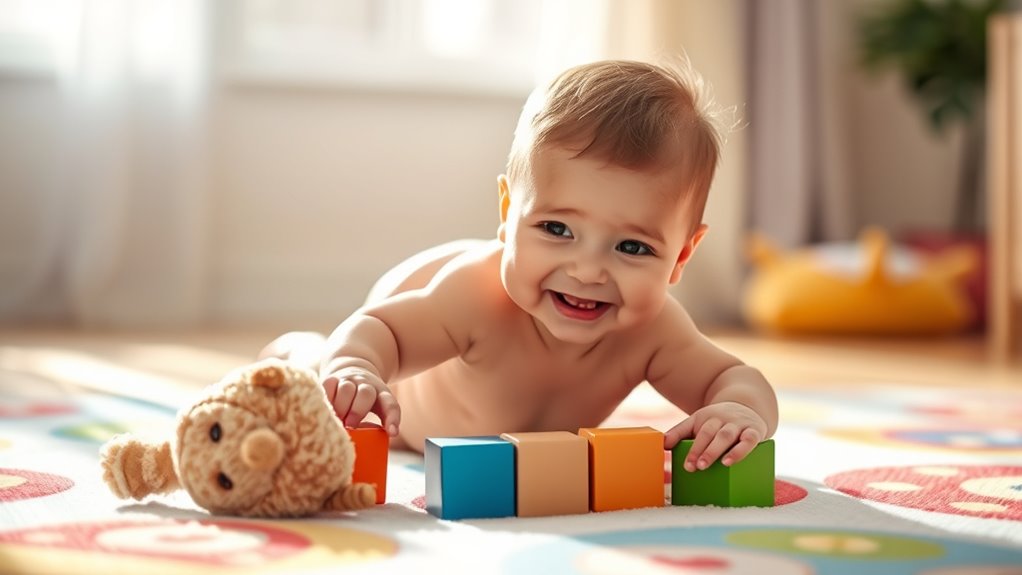

Your baby’s gross motor skills are vital for building strength and enabling crucial movements like crawling, sitting, and walking. Early actions, such as tummy time and reaching, help develop neck and shoulder muscles. As your little one progresses, they’ll roll, sit independently, and eventually take those first steps. These skills not only foster independence but also boost confidence. Exciting activities, like obstacle courses, can enhance agility and coordination. Discover how to support their growth further!

Turn the school run and nap time into listening time
- Thousands of audiobooks, podcasts and originals
- Listen on your phone, tablet or Echo — also offline
- Cancel anytime
Key Takeaways
- Engaging in tummy time helps strengthen neck and shoulder muscles, essential for developing gross motor skills.
- Activities like rolling balls promote arm strength and enhance hand-eye coordination in infants.
- Encouraging reaching and grabbing fosters early muscle development and coordination.
- Outdoor play allows infants to practice running and jumping, boosting their physical confidence.
- Structured games can improve skills like throwing and catching, reinforcing overall gross motor development.
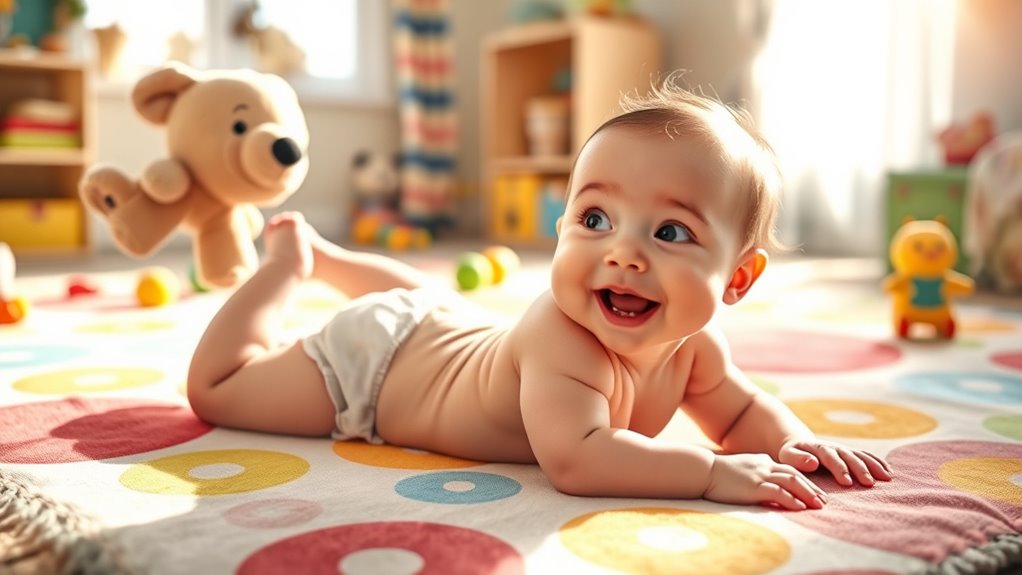
When your baby starts to move, it’s a crucial time for developing gross motor skills, which involve those large muscle movements essential for everyday activities. These skills lay the foundation for walking, running, and sitting, playing vital roles in your child’s physical and social development. As they progress through infancy and into toddlerhood, you’ll notice how these movements influence their coordination and confidence, ultimately affecting their overall growth.
In the first few months, your baby will begin with simple movements like raising their head, propping on elbows, and stretching. These early actions strengthen their neck and shoulder muscles, setting the stage for future milestones. By three to six months, they’ll start rolling to their sides and sitting with support, allowing you to engage them with toys and activities that encourage reaching and grabbing. Tummy time is especially important during this phase, as it strengthens essential muscles for later skills.
As your baby approaches six to nine months, they’ll sit independently, roll both ways, and start crawling. This stage is exciting, as mobility opens up a new world for exploration. You can enhance their development by introducing activities like ball rolling, which builds arm strength and hand-eye coordination. By nine to twelve months, they’ll likely pull up to stand and may take their first steps, showcasing the incredible progress they’ve made.
You’ll see significant strides in gross motor skills, not just physically but also cognitively and emotionally. These abilities impact their social interactions and contribute to their sense of independence. Encouraging outdoor play helps them run, jump, and explore, while structured games can focus on skills like throwing and catching.
As your child grows, they’ll master various milestones: rolling over typically by six months, sitting up around seven months, crawling by ten months, and walking between twelve to fourteen months. Each achievement marks a leap in their development, driven by muscle tone, balance, and joint stability. Engaging them in activities like obstacle courses or creative play will further enhance their skills, promoting agility and coordination.
As an affiliate, we earn on qualifying purchases.
Frequently Asked Questions
When Should My Baby Start Crawling?
Your baby will likely start crawling between 6 to 10 months old.
By 8 months, about half of babies are on the move, but some may begin as early as 5 or 6 months. Others might wait until after 11 months.
Remember, crawling isn’t a required milestone; some babies skip it entirely.
Each baby develops at their own pace, so don’t worry if your little one takes a bit longer to crawl.
Can Tummy Time Help With Motor Skills?
Imagine your baby as a tiny explorer, ready to conquer the world one movement at a time. Yes, tummy time can indeed help with motor skills!
When you place your little one on their tummy, they engage those essential muscles, lifting their heads and pushing up. This playful struggle fosters coordination and balance, laying the groundwork for future milestones like crawling and walking.
What Toys Promote Gross Motor Skill Development?
To promote gross motor skill development, you can choose toys like lightweight balls that encourage reaching and rolling.
Activity tables help babies pull themselves up, while baby gyms stimulate visual tracking.
Push-and-pull toys and soft climbing structures enhance strength and coordination.
For older toddlers, ride-on toys and balance boards improve balance and movement.
Incorporating these engaging toys into playtime not only supports physical growth but also keeps your little one entertained and active.
How Do I Encourage My Baby to Walk?
To encourage your baby to walk, start by providing support as they practice standing and moving.
Use sturdy push toys to help with balance and create a safe space by baby-proofing your home.
Go for tummy time to strengthen their upper body, and let them walk barefoot indoors for sensory feedback.
Be patient and look for signs of readiness, like pulling up to stand or cruising along furniture.
Celebrate every little achievement!
Are There Any Signs of Gross Motor Skill Delays?
Like a flower that struggles to bloom, your baby might show signs of gross motor skill delays.
Watch for difficulty rolling over by 4-5 months, inability to sit up unsupported by 6 months, or not walking independently by 15 months.
Muscle tone changes, such as stiffness or floppiness, and poor posture can also be red flags.
Keeping an eye on these signs helps ensure your little one gets the support they need.
infant activity ball for motor skills
As an affiliate, we earn on qualifying purchases.
As an affiliate, we earn on qualifying purchases.
Conclusion
As your baby explores the world, those little movements lead to big gains. You’ll notice how each wiggle and stretch builds strength, paving the way for crawling, standing, and walking. With each milestone, you’ll find joy in their progress, a dance of growth and discovery. So, embrace the messiness of playtime; it’s all part of the journey. Remember, every kick and reach is a step closer to mastering their body and the world around them.
As an affiliate, we earn on qualifying purchases.
As an affiliate, we earn on qualifying purchases.
Halloween Picks
halloween
As an affiliate, we earn on qualifying purchases.