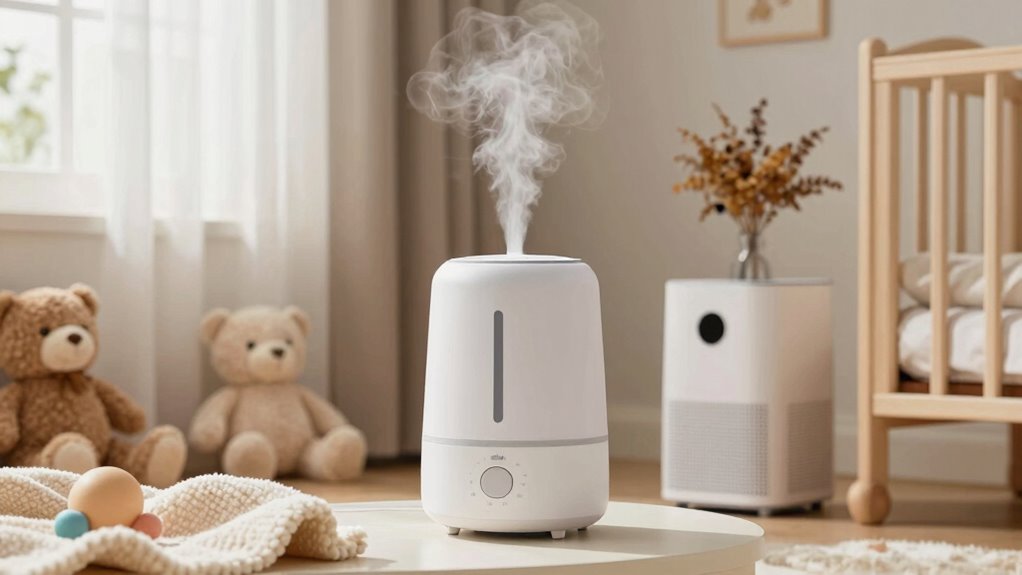
If your baby’s room feels dry, a humidifier adds moisture, easing congestion and keeping skin healthy. If it’s damp or moldy, a dehumidifier helps remove excess moisture to prevent respiratory issues. Check your room’s humidity levels first—aim for 40-50%—to decide which device suits your needs. Both can be helpful when used properly, but understanding your space better will guarantee you select what’s best for your little one’s health.

Turn the school run and nap time into listening time
- Thousands of audiobooks, podcasts and originals
- Listen on your phone, tablet or Echo — also offline
- Cancel anytime
Key Takeaways
- Use a humidifier to add moisture in dry environments, preventing dry skin and respiratory issues for your baby.
- Choose a dehumidifier if the room is damp, moldy, or has excess moisture, to improve air quality and prevent mold growth.
- Maintain optimal humidity levels between 40-50% to ensure comfort and reduce allergy or respiratory symptoms.
- Consider noise levels; humidifiers are typically quieter and more suitable for sleeping babies, while some dehumidifiers can be disruptive.
- Regular cleaning and monitoring are essential for both devices to ensure a safe, healthy, and balanced nursery environment.
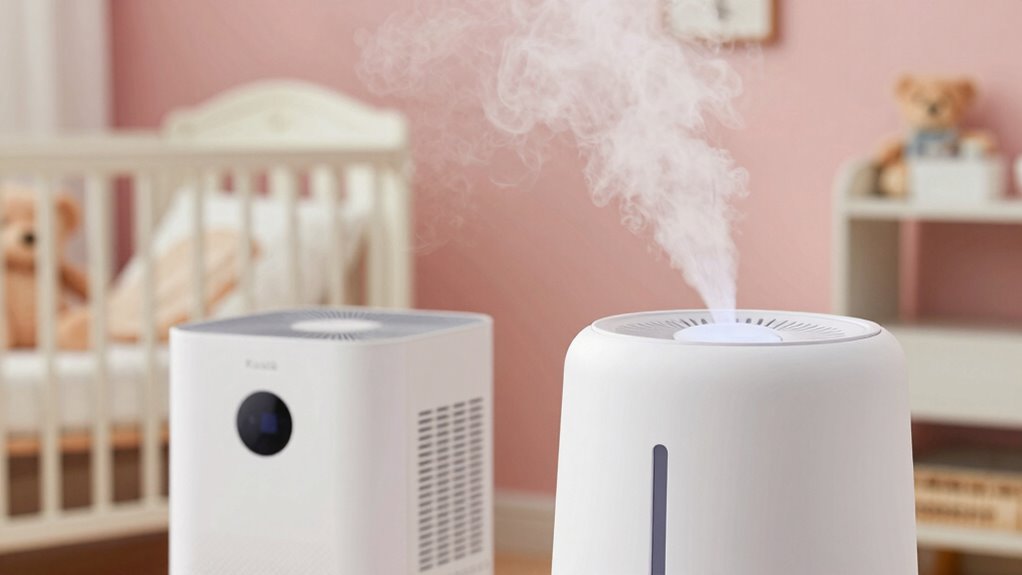
Creating a comfortable and healthy environment in your baby’s room often involves managing humidity levels carefully. But it’s equally important to pay attention to air quality and noise levels, as both can substantially impact your little one’s health and sleep quality. When choosing between a humidifier and a dehumidifier, it’s essential to understand how each influences these factors. A humidifier adds moisture to the air, which can be beneficial if your home feels dry, especially during winter or in heated spaces. It helps prevent dry skin, nasal congestion, and sore throats, creating a more soothing environment for your baby. However, if the air becomes too moist, it can promote mold growth and dust mites, which may worsen allergy symptoms or respiratory issues. That’s why maintaining the right humidity level—ideally between 40-50%—is critical. Using a humidifier with a built-in hygrometer or monitoring device can help you keep track of this balance. Proper humidity levels also support respiratory health, reducing the likelihood of your baby developing irritation or infections.
On the other hand, a dehumidifier removes excess moisture, which is especially useful if your baby’s room feels damp or you notice condensation or mold. Too much humidity can decrease air quality, leading to increased mold spores and dust mites, both of which can trigger allergies or asthma. By reducing moisture, a dehumidifier helps improve air quality and creates a healthier space for your baby. But, just like with humidifiers, it’s imperative to avoid over-drying the air, which can cause discomfort and dry out your baby’s skin and respiratory passages. Properly setting and monitoring the device is key to preventing this.
Noise levels are another factor to ponder. Humidifiers tend to operate quietly, making them suitable for a sleeping baby. Some models even feature white noise or gentle hums that can help lull your baby into sleep. Dehumidifiers, however, can be noisier, especially larger or older models, which might disturb sleep or become a source of irritation. If you opt for a dehumidifier, look for quieter designs or place it outside the nursery, ensuring it doesn’t interfere with your child’s rest.
Ultimately, your choice depends on your specific environment. If the air is dry, a humidifier is usually the better option—just make sure it’s cleaned regularly to prevent mold and bacteria buildup. If your room feels damp or you notice mold, a dehumidifier can help restore balance and improve air quality. In many cases, a combination of both, used appropriately and monitored closely, provides the best environment for your baby’s health. Remember, keeping humidity levels in check and minimizing noise will help create a safe, peaceful space where your baby can thrive.
baby room humidifier with hygrometer
As an affiliate, we earn on qualifying purchases.
As an affiliate, we earn on qualifying purchases.
Frequently Asked Questions
Can I Use Both a Humidifier and Dehumidifier Simultaneously?
Yes, you can use both a humidifier and dehumidifier simultaneously, but only if needed for your baby’s room. This helps balance air quality, especially if the room has fluctuating humidity levels. Keep in mind, using both can impact energy efficiency and increase energy bills. Monitor humidity levels regularly with a hygrometer to assure a healthy environment without unnecessary energy use.
How Do I Choose the Right Size for My Baby’s Room?
You need to match your device capacity to your room size for ideal comfort. Measure your baby’s room accurately—length, width, and height—and choose a humidifier or dehumidifier rated for that space. A device too small won’t effectively control humidity, while one too large might overdo it. Think of it like fitting a piece into a puzzle—size matters to keep the environment just right for your little one.
Are There Any Safety Concerns With Using These Devices?
You should be aware of water vapor safety risks, such as mold growth or over-humidification, which can harm your baby. Regularly clean your device to prevent bacteria and mold buildup, and never leave it running unattended for long periods. Watch for device malfunction signs like strange noises or leaks, and turn it off immediately if you notice any issues. Proper maintenance keeps your baby safe and guarantees healthy air quality.
What Are the Signs My Baby’s Room Needs a Humidifier or Dehumidifier?
You’ll want a humidifier if your baby’s room has dry air, causing coughing, dry skin, or nasal congestion. On the other hand, if you notice mold, musty smells, or excessive moisture, a dehumidifier helps improve air quality. Pay attention to noise levels, as loud devices can disturb sleep. Keep an eye on these signs to make certain your baby’s room stays comfortable and healthy.
How Often Should I Clean or Replace These Devices?
You should clean your humidifier or dehumidifier at least once a week to prevent mold and bacteria buildup, ensuring safe air for your baby. Check the device’s manual for specific maintenance instructions. Replace filters or parts as recommended—usually every 3 to 6 months—to maintain efficiency. Proper device maintenance and adhering to the replacement frequency help keep the air quality safe and healthy for your little one.
As an affiliate, we earn on qualifying purchases.
Conclusion
Choosing between a humidifier and a dehumidifier for your baby’s room is like tending a delicate garden—you need just the right balance. Too much moisture, and mold or mold spores can take root; too little, and dry air can irritate tiny airways. Think of each device as a gardener’s tool, working together to create a healthy, cozy environment. By understanding your baby’s needs, you’ll nurture a space where they can breathe easy and grow strong.
baby-safe air purifier and humidity monitor
As an affiliate, we earn on qualifying purchases.
As an affiliate, we earn on qualifying purchases.
best humidifier for baby's sleep
As an affiliate, we earn on qualifying purchases.
As an affiliate, we earn on qualifying purchases.
Fall Picks
fall essentials
As an affiliate, we earn on qualifying purchases.