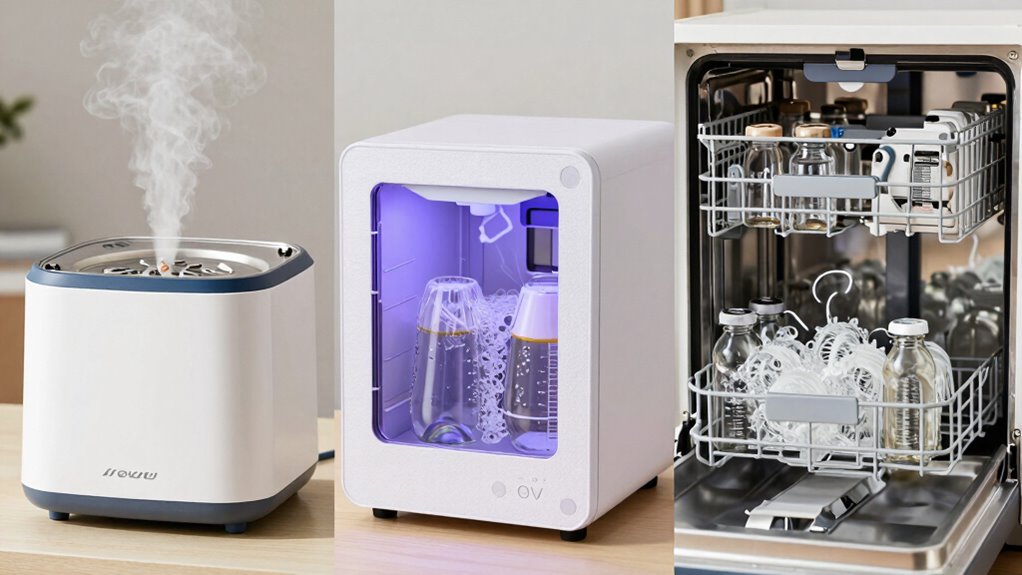

Steam sterilizers use high-temperature water vapor to thoroughly kill germs on bottles and accessories, offering a quick, chemical-free solution with safety features like automatic shut-offs. UV sterilizers use ultraviolet light to disinfect without steam, but may require longer times or special conditions. Dishwashers clean bottles with hot water and detergent but don’t guarantee sterilization. Each method has benefits and limitations—understanding these differences helps you choose the best for your baby’s safety. If you keep exploring, you’ll discover more about each option.

Turn the school run and nap time into listening time
- Thousands of audiobooks, podcasts and originals
- Listen on your phone, tablet or Echo — also offline
- Cancel anytime
Key Takeaways
- Steam sterilizers use high-temperature steam for thorough disinfection, penetrating all surfaces without chemicals.
- UV sterilizers utilize ultraviolet light, disinfecting surfaces without heat or moisture, but may be less effective on hidden areas.
- Dishwashers clean bottles with hot water and detergent, but may not sterilize effectively without specific sterilization cycles.
- Steam sterilizers often have safety features like automatic shut-offs, while UV and dishwasher methods vary in safety protocols.
- Steam sterilization is quick and effective, whereas UV and dishwasher cleaning may require additional steps for complete sterilization.
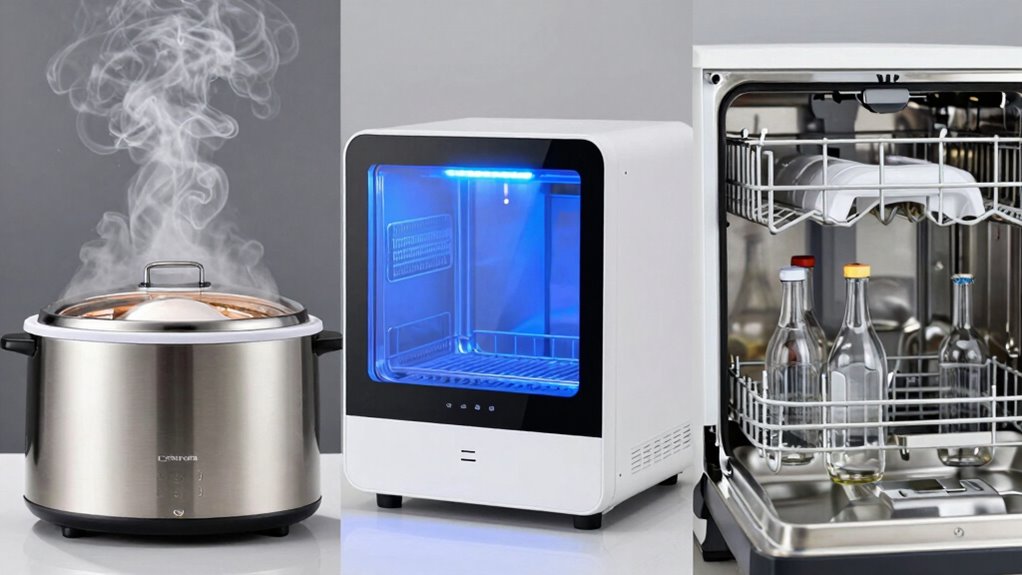
Steam sterilizers are popular because they use high-temperature steam to kill germs and bacteria. They’re generally safe when used correctly, with built-in safety features like automatic shut-offs to prevent overheating. These sterilizers often come with trays that hold bottles, nipples, and other accessories, making cleaning straightforward. The cleaning methods involve simply filling the device with water, placing your bottles inside, and turning it on. The heat generated from steam penetrates every nook and cranny, ensuring thorough sterilization. Plus, steam sterilizers don’t require any harsh chemicals, making them a safe choice for your baby’s health and your peace of mind. However, it’s important to regularly clean the sterilizer itself to prevent mineral buildup or mold, which can compromise sterilizer safety. Wiping down the interior or following manufacturer instructions for descaling helps maintain its effectiveness. Using proper ventilation during and after sterilization can help prevent moisture buildup and ensure safety.
As an affiliate, we earn on qualifying purchases.
Frequently Asked Questions
Are Bottle Sterilizers Safe for All Bottle Materials?
Yes, bottle sterilizers are generally safe for most bottle materials, but you should always check material compatibility to guarantee sterilizer safety. Steam sterilizers work well with glass and some plastics, while UV sterilizers are safe for plastics and silicone. Dishwashers are suitable for heat-resistant bottles. Always follow manufacturer instructions and verify that your bottles are compatible with the sterilization method you choose to prevent damage.
How Long Does Each Sterilization Method Take?
You’re in a hurry, so knowing sterilization speed helps. Steam sterilizers usually take about 10-15 minutes, UV sterilizers around 10 minutes, and dishwashers can vary from 30 minutes to an hour depending on cycles. Each method’s efficiency differs, with steam and UV offering quick, effective sterilization, while dishwashers provide a longer but convenient option. Your choice depends on how fast and thorough you want the process to be.
Can UV Sterilizers Eliminate All Bacteria?
UV sterilizers can considerably reduce bacteria on bottles, but they can’t eliminate all bacteria due to limitations like shadowing and uneven exposure. Bacterial resistance can also affect effectiveness, making some microbes harder to kill. To maximize safety, combine UV sterilization with other methods like washing or steaming. Relying solely on UV may leave some bacteria behind, so it’s best used as part of an all-encompassing cleaning routine.
Do Dishwasher Sterilizers Damage Bottle Plastics Over Time?
Yes, dishwasher sterilizers can cause plastic degradation over time, especially if you use high heat settings. Repeated exposure to hot water and detergents may weaken or warp plastic bottles, reducing their durability. However, the sterilization efficacy remains high if you choose gentle cycles and avoid harsh detergents. To protect your bottles, consider hand washing or using lower heat dishwasher settings, ensuring they stay safe and intact longer.
Are There Energy Efficiency Differences Among Sterilizer Types?
You’ll find that UV sterilizers typically use less energy, making them more efficient than steam or dishwasher methods. Steam sterilizers often require more power due to heating water, while dishwashers vary depending on cycle settings. Choosing an energy-efficient option reduces energy consumption and environmental impact, saving you money and helping protect the planet. Consider your sterilization needs and energy use to select the most eco-friendly, economical sterilizer for your bottles.
As an affiliate, we earn on qualifying purchases.
Conclusion
Now that you know how steam, UV, and dishwashers each sterilize bottles, the choice isn’t so clear-cut. Each method has its strengths—and potential surprises. But which one will truly give your baby’s bottles the ultimate protection? The answer might depend on what matters most to you: speed, safety, or convenience. Ready to make the best call? Discover the secret that could change how you sterilize forever—stay tuned.
baby bottle sterilizer dishwasher compatible
As an affiliate, we earn on qualifying purchases.
As an affiliate, we earn on qualifying purchases.
steam sterilizer for baby bottles
As an affiliate, we earn on qualifying purchases.
As an affiliate, we earn on qualifying purchases.
Halloween Picks
halloween
As an affiliate, we earn on qualifying purchases.