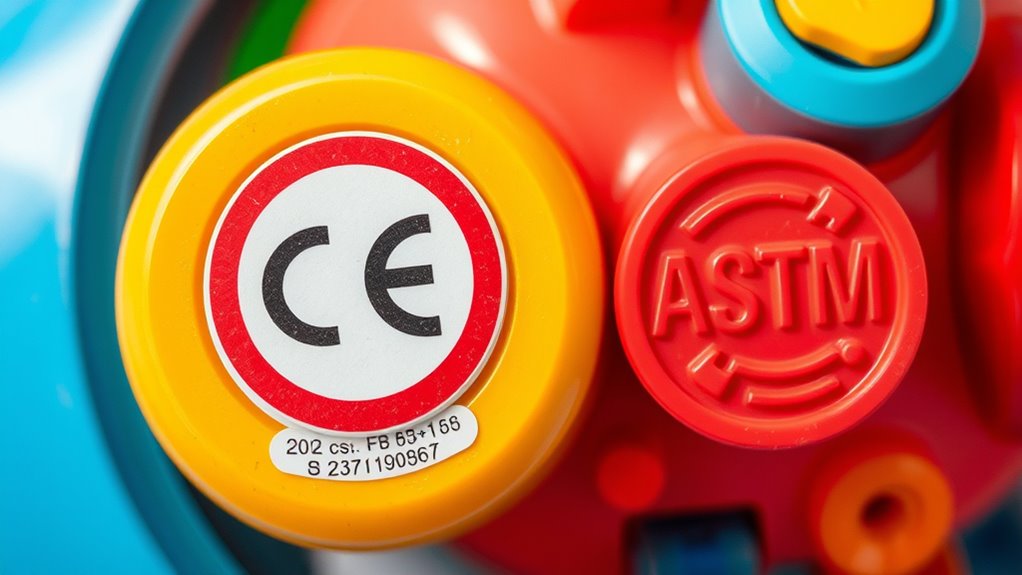

To decode CE and ASTM labels on toys, look for the CE mark, which shows the product complies with EU safety standards, and check for the ASTM label, indicating it meets American safety guidelines like ASTM F963. These markings reveal that the toy has undergone safety testing for hazards like choking, sharp edges, and toxic materials. Understanding what these labels mean helps you pick safer toys—continue exploring to uncover detailed tips for identifying quality safety marks.
Key Takeaways
- Recognize the labels: CE is a European conformity mark; ASTM indicates compliance with American safety standards.
- Check for official logos or symbols on the toy or packaging to identify CE and ASTM markings clearly.
- Understand that CE shows EU safety evaluation, while ASTM confirms adherence to specific US safety standards like F963.
- Read accompanying safety information, warnings, and age recommendations that often accompany the labels.
- Use official sources or manufacturer details to verify the authenticity and specific standards behind each label.
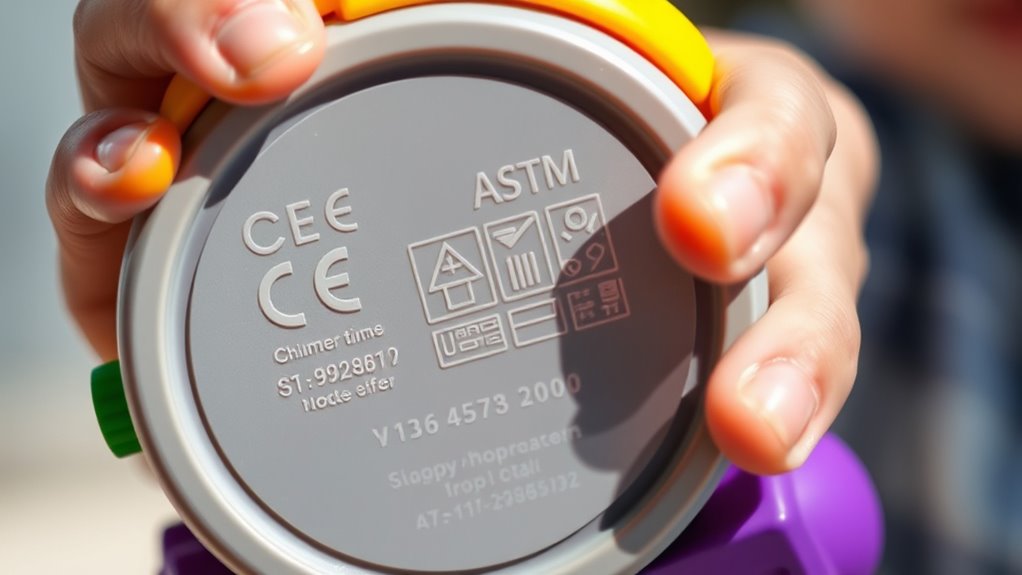
When shopping for toys, you might notice labels like CE and ASTM on packaging, but understanding what they really mean can be confusing. These labels are designed to indicate that the toy meets certain safety standards and complies with regulations, but knowing the specifics helps you make more informed choices for your children’s safety. The CE mark, for example, signals that the toy conforms to European safety standards, ensuring it meets rigorous safety requirements across multiple areas, including mechanical safety, chemical safety, and flammability. It’s a quick way to verify that the product has undergone a thorough evaluation, but it doesn’t specify which standards were followed. Similarly, the ASTM label indicates that the toy complies with standards set by the American Society for Testing and Materials, a globally recognized organization that develops safety specifications for toys. ASTM standards cover everything from toy durability to choking hazards, ensuring that the product is safe for children to play with.
Understanding these labels is key to evaluating regulatory compliance. When you see the CE mark, you can be reasonably assured that the toy has been tested and meets the European Union’s safety directives. It’s not a certification issued by a single authority but a declaration by the manufacturer that the product complies with applicable EU legislation. With ASTM, the label signifies adherence to specific safety standards outlined in ASTM F963, which is widely accepted in the US. ASTM compliance involves testing for small parts, sharp edges, and toxic materials—important factors to contemplate, especially for younger children. Recognizing these indicators helps you quickly verify that the toy has been examined against industry safety standards, reducing the risk of hazards. Additionally, understanding the testing procedures involved in these standards can give you greater confidence in the safety of the toys you choose. A comprehensive understanding of safety standards also enables you to better compare products across different markets and ensure they meet your expectations for safety and quality.
Furthermore, staying informed about regulatory updates ensures you are aware of any new safety requirements or emerging risks associated with toys. Moreover, manufacturers often update or modify their products to meet evolving safety regulations, so staying informed about latest safety standards can be beneficial in making safer selections. It’s also important to remember that these labels aren’t the only indicators of safety. Sometimes, manufacturers include additional certifications or safety labels, and reading the packaging thoroughly can reveal more about a toy’s safety features. Always check for age recommendations, warning labels, and manufacturer information to get a complete picture. While CE and ASTM labels provide a strong starting point, combining this knowledge with your own judgment ensures you’re selecting toys that truly meet safety standards and regulatory compliance. Knowing how to decode these labels empowers you to make smarter, safer choices—because protecting your children from harm starts with understanding the symbols and standards that ensure their toys are safe to play with.

Stroller Organizer with Cup Holder, Non-Slip Stroller Caddy Baby Essentials
- Large Capacity Storage: Holds bottles, diapers, toys, snacks
- Ideal Gift for New Moms: Perfect for baby showers and gender reveals
- Universal Compatibility: Fits most stroller brands and models
As an affiliate, we earn on qualifying purchases.
Frequently Asked Questions
Are CE and ASTM Labels Mandatory for All Toy Products Worldwide?
You might wonder if CE and ASTM labels are mandatory worldwide. While these labels are vital for regulatory compliance and ensuring labeling accuracy in many regions, they’re not universally required everywhere. For example, CE marks are essential in the European Union, but other countries have their own standards. Always check local regulations to guarantee your toys meet the specific labeling and safety requirements to avoid legal issues and protect consumer safety.
Can a Toy Have Both CE and ASTM Labels Without Safety Issues?
Think of CE and ASTM labels as different passports for your toy’s safety journey. Having both isn’t a safety red flag; it’s like dual certification, showing your toy meets multiple standards. Label compatibility is key—ensure both labels are genuine and clear. When you see a toy with dual certification, you’re looking at a product that’s traveled a broader safety route, giving you peace of mind without safety issues.
How Often Do CE and ASTM Standards Get Updated?
You might wonder how often CE and ASTM standards get updated. Typically, their regulatory revision cycle varies—CE standards are reviewed roughly every 5 years, but updates can happen sooner if safety concerns arise. ASTM standards are reviewed annually, with some updates more frequent depending on technological advances or safety issues. Staying informed about these standard update frequencies helps you guarantee toys meet current safety regulations and standards.
Do These Labels Guarantee the Toy’s Safety and Quality?
You might think those labels guarantee safety and quality, but don’t be fooled. While CE and ASTM markings show safety certifications and quality assurance, they aren’t foolproof guarantees. They indicate compliance with specific standards, but actual safety depends on proper manufacturing and inspection. So, always stay vigilant, check for recalls, and trust your instincts. Labels are helpful guides, but your vigilance guarantees your child’s safety far more.
What Should I Do if a Toy Has Conflicting CE and ASTM Markings?
If you find conflicting CE and ASTM markings on a toy, you should prioritize label authenticity and conduct compliance verification. Check each label carefully for proper symbols, dates, and manufacturer info. Contact the manufacturer or retailer for clarification, and consider consulting safety authorities if needed. Ensuring the labels are genuine and verifying compliance helps you determine if the toy meets safety standards before allowing your child to play with it.

mommore Universal Stroller Organizer with Insulated Cup Holders
- Large Capacity Storage: Multiple compartments for essentials
- Insulated Cup Holders: Two spacious, versatile holders
- Additional Pockets: Mesh zip and quick-access wipe pocket
As an affiliate, we earn on qualifying purchases.
Conclusion
Now that you know how to decode those CE and ASTM labels, you hold the key to safer toy adventures. Think of these labels as secret maps guiding you through a world of fun and safety, ensuring every playtime is a worry-free journey. With this knowledge in your pocket, you’re no longer in the dark—you’re the lighthouse illuminating the path to smarter, safer toy choices. Let your confidence shine brighter than ever before.
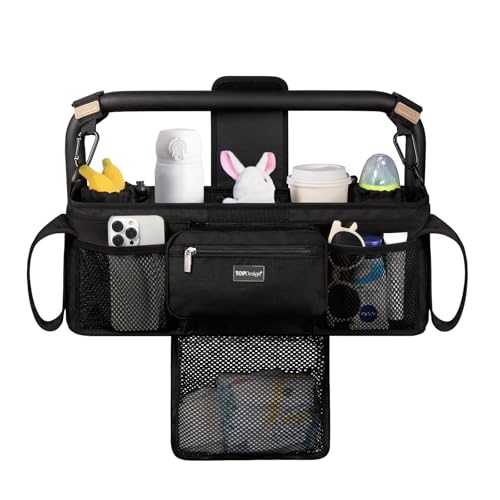
TOPDesign Universal Baby Stroller Organizer, Double Stroller Caddy with Detachable Mesh Bag & Heightened Insulated Cup Holders & Non-Slip Secure Hooks Accessories, Fits Most Strollers (Black)
- Detachable Mesh Laundry Bag: Extra storage for clothes and diapers
- Multi-Functional Organizer: Keeps essentials organized and accessible
- Insulated Cup Holders: Holds bottles, water, or coffee cups
As an affiliate, we earn on qualifying purchases.

Infantino Water Teethers, Cooling & Massaging Relief, Lime/Blue, 3-Pack
- Cooling Relief: Filled with purified water for cooling
- Easy-to-Hold Design: Circular shape for small hands
- Textured Surfaces: Bumps and ridges for gum massage
As an affiliate, we earn on qualifying purchases.