
To set up for baby-led weaning, focus on selecting safe, sturdy gear like non-slip bowls, high chairs with secure harnesses, and age-appropriate utensils designed for tiny hands. Use brightly colored, manageable food pieces served on easy-to-clean trays, and keep the workspace clutter-free for safety. Close supervision is key—stay nearby and remove hazards to foster confidence. If you want to know more about creating the ideal weaning environment, keep exploring these essentials.
Key Takeaways
- Select a sturdy, non-slip high chair with a secure harness for safe, stable eating sessions.
- Use appropriately sized, soft-tipped utensils designed for little hands to promote self-feeding.
- Choose brightly colored, easy-to-hold plates and bowls to encourage interest and manageable handling.
- Prepare soft, bite-sized foods in simple shapes to reduce choking risk and facilitate grasping.
- Keep the eating area clean, clutter-free, and supervise closely to ensure safety and positive feeding experiences.
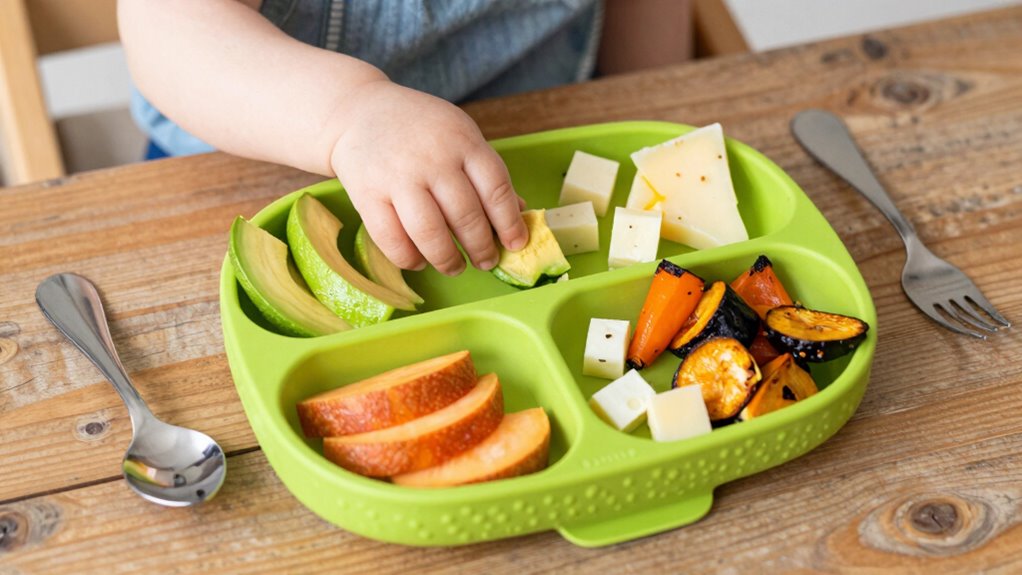
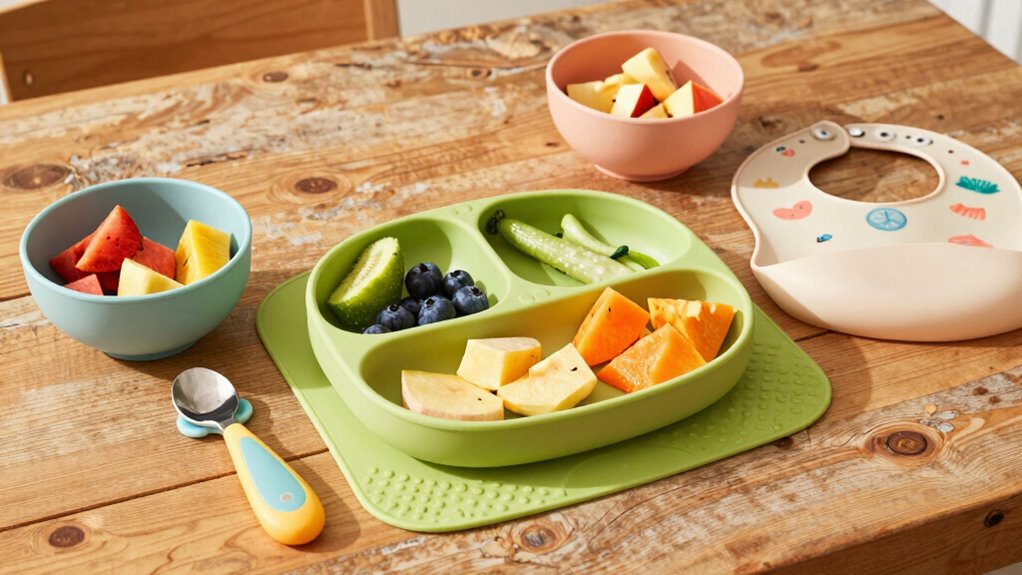
Baby-led weaning is an approach that lets your little one explore and eat solids at their own pace, fostering independence and healthy eating habits from the start. When setting up for this method, paying attention to meal presentation is essential. You want to serve foods in a way that’s inviting, manageable, and safe for your baby. Brightly colored, appropriately sized pieces of fruit, vegetables, or soft proteins can catch their eye and encourage curiosity. Cutting foods into manageable, easy-to-grasp shapes ensures your little one can pick them up confidently without frustration. Avoid overly complicated plating or small, slippery pieces that could pose a choking hazard. Instead, focus on simple, appealing presentations that make the mealtime engaging and safe. Color accuracy impacts how tempting and realistic the food appears, making it more enticing for your baby. Safety considerations should be at the forefront of your setup. Always choose sturdy, non-slip bowls or plates that won’t slide around as your baby explores eating independently. Use utensils that are designed specifically for small hands—short, wide, and soft-tipped—so your baby can practice self-feeding without injury. Keep a close eye on the environment, removing small objects or toys that could be mistaken for food, and ensure the workspace is clean and clutter-free. It’s wise to prepare foods that are soft enough for your baby to gum or chew easily, reducing the risk of choking. Additionally, stay nearby during meals to supervise and intervene quickly if necessary. Never leave your baby unattended while they’re eating, and be mindful of their cues—if they’re tired or overwhelmed, it’s okay to pause and try again later. Another important aspect of setup involves considering the surface where your baby will eat. A high chair with a secure harness and an easy-to-clean tray provides a stable platform for exploring new foods. Make sure the tray or table is at an appropriate height, allowing your little one to sit comfortably and reach their food without strain. Using a bib or a washable cloth helps keep the area tidy and teaches your child about mealtime routines. Remember, the goal is to create an environment that’s encouraging but also mindful of safety. Proper meal presentation combined with safety precautions helps your baby develop confidence in self-feeding and nurtures a positive relationship with food from the beginning.

51" Heavy Duty Baby Splat Mat for Under High Chair | Includes Wet Bag | Premium Washable Toddler Mat | Baby Led Weaning | High Chair Mat for Floor | Craft Mat | Splash Mat (Dots on Dots)
- Easy Cleanup: Resists spills and stains for quick cleaning
- Durable 3-Ply Construction: Repels liquids, machine washable, non-slip backing
- Portable Design: Folds compactly into included wet bag
As an affiliate, we earn on qualifying purchases.
As an affiliate, we earn on qualifying purchases.
Frequently Asked Questions
How Do I Transition From Purees to Baby-Led Weaning?
To shift from purees to baby-led weaning, start by introducing soft, manageable finger foods that align with your baby’s feeding milestones. Let your little one explore textures through sensory exploration, encouraging independence. Offer small pieces of cooked vegetables, fruits, or soft proteins, and stay patient. Watch for signs of readiness, and gradually increase the variety and complexity of foods, supporting your baby’s confidence and skill development during this exciting phase.
What Are the Safest Materials for Baby Weaning Equipment?
Imagine a safe, worry-free mealtime where your little one thrives. Stick to non-slip mats and BPA-free plastics to guarantee safety and peace of mind. These materials are gentle, durable, and free from harmful chemicals, making them ideal for your baby’s delicate hands and mouth. Prioritize gear that’s designed to protect and support your child’s growth, turning mealtime into a joyful, secure experience you both cherish.
How Can I Prevent Choking During Baby-Led Weaning?
To prevent choking during baby-led weaning, you should always supervise your baby closely and stay within arm’s reach. Offer safe food textures, like soft, easily mashable pieces, and avoid foods that are hard, small, or round. Cut food into manageable sizes, and teach your baby to chew thoroughly. Using supervision strategies, like staying attentive and ready to assist, helps guarantee they eat safely and reduce choking risks.
When Should I Introduce Utensils in Baby-Led Weaning?
Think of introducing utensils as planting seeds for your child’s independence. You should start introducing utensils around 8 to 10 months, when they develop better hand-eye coordination and grasp skills. Focus on offering baby-friendly utensils with thick handles, making it easier for them to learn. Patience is key—gradually, they’ll master the art of self-feeding, turning simple mealtime into a joyful journey of discovery and growth.
Are There Specific Setups for Babies With Allergies?
Yes, there are specific setups for babies with allergies. You should use hypoallergenic gear, like silicone or stainless steel utensils and bowls, to minimize allergy risks. Always prepare allergy-friendly foods that avoid your baby’s known allergens, and consider using separate, clearly labeled containers. These precautions help create a safe environment, making it easier for your little one to explore new textures and tastes without exposure to potential allergens.

Eascrozn 6 Pack Silicone Baby Spoons Self Feeding 6 Months+, BPA Free
- Material: Food grade silicone, BPA free
- Color Options: Six different colors for easy differentiation
- Design: Soft, flexible spoon tip gentle on gums
As an affiliate, we earn on qualifying purchases.
As an affiliate, we earn on qualifying purchases.
Conclusion
Remember, when it comes to baby-led weaning, it’s not about the fancy gear or Instagram-worthy setups. Skip the overhyped gadgets and focus on what really matters: your little one’s curiosity and your patience. After all, the best “setup” is a mess on the floor and a happy, exploring baby. So, ditch the fuss, embrace the chaos, and let your tiny pioneer discover the world—one messy bite at a time.

Munchkin® 16pc Baby and Toddler Feeding Supplies Set – Includes Plates, Bowls, Cups and Utensils
- Durable Toddler Dinnerware: For ages 18 months and up
- Includes Favorite Utensils and Dishes: Splash utensils, Multi plates, bowls, cups
- Complete Feeding Set: 4 plates, 4 bowls, 4 cups, 2 forks, 2 spoons
As an affiliate, we earn on qualifying purchases.
As an affiliate, we earn on qualifying purchases.

101 Before one Baby Food Chart Tracker Checklist Fridge Magnet 12×8"
- Allergy Tracking Section: Monitor sensitivities and isolate new ingredients
- Doctor-Ready Data: Organized history for pediatric visits
- Solid Food Milestone Tracker: Supports Baby-Led Weaning and purees
As an affiliate, we earn on qualifying purchases.
As an affiliate, we earn on qualifying purchases.