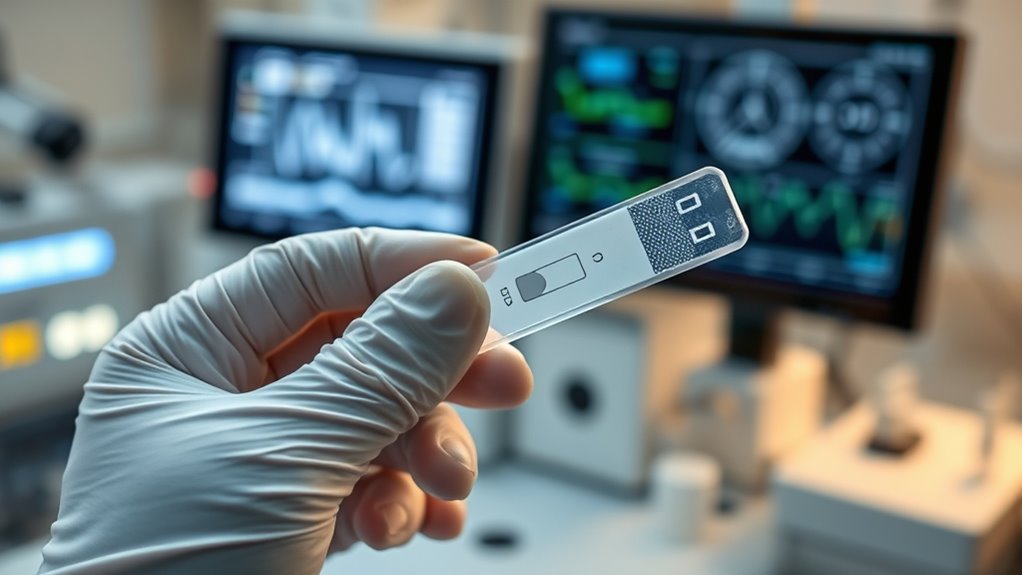

Non-invasive prenatal testing (NIPT) is highly accurate for detecting common chromosomal conditions like Down syndrome, with sensitivity and specificity often over 99%. You can typically have the test done from as early as 10 weeks of pregnancy, when enough fetal DNA circulates in your blood. Early testing not only provides quick insights but also improves detection reliability. If you want to understand more about how timing and accuracy impact your options, you’ll find helpful details here.
Key Takeaways
- NIPT can be performed from 10 weeks gestation, once sufficient fetal DNA circulates in maternal blood.
- The test offers over 99% sensitivity and specificity for detecting trisomy 21, 18, and 13.
- Optimal timing ensures higher accuracy due to increased fetal DNA levels after 10 weeks.
- Early testing provides quicker insights but may have slightly lower reliability before 10 weeks.
- Positive NIPT results should be confirmed with diagnostic procedures for definitive diagnosis.
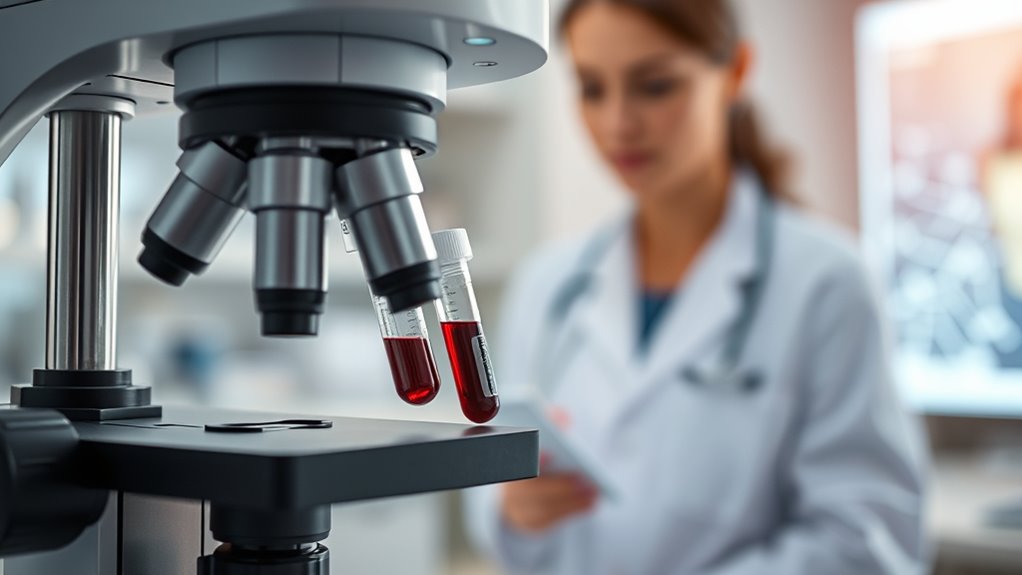
Have you ever wondered how modern technology allows expectant parents to learn about their baby’s health without risking invasive procedures? Non-invasive prenatal testing (NIPT) has revolutionized prenatal care by offering a safe, highly accurate way to screen for certain genetic conditions early in pregnancy. This method analyzes small fragments of fetal DNA circulating in your blood, providing valuable insights without the risks associated with procedures like amniocentesis or chorionic villus sampling. Because of its non-invasive nature, you can undergo testing as early as 10 weeks into your pregnancy, giving you critical information sooner and reducing anxiety about potential issues.
The accuracy of NIPT has improved considerably over the years. It’s particularly effective at detecting common chromosomal abnormalities such as trisomy 21 (Down syndrome), trisomy 18, and trisomy 13. While it’s classified as a screening test rather than a diagnostic one, its sensitivity and specificity are impressive—often exceeding 99% for Down syndrome. This high accuracy means you can have greater confidence in the results, but it’s essential to remember that positive results typically require confirmation through diagnostic testing. Timing plays a key role in maximizing accuracy; starting the test after 10 weeks allows for more reliable detection because fetal DNA levels are sufficient for analysis.
As you consider NIPT, you’ll also encounter important ethical considerations. Genetic screening raises questions about how the information might impact your decision-making, privacy, and future family planning. Some worry about the potential for false positives or ambiguous results, which could lead to unnecessary stress or invasive follow-up procedures. Others are concerned about how the results might influence perceptions of disabilities or influence choices around pregnancy termination. It’s essential to approach NIPT with a clear understanding of its capabilities and limitations, and to discuss these concerns with your healthcare provider. Ensuring informed consent means you’re aware of what the test can and cannot tell you, and how the information might be used or shared.
Additionally, understanding the role of air quality in overall health can be relevant for expectant mothers, as exposure to pollutants may impact fetal development. Ultimately, NIPT empowers you with early, non-invasive insights into your baby’s health, but it’s crucial to handle the information responsibly. Combining the technological precision of genetic screening with thoughtful ethical considerations helps guarantee that you make informed choices that align with your values and circumstances. As you navigate this part of your pregnancy journey, remember that your healthcare team is there to guide you through understanding the results, addressing concerns, and supporting your decisions every step of the way.

HomePaternity Prenatal Paternity DNA Test, Results in 5 Days, from 7 Weeks, 99.9% Confidence, Simple Appt Scheduling, for Mother & Possible Father
- Easy Appointment Scheduling: Choose a time at local centers or use your provider
- Fast Results: Results in 5 business days via secure portal
- Comprehensive Testing: Includes mother, unborn child, and possible father
As an affiliate, we earn on qualifying purchases.
As an affiliate, we earn on qualifying purchases.
Frequently Asked Questions
Can NIPT Detect All Genetic Conditions?
No, NIPT can’t detect all genetic conditions. While it’s a highly accurate genetic screening tool for common trisomies like Down syndrome, it has test limitations. Some rare or complex genetic disorders may go unnoticed because NIPT primarily screens for specific conditions. You should understand that it’s not a diagnostic test, so if results indicate potential issues, follow-up with more extensive testing is essential for a complete assessment.
How Soon After Conception Can NIPT Be Performed?
Think of early testing like catching a butterfly in flight—you can’t do it too soon. NIPT can typically be performed starting at around 10 weeks of gestational age, but for the most accurate results, waiting until 12 weeks is recommended. Testing too early may lead to inconclusive results because fetal DNA levels aren’t yet sufficient. So, patience helps you get clearer insights into your baby’s health.
Is NIPT Recommended for High-Risk Pregnancies Only?
You might wonder if NIPT is only recommended for high-risk pregnancies. While it’s especially helpful for risk assessment, it’s also suitable for low-risk pregnancies to screen for chromosomal abnormalities. Keep in mind, though, that NIPT has screening limitations and isn’t diagnostic. Consulting your healthcare provider helps determine if NIPT fits your situation, regardless of risk level, ensuring you make informed decisions about your pregnancy.
What Are the Potential Emotional Impacts of NIPT Results?
You might experience a range of emotional impacts from NIPT results, including relief, anxiety, or disappointment. It’s important to be emotionally prepared for all outcomes and seek psychological support if needed. Sharing your feelings with loved ones or a counselor can help manage stress. Remember, understanding your results fully and having a support system in place can ease emotional strain during this uncertain time.
How Does NIPT Compare to Traditional Diagnostic Tests?
Like comparing a lighthouse to a flashlight, NIPT offers high screening accuracy but isn’t a definitive diagnosis. Unlike traditional diagnostic tests, which confirm fetal conditions with near certainty, NIPT’s screening accuracy has limitations, meaning it can’t replace invasive procedures. You get early insights, but for conclusive results, diagnostic tests remain essential. Think of NIPT as a helpful guide, not the final destination in prenatal testing.
As an affiliate, we earn on qualifying purchases.
Conclusion
Think of non-invasive prenatal testing as a gentle, yet precise lighthouse guiding you through the foggy waters of pregnancy. With its remarkable accuracy and timely results, it becomes your trusted beacon, shining light on your baby’s health without risking harm. As you navigate this delicate journey, know that this test offers clarity like a clear sky after a storm, helping you make confident decisions and embrace the path ahead with hope and peace of mind.
chromosomal abnormality screening test
As an affiliate, we earn on qualifying purchases.
As an affiliate, we earn on qualifying purchases.
early pregnancy genetic screening
As an affiliate, we earn on qualifying purchases.
As an affiliate, we earn on qualifying purchases.