

To guarantee a safe water birth, focus on proper preparation by maintaining water temperatures between 95-100°F and monitoring regularly with waterproof thermometers. Keep the environment clean and sanitized, using proper filtration and disinfection, and take precautions to prevent slips with non-slip mats. Having a trained attendants and emergency equipment nearby is essential in case complications arise. If you’re interested, you’ll discover more about creating a safe and relaxing water birth experience tailored for you.
Key Takeaways
- Ensure water temperature remains between 95-100°F, regularly monitoring with reliable thermometers for safety.
- Use sanitized, clean water with proper filtration to prevent infections during the water birth.
- Have a trained healthcare professional oversee the process, ready to manage emergencies and monitor progress.
- Use non-slip mats and handrails to prevent slips and falls during entry, exit, and movement in the pool.
- Confirm all safety protocols, including emergency equipment and sanitation procedures, are in place for a safe birth environment.
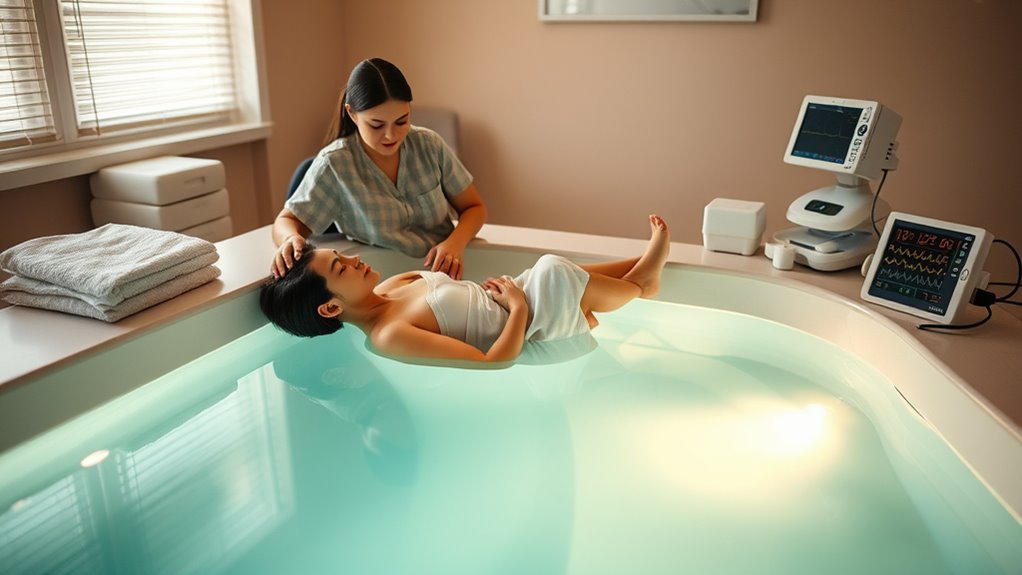
Water birth has become an increasingly popular option for many expectant parents seeking a natural and gentle labor experience. If you’re considering this route, understanding the importance of water temperature and water safety is vital for a smooth and safe delivery. The right water temperature is essential because it helps keep you comfortable and minimizes stress on your body during labor. Ideally, the water should be kept between 95 and 100 degrees Fahrenheit (35-37.8°C). This range mimics body temperature, creating a soothing environment that promotes relaxation and helps ease labor pains. Too hot, and you risk overheating, which can cause dehydration, dizziness, or fetal distress. Too cold, and you might experience discomfort or muscle tightening, which could slow labor progress. Maintaining a consistent water temperature requires careful monitoring, especially as your body temperature fluctuates during labor. You should have a reliable thermometer and a professional or trained birth attendant to regularly check the water’s heat level. Using a thermometer designed for water safety can help ensure accurate readings and prevent accidental overheating or cooling.
Water safety is another vital aspect that shouldn’t be overlooked. Before you even get into the pool, make sure the setup is properly sanitized and maintained. The water should be clean, free of bacteria, and free from contaminants. Use a clean, non-toxic liner or ensure the pool is thoroughly disinfected before each use. You also need to be aware of the physical risks associated with water birth, such as the possibility of slips or falls during entry or exit from the pool. Non-slip mats or handrails can help provide stability. Furthermore, your birthing team should be trained in water birth safety protocols, including how to assist you if you encounter any complications. Keep emergency equipment nearby, like a phone, oxygen, and medications, just in case. Ensuring proper water filtration and regular maintenance of the pool can significantly reduce the risk of infections and ensure a safe environment for both mother and baby.
It’s essential to communicate openly with your healthcare provider about your plans for a water birth. They can help you assess whether you’re a good candidate based on your medical history and current health. A skilled birth attendant experienced in water births can help monitor you and your baby throughout labor, ensuring the environment remains safe at all times. Remember, while water birth can be a beautiful and peaceful experience, it requires diligent preparation and vigilance around water temperature and safety. Proper planning and expert support will help you enjoy a more comfortable, secure, and natural labor experience.
Frequently Asked Questions
Are Water Births Suitable for High-Risk Pregnancies?
Water births aren’t typically suitable for high-risk pregnancies because water birth safety can be compromised in such cases. If you have high-risk factors like preeclampsia, diabetes, or fetal concerns, your healthcare provider might recommend a hospital setting with advanced medical support. It’s essential to discuss your specific situation with your doctor to determine if a water birth is safe for you. Prioritizing safety guarantees the best outcome for you and your baby.
How Do I Find a Certified Water Birth Provider?
To find a certified water birth provider, start by researching local birthing centers and midwives with water birth certification. Check their credentials and ask about their water birth certification process. You can also consult professional organizations like the American College of Nurse-Midwives or the International Childbirth Education Association for lists of certified providers. Always verify their experience and guarantee they prioritize safety and proper water birth preparation.
What Are the Costs Associated With Water Birth?
You might wonder about the costs of a water birth, which vary based on several factors. The cost factors include your chosen birth location, provider fees, and necessary equipment. Insurance coverage can help offset expenses, but policies differ. Typically, water births cost between $2,000 and $4,000, often comparable to hospital births. Be sure to check with your provider and insurance company to understand what’s covered and plan your budget accordingly.
Can I Use My Own Bathtub for Water Birth?
You can use your own bathtub for water birth if it’s properly prepared. Make certain the bathtub is clean, with a secure installation, and can hold enough water for comfort. You’ll need to monitor the water temperature closely, keeping it between 95-100°F to avoid overheating or chilling. Make sure the tub is easily accessible and that you have support nearby, as safety during labor is essential.
What Signs Indicate a Need to Transfer During Water Labor?
If you notice signs like fetal distress, such as abnormal heart rates, or if labor progression stalls or becomes too intense, it’s time to transfer. You might also experience excessive bleeding, strong contractions that don’t ease, or if you’re unable to push effectively. Trust your provider’s guidance and keep a close watch; early transfer guarantees safety for both you and your baby. Always follow your birth plan and healthcare advice.
Conclusion
Remember, preparation and awareness are key to a safe water birth. Make sure you discuss all options with your healthcare provider and follow their guidance carefully. Keep the lines of communication open and trust your instincts—after all, a well-prepared mother is a confident mother. As the saying goes, “Forewarned is forearmed.” With the right knowledge and support, you can help guarantee a safe and positive water birth experience for both you and your baby.