To manage swelling and edema in the third trimester, wear compression socks to improve circulation, stay well-hydrated, and avoid excess salt. Elevate your legs whenever possible and take frequent breaks to prevent fluid buildup. Wear comfortable shoes and avoid tight clothing around your ankles and waist. Keep an eye on symptoms, and if swelling worsens or is accompanied by headaches or vision changes, consult your healthcare provider. More helpful tips await as you explore further.
Key Takeaways
- Wear properly fitted compression socks to improve circulation and reduce swelling in legs and feet.
- Elevate legs frequently and take breaks from standing or sitting to promote fluid return.
- Stay well-hydrated with water, and limit salt and caffeine intake to prevent fluid retention.
- Engage in gentle movement and stretching to enhance blood flow and decrease edema.
- Monitor swelling closely and consult your healthcare provider if it worsens or is accompanied by additional symptoms.
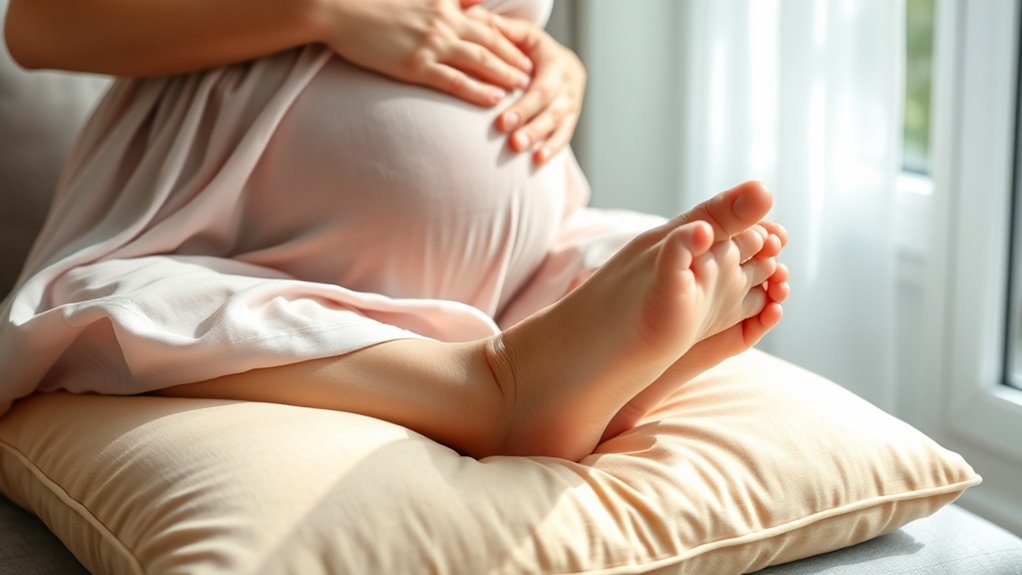
As you reach the third trimester, swelling and edema become common concerns, often leading to discomfort and worry. During this stage of pregnancy, your body retains more fluid, and your circulatory system works harder, which can cause your ankles, feet, and legs to swell. While some swelling is normal, it’s important to manage it effectively to stay comfortable and reduce potential complications. One effective way to do this is by using compression socks. These specially designed stockings apply gentle pressure to your legs, helping improve blood flow and prevent fluid from accumulating in your lower extremities. When choosing compression socks, opt for ones with the right level of compression as recommended by your healthcare provider, and make sure they fit well without cutting off circulation. Wearing them during the day can markedly reduce swelling and make walking and standing less uncomfortable.
Compression socks help reduce swelling and improve circulation during the third trimester.
In addition to compression socks, paying close attention to your fluid intake plays a vital role in managing edema. It might seem counterintuitive, but staying well-hydrated actually helps your body eliminate excess fluids more efficiently. Aim to drink plenty of water throughout the day, but avoid excessive caffeine or sugary drinks, which can contribute to dehydration or fluid retention. Spreading your fluid intake evenly helps maintain proper hydration without overloading your system. Also, be mindful of your salt consumption, as excessive salt can cause your body to retain more water, worsening swelling. Incorporate fresh fruits, vegetables, and whole grains into your diet, which support healthy fluid balance and overall well-being. Knowing how retaining fluid affects your body can help you make better choices to manage swelling.
Beyond wearing compression socks and monitoring fluid intake, there are other steps you can take to manage swelling. Elevating your legs whenever possible helps facilitate blood flow back toward your heart, reducing fluid buildup. Taking breaks from prolonged standing or sitting can also make a difference; moving around, stretching, or lying down with your feet elevated can help alleviate pressure and prevent swelling from worsening. Wearing comfortable, supportive shoes and avoiding tight clothing around your ankles or waist can prevent unnecessary restriction of circulation. Ultimately, listen to your body—if swelling suddenly worsens, becomes painful, or is accompanied by other symptoms like headaches or vision changes, contact your healthcare provider promptly, as these could be signs of a more serious condition such as preeclampsia.
Managing swelling in the third trimester involves a combination of strategies that promote good circulation and fluid balance. By incorporating compression socks, maintaining proper hydration, and practicing healthy habits, you can reduce discomfort and support your health as you prepare for delivery.
Frequently Asked Questions
Can Swelling Indicate a Serious Medical Condition?
Yes, swelling can indicate a serious medical condition like preeclampsia, especially if it’s sudden or severe. You should watch for other preeclampsia symptoms such as high blood pressure, headaches, or vision changes. An edema diagnosis involves checking if swelling is localized or widespread. If you notice these signs, contact your healthcare provider promptly to guarantee proper assessment and care, as early intervention is vital.
Are There Specific Foods That Help Reduce Edema?
Think of your body as a garden; certain foods help it flourish while others cause weeds. To reduce edema, eat foods rich in potassium like bananas and leafy greens, and hydrate well. Avoid foods high in sodium, which can worsen swelling. Herbal remedies like ginger tea may also help. Remember, balancing these foods supports your health and eases swelling, making your pregnancy journey a little smoother.
How Does Hydration Affect Swelling Levels?
Staying well-hydrated helps regulate your body’s fluid retention mechanisms and maintain electrolyte balance, which can reduce swelling. When you drink enough water, your body is less likely to hold onto excess fluids, easing edema. Proper hydration supports circulation and helps flush out excess sodium that contributes to swelling. Keep sipping water throughout the day to maintain ideal hydration levels and minimize swelling during your third trimester.
When Should I Contact My Healthcare Provider About Swelling?
Think of your body as a sponge; when it’s too full, it leaks. You should contact your healthcare provider if you notice sudden swelling, especially in your face or hands, or if it’s accompanied by severe headaches, vision changes, or upper belly pain—signs of preeclampsia. For home remedies, elevate your feet, stay hydrated, and wear compression stockings. Seek medical advice promptly to keep you and your baby safe.
Can Swelling Be Relieved Through Exercise or Massage?
Yes, swelling can often be alleviated through gentle methods like manual lymphatic drainage massage and gentle stretching. You should focus on gentle, rhythmic motions to encourage lymph flow and reduce fluid buildup. Regular, light exercise like walking can also help. Always listen to your body and avoid overexertion. If swelling persists or worsens, consult your healthcare provider to ensure it’s safe and appropriate for your situation.
Conclusion
As you manage swelling and edema in the third trimester, remember to stay hydrated, elevate your legs, and wear comfortable shoes. Keep moving gently, wear loose clothing, and listen to your body’s signals. By staying proactive, staying mindful, and staying calm, you create a healthier environment for both you and your baby. Embrace these small steps, maintain your comfort, and nurture your well-being—you’re almost there, and every effort counts.