During pregnancy, ensuring you get enough folic acid and iron is vital for your health and your baby’s development. Folic acid helps prevent neural tube defects and should be taken daily, preferably with food or water. Iron supports increased blood volume and prevents anemia, and vitamin C can boost its absorption. By focusing on balanced intake and knowing how to optimize nutrient absorption, you can support a healthy pregnancy—more tips to come.
Key Takeaways
- Folic acid prevents neural tube defects and is essential from preconception through early pregnancy.
- Prenatal vitamins help meet recommended folic acid (400-600 mcg) and iron (27 mg) daily requirements.
- Iron supports increased blood volume and oxygen transport, reducing anemia risks for mother and baby.
- Consuming vitamin C-rich foods enhances iron absorption, while calcium-rich foods can hinder it.
- Proper nutrient intake and timing, including taking with water or small foods and avoiding caffeine, optimize absorption.
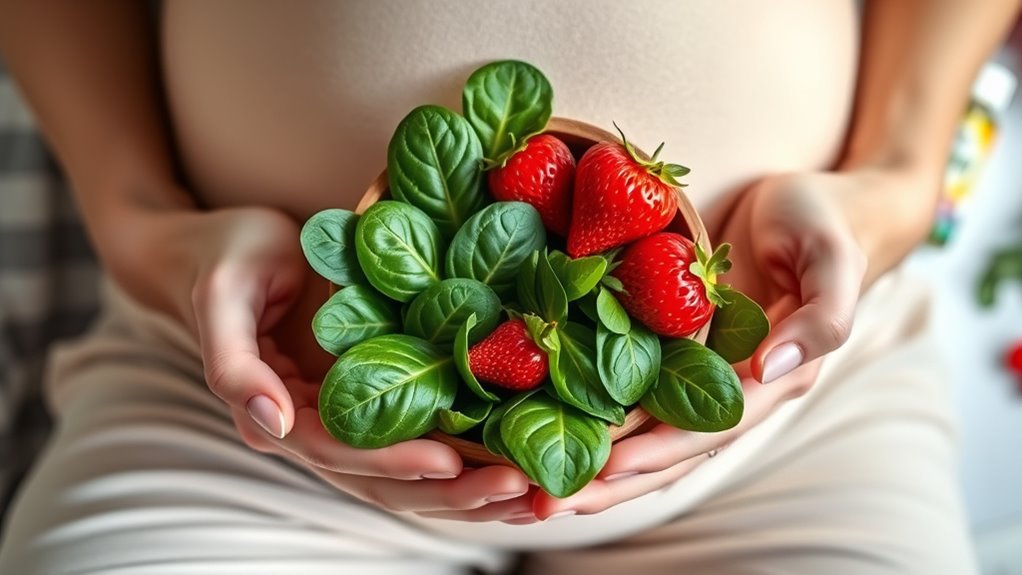
Are you aware of the essential nutrients your body needs during pregnancy to support both your health and your baby’s development? It’s crucial to focus on key nutrients like folic acid and iron, which play vital roles in ensuring a healthy pregnancy. Taking prenatal vitamins can help fill nutritional gaps, but understanding how these nutrients work and how your body absorbs them makes all the difference. Proper nutrient absorption is essential to maximize the benefits of your prenatal vitamins and ensure your body effectively utilizes the nutrients you consume.
Folic acid, a B-vitamin, is especially important from the very start of your pregnancy. It helps prevent neural tube defects, which are serious birth defects of the brain and spine. You should aim to get at least 400 to 600 micrograms of folic acid daily, ideally before conception and during the early weeks of pregnancy. Prenatal vitamins often contain the recommended amount, but you can also find folic acid-rich foods like leafy greens, citrus fruits, and fortified cereals to boost your intake. When you take prenatal vitamins, your body needs to efficiently absorb folic acid; otherwise, the benefits are diminished. To enhance nutrient absorption, consider taking your vitamins with a small amount of food or water, avoiding excess caffeine or alcohol, which can interfere with absorption. Maintaining a balanced diet rich in folate-rich foods supports your body’s ability to utilize this vital nutrient. Additionally, understanding the role of nutrient absorption can help you make better dietary choices during pregnancy.
Iron is another critical mineral during pregnancy, supporting the increased blood volume and helping prevent anemia. Adequate iron intake ensures that both you and your developing baby get enough oxygen-rich blood. Pregnant women typically need about 27 milligrams of iron daily, which can be challenging to get through diet alone. Prenatal vitamins usually contain iron, but you should also include iron-rich foods like lean meats, beans, spinach, and fortified cereals. To optimize nutrient absorption, avoid taking iron supplements with calcium-rich foods or dairy, as calcium can hinder iron absorption. Instead, take iron supplements or iron-rich foods with vitamin C-rich options like oranges or bell peppers, which help your body absorb iron more effectively. If you experience fatigue or weakness, it’s often a sign that your iron levels may need attention, and your healthcare provider can recommend appropriate supplementation. Proper timing and pairing of iron-rich foods with vitamin C sources can significantly improve your iron status during pregnancy.
Frequently Asked Questions
Are There Any Risks Associated With High Intake of Folic Acid or Iron?
If you consume too much folic acid, you might experience folic acid overdose, which can mask vitamin B12 deficiency symptoms and potentially cause nerve damage. Excess iron can lead to iron toxicity, resulting in nausea, constipation, or even more serious issues like organ damage. It is crucial to follow recommended intake levels and consult your healthcare provider to avoid these risks and guarantee both you and your baby stay healthy.
Can I Get Enough Nutrients From Diet Alone Without Supplements?
Diving into dietary sources can deliver many nutrients, but relying solely on diet might not meet all your needs. You need adequate amounts of folic acid, iron, and other essential nutrients, which can be tricky through food alone. Supplements serve as a safety net, ensuring you get enough of these essentials. So, while a balanced diet is beneficial, supplement reliance often provides the key coverage during pregnancy.
How Do I Know if I Need Additional Folic Acid or Iron?
You can find out if you need extra folic acid or iron through blood tests ordered by your healthcare provider. They’ll check your levels and determine if your dietary sources are sufficient. If your levels are low, they may recommend supplements. Pay attention to symptoms like fatigue or weakness, but always rely on blood tests for accurate guidance to guarantee you meet your nutritional needs during pregnancy.
Are Vegetarian or Vegan Diets Sufficient for Pregnancy Nutrient Needs?
A vegetarian or vegan diet can meet pregnancy nutrient needs if you choose a variety of plant-based sources like leafy greens, beans, and fortified foods. To maximize nutrient absorption, pair iron-rich foods with vitamin C sources, such as citrus fruits. Guarantee you’re getting enough folate from options like legumes and spinach. Consider supplements if your diet lacks certain nutrients, and consult your healthcare provider for personalized guidance.
What Are the Signs of Folic Acid or Iron Deficiency During Pregnancy?
You might notice nutrient deficiency symptoms like fatigue, weakness, pale skin, or shortness of breath, which can indicate iron deficiency. Folic acid deficiency may cause birth defects or neural tube issues, but symptoms are less obvious. During pregnancy, watch for unusual tiredness or dizziness. If you experience these pregnancy symptoms, consult your healthcare provider promptly to address potential deficiencies and ensure both your health and your baby’s well-being.
Conclusion
Taking folic acid and iron during pregnancy is vital for your baby’s development. Did you know that around 50% of neural tube defects could be prevented with proper folic acid intake? By ensuring you’re getting enough of these key nutrients, you’re giving your little one the best start in life. Stay proactive, follow your healthcare provider’s advice, and remember, your nutrition truly makes a difference for both of you.