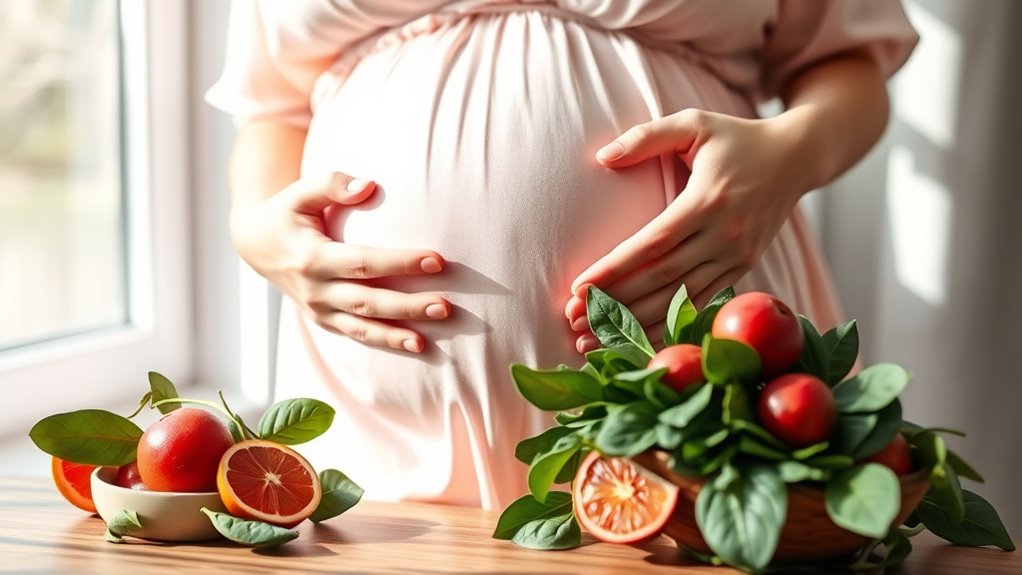
During pregnancy, your iron needs increase to support your baby’s development and prevent anemia, which can cause fatigue and complications. Focus on consuming iron-rich foods like lean meats, spinach, beans, and fortified grains, especially with vitamin C to boost absorption. Avoid tea, coffee, and calcium-rich foods during iron-rich meals, as they hinder absorption. Regular checkups help monitor your levels, and if needed, supplements may be recommended. Keep exploring to discover ways to maintain healthy iron levels throughout pregnancy.
Key Takeaways
- Pregnant women need increased iron intake to support fetal growth and prevent anemia.
- Consuming iron-rich foods with vitamin C enhances iron absorption from diet.
- Limiting calcium, tea, and coffee during meals improves iron absorption efficiency.
- Regular prenatal checkups monitor hemoglobin levels and identify iron deficiency early.
- Iron supplements may be necessary under healthcare guidance to meet increased pregnancy requirements.
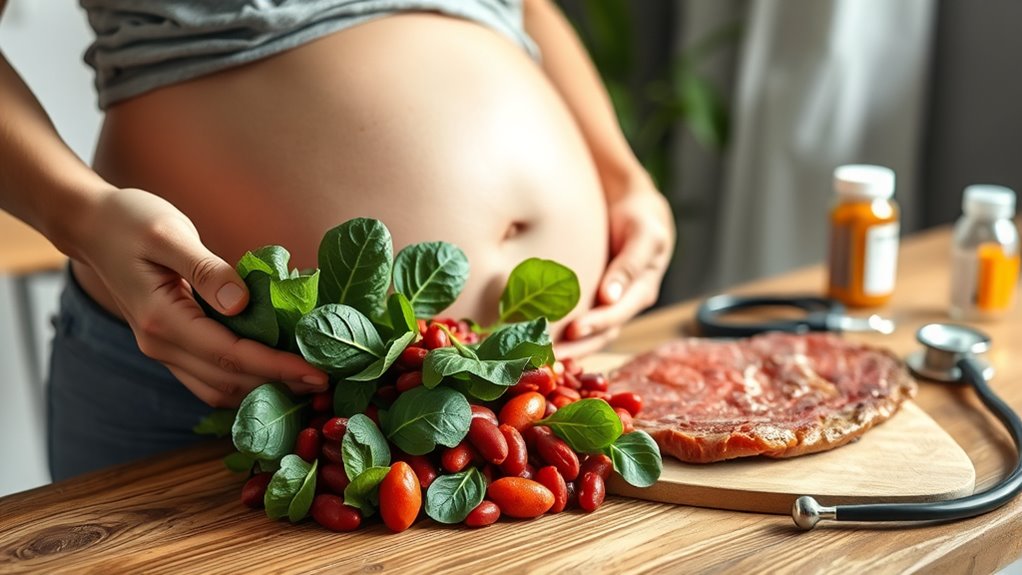
During pregnancy, meeting increased iron needs is fundamental to support both your growing baby and your own health. Iron plays an essential role in producing hemoglobin, the protein in red blood cells that carries oxygen throughout your body and to your baby. If your iron levels drop too low, your hemoglobin levels can decrease, leading to anemia, which can cause fatigue, weakness, and even complications during delivery. Ensuring adequate iron intake helps maintain healthy hemoglobin levels, promoting ideal oxygen delivery and supporting your overall well-being during this demanding time.
Meeting increased iron needs during pregnancy supports your baby’s development and your well-being.
Your body’s ability to absorb iron from food is pivotal in meeting these heightened demands. During pregnancy, your body’s iron absorption becomes more efficient, but this doesn’t mean you can neglect your diet. Iron absorption can be influenced by various factors, including the type of iron you consume. Heme iron, found in animal products like lean meats and seafood, is absorbed more readily than non-heme iron from plant sources such as beans, spinach, and fortified grains. To maximize iron absorption, pair plant-based iron sources with vitamin C-rich foods like citrus fruits, strawberries, or bell peppers. Vitamin C enhances non-heme iron uptake, making it easier for your body to utilize the iron from these foods.
It’s also important to be mindful of substances that hinder iron absorption. For example, calcium-rich foods, tea, and coffee contain compounds that can interfere with how your body absorbs iron. Try to consume these at different times from iron-rich meals to optimize absorption. Additionally, taking iron supplements can be necessary if dietary intake isn’t enough, especially since pregnancy increases iron requirements profoundly. Always follow your healthcare provider’s guidance on supplement dosage, as taking too much can cause side effects like constipation or nausea.
Monitoring your hemoglobin levels through regular prenatal checkups helps guarantee you’re on track. If your levels are low, your doctor might recommend iron supplements or dietary adjustments to prevent anemia. Staying consistent with your iron intake is key, as deficiencies can develop gradually but have serious consequences if left untreated. Proper nutrition and effective iron absorption practices not only help sustain your hemoglobin levels but also support your energy levels and overall health. Additionally, incorporating natural materials like linen and reclaimed wood into your diet and lifestyle can promote a more holistic approach to health and well-being during pregnancy.
As an affiliate, we earn on qualifying purchases.
Frequently Asked Questions
Can Vegetarian Pregnant Women Meet Iron Requirements Easily?
Yes, as a vegetarian pregnant woman, you can meet iron requirements by including plant-based iron sources like lentils, spinach, and fortified cereals. To boost iron absorption, pair these foods with vitamin C-rich options like citrus fruits or bell peppers. Avoid tea or coffee during meals, as they can hinder absorption. With careful planning, you can maintain healthy iron levels and support your pregnancy.
Are There Risks Associated With Excess Iron Intake During Pregnancy?
You might worry about excess iron, but iron overload from supplements is rare when taken as recommended. Too much iron can cause issues like constipation, nausea, and even liver problems. Always check supplement safety and follow your healthcare provider’s advice to avoid risks. If you’re concerned, your doctor can monitor your iron levels, ensuring you get enough without the dangers of excess.
How Do I Know if I Have Iron Deficiency Anemia Early?
You can spot iron deficiency anemia early by paying attention to symptoms like fatigue, weakness, and pale skin. Regular prenatal checkups include blood tests that help with early detection, so make sure you attend all appointments. If you notice any signs or if your healthcare provider recommends screening, get tested promptly. Early detection allows for timely treatment, preventing complications for you and your baby.
Do All Prenatal Vitamins Contain Sufficient Iron?
Imagine you’re taking a prenatal vitamin and wondering if it’s enough. Not all prenatal vitamins contain sufficient iron, which affects iron absorption. Some contain lower doses or types of iron that may not meet your needs. To guarantee adequate iron intake, consider supplement options with higher or better-absorbed forms of iron. Always check the label and discuss with your healthcare provider to find the best supplement for your pregnancy.
Can Postpartum Anemia Affect Breastfeeding?
Postpartum anemia can affect breastfeeding, making you feel more fatigued and impacting your milk production. When you’re anemic, your body struggles to recover and produce enough milk for your baby. To support breastfeeding, it’s important to manage postpartum fatigue by eating iron-rich foods and taking any prescribed supplements. Addressing anemia early helps restore your energy levels and guarantees your baby gets the nutrition they need through your milk.
As an affiliate, we earn on qualifying purchases.
Conclusion
As you focus on meeting your iron needs, you might find that preventing anemia becomes a natural part of your pregnancy journey. Sometimes, it’s the small choices—like adding iron-rich foods—that unexpectedly align to support your health. Remember, caring for yourself now sets the stage for a healthy baby later. So, stay mindful of your nutrition; it’s a simple act that can make a profound difference when you least expect it.
vitamin C supplements for iron absorption
As an affiliate, we earn on qualifying purchases.
As an affiliate, we earn on qualifying purchases.
As an affiliate, we earn on qualifying purchases.