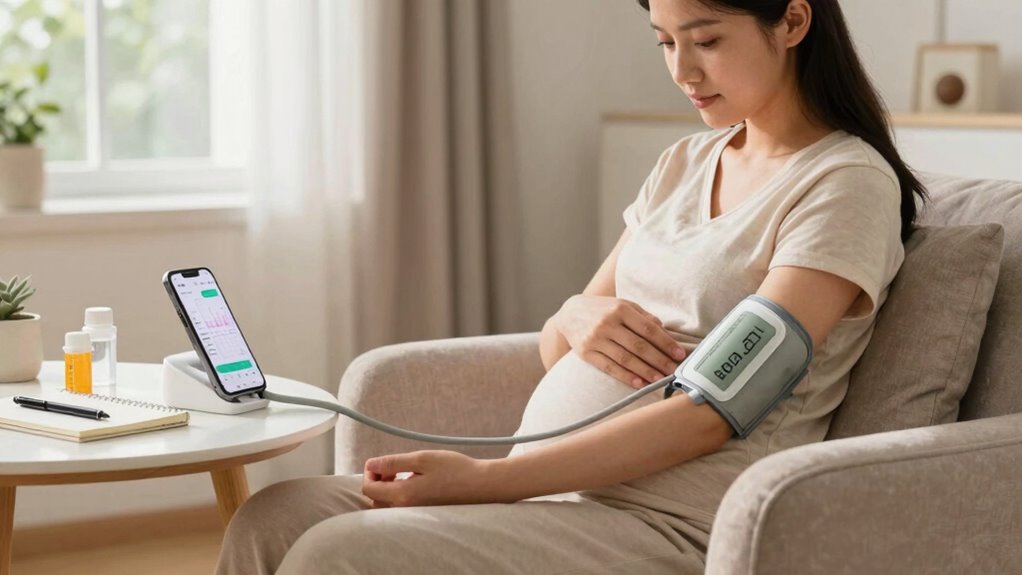

When monitoring high blood pressure at home, make sure to use a validated monitor and follow the manufacturer’s instructions carefully. Sit calmly, support your arm at heart level, and measure at consistent times each day, like morning and evening. Avoid rushing, exercising, or eating beforehand. Keep track of your numbers and share them with your healthcare provider. If you notice signs like severe headaches or sudden spikes, seek medical help immediately; stay informed to keep yourself and your baby safe.

Turn the school run and nap time into listening time
- Thousands of audiobooks, podcasts and originals
- Listen on your phone, tablet or Echo — also offline
- Cancel anytime
Key Takeaways
- Always use a validated monitor and follow manufacturer instructions for accurate readings.
- Measure blood pressure at the same times daily, ideally morning and evening, and record each result with date and time.
- Sit calmly, support your arm at heart level, and avoid talking or moving during measurement.
- Avoid taking readings after eating, exercising, caffeine, or during stress to ensure accuracy.
- Contact your healthcare provider if readings are consistently high or if you experience sudden symptoms.
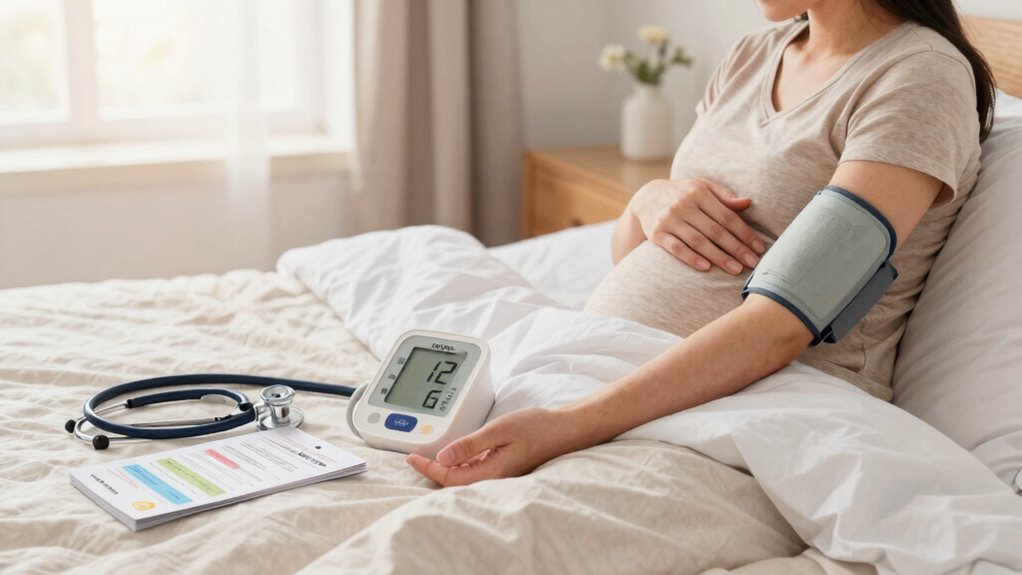
High blood pressure in pregnancy, also known as gestational hypertension, is a common condition that can affect both your health and your baby’s development. If you’re managing this condition at home, understanding how to monitor your blood pressure correctly is essential. Gestational hypertension can cause blood pressure fluctuations, which might be normal to some extent, but significant changes could signal a need for medical attention. Tracking these fluctuations helps you and your healthcare provider stay on top of your condition, preventing complications like preeclampsia.
When you measure your blood pressure at home, it’s important to use a reliable, validated monitor. Always follow the manufacturer’s instructions and sit calmly for a few minutes before taking a reading. Make sure your arm is supported at heart level, and avoid talking or moving during the measurement. Consistency is key; measure your blood pressure at the same times each day, preferably morning and evening, to get a clear picture of your blood pressure patterns. Record each reading accurately, noting the date and time, so you can share this information with your doctor during checkups.
Avoid common mistakes that can lead to inaccurate readings. Don’t take measurements right after eating, exercising, or consuming caffeine, as these can temporarily raise your blood pressure. Also, avoid measuring your blood pressure when you’re stressed or anxious, as this can cause blood pressure fluctuations that don’t reflect your typical levels. If you notice your readings are consistently high or show wide fluctuations, it’s essential to contact your healthcare provider promptly. They may recommend additional tests or adjustments to your care plan.
While home monitoring is a valuable tool, it doesn’t replace regular prenatal visits. Keep attending your scheduled appointments, and discuss any concerns about blood pressure fluctuations with your provider. They can help interpret your home readings, assess your overall health, and determine if any treatment adjustments are needed. Remember, sudden spikes in blood pressure or symptoms like severe headaches, vision changes, or swelling require immediate medical attention. Additionally, understanding blood pressure management strategies can improve your overall pregnancy health and outcomes.
validated blood pressure monitor for pregnancy
As an affiliate, we earn on qualifying purchases.
As an affiliate, we earn on qualifying purchases.
Frequently Asked Questions
Can High Blood Pressure in Pregnancy Cause Long-Term Health Issues?
Yes, high blood pressure during pregnancy can lead to long-term health issues if not managed properly. You might face future risks like heart disease or kidney problems. Pregnancy complications from high blood pressure can have lasting effects, so it’s essential to monitor your condition closely. Staying proactive with your health now can help reduce the chances of long-term health problems later on.
Are There Specific Foods to Avoid When Monitoring Blood Pressure at Home?
You should avoid foods high in salt, as excessive salt intake can elevate your blood pressure. Focus on reducing processed foods, canned soups, and salty snacks, which often contain hidden sodium. Instead, opt for fresh fruits, vegetables, and whole grains. Maintaining proper dietary restrictions helps keep your blood pressure under control. Always follow your healthcare provider’s advice on dietary choices to ensure a healthy pregnancy.
How Often Should Blood Pressure Be Checked During Pregnancy?
You should check your blood pressure at least once a day, but your healthcare provider might recommend more frequent monitoring based on your condition. Consistency is key, so try to measure at the same time each day to get accurate readings. Keep a log of your measurements, and follow your doctor’s advice on measurement frequency. This helps you stay on top of your blood pressure and catch any changes early.
Can Stress Affect Blood Pressure Readings in Pregnancy?
Yes, stress impact can temporarily raise your blood pressure readings, making them less accurate. You might worry that stress skews your results, but understanding this helps you stay calm during measurements. To get the most reading accuracy, take deep breaths and relax before measuring. Managing stress not only improves your overall well-being but also guarantees your home monitoring results truly reflect your blood pressure, giving you peace of mind.
What Are the Signs of Dangerous Blood Pressure Levels During Pregnancy?
You should watch for signs warning of dangerous blood pressure levels, like severe headaches, vision changes, or sudden swelling. Urgent symptoms also include persistent nausea, chest pain, or difficulty breathing. If you experience any of these, get medical help immediately. These signs indicate preeclampsia or other complications that need prompt treatment to protect you and your baby’s health. Don’t ignore these symptoms—seek urgent care right away.
automatic arm blood pressure cuff
As an affiliate, we earn on qualifying purchases.
As an affiliate, we earn on qualifying purchases.
Conclusion
So, while home monitoring might seem like an easy fix, don’t forget that it’s not a substitute for your doctor’s advice. You might think you’re catching every spike, but in reality, some risks still hide behind those readings. Ironically, thinking you’re in control could make you overlook serious signs. Always trust your healthcare provider over your own measurements, because when it comes to high blood pressure in pregnancy, a little professional guidance goes a long way—more than any home device ever could.
home blood pressure tracking journal
As an affiliate, we earn on qualifying purchases.
As an affiliate, we earn on qualifying purchases.
digital blood pressure monitor with memory
As an affiliate, we earn on qualifying purchases.
As an affiliate, we earn on qualifying purchases.
Cold & flu season Picks
humidifiers
As an affiliate, we earn on qualifying purchases.