For most buyers seeking a countertop reverse osmosis water filter, I’d start with the Bluevua RO100ROPOT: its countertop format avoids plumbing work while keeping the setup straightforward. The DREO model with two autofill pitchers stands out for households that want more ready-to-pour water, while the Waterdrop G5P500A suits buyers willing to install an under-sink system for a tankless design. The main tradeoffs are countertop space versus permanent installation, pitcher capacity versus refill frequency, and added mineral or UV stages versus greater system complexity. Some products in this roundup are under-sink models, so they are alternatives rather than true countertop units. Read on for the full comparison and help matching a system to your kitchen, household size, and maintenance preferences.

Turn the school run and nap time into listening time
- Thousands of audiobooks, podcasts and originals
- Listen on your phone, tablet or Echo — also offline
- Cancel anytime
Complete the kit


Key Takeaways
- Countertop convenience is the defining split: Bluevua, DREO, VonWater, Waterdrop C2SL, NatureFlow, Waken, and Slevoo avoid under-sink plumbing, while the Waterdrop G5P500A and two iSpring RCC7AK models require an under-sink setup.
- Pitcher capacity changes daily usability: The DREO 3L and 5L versions, autofill-pitcher models, and VonWater pitcher approach storage differently, so household water use matters as much as filtration stages.
- Added treatment stages are not automatically better: Mineralization appears across several models, and UV appears on the Bluevua RO100ROPOT-UV and Waken C11S; choose these features for a specific preference, not just a longer feature list.
- Installation style drives the ranking: Countertop models rank ahead for a query focused on countertop reverse osmosis because they avoid plumbing changes; the under-sink Waterdrop and iSpring picks suit buyers prioritizing a permanent, out-of-sight setup.
- Convenience features come with upkeep: Autofill, displays, self-cleaning claims, UV stages, and extra filtration stages can make operation easier or add treatment options, but buyers should check replacement schedules and part availability before choosing.
| DREO Reverse Osmosis Water Filter System Countertop, RO Water Filter 112 3L | 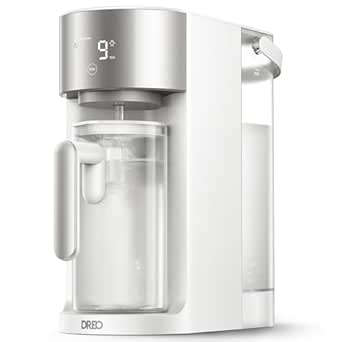 | Best for Compact Countertop Convenience | Filtration: 7-in-1 reverse osmosis; 0.0001 μm membrane | Reported reductions: Up to 99% lead, hexavalent chromium, chlorine, PFOS and PFOA; 97% fluoride under laboratory conditions | Water capacity: 3 L tank plus 1.1 L pitcher | VIEW ON AMAZON | See Our Full Breakdown |
| Waterdrop G5P500A Tankless Reverse Osmosis Water Filtration System with Alkaline Mineralization |  | Best for High-Volume Under-Sink Use | Filtration: 8-stage reverse osmosis; 0.0001 μm membrane | Pure-to-drain ratio: 2:1 | Maximum flow rate: 1.31 L/min | VIEW ON AMAZON | See Our Full Breakdown |
| iSpring RCC7AK-BLK 6-Stage Alkaline Reverse Osmosis Water Filter System with Black Faucet |  | Best for Mineralized Under-Sink Filtration | Filtration: 6-stage reverse osmosis with alkaline remineralization | RO membrane filtration: 0.0001 microns | Certification: NSF/ANSI 58 | VIEW ON AMAZON | See Our Full Breakdown |
| VonWater CT910 7-Stage Countertop Reverse Osmosis Water Filter with Pitcher |  | Best for Dispensing Control | Filtration: 7-stage reverse osmosis; 0.0001 μm filter pore size | Certifications: NSF/ANSI 372, 53, 42, and 58 | Filter life: Up to 12 months or 528 gallons | VIEW ON AMAZON | See Our Full Breakdown |
| Bluevua RO100ROPOT Countertop Reverse Osmosis Water Filter System |  | Best for a Glass Carafe | Filtration: 5-stage reverse osmosis with remineralization | Container material: Borosilicate glass | Capacity: 12 liters, as listed | VIEW ON AMAZON | See Our Full Breakdown |
| Waterdrop C2SL Countertop Reverse Osmosis Water Filter with Mineral Filter and 40 oz Glass Pitcher |  | Best for Mineralized Water in a Small Household | Purification method: Reverse osmosis | Filtration stages: 7 | RO membrane pore size: 0.0001 μm | VIEW ON AMAZON | See Our Full Breakdown |
| DREO Reverse Osmosis Water Filter Countertop, RO Filtration System, 3:1 Pure to Drain, TDS & Filter Life & 2 Autofill Pitchers, Install-Free, Self-Cleaning Water Purifier |  | Best for Two-Pitcher Convenience | Purification method: Reverse osmosis | Filtration description: 7-in-1 | Contaminant reduction claim: Up to 99.9%; listing reports SGS testing against NSF/ANSI 58 standards | VIEW ON AMAZON | See Our Full Breakdown |
| Bluevua RO100ROPOT-UV Countertop Reverse Osmosis Water Filter System |  | Best for UV Treatment and Glass-Carafe Use | Filtration: 6-stage reverse osmosis with UV light and remineralization | RO membrane: 0.0001 μm | Container: Borosilicate glass carafe | VIEW ON AMAZON | See Our Full Breakdown |
| DREO Countertop Reverse Osmosis Water Filter with Autofill Pitcher |  | Best for High-TDS Feed Water | Purification method: Reverse osmosis | Contaminant reduction claim: Up to 99.9% | Pure-to-drain ratio: 3:1 | VIEW ON AMAZON | See Our Full Breakdown |
| iSpring RCC7AK-BN NSF Certified, 75 GPD, Alkaline 6-Stage Reverse Osmosis System |  | Best for Permanent Under-Sink Installation | Installation type: Under sink | Purification method: Reverse osmosis with alkaline remineralization | Filtration stages: 6 | VIEW ON AMAZON | See Our Full Breakdown |
| NatureFlow F40 SE Countertop Reverse Osmosis Water Filter System | 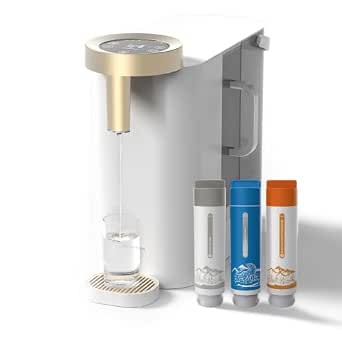 | Best for Mineralized Water and Guided Maintenance | Installation: Countertop | Purification method: Reverse osmosis | Filtration stages: 10 | VIEW ON AMAZON | See Our Full Breakdown |
| DREO Reverse Osmosis Water Filter Countertop System, RO Water Filter 113 5L |  | Best for Compact Family Use | Filtration: 7-in-1 reverse osmosis | Tank capacity: 5 liters | Included pitchers: Two 1.1-liter pitchers | VIEW ON AMAZON | See Our Full Breakdown |
| Waken Electric C11S UV Countertop Reverse Osmosis Water Filter System |  | Best for UV Support and TDS Monitoring | Model: C11S | Filtration: 8-stage reverse osmosis with UV support | Pure-to-drain ratio: 4:1 | VIEW ON AMAZON | See Our Full Breakdown |
| Slevoo Countertop Reverse Osmosis Water Filter System with Remineralization and TDS Display |  | Best for Glass-Pitcher Dispensing | Filtration: 6-stage reverse osmosis | Capacity: 4 liters | Pure-to-drain ratio: 4:1 | VIEW ON AMAZON | See Our Full Breakdown |
| counterreverse osmosis water filter | Pure-to-drain ratio | Filtration | Dimensions | Capacity |
|---|---|---|---|---|
| DREO Reverse Osmosis Water Fil | 3:1 | 7-in-1 reverse osmosis; 0.0001 μm membrane | 14.51 × 6.73 × 13.35 in | — |
| Waterdrop G5P500A Tankless Rev | 2:1 | 8-stage reverse osmosis; 0.0001 μm membrane | — | — |
| iSpring RCC7AK-BLK 6-Stage Alk | — | 6-stage reverse osmosis with alkaline remineralization | — | 75 gallons |
| VonWater CT910 7-Stage Counter | 3:1 | 7-stage reverse osmosis; 0.0001 μm filter pore size | — | — |
| Bluevua RO100ROPOT Countertop | 2:1 | 5-stage reverse osmosis with remineralization | — | 12 liters, as listed |
| Waterdrop C2SL Countertop Reve | 3:1 | — | 15.8 × 6.1 × 11.4 in | — |
| DREO Reverse Osmosis Water Fil | 3:1 | — | 15.7 × 6.7 × 13.4 in | 5 liters |
| Bluevua RO100ROPOT-UV Countert | 2:1 | 6-stage reverse osmosis with UV light and remineralization | — | 1700 ml |
| DREO Countertop Reverse Osmosi | 3:1 | — | — | 3 liters |
| iSpring RCC7AK-BN NSF Certifie | — | — | — | — |
| NatureFlow F40 SE Countertop R | 4:1 | — | 18.5 × 8.58 × 13.9 inches | 5 liters |
| DREO Reverse Osmosis Water Fil | 3:1 | 7-in-1 reverse osmosis | 14.51 × 6.73 × 13.35 inches | — |
| Waken Electric C11S UV Counter | 4:1 | 8-stage reverse osmosis with UV support | 18.3 × 7.28 × 15.04 inches | — |
| Slevoo Countertop Reverse Osmo | 4:1 | 6-stage reverse osmosis | 13.98 × 6.3 × 14.37 inches | 4 liters |
More Details on Our Top Picks
DREO Reverse Osmosis Water Filter System Countertop, RO Water Filter 112 3L
The DREO makes the most sense for buyers who want countertop reverse osmosis without plumbing and have limited room to spare. Its 14.51-inch-long footprint is narrower than the VonWater CT910, while a 3-liter tank and 1.1-liter pitcher provide more ready-to-serve capacity than the VonWater’s 1.2-liter pitcher alone. Real-time TDS readings, filter reminders, and automatic flushing also reduce routine guesswork. The listed 3:1 pure-to-drain ratio is a strong fit for buyers seeking lower water waste, and the filter is rated for 265 gallons. The tradeoff is its modest storage for a household with several frequent users; compared with the Bluevua RO100ROPOT, it also has no stated glass carafe or remineralization stage. Its compact format and monitoring features matter more here than serving a crowd.
Pros:- Slim countertop footprint for a compact kitchen or office
- 3-liter tank plus 1.1-liter pitcher provide two water-storage options
- Real-time raw and filtered water TDS readings and filter reminders
- 3:1 pure-to-drain ratio and automatic internal flushing
Cons:- The stated 265-gallon filter life is shorter than the VonWater CT910’s 528-gallon rating
- The combined tank and pitcher capacity may require frequent refills in a busy household
- No remineralization feature is listed
Best for: One- or two-person households that want a narrow, no-plumbing RO unit with TDS and filter-life monitoring.
Not ideal for: Large households that need a substantial chilled reserve, or buyers who specifically want a glass carafe or remineralization.
- Filtration:7-in-1 reverse osmosis; 0.0001 μm membrane
- Reported reductions:Up to 99% lead, hexavalent chromium, chlorine, PFOS and PFOA; 97% fluoride under laboratory conditions
- Water capacity:3 L tank plus 1.1 L pitcher
- Pure-to-drain ratio:3:1
- Filter life:265 gallons (1,000 L); listed as about six months
- Dimensions:14.51 × 6.73 × 13.35 in
- Maximum supported TDS:500 ppm
- Installation:Countertop; no plumbing installation required
Our verdict“Choose the DREO for a compact, monitored countertop RO setup for one or two people, not for high-volume use or remineralized water.”
Waterdrop G5P500A Tankless Reverse Osmosis Water Filtration System with Alkaline Mineralization
For households that want a built-in RO supply rather than a countertop appliance, the Waterdrop G5P500A is the clear high-volume pick. Its 500 GPD rating and tankless design suit regular drinking and cooking use without reserving cabinet space for a storage tank. It also adds minerals, a feature the DREO countertop model does not list, and can supply compatible refrigerators or ice makers. The 2:1 purified-water-to-drain ratio is less water-efficient than the DREO and VonWater CT910’s stated 3:1 ratios, but the Waterdrop trades that efficiency for an installed, higher-output setup. This is not a no-fuss countertop alternative: it needs a corded connection, under-sink access, and a drilled faucet hole. Compared with the iSpring RCC7AK-BLK, it offers greater stated daily output and refrigerator compatibility, but brings more installation requirements.
Pros:- Tankless design frees cabinet space otherwise used by a storage tank
- 500 GPD rated capacity for sustained household demand
- Adds minerals including calcium, magnesium, sodium, and potassium
- Can connect to compatible refrigerators and ice makers
Cons:- Faucet installation requires drilling a countertop hole
- Requires a corded electrical connection
- Its 2:1 pure-to-drain ratio uses more drain water than the 3:1 countertop options listed
Best for: Households with regular high water demand that want an under-sink RO system, mineral addition, and the option to feed a compatible refrigerator or ice maker.
Not ideal for: Renters or anyone who cannot drill a faucet hole, provide electrical power under the sink, or accommodate a permanent installation.
- Filtration:8-stage reverse osmosis; 0.0001 μm membrane
- Pure-to-drain ratio:2:1
- Maximum flow rate:1.31 L/min
- Maximum supported TDS:500 ppm
- Dimensions and weight:16.69 × 5.69 × 13.9 in; 21.4 lb
- Installation and power:Under sink; countertop drilling for faucet; corded electric
- Certifications and warranty:NSF/ANSI 58 and 372; one-year warranty
Our verdict“Pick the Waterdrop for a high-output, mineralizing under-sink system if you can handle drilling and a powered installation.”
iSpring RCC7AK-BLK 6-Stage Alkaline Reverse Osmosis Water Filter System with Black Faucet
The iSpring RCC7AK-BLK suits buyers who want a conventional under-sink RO system with alkaline remineralization and a coordinated black faucet. Its six-stage setup is NSF/ANSI 58 certified, and the listing describes reduction of TDS and a broad range of contaminants. Unlike the Waterdrop G5P500A, this model does not list tankless operation, a 500 GPD output, or refrigerator connections; its appeal is a more straightforward system with included installation parts and lifetime technical support. The tradeoff is the work and cabinet space that come with an under-sink installation. At 15.5 × 16 × 18 inches, it is not a compact choice, and buyers may need the manual or instructional videos to complete setup. Compared with the countertop DREO, it gives up portability in exchange for a fixed faucet and remineralization.
Pros:- Six-stage RO filtration with alkaline remineralization
- NSF/ANSI 58 certification
- Includes black faucet and installation parts
- Lifetime technical support is listed
Cons:- Requires under-sink space and a permanent installation
- Setup may take extra effort for buyers unfamiliar with plumbing
- No daily output rating or pure-to-drain ratio is provided in the supplied product data
Best for: Homeowners who have under-sink room and want a certified RO system with alkaline mineral restoration, a black faucet, and ongoing technical support.
Not ideal for: Renters, people avoiding installation, or kitchens with limited cabinet clearance.
- Filtration:6-stage reverse osmosis with alkaline remineralization
- RO membrane filtration:0.0001 microns
- Certification:NSF/ANSI 58
- Contaminant reduction:Up to 99% of over 1,000 contaminants, as stated in the product data
- Capacity:75 gallons
- Dimensions and weight:15.5 × 16 × 18 in; 12.5 kg
- Installation:Under sink
- Included components:Black faucet, installation parts, and extra filter
Our verdict“Choose the iSpring if you want an installed, mineralizing RO system with a black faucet and have room to fit it under the sink.”
VonWater CT910 7-Stage Countertop Reverse Osmosis Water Filter with Pitcher
The VonWater CT910 is a practical countertop pick for buyers who want preset portions rather than filling every glass by hand. Its five dispensing choices, from 4 to 17 ounces plus continuous dispensing, give it more portion control than the DREO’s pitcher-focused setup. It also pairs a removable 1.2-liter pitcher with live TDS and filter-life information, so a user can monitor output and take water to the table. The stated 528-gallon filter life is longer than the DREO’s 265-gallon rating, while its 3:1 pure-to-drain ratio matches DREO’s listed efficiency. The tradeoffs are its corded power requirement and smaller pitcher capacity than the Bluevua RO100ROPOT’s listed 12-liter capacity. Replacement filters and extra pitchers are separate purchases, so check ongoing supply needs before choosing it.
Pros:- Five dispensing options, including continuous dispensing
- Removable 1.2-liter pitcher for serving away from the dispenser
- Real-time TDS and filter-life display
- 3:1 pure-to-drain ratio and stated filter life up to 528 gallons
Cons:- Requires corded electrical power
- Replacement filters and extra pitchers are sold separately
- The 1.2-liter pitcher may need frequent refilling for multiple users
Best for: People who want a no-plumbing countertop RO unit with measured dispensing, a removable pitcher, and visible TDS and filter-life status.
Not ideal for: Buyers who need a large stored water reserve, want a non-electric system, or prefer included spare pitchers and filters.
- Filtration:7-stage reverse osmosis; 0.0001 μm filter pore size
- Certifications:NSF/ANSI 372, 53, 42, and 58
- Filter life:Up to 12 months or 528 gallons
- Pure-to-drain ratio:3:1
- Pitcher capacity:1.2 L (41 oz)
- Dispensing volumes:4, 8, 12, or 17 oz, or unlimited
- Dimensions and weight:8.2 × 13.4 × 15.3 in; 15 lb
- Installation and power:Countertop; no installation required; corded electric
Our verdict“Choose the CT910 if measured dispensing and a removable pitcher matter more than a large stored-water capacity.”
Bluevua RO100ROPOT Countertop Reverse Osmosis Water Filter System
The Bluevua RO100ROPOT stands apart for buyers who would rather serve RO water from borosilicate glass than keep it in a plastic pitcher. Its five filtration stages include remineralization, addressing a preference the DREO and VonWater CT910 listings do not specify. The 2:1 pure-to-drain ratio is less water-efficient than those two models’ 3:1 figures, but Bluevua supports water with a listed maximum TDS of 1,000 ppm, compared with 500 ppm for both. Its countertop installation avoids plumbing, and the package includes four filters, a mineral filter, and a cleaning brush. The supplied 12-liter capacity is larger than the VonWater’s 1.2-liter pitcher, though its 0.26 L/min maximum flow rate still means dispensing takes time. It needs electrical power and filter changes remain part of ownership.
Pros:- Borosilicate glass carafe avoids a plastic serving container
- Five-stage filtration includes remineralization
- No plumbing or permanent installation required
- Supports a stated maximum water TDS of 1,000 ppm
Cons:- 2:1 pure-to-drain ratio is less efficient than the 3:1 DREO and VonWater figures
- Requires corded electrical power
- Filter replacements are needed after the listed 12–24-month service interval
Best for: Countertop RO buyers who prefer a glass carafe, want remineralization, and value a higher stated maximum feed-water TDS limit.
Not ideal for: People prioritizing the lowest water waste, a non-electric setup, or a compact unit with minimal countertop presence.
- Filtration:5-stage reverse osmosis with remineralization
- Container material:Borosilicate glass
- Capacity:12 liters, as listed
- Maximum flow rate:0.26 L/min
- Maximum supported water TDS:1,000 ppm
- Filter life:12–24 months
- Pure-to-drain ratio:2:1
- Dimensions and weight:10.9 × 15.4 × 14.3 in; 5 kg
- Included components and warranty:Glass carafe, power adapter, cleaning brush, user guide, four filters, mineral filter; one-year limited warranty upon registration
Our verdict“Pick the Bluevua if a glass carafe and remineralization are priorities and its lower water-efficiency ratio is acceptable.”
Waterdrop C2SL Countertop Reverse Osmosis Water Filter with Mineral Filter and 40 oz Glass Pitcher
The C2SL pairs seven-stage RO filtration with a mineral filter that adds calcium, magnesium, potassium, and sodium, giving it a taste-focused edge over the DREO Countertop Reverse Osmosis Water Filter with Autofill Pitcher, whose listed features emphasize monitoring and convenience rather than remineralization. Its 40 oz glass pitcher fills automatically, so a one- or two-person household can keep drinking water ready without plumbing or a faucet connection. The stated 3:1 pure-to-drain ratio also uses water more efficiently than the Bluevua RO100ROPOT-UV’s 2:1 ratio. The tradeoff is scale: Waterdrop describes this unit for just one or two people, and its electric, 15.8-inch-tall body still claims counter space. Filter life varies with feed-water quality and use, so the 12-month figure is not a guarantee.
Pros:- Seven-stage RO filtration with a mineral filter adding calcium, magnesium, potassium, and sodium
- Automatic refill of a detachable 40 oz glass pitcher
- No plumbing or faucet connection required
- 3:1 pure-to-drain ratio and filter-status and voice alerts
Cons:- Designed for only one or two people, limiting its fit for busy households
- Requires electricity and a dedicated countertop footprint
- Actual filter life depends on water quality and usage
Best for: One- or two-person households that want countertop RO water with added minerals and an automatically filled glass pitcher.
Not ideal for: Larger households or people who want a non-electric system; its intended household size is limited and it needs an outlet and counter space.
- Purification method:Reverse osmosis
- Filtration stages:7
- RO membrane pore size:0.0001 μm
- Feed water tank capacity:108 oz
- Pitcher capacity:40 oz
- Filter capacity:Up to 528 gallons
- Pure-to-drain ratio:3:1
- Dimensions:15.8 × 6.1 × 11.4 in
- Installation and power:Countertop; corded electric
Our verdict“Choose the C2SL for a small household that values mineralized water and pitcher convenience more than high-volume capacity.”
DREO Reverse Osmosis Water Filter Countertop, RO Filtration System, 3:1 Pure to Drain, TDS & Filter Life & 2 Autofill Pitchers, Install-Free, Self-Cleaning Water Purifier
The standout here is the two-autofill-pitcher setup, a practical distinction from the Waterdrop C2SL, which supplies one 40 oz glass pitcher. That extra serving vessel can help a household keep a second batch ready, while TDS and filter-life displays give users a quick status check. The listing describes seven-in-one RO filtration and reports SGS testing against NSF/ANSI 58 standards; that is testing information, not the same claim as a certification for the full system. A 3:1 pure-to-drain ratio matches the Waterdrop and improves on the Bluevua UV model’s stated 2:1 ratio. The drawback is that the supplied product data does not state filter capacity, filter-replacement interval, pitcher volume, or supported maximum TDS, making long-term ownership and household sizing harder to judge. Its 5-liter capacity and 15.7 × 6.7 × 13.4-inch body also need room.
Pros:- Includes two autofill pitchers for keeping a second batch available
- Built-in TDS and filter-life indicators
- Self-cleaning feature and touch controls
- Stated 3:1 pure-to-drain ratio and countertop installation without plumbing
Cons:- Available product data does not specify filter life, filter capacity, or pitcher volume
- Maximum supported feed-water TDS is not stated in the supplied specifications
- Its 5-liter capacity and 13.4-inch height require meaningful counter space
Best for: Households that want two ready-to-serve pitchers, visible TDS and filter status, and a no-plumbing countertop RO setup.
Not ideal for: Buyers who need clearly documented filter-life or maximum-TDS specifications, or who require a compact unit with a stated small footprint.
- Purification method:Reverse osmosis
- Filtration description:7-in-1
- Contaminant reduction claim:Up to 99.9%; listing reports SGS testing against NSF/ANSI 58 standards
- Pure-to-drain ratio:3:1
- Capacity:5 liters
- Dimensions:15.7 × 6.7 × 13.4 in
- Weight:10.8 lb
- Installation:Countertop; install-free
- Features:TDS meter, filter-life indicator, touch control, self-cleaning, two autofill pitchers
Our verdict“Pick this DREO if having two autofill pitchers matters more than having complete published maintenance and water-limit specifications.”
Bluevua RO100ROPOT-UV Countertop Reverse Osmosis Water Filter System
The RO100ROPOT-UV suits buyers who want UV treatment alongside remineralization, rather than just an RO membrane and a pitcher. Its borosilicate glass carafe also avoids the plastic pitcher format used by the DREO countertop models. A built-in TDS meter and filter-life monitor make it easier to track water readings and maintenance, while standby mode is intended to reduce power use when the system is idle. Compared with the Waterdrop C2SL, though, Bluevua has a less favorable stated 2:1 pure-to-drain ratio versus 3:1 and a smaller 1700 ml container. The unit weighs 17.8 lb, so “portable” does not mean effortless to move around. It needs electricity, and its annual filter-life estimate still depends on actual water quality and usage.
Pros:- Six-stage filtration includes UV light and remineralization
- Borosilicate glass carafe rather than a plastic pitcher
- Built-in TDS meter and filter-life monitor
- Power-saving standby and no-plumbing countertop installation
Cons:- 2:1 pure-to-drain ratio is less water-efficient than the 3:1 Waterdrop and DREO options listed here
- 1700 ml carafe capacity may require frequent refills
- At 17.8 lb, it is relatively heavy for a portable countertop unit
Best for: Buyers who want countertop RO with UV, remineralization, a glass carafe, and on-unit water and filter monitoring.
Not ideal for: People seeking a lightweight, frequently moved purifier, a large serving vessel, or a stronger stated pure-to-drain ratio.
- Filtration:6-stage reverse osmosis with UV light and remineralization
- RO membrane:0.0001 μm
- Container:Borosilicate glass carafe
- Capacity:1700 ml
- Flow rate:0.26 liters per minute
- Pure-to-drain ratio:2:1
- Filter life:12 months
- Dimensions and weight:10.9 × 15.4 × 14.3 in; 17.8 lb
- Maximum supported water TDS:500 ppm
Our verdict“Choose Bluevua if UV, remineralization, and a glass carafe matter more to you than lighter weight or a higher pure-to-drain ratio.”
DREO Countertop Reverse Osmosis Water Filter with Autofill Pitcher
This DREO’s clearest distinction is its listed support for feed water up to 1200 ppm TDS, higher than the 500 ppm limit supplied for both the Waterdrop C2SL and Bluevua RO100ROPOT-UV. That makes it the more relevant option for buyers whose source water has elevated TDS, though it does not replace checking the system’s guidance for a specific water supply. Its autofill pitcher, TDS meter, and filter-life indicator make daily use and upkeep more visible than on basic countertop units, and self-cleaning adds another convenience feature. The tradeoff is a stated six-month filter cycle, shorter than the 12-month intervals listed for Waterdrop and Bluevua. Its 3-liter capacity is also less suited to high-volume households, and the supplied data does not identify filtration stages or a certification.
Pros:- Maximum supported feed-water TDS listed at 1200 ppm
- Autofill pitcher with built-in TDS and filter-life indicators
- Self-cleaning and touch controls
- 3:1 pure-to-drain ratio with installation-free countertop setup
Cons:- Six-month filter cycle is shorter than the 12-month intervals listed for Waterdrop and Bluevua
- 3-liter capacity may be limiting for larger households
- Supplied specifications do not state filtration stages or certification
Best for: Buyers with higher-TDS feed water who want an installation-free RO unit with an autofill pitcher and visible maintenance indicators.
Not ideal for: Large households that want a longer stated filter interval, or buyers who need a listed filtration-stage count and certification details before choosing.
- Purification method:Reverse osmosis
- Contaminant reduction claim:Up to 99.9%
- Pure-to-drain ratio:3:1
- Maximum supported water TDS:1200 ppm
- Filter life cycle:6 months
- Capacity:3 liters
- Dimensions and weight:14.5 × 6.7 × 13.4 in; 9.5 lb
- Installation:Countertop; installation-free
- Features:Built-in TDS meter, filter-life indicator, touch controls, self-cleaning, autofill pitcher
Our verdict“This DREO is the more suitable pick for buyers prioritizing a higher stated feed-water TDS limit over longer filter intervals or fuller certification details.”
iSpring RCC7AK-BN NSF Certified, 75 GPD, Alkaline 6-Stage Reverse Osmosis System
Unlike the countertop Waterdrop, Bluevua, and DREO systems in this group, the iSpring RCC7AK-BN is a plumbed under-sink RO system. That makes it a better fit for households that want a dedicated faucet and a permanent water station, and its listed NSF/ANSI 58 system certification is a meaningful distinction from products whose supplied descriptions mention testing or other certification standards. The six-stage design adds alkaline mineralization, while the 75 GPD output supports ongoing household use without filling a countertop pitcher. Its top-mounted fastener is designed to simplify faucet installation from above, but setup still involves plumbing and cabinet access. It also lacks the portability and no-install convenience of the countertop picks, and the supplied product information gives mixed capacity and filter-life figures, so buyers should verify replacement schedules for their exact filter set.
Pros:- Listed NSF/ANSI 58 certification for the full RO system
- Six-stage filtration with alkaline remineralization
- 75 GPD output for a dedicated household drinking-water faucet
- Top-mounted faucet fastener is designed to ease installation from above
Cons:- Requires under-sink plumbing and a faucet installation, unlike the countertop alternatives
- Not portable and takes up cabinet space
- Supplied information lists differing capacity and filter-life details, so replacement schedules need confirmation
Best for: Homeowners or renters with permission to modify plumbing who want a dedicated under-sink faucet, alkaline remineralization, and a system with listed NSF/ANSI 58 certification.
Not ideal for: People who cannot alter plumbing, want a portable or renter-friendly system, or prefer a ready-to-use countertop unit.
- Installation type:Under sink
- Purification method:Reverse osmosis with alkaline remineralization
- Filtration stages:6
- Certification:NSF/ANSI 58
- Maximum supported water TDS:750 ppm
- Operating pressure:70 psi
- Maximum flow rate:284 liters per day
- Power source:No power needed
Our verdict“Choose the iSpring if you want a certified, permanent under-sink RO installation and are willing to handle plumbing rather than use a countertop dispenser.”
NatureFlow F40 SE Countertop Reverse Osmosis Water Filter System
The NatureFlow F40 SE suits buyers who want countertop RO filtration with mineralization and built-in maintenance prompts. Its 10-stage setup, automatic cleaning, and filter-life indicator offer more hands-off guidance than the simpler feature set described for the Waken Electric C11S. The 5-liter capacity also gives it a practical reservoir for routine household use, while the stated 4:1 pure-to-drain ratio is a useful water-efficiency claim to compare with the DREO model’s stated 3:1 ratio.
The tradeoff is that the product details do not independently substantiate its contaminant-removal or health claims, so I would not treat the mineralized water’s stated pH range as proof of a health benefit. At 18.5 inches long, it also needs a generous counter space, and the stated two-year filter life still means replacement planning. Choose it for mineralization and care reminders, not for a compact footprint.
Pros:- Combines reverse osmosis filtration with natural mineralization.
- Filter-life indicator and automatic cleaning support more guided upkeep than the Waken C11S feature list describes.
- Five-liter capacity provides a usable stored-water supply.
- States a 4:1 pure-to-drain ratio.
Cons:- The supplied product details do not independently substantiate contaminant-removal or health-benefit claims.
- Its 18.5-inch length can be difficult to accommodate on smaller counters.
- Filter replacement is required after the stated two-year cycle.
Best for: Households wanting countertop RO filtration with mineralization, automatic cleaning, and a clear filter-life reminder.
Not ideal for: Buyers with limited counter space or those who require independently substantiated contaminant-removal claims before choosing a filter.
- Installation:Countertop
- Purification method:Reverse osmosis
- Filtration stages:10
- Capacity:5 liters
- Filter life:2 years
- Pure-to-drain ratio:4:1
- Mineralized water pH:9.0–9.5
- Dimensions:18.5 × 8.58 × 13.9 inches
Our verdict“Choose the NatureFlow F40 SE if mineralization and maintenance prompts matter more to you than a compact countertop footprint or independently documented performance claims.”
DREO Reverse Osmosis Water Filter Countertop System, RO Water Filter 113 5L
The DREO RO Water Filter 113 pairs a slim countertop unit with a 5-liter tank and two 1.1-liter pitchers, making it a strong fit for households that want filtered water ready to serve without plumbing. Compared with the larger-footprint NatureFlow F40 SE, its stated dimensions are easier to place in a crowded kitchen, and the extra pitchers let several people keep water on hand away from the machine. Real-time TDS readings and filter-life monitoring also make routine checks more visible.
DREO claims testing against NSF/ANSI 58 and 99.9% contaminant filtration, but those claims come from the supplied description and should not be read as a guarantee for every contaminant or water supply. Its stated 3:1 pure-to-drain ratio is less water-efficient on paper than the 4:1 claims from NatureFlow and Waken. The 265-gallon filter life is also a capacity limit to track rather than a long calendar interval.
Pros:- Slim countertop footprint relative to the NatureFlow F40 SE.
- Includes a 5-liter tank plus two 1.1-liter pitchers for serving and storage.
- Real-time TDS readings and filter-life monitoring make upkeep more visible.
- Twist-to-install cartridge is designed for quick replacement.
Cons:- Its stated 3:1 pure-to-drain ratio is lower than the 4:1 claims from NatureFlow and Waken.
- The stated 265-gallon filter capacity requires tracking usage and replacement.
- Contaminant-removal and standards-testing claims are supplied by the manufacturer and do not establish performance for every water source.
Best for: Three- to four-person households that want a no-plumbing RO unit, a shared reservoir, and pitchers for serving or storing water.
Not ideal for: Buyers prioritizing a higher stated pure-to-drain ratio or a long filter service interval over the convenience of included pitchers.
- Filtration:7-in-1 reverse osmosis
- Tank capacity:5 liters
- Included pitchers:Two 1.1-liter pitchers
- Pure-to-drain ratio:3:1
- Filter capacity:265 gallons (1,000 liters)
- Dimensions:14.51 × 6.73 × 13.35 inches
- Monitoring:Real-time TDS meter and filter-life monitoring
- Installation:Countertop; no plumbing required
Our verdict“Pick the DREO RO Water Filter 113 if your household will use the included pitchers and you value a slimmer footprint over the higher stated efficiency ratio of some rivals.”
Waken Electric C11S UV Countertop Reverse Osmosis Water Filter System
The Waken Electric C11S stands out for buyers who want a countertop RO system with both UV support and a built-in TDS meter. Its eight-stage filtration and individual filter monitoring make it a more instrumented choice than the NatureFlow F40 SE, whose supplied details emphasize mineralization and automatic cleaning instead. Waken also lists NSF/ANSI 58 and 372, SGS testing, and FCC certification; those credentials give buyers specific claims to verify when comparing documentation, rather than relying only on broad filtration language.
Its stated 4:1 pure-to-drain ratio matches NatureFlow’s claim, but the 19.4-pound weight and 18.3-inch length make this less convenient to move or fit on a tight counter. It needs both counter space and a power connection, and the advertised maximum flow rate of 530 GPD should not be confused with a stated reservoir capacity. Choose it for monitoring and UV support, not portability or a small footprint.
Pros:- Combines eight-stage RO filtration with UV support.
- Built-in TDS meter and filter-change indicators help track water readings and maintenance.
- States a 4:1 pure-to-drain ratio.
- Lists NSF/ANSI 58 and 372, SGS testing, and FCC certification.
Cons:- Requires a power connection and substantial counter space.
- At 19.4 pounds, it is less convenient to move than a lighter countertop unit.
- The stated 530 GPD maximum flow rate is not a practical measure of stored-water capacity.
Best for: Buyers who want countertop RO filtration with UV support, visible TDS readings, and individual filter-change monitoring.
Not ideal for: Small-kitchen users or anyone who needs a lightweight unit that can be moved frequently or used away from an outlet.
- Model:C11S
- Filtration:8-stage reverse osmosis with UV support
- Pure-to-drain ratio:4:1
- Maximum flow rate:530 GPD
- Dimensions:18.3 × 7.28 × 15.04 inches
- Weight:19.4 pounds
- Material:BPA-free food-grade plastic
- Certifications and testing:NSF/ANSI 58 and 372; SGS tested; FCC certified
Our verdict“Choose the Waken C11S if UV support and monitoring are priorities and you have room for a relatively large, powered countertop system.”
Slevoo Countertop Reverse Osmosis Water Filter System with Remineralization and TDS Display
The Slevoo C2-M25 is the clearest choice here for buyers who want remineralized RO water dispensed into a glass pitcher, with three preset serving sizes for routine pours. Its 4-liter capacity is smaller than the 5-liter reservoirs in the NatureFlow F40 SE and DREO RO Water Filter 113, but the 8-, 20-, and 40-ounce options can make dispensing more controlled. A TDS display, filter-life indicator, and automatic flushing add useful operating cues without requiring under-sink plumbing.
Slevoo states a 4:1 pure-to-drain ratio, matching NatureFlow and Waken on paper, and its 11-pound weight is lighter than the Waken unit. The tradeoffs are a stated maximum supported TDS of 500 ppm and a 12–24-month filter life, so buyers should check their feed water and plan for cartridge changes. It also needs power, and its contaminant claims should be checked against documentation suited to the buyer’s water concerns.
Pros:- Remineralizes filtered water and includes a food-grade glass pitcher.
- Three dispensing options support measured pours for different uses.
- TDS display, filter-life indicator, and automatic flushing provide useful operating feedback.
- At 11 pounds, it is lighter than the Waken C11S.
Cons:- The supported input TDS is limited to 500 ppm.
- Four-liter capacity is smaller than the 5-liter NatureFlow and DREO systems.
- Requires a power connection and periodic cartridge replacement.
Best for: Buyers who prefer remineralized RO water in a glass pitcher and want preset dispensing amounts, TDS visibility, and automatic flushing.
Not ideal for: Households with feed water above the stated 500 ppm TDS limit or those needing a larger stored-water capacity than four liters.
- Filtration:6-stage reverse osmosis
- Capacity:4 liters
- Pure-to-drain ratio:4:1
- Maximum supported TDS:500 ppm
- Filter life:12–24 months
- Dispensing options:8 oz, 20 oz, and 40 oz
- Dimensions:13.98 × 6.3 × 14.37 inches
- Weight:11 pounds
Our verdict“Choose the Slevoo C2-M25 if a glass pitcher and measured dispensing matter more than maximum reservoir capacity or support for higher-TDS feed water.”

How We Picked
I ranked these systems around the needs behind a search for a countertop reverse osmosis water filter: install effort, countertop footprint, water storage and serving, controls, filter maintenance, and useful added treatment. I also separated countertop units from under-sink systems rather than treating them as interchangeable. A countertop unit earns a stronger fit here when it provides a practical no-plumbing setup; an under-sink model can still be a good choice for a buyer who wants a permanent installation.
The order reflects how well each option fits that use case, not the number of stages or features listed. I gave more weight to clear everyday advantages—such as a pitcher format, autofill convenience, or simpler placement—than to add-ons alone. Mineralization, UV treatment, TDS displays, and self-cleaning features were treated as tie-breakers only when they matched a buyer need. Since product specifications and filter requirements can vary by model or revision, I would verify the current installation instructions, tested contaminant claims, replacement filters, and maintenance schedule before purchase.
Factors to Consider When Choosing Counterreverse Osmosis Water Filter
Choosing a countertop RO system is less about finding the longest feature list and more about matching the unit to your kitchen routine. I’d check the following details before deciding, especially because a compact countertop purifier and a permanently installed under-sink system solve different problems.
Confirm the installation type before comparing features
Start by checking whether the product is truly a standalone countertop unit or an under-sink system. Countertop models generally suit renters, people avoiding plumbing work, and kitchens where a portable appliance is easier than a dedicated faucet. Under-sink systems can free counter space and provide a more permanent water connection, but they need cabinet room and installation access. A product title containing “countertop” does not replace checking the setup diagram and connection requirements. A common mistake is comparing filtration stages before confirming that the system physically fits your kitchen and living arrangement.
Match storage and output to how your household drinks
Think about how much purified water you use at once, not just the system’s advertised capacity. A pitcher-based unit may fit a single person or occasional use, while a household that fills several bottles or cooks with filtered water may prefer a larger reservoir or multiple pitchers. Smaller storage can mean more frequent refilling, and a large vessel takes up more fridge or counter space. Check whether the product stores treated water, dispenses on demand, or requires manual pitcher handling. If you routinely need water for several people at the same time, prioritize usable stored volume and refill rhythm over a high stage count.
Choose extra treatment features for a clear reason
Mineralization may appeal if you prefer water with minerals added after RO filtration, while UV features may matter to buyers seeking an additional treatment stage. Neither feature alone proves that a system addresses a particular contaminant or fits every water source. Look for model-specific test data and certifications that name the contaminants reduced, rather than relying on broad terms such as “purifies” or “multi-stage.” Added components can also mean more parts to maintain or replace. If you do not have a specific reason for an add-on, a simpler system may be easier to operate and service.
Check filter costs, replacement intervals, and availability
The purchase decision includes the recurring work of keeping the system supplied with compatible filters. Before choosing, find the replacement schedule for each cartridge, the exact filter model numbers, and whether they are readily available from the manufacturer or other reliable sellers. A system with several stages may have separate replacement needs, so compare the maintenance calendar rather than assuming one annual change covers everything. Displays or alerts can help track service, but they do not replace following the manufacturer’s instructions. A frequent buyer mistake is selecting a unit with appealing features and only later discovering that its replacement filters are hard to source.
Measure the space, including room for refilling and cleaning
Measure the counter area where the system will sit, then account for its water tank, pitcher, lid clearance, and access to a power outlet if required. Also leave room to remove the reservoir and clean surfaces around it; a unit that technically fits but blocks daily kitchen work can become inconvenient. For under-sink alternatives, check cabinet dimensions, plumbing layout, and space for a storage tank or filter housings. Consider where wastewater goes and how often you will need to empty or refill components. Buying based on the product’s footprint alone can overlook the extra clearance needed for normal use.
Treat water-saving claims and certifications as separate checks
Reverse osmosis systems produce wastewater, so a stated pure-to-drain ratio can help compare water use—but only when the claim applies to the exact model and operating conditions. Household water pressure, temperature, and source-water characteristics may affect performance. Certifications and contaminant-reduction data answer a different question: whether a specific model has been independently evaluated for particular claims. Do not infer certification from a product family name or assume that one certified component covers the entire system. For private well water or a known contamination concern, match test results to that concern and consult a qualified water professional when needed.
Frequently Asked Questions
Are under-sink reverse osmosis systems good alternatives to countertop models?
They can be, but they suit a different setup. The Waterdrop G5P500A and iSpring RCC7AK models in this roundup are under-sink options, so they trade easy placement for plumbing work and cabinet space. I would choose one if you want a more permanent installation and can accommodate the equipment below the sink. If you rent, lack access to plumbing, or want to move the purifier between locations, a countertop unit is usually the closer match. Check the installation requirements before comparing their filtration features with countertop models.
Should I choose a countertop model with mineralization?
Choose mineralization if you specifically prefer the taste or mineral profile it is intended to add after RO filtration. It is not a substitute for checking the system’s contaminant-reduction claims, and it does not automatically make a model a better fit. This roundup includes mineral-featured countertop units as well as systems without that emphasis, so you can weigh the preference against added filter parts and their replacement needs. Check which minerals are added and how that stage is maintained. If taste is your main concern, compare the manufacturer’s information and consider whether the feature justifies the extra upkeep for you.
Is a UV countertop RO system worth choosing over a non-UV model?
A UV stage may appeal if you want an additional treatment step, but it should not be treated as a universal upgrade. The Bluevua RO100ROPOT-UV and Waken C11S include UV in their product names, while other picks focus on different features such as pitcher storage or autofill. Check the exact model’s tested claims, UV component maintenance, and replacement requirements before deciding. Your source water and the specific concern you want to address should guide the choice. If you cannot identify a relevant need for UV, a simpler system may be easier to maintain.
How much water storage should I prioritize for a household?
Base the choice on how often your household fills glasses, bottles, kettles, and cooking pots between refills. A smaller pitcher can work well for one or two people with moderate use, but larger households may find repeated refilling inconvenient. The roundup includes DREO versions with different stated capacities, along with models that use pitchers or autofill features, so compare usable storage rather than relying only on product names. Also check where the filled pitcher will sit and whether it fits your refrigerator. Capacity is most useful when it matches both daily demand and the space available to store treated water.
What should I verify before buying a countertop RO filter for well water?
Start with a current water test, since well water can vary and a broad RO label does not show which specific contaminants a model has been evaluated to reduce. Compare the results with the product’s model-specific test data or certification, and ask a qualified water professional if your test identifies a concern the product does not address. Check the manufacturer’s guidance on feed-water limits and any pretreatment needs; sediment or other source-water issues can affect maintenance and operation. Confirm replacement filters are available and that the service schedule fits your routine. Do not choose solely by stage count, a TDS display, or a general claim of purification.
Conclusion
For the strongest match to this roundup’s countertop focus, I’d start with the Bluevua RO100ROPOT as the best overall choice, while the DREO autofill-pitcher system is better suited to households that value ready-to-pour water and added convenience features. For best value, compare the simpler countertop choices against your actual needs and favor the model with manageable filter replacements over paying for features you will not use. Beginners should prioritize a clear setup, straightforward controls, and easy-to-find replacement filters rather than extra stages. For a premium, permanent installation, consider the Waterdrop G5P500A or an iSpring RCC7AK, knowing they are under-sink alternatives, not countertop units. Buyers seeking mineralization or UV should compare the relevant feature and maintenance needs across the Waterdrop, iSpring, Bluevua, Waken, and Slevoo options; the right choice depends on your water source, space, and preferred routine.
Halloween Picks
halloween
As an affiliate, we earn on qualifying purchases.