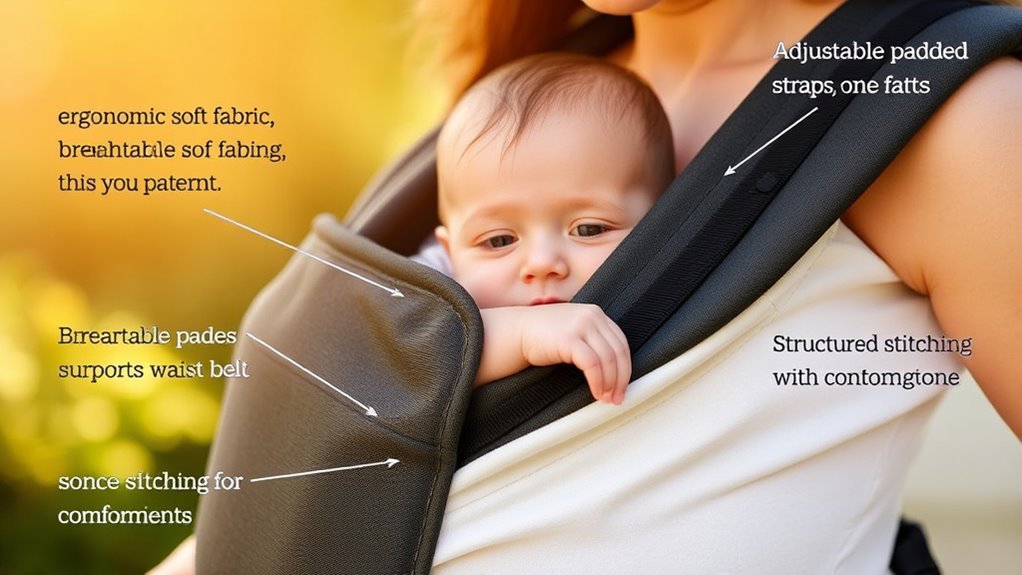

When choosing a babywearing carrier, look for ergonomic support that keeps your baby’s hips, spine, and neck correctly aligned for healthy development. Adjustable straps help customize the fit for both you and your growing little one, ensuring comfort and security. Make sure the carrier promotes proper posture to reduce strain and is versatile enough to adapt over time. Keep in mind that a well-designed carrier prioritizes safety and comfort—discover more features to take into account as you explore options.

Turn the school run and nap time into listening time
- Thousands of audiobooks, podcasts and originals
- Listen on your phone, tablet or Echo — also offline
- Cancel anytime
Key Takeaways
- Ergonomic support ensuring proper hip, spine, and neck positioning for both baby and wearer.
- Adjustable straps for a customizable fit that grows with your baby.
- Secure fastening features to maintain safety and prevent slipping during use.
- Proper fit and comfort design to reduce fatigue and enhance extended wear.
- Versatile, durable construction prioritizing safety, comfort, and adaptability for different body types.
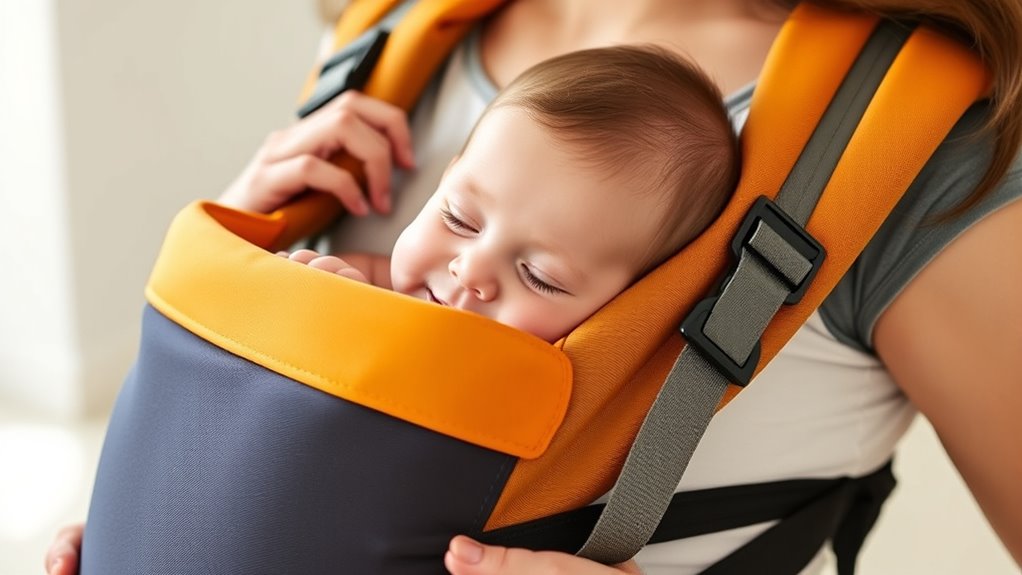
Babywearing carriers are a practical and convenient way to keep your baby close while freeing up your hands. When choosing a carrier, one of the most important features to consider is ergonomic support. Proper ergonomic support ensures that your baby’s hips, spine, and neck are positioned correctly, reducing the risk of discomfort or long-term issues. Look for carriers that promote a natural M-position for your baby’s hips, with their knees higher than their bottom. This not only supports healthy hip development but also makes your little one feel more comfortable and secure. Additionally, ergonomic support benefits you too, by evenly distributing your baby’s weight across your shoulders and hips, minimizing strain and making extended wear more comfortable. The overall design should prioritize self-discovery and growth, ensuring both safety and comfort for your child and peace of mind for you. Adjustable straps are another essential feature to seek out in a babywearing carrier. They allow you to customize the fit based on your body type and your baby’s size and weight. With adjustable straps, you can tighten or loosen the carrier easily, ensuring that your baby is snug and secure without feeling restricted. This flexibility is especially important as your baby grows, so you can continue using the same carrier over time without sacrificing comfort or safety. Plus, adjustable straps help you maintain proper posture, preventing back or shoulder pain that might come from a poorly fitted carrier. When shopping, test the straps to make sure they’re easy to adjust and stay securely in place once you’ve found the right fit. Comfort is key, and adjustable straps contribute greatly to that. They allow you to distribute your baby’s weight evenly, which is essential if you plan to wear your little one for extended periods. You’ll feel less fatigue and be able to wear your baby longer without discomfort. Ergonomic support and adjustable straps work hand-in-hand to create a carrier that’s both safe for your baby and comfortable for you. It’s worth investing in a carrier with these features because they give you versatility and peace of mind, knowing your baby is supported properly and you’re not strained.
Products Worth Considering

Owlet Dream Duo 3 Smart Baby Monitor System

Owlet Dream Duo 2 Smart Baby Monitor System with Camera and Sock

Owlet Dream Duo Smart Baby Monitor System – includes 3 months of Owlet360
As an affiliate, we earn on qualifying purchases.
Frequently Asked Questions
Are Smart Carriers Suitable for Newborns?
Yes, smart carriers can be suitable for newborns, but you should check market compatibility and safety features first. Look for models that support proper ergonomic positioning and have adjustable settings for a newborn’s size. Keep price considerations in mind, as advanced features may increase costs. Confirm the carrier is designed for your baby’s age and weight, and always follow manufacturer guidelines to keep your little one safe and comfortable.
How Do Smart Carriers Enhance Safety During Use?
Smart carriers act like a guardian angel, weaving safety into every step you take. With sensor integration and real-time monitoring, they keep a vigilant eye on your baby’s essential signs and position. If anything’s amiss, alerts flash like warning signals, so you can respond swiftly. This tech-tender touch transforms babywearing into a secure, confident experience, allowing you to focus on the joy of closeness without worry.
Can Smart Carriers Be Adjusted for Growing Babies?
Yes, smart carriers can be adjusted for growing babies thanks to sensor integration and ergonomic design. You can easily modify the carrier’s fit and support as your baby grows, ensuring comfort and safety. Sensor technology provides real-time feedback on fit and positioning, making adjustments simple. This adaptability helps maintain proper posture for your baby and keeps the carrier comfortable for you, even as your little one gets bigger.
What Materials Are Best for Smart Babywearing Carriers?
You should choose smart babywearing carriers made from breathable fabrics like cotton or mesh, which keep both you and your baby comfortable. An ergonomic design is essential for proper support and to prevent strain on your body. Look for materials that wick away moisture and allow air circulation, ensuring your little one stays cool and comfy. These features help you enjoy extended wear without discomfort, making your babywearing experience more enjoyable.
Do Smart Carriers Support Back and Hip Health?
Yes, smart carriers support back and hip health through ergonomic design and proper weight distribution. You’ll notice that they contour to your baby’s body, reducing strain on your back and hips. Smart features like adjustable straps and structured supports help evenly distribute weight, preventing discomfort during extended wear. By choosing a carrier with these ergonomic benefits, you protect your own health while keeping your baby comfortable and secure.
Conclusion
When choosing a babywearing carrier, remember to prioritize comfort, safety, and versatility—much like a trusty steed of yore. Don’t forget to check for adjustable straps, breathable fabric, and ergonomic design to guarantee both you and your little one stay happy and secure. As the old saying goes, “A good carrier is worth its weight in gold,” so take your time and pick one that truly fits your journey. Happy carrying!