Baby sign language offers surprising benefits beyond basic communication. It helps you understand your little one’s needs and feelings early, reducing frustration for both of you. It also strengthens your bond through shared activities and builds emotional security. Plus, it boosts cognitive, social, and language development, giving your child a head start. Many parents are amazed at how signing promotes confidence and connection. Keep exploring to discover even more ways this simple tool transforms your parenting experience.
Key Takeaways
- Boosts early communication skills, helping babies express needs and feelings before they speak.
- Strengthens parent-child bonds through shared signing activities and increased responsiveness.
- Enhances cognitive development by encouraging problem-solving and memory through learning signs.
- Promotes emotional security and trust, fostering a supportive environment for self-expression.
- Simplifies daily routines and caregiving, making interactions more predictable and engaging.
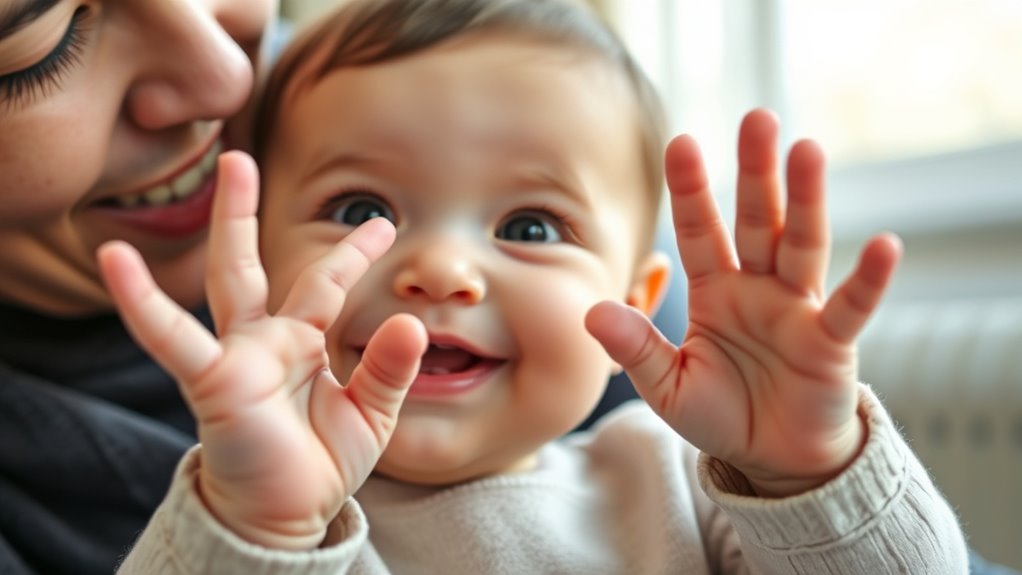
Learning baby sign language offers numerous benefits that can enhance communication between you and your little one. When you start using signs, you’re not just teaching your baby a new way to express themselves—you’re actively supporting their language development from an early age. Babies are naturally enthusiastic to communicate, but their verbal skills can take time to develop. Sign language bridges that gap, allowing them to share their needs, feelings, and observations before they can speak clearly. This early form of communication helps you understand your baby’s world better, reducing frustration on both sides. As they learn to express themselves with signs, you’ll notice their vocabulary expanding more quickly, and their ability to connect ideas and emotions becomes more refined. Over time, this boosts their overall language skills, making the passage to spoken language smoother and more confident. Additionally, engaging in sign language can stimulate early cognitive development by encouraging problem-solving and memory skills as your baby learns new signs.
Using baby sign language also plays an essential role in strengthening parent-child bonding. When you learn and practice signs together, it creates a unique shared experience that fosters trust and closeness. Your baby feels more understood and valued when they can communicate their thoughts and needs, which deepens your emotional connection. This interactive process encourages frequent eye contact, responsiveness, and pauses for your baby to sign or gesture, all of which nurture a sense of safety and attachment. It’s a wonderful way to show your child that you’re attentive and enthusiastic to listen, which in turn encourages them to explore and express themselves more freely. As you observe your baby’s reactions and learn their preferred signs, you build a stronger, more intuitive relationship that continues to grow as they develop language skills. Incorporating early communication methods like sign language can also support their overall cognitive development. Moreover, practicing mindfulness techniques during your signing sessions can help both of you stay present and focused, enhancing the learning experience. Additionally, mastering non-verbal communication can make daily caregiving routines smoother and more predictable for both you and your baby.
As an affiliate, we earn on qualifying purchases.
Frequently Asked Questions
Can Baby Sign Language Delay Speech Development?
You might wonder if baby sign language causes speech delay, but it actually supports your child’s language development. Using signs doesn’t delay speech; instead, it can enhance it by reducing frustration and encouraging communication. Research shows sign language helps with speech delay by giving your baby a way to express needs early on. So, incorporating signs can boost language skills without hindering natural speech development.
At What Age Should I Start Teaching Signs to My Baby?
Did you know that many babies start to show early sign milestones as early as 6 months? You should begin teaching signs for toddlers around this age, as it helps foster communication before they can speak. Focus on simple, everyday signs like “milk” or “more” and keep sessions short and fun. Starting early gives your baby a head start in expressing themselves and strengthens your bond.
Is Baby Sign Language Effective for Non-Verbal Children?
You might wonder if sign language myths are true, but it’s effective for non-verbal children. Sign language helps improve non-verbal communication, allowing your child to express needs and feelings before they develop speech. It reduces frustration and fosters confidence. Even if some believe it delays speech, research shows it supports language development. So, incorporating sign language can be a valuable tool for your child’s growth, regardless of their current verbal abilities.
What Signs Are Easiest for Babies to Learn First?
Oh, sure, because babies are born ready to master complex hand gestures, right? In reality, you’ll find that the easiest signs involve simple vocabulary and clear hand gestures, like “more,” “milk,” or “all done.” These signs are intuitive and mimic everyday actions, making them easier for your little one to learn. Keep it simple, repetitive, and patient—soon enough, they’ll be signing their needs before they even talk.
How Can I Encourage Consistent Signing at Home?
To encourage consistent signing at home, you should model consistency by signing daily routines and common words. Create routines that incorporate signing, like during mealtime or bedtime, so your baby sees regular practice. Repeating signs often helps your baby learn faster. Be patient and enthusiastic, showing your excitement when signing. Over time, these routines and consistent modeling will make signing a natural part of your daily interactions.
As an affiliate, we earn on qualifying purchases.
Conclusion
By learning baby sign language, you open better communication, foster stronger bonds, and boost your child’s confidence. You connect more deeply, understand more clearly, and support more effectively. You watch your little one grow, express, and explore with ease. Embrace baby sign language to nurture patience, encourage curiosity, and create a happier, more connected family. Because when you communicate early, you open doors to understanding, nurture trust, and build a foundation for lifelong learning.
baby sign language books for parents
As an affiliate, we earn on qualifying purchases.
As an affiliate, we earn on qualifying purchases.
baby sign language development toys
As an affiliate, we earn on qualifying purchases.
As an affiliate, we earn on qualifying purchases.