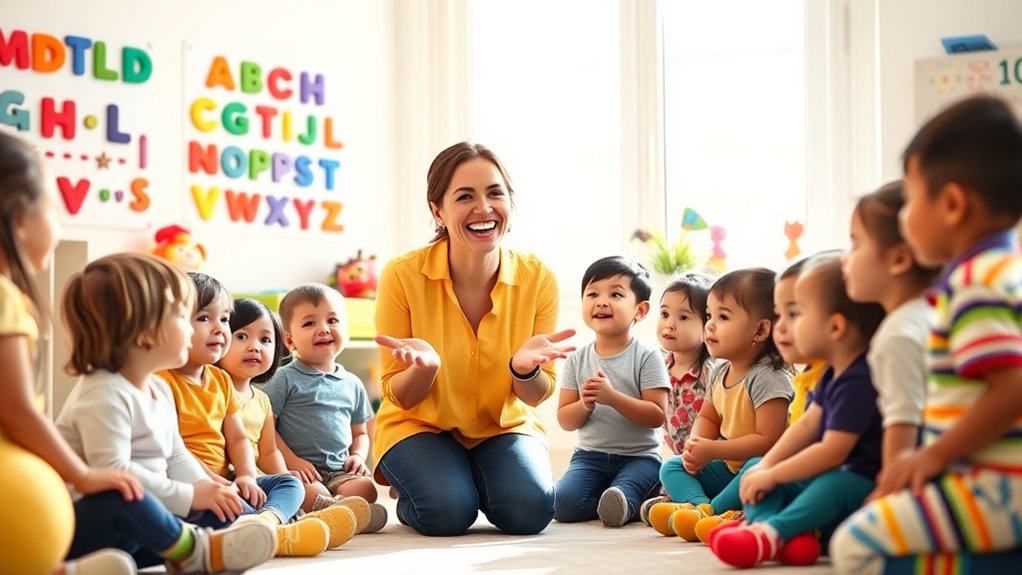

To communicate effectively with preschoolers, use visual aids like pictures, charts, and facial expressions to help them understand instructions and feelings. Establish clear routines with visual schedules to create predictability and safety. These tools boost their confidence, reduce frustration, and promote active participation. When you combine visuals with routines, your interactions become more meaningful and natural, helping build trust. Keep exploring, and you’ll uncover even more strategies to strengthen your connection with preschoolers.
Key Takeaways
- Use visual aids like pictures, charts, and symbols to enhance understanding and clarify instructions.
- Establish predictable routines with visual schedules to create a sense of safety and reduce confusion.
- Engage multiple senses during interactions to promote better comprehension and active participation.
- Consistently link visual cues to routines and expectations to build trust and independence.
- Foster positive relationships by maintaining clear, predictable communication that supports emotional security.
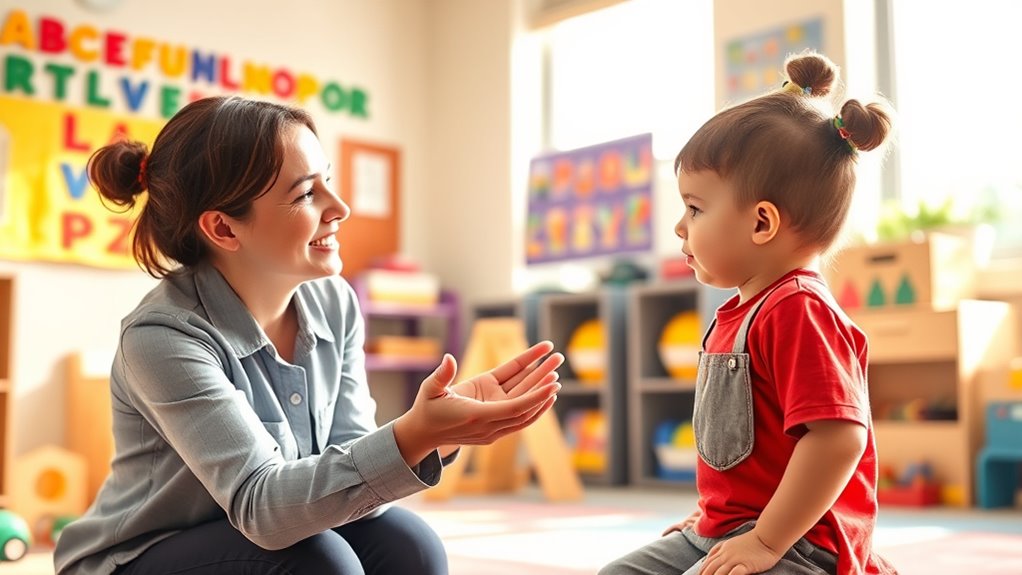
Have you ever wondered how to connect better with preschoolers? Building strong communication with young children isn’t just about talking — it’s about engaging their senses and creating a predictable environment where they feel safe and understood. Two effective strategies are using visual aids and establishing routines. These tools help bridge the gap between your words and their understanding, making interactions smoother and more meaningful.
Using visual aids is a game-changer when communicating with preschoolers. Kids at this age are highly visual learners; they absorb information better when they see it. Incorporate pictures, charts, or objects to illustrate your points. For example, if you’re explaining the steps of washing hands, show a picture sequence instead of just verbal instructions. This not only clarifies what you’re saying but also keeps their attention focused. Visual aids can be anything from flashcards and storyboards to symbols and facial expressions. They help children grasp concepts more quickly and reduce misunderstandings. When you use visual cues consistently, children start to associate images with actions or feelings, which enhances their comprehension and response. Additionally, choosing the right type of visual aid can significantly impact how effectively children learn and retain information.
Establishing routines is another crucial way to improve communication. Preschoolers thrive on predictability because it makes their world feel safe and manageable. When routines are clear and consistent, children know what to expect and how to behave, which minimizes confusion and frustration. Communicate these routines simply and clearly, using visual aids if necessary, so children can anticipate daily activities. For instance, a visual schedule showing pictures of brushing teeth, snack time, or storytime helps children understand the sequence of their day. When routines become habitual, children start to internalize expectations, making transitions easier and reducing behavioral issues. It also encourages independence because children learn what they’re supposed to do without constant direction.
Combining visual aids with routines creates a powerful framework for effective communication. When children see visual cues linked to daily activities, they feel more confident and secure. It’s easier for them to follow instructions, participate actively, and express themselves. As you reinforce routines with visuals, you’re not only teaching them what to do but also how to communicate their needs and feelings more clearly. These strategies foster a positive environment where children are encouraged to explore, ask questions, and develop language skills at their own pace. Moreover, incorporating elements of visual learning can further enhance understanding and retention.
In short, connecting with preschoolers becomes more straightforward when you utilize visual aids and establish consistent routines. These approaches support their learning style, reduce confusion, and promote a sense of stability and trust. By integrating these tools into your interactions, you’ll find communication flowing more naturally, making your relationship with preschoolers more rewarding and effective.
Frequently Asked Questions
How Can I Interpret My Preschooler’s Non-Verbal Cues?
You can interpret your preschooler’s non-verbal cues by paying close attention to their body language and facial expressions. Notice how they hold their body, whether they’re tense, relaxed, or fidgeting, and observe their facial expressions for signs of happiness, frustration, or fear. These cues reveal their feelings and needs. Respond thoughtfully, offering comfort or guidance based on what their body language and facial expressions communicate.
What Are Common Mistakes to Avoid When Talking to Preschoolers?
Avoid using complex vocabulary that might confuse your preschooler, and refrain from giving unsolicited advice, which can feel overwhelming. Instead, speak simply and listen actively, making your child feel heard and respected. Don’t interrupt or dismiss their feelings, as this hampers effective communication. Instead, encourage open dialogue, ask age-appropriate questions, and be patient, creating a safe space where they feel comfortable sharing their thoughts and emotions.
How Do I Handle Temper Tantrums Effectively?
When your preschooler throws a tantrum, stay calm and offer reassurance to help them feel safe. Use a gentle, firm tone to set clear boundaries, letting them know what’s acceptable. Avoid giving in to the tantrum, as it can reinforce negative behavior. Instead, distract them with a favorite toy or activity, and give them time to settle down, showing them that you’re there to support and guide them through their emotions.
What Topics Are Appropriate for Preschooler Conversations?
You should focus on simple, relatable topics like favorite animals, family, or daily activities. Use storytelling tips to make conversations engaging, and incorporate emotional vocabulary to help them understand feelings. Ask open-ended questions to encourage expression, and listen attentively. Keep your language clear and positive, ensuring they feel safe sharing. This approach builds trust and helps develop their language skills while making conversations enjoyable.
How Can I Encourage My Child’s Language Development?
You can encourage your child’s language development by engaging in storytelling techniques that captivate their imagination and promote active participation. Use simple, clear language and expand their vocabulary by introducing new words during daily activities. Ask open-ended questions to stimulate conversation and encourage them to share their thoughts. Reading together regularly also boosts language skills, making learning fun and interactive while helping your child develop essential communication abilities.
Conclusion
Now that you know how to communicate effectively with preschoolers, you’re better equipped to build trust and understanding. Remember, your words shape their world and help them grow confident. Are you ready to listen more than you speak and truly connect? By showing patience, kindness, and clarity, you create a safe space for their curiosity to flourish. So, why not start today and make every interaction meaningful? Your little one will thank you.