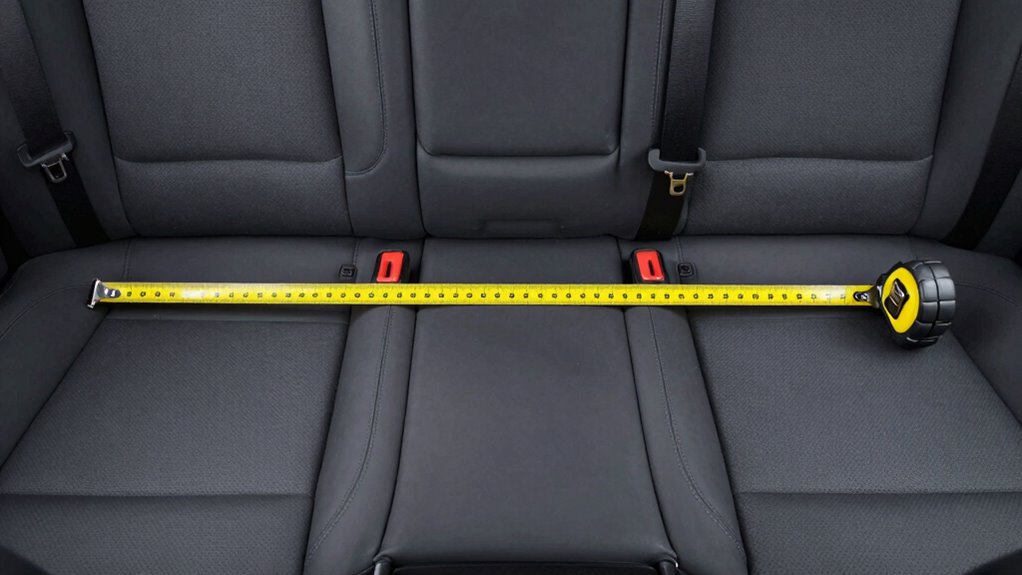

To measure your back seat for three car seats, start by using a tape measure to find the width from door to door, including space for seat belts and latch systems. Check the distance between seat cushions to identify any interference. Remember, not all cars can seat three car seats side by side comfortably. If you want to make certain of a perfect fit and safety, keep exploring these tips for accurate measurement and installation.
Key Takeaways
- Measure the width from door to door, including space for seat belts and latch systems, to determine available back seat space.
- Measure the width of each car seat intended for installation, noting narrower models for better fit.
- Confirm that three car seats can fit side by side without overcrowding by comparing seat widths to back seat space.
- Test fit the seats in your vehicle to check for proper alignment, stability, and ease of access.
- Follow safety guidelines by ensuring all seats are securely installed with minimal movement, prioritizing safety over space.
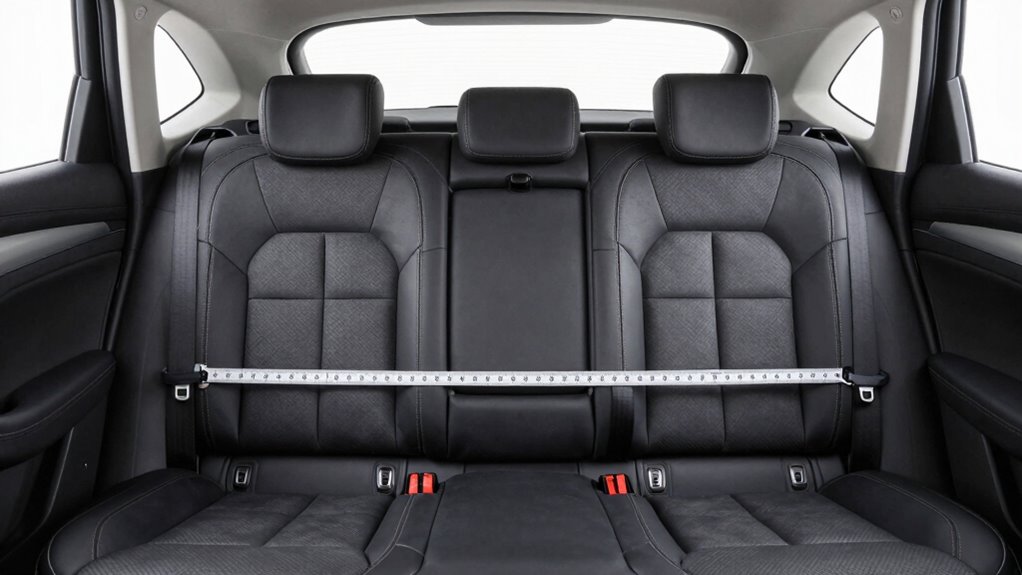
Traveling with multiple children can be challenging, especially when trying to fit three car seats across a standard vehicle’s back seat. To make certain everyone stays safe and comfortable, you need to measure your back seat carefully first. Not all vehicles are designed to accommodate three car seats side by side, so understanding your space is key. Start by measuring the width of your back seat from door to door. Use a tape measure and note the total distance. Then, measure the width of each car seat you plan to install. Keep in mind that car seats vary in size, and some models are narrower, which can help when fitting three across.
Measure your vehicle’s back seat and car seats carefully to ensure a safe, comfortable fit for three children.
When measuring, don’t forget to include the space needed for seat belts and latch systems. It’s also wise to measure the space between the seat cushions—sometimes, the width of the seat itself isn’t enough, and you need to account for armrests or other features that might interfere with installation. Once you have your measurements, compare them to the width of your car seats to make certain they can all fit comfortably side by side. Remember, it’s not just about fitting the seats; you also need to contemplate how easily they can be installed and accessed.
Safety regulations are vital here. They dictate how car seats should be installed to keep your children safe. Many states and safety organizations recommend testing the fit of your car seats before a trip, making certain they do not wiggle or shift when installed correctly. Proper installation tips include reading the manufacturer’s instructions carefully and double-checking that the seat is securely anchored using either the seat belt or latch system. When installing, tighten all straps and make certain the seat doesn’t move more than an inch side to side or front to back. If the seats are too bulky or don’t fit snugly, consider opting for slimmer models or alternative configurations, like a bench seat with a different layout. Additionally, familiarizing yourself with car seat safety guidelines can provide further assurance of correct installation.
Finally, after measuring and installing, do a manual test by giving each seat a firm push to confirm stability. If any seat shifts excessively, re-install or switch to a different model. Remember, no matter how tight the fit, safety always comes first. Making certain your car seats are installed following safety regulations and proper installation tips helps protect your children and makes traveling more manageable. With careful planning and precise measurements, you can optimize your vehicle space and keep everyone safe on the road.
Frequently Asked Questions
Can I Install a Three-Across Car Seat in Any Vehicle?
You can’t install a three-across car seat in any vehicle. Your vehicle’s size matters—compact cars may not have enough space, and larger SUVs or vans usually do. Also, check seat belt compatibility; some vehicles have seat belts or LATCH anchors that aren’t suitable for three car seats side-by-side. Always measure your back seat and verify the car seat’s width to confirm a safe, proper fit.
Are There Specific Car Seat Brands That Fit Better Together?
Yes, some compatible brands work better together, especially those with adjustable options. When choosing car seats, look for brands known for their compatibility, like Britax, Graco, and Diono, which often have similar latch systems and sizes. Adjustable features help guarantee a snug fit in tight spaces. Always check manufacturer guidelines and test the seats together in your vehicle to confirm they fit comfortably side-by-side.
How Do I Ensure the Seat Belts Are Properly Secured?
To guarantee your seat belts are properly secured, start by adjusting the seat belt tension so it fits snugly across your child’s lap and shoulder. Make sure the buckle is positioned flat and securely against the seat, not twisted or pinched. Double-check that the belt lies flat without slack, and always confirm that the latch clicks into place. Proper buckle positioning and tension keep your child safe and secure in the seat.
What Is the Maximum Weight for a Three-Across Setup?
The maximum weight for a three-across setup varies depending on your vehicle’s safety regulations and the car seat models. Generally, most three-across arrangements support a combined weight of around 100-120 pounds, but always check the specific weight limit listed by the manufacturer. To guarantee safety, follow your vehicle’s safety regulations and never exceed the weight limit, as overloading can compromise seat belt effectiveness and overall safety.
Do Side Airbags Affect the Installation of Three Car Seats?
Side airbags can affect your installation safety because they may deploy during a crash, risking injury to your child. When installing three car seats, you should check if your vehicle’s side airbags are active and consider disabling them if recommended by the car seat manufacturer. Always follow safety guidelines, make certain proper seat placement, and consult your vehicle’s manual to prevent any issues with side airbags during installation.
Conclusion
Now that you know how to measure your back seat properly, you’ll be ready for a smooth ride—no need to be stuck in a jam like in the days of horse-drawn carriages. Remember, fitting three across isn’t just about size; it’s about comfort and safety for your little passengers. So, grab your tape measure, channel your inner Bob the Builder, and guarantee your car seats fit perfectly. Your family’s safety depends on it—trust me, you don’t want to end up in a pickle!