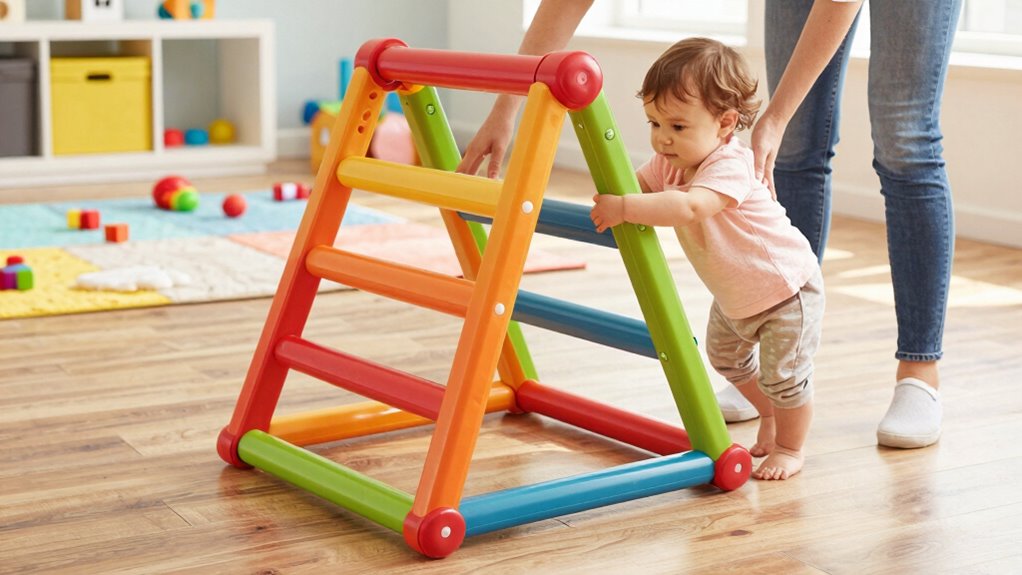
Make sure your child is between 6 months and 3 years old before introducing a Pikler triangle, and always supervise their play to prevent accidents. Set it up on a flat, stable surface and double-check all screws and joints regularly. Avoid placing the structure too high or on uneven ground, and use safety mats for cushioning falls. Proper setup and age-appropriate use are key—learn more about common mistakes and safety tips to keep play safe and fun.
Key Takeaways
- Suitable for children aged 6 months to 3 years, with supervision tailored to developmental levels.
- Place on flat, stable surfaces and ensure all screws are tightly secured for safety.
- Use soft mats underneath to cushion falls and prevent injuries during climbing.
- Avoid positioning the triangle too high or on uneven, unstable surfaces to reduce fall risk.
- Regularly inspect for damage, loose parts, and maintain proper setup to ensure ongoing safety.
Pikler triangles are versatile climbing toys that can promote your child’s physical development and confidence, but using them correctly is essential for safety and effectiveness. When you introduce a Pikler triangle into your child’s play area, you’re providing a wonderful opportunity to support their motor skill development. Climbing, balancing, and hanging help strengthen muscles, improve coordination, and enhance spatial awareness. However, to truly benefit from these activities, you need to ensure proper setup and use. Safety considerations should always be your top priority to prevent accidents and injuries.
First, pay close attention to the age guidelines recommended by the manufacturer. Pikler triangles are generally suitable for children around 6 months to 3 years old, but every child’s development is different. For younger children or those just beginning to explore, the focus should be on supervised, gentle use. As your child grows and gains confidence, they can handle more advanced climbing, but always monitor their behavior and physical ability. Never leave your child unattended when they’re using the triangle, especially during the early stages of exploration.
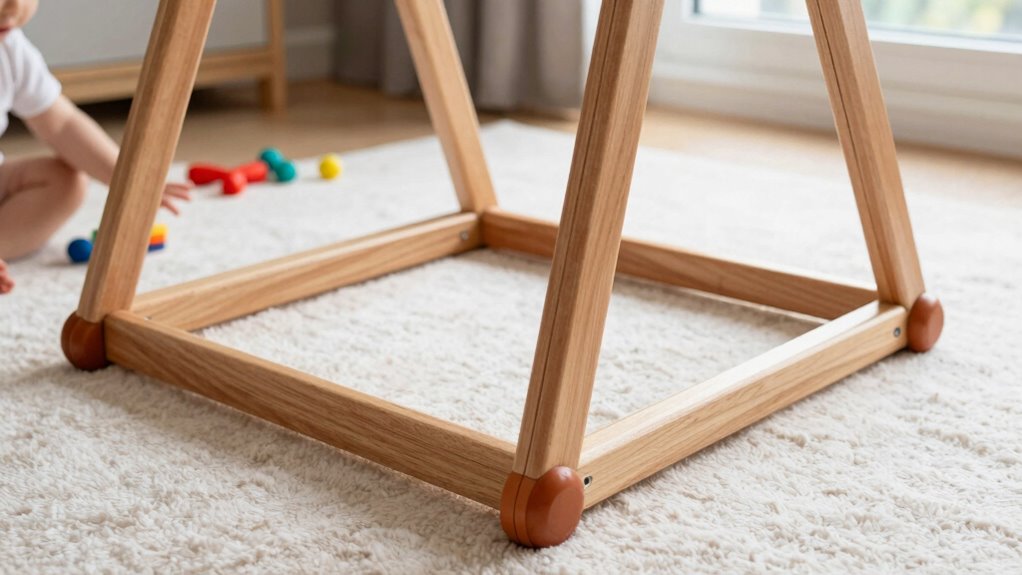
When setting up the triangle, make sure it’s on a flat, stable surface. Avoid placing it on uneven flooring or areas where it could tip over easily. The triangle should be securely assembled, with all screws and joints tightened according to the manufacturer’s instructions. Loose parts or unstable setups pose significant safety risks. It’s also crucial to place a soft, cushioned mat underneath or nearby to cushion potential falls. This simple safety measure can make a big difference in preventing injuries during play. Additionally, regularly checking the stability of the structure can help prevent accidents caused by shifting or loosening parts.
Another common setup mistake is positioning the triangle too high or in a way that encourages risky climbing behaviors. Keep the triangle at a height that allows your child to climb comfortably without overextending or risking a fall from a dangerous height. Encourage your child to use both hands and feet when climbing to develop their motor skills properly, but don’t push them beyond their comfort zone. Observe their movements and intervene if they start to climb in an unsafe manner or attempt tasks that are too difficult.
Finally, regularly inspect the Pikler triangle for wear and tear. Over time, wood can splinter or joints may loosen. Address any damage immediately to ensure the structure remains safe. When used correctly, with appropriate setup and safety precautions, a Pikler triangle can become a valuable tool for your child’s motor skill development while keeping safety at the forefront. Proper maintenance and awareness of safe climbing practices can further enhance your child’s play experience.
Frequently Asked Questions
Can Pikler Triangles Be Used Outdoors Safely?
Yes, you can use Pikler triangles outdoors, but you need to prioritize outdoor safety. Make sure to choose a weather-resistant material or treat the wood to withstand rain and sun exposure. Always check the weather considerations, like avoiding use during rain, snow, or extreme heat, which can make the surface slippery or damage the wood. Regularly inspect for wear and tear to keep your child safe while they play outside.
What Are the Signs of a Damaged Pikler Triangle?
A stitch in time saves nine, so regularly check your Pikler triangle for signs of damage. Look for cracks, splinters, or wobbling, which indicate compromised structural integrity. Rust or missing bolts also signal it’s time for a safety inspection. If any of these signs appear, don’t use the triangle until it’s repaired or replaced. Prioritize safety first to keep playtime both fun and secure for your child.
How Do I Store a Pikler Triangle When Not in Use?
When not in use, you should store your Pikler triangle using effective storage tips, like keeping it in a dry, cool place away from direct sunlight. If your model has folding options, make sure you fold it carefully and securely to save space. You can also hang it on a wall or store it in a sturdy bin. Always check for any damage before setting it up again.
Are Pikler Triangles Suitable for Children With Special Needs?
Yes, Pikler triangles can be suitable for children with special needs, especially when used for adaptive play. They support developmental considerations by encouraging motor skills, balance, and confidence at a gentle pace. You should customize the usage based on your child’s abilities and needs, ensuring supervision and safety. Always consult with a pediatric therapist to tailor the experience and maximize benefits for your child’s unique development.
How Long Does It Typically Take to Assemble a Pikler Triangle?
It usually takes you around an hour to assemble a Pikler triangle, but the exact assembly time can vary. You’ll need basic tools like a screwdriver and possibly a wrench, depending on the model. The process is straightforward, but if you’re meticulous about tightening every screw and checking stability, it might take a little longer. Prepare yourself for a satisfying build that results in a safe, sturdy play structure for your child.
Conclusion
By following age guidelines and avoiding setup mistakes, you create a safe, sturdy play space that sparks your child’s independence. Think of their first climb as a delicate dance—balanced and confident—rather than a shaky step in the dark. When you set up your Pikler triangle thoughtfully, you’re building more than a toy; you’re laying the foundation for fearless exploration. Watch your little one grow, confident and free, as they turn simple wood into endless adventures.