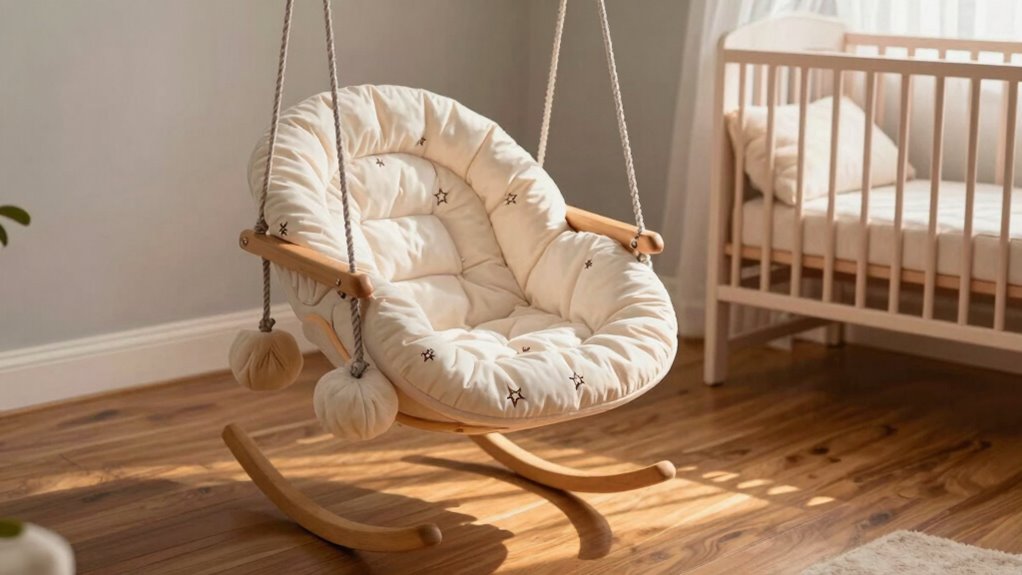

You can safely use baby swings and rockers to soothe your little one, typically for about 30 minutes at a time, and always follow safety guidelines. Use them as a complement to other activities like tummy time and interactive play, and stop when your baby shows signs of discomfort or begins to push up, roll over, or sit independently. Keep in mind that these devices are temporary aids, and there’s more to learn about their proper use and shift strategies.
Key Takeaways
- Use swings and rockers for about 30 minutes per session, ensuring the baby remains comfortable and safe.
- Employ these devices as a supplement to active play, not a replacement for interaction or tummy time.
- Transition away from swings when the baby begins to push up, roll over, or sit independently.
- Always supervise during use, keep the harness secure, and place the device on a flat, stable surface.
- Limit reliance over time and encourage natural movement, focusing on milestones to determine when to stop.
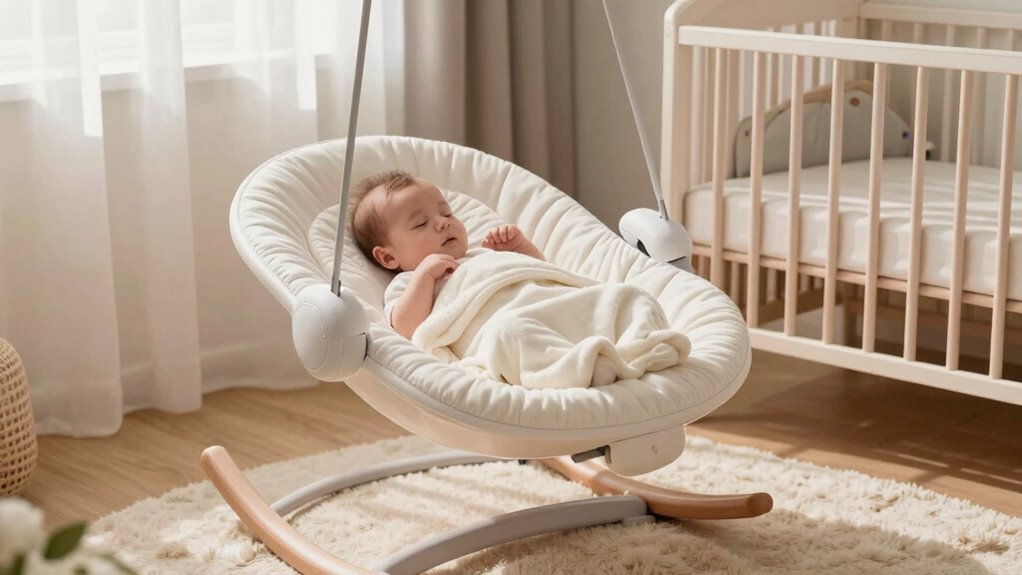
Are you looking for a way to soothe your baby and give yourself a break? Baby swings and rockers can be incredibly helpful tools for calming your little one, but it’s essential to use them correctly. Before you start, familiarize yourself with safety guidelines to ensure your baby’s well-being. Always place your baby on their back in the seat, and never leave them unattended while in a swing or rocker. Keep an eye on the harness to prevent slipping, and make sure the device is placed on a flat, stable surface. Regularly check for any signs of wear or damage, and follow the manufacturer’s instructions carefully. These precautions are vital not just for safety, but also to maximize the developmental benefits of using swings and rockers.
When used appropriately, baby swings and rockers can offer more than just a soothing motion. They can support your baby’s development by encouraging visual tracking, strengthening neck muscles, and fostering a sense of security. The gentle rocking motions mimic the comfort of being held, which can help your baby develop trust and emotional stability. Some swings come with different settings and speeds, allowing you to customize the experience as your baby grows. Keep in mind that using swings and rockers as part of a varied routine, including tummy time and interactive play, promotes overall development. They shouldn’t replace direct interaction but rather serve as a supplement to your bonding time. Additionally, understanding developmental milestones**** can help you determine the appropriate time to phase out these devices.
Knowing when to stop using these devices is equally important. Most experts recommend limiting swing and rocker time to about 30 minutes at a stretch, as prolonged use can interfere with natural movement and development. Once your baby begins to push up, roll over, or sit independently, it’s time to phase out the swing or rocker. These milestones indicate that your baby is developing the strength and coordination needed for free movement, which is essential for their growth. Additionally, if your baby shows signs of discomfort, fussiness, or seems overly dependent on the swing, it’s a sign to cut back. Remember, your baby’s safety and physical development come first. Transition to more active play and supervised tummy time will better support their growth and help them reach new milestones.

Newton Baby Crib Mattress and Toddler Bed - Ultra-Breathable Proven to Reduce Suffocation Risk, Washable Core & Cover, All-Stages, Infant to Toddler, Deluxe 5.5" Thick - White
BREATHE-THRU SAFETY: The only crib mattress with a Wovenaire breathe-thru core. Our patented technology ensures optimal breathability, reducing...
As an affiliate, we earn on qualifying purchases.
Frequently Asked Questions
Are Baby Swings Safe for Overnight Sleeping?
You shouldn’t let your baby sleep overnight in a swing because it poses safety risks. Sleep safety experts recommend placing your baby on a firm, flat surface like a crib for safe, uninterrupted sleep. Using swings long-term can impact your baby’s development, affecting their sleep patterns and muscle strength. Always follow safety guidelines, and use swings only for supervised naps or playtime, not for overnight sleep.
How Long Can a Baby Stay in a Swing Daily?
A stitch in time saves nine. You should limit your baby’s daily usage of a swing to about 30 minutes to an hour, depending on their age and tolerance. Prolonged duration limits can lead to dependency or affect their development. Always observe your baby for signs of discomfort or overstimulation, and avoid keeping them in the swing longer than recommended. Balance swing time with tummy time and other activities for healthy growth.
Can Swings Delay a Baby’s Developmental Milestones?
Using swings excessively can potentially delay your baby’s developmental milestones and motor skills, but it’s unlikely if used in moderation. Swings shouldn’t replace tummy time and active play, which are essential for growth. Keep a balance, allowing your baby to explore and develop naturally. If you notice developmental delays, consult your pediatrician. Properly used, swings can be a helpful, soothing tool without hindering your baby’s development.
What Are Signs My Baby Dislikes the Swing?
If your baby’s tiny face tightens or fussiness takes over, it’s a clear sign they dislike the swing. Watch for discomfort signals like squirming, grimacing, or turning away—these are your baby’s way of saying “enough.” You’ll notice swing aversion when they resist being placed in it or cry as soon as it starts moving. Trust your instincts; if your little one isn’t happy, it’s time to switch to another soothing method.
Are There Specific Brands Recommended for Safety?
For swing safety, choose reputable brands like Graco, Fisher-Price, and Ingenuity, known for rigorous safety standards. These brands often feature sturdy frames, secure harnesses, and reliable brakes, giving you peace of mind. Always check for certifications like JPMA or ASTM, and read reviews to make certain of safety and durability. Trusting well-known brands helps protect your baby while enjoying the benefits of a good swing.

Dream On Me Karley Bassinet, Award Winner Lightweight Travel Baby Bassinet, Foldable Bedside Sleeper, Adjustable Double Canopy, Spacious Design, Soft Fabric, Storage Basket – Blue and Grey
Award-Winning Design: Proud winner of the 2021 National Parenting Product Award, Mom’s Choice Award, and LittleOneMag Best Baby...
As an affiliate, we earn on qualifying purchases.
Conclusion
In the end, baby swings and rockers can be helpful tools for soothing your little one, but they’re not a long-term solution. Trust your instincts and watch your baby’s cues to know when it’s time to stop using them. Some experts say that limiting swing time helps develop your baby’s strength and independence. So, enjoy the calming moments, but remember—balance is key to your baby’s healthy growth and happiness.

Ezebaby Baby Bassinet Bedside Sleeper: 3-in-1 Rocking Bassinet for Baby - Breathable Full-Mesh Crib with Mattress | 6 Height Adjustable | Portable Crib with Lockable Wheels for Newborns
Versatile 3-in-1 Baby Bassinet - Engineered for versatility, this portable bassinet serves as: (1) a secure attached bedside...
As an affiliate, we earn on qualifying purchases.
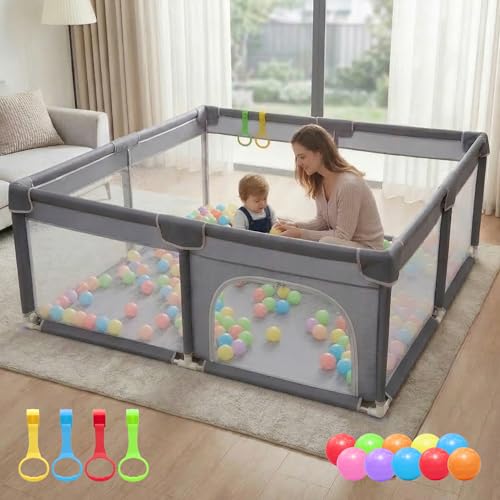
Orian Baby Playpen 50x50 Large Play Yard for Babies and Toddlers, Indoor Outdoor Playpen, Sturdy Baby Play Pen with Mesh Sides, Safe Baby Fence Play Area, Assembly Required/Not Portable, w Storage Bag
[LARGE 50x50 PLAYPEN FOR BABIES AND TODDLERS] - This 50x50 baby playpen creates a spacious play yard for...
As an affiliate, we earn on qualifying purchases.