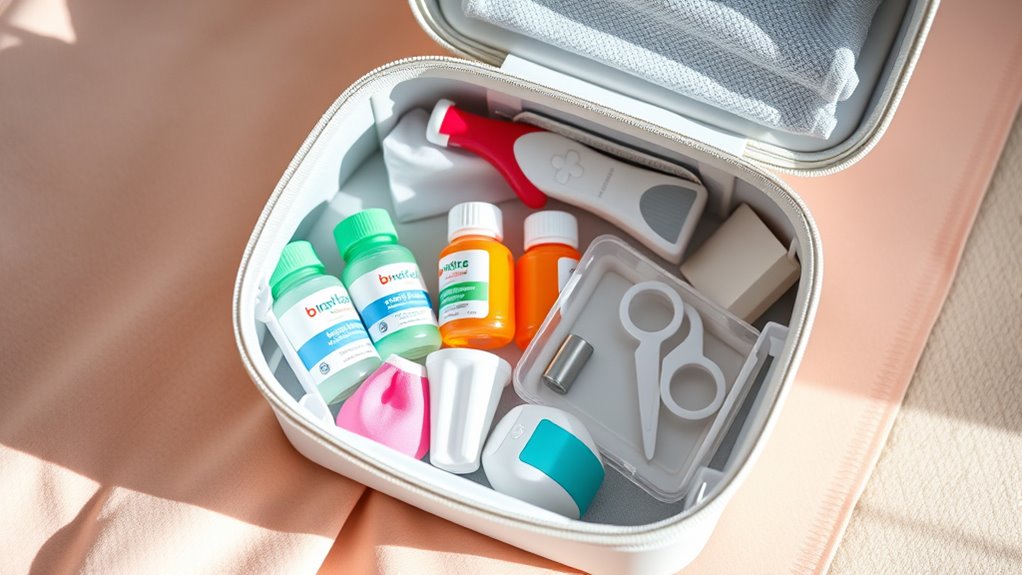

Choosing the right baby first aid kit requires balancing portability with medical completeness, especially when dealing with infants who have delicate skin and unpredictable needs. The KeepGoing Travel First Aid Kit for Kids stands out as the best overall choice due to its TSA-compliant design and comprehensive 130-piece inventory that covers minor cuts, burns, and fever management. For those prioritizing brand reliability and basic wound care, the BAND-AID Brand Travel Ready Portable First Aid Kit offers trusted adhesive quality in a compact format. The primary tradeoff you face is between kit size and convenience; larger home kits offer better stock for emergencies, while travel kits prioritize space-saving. Read on to see how these six options compare in terms of contents, durability, and specific suitability for infants versus older children.

Turn the school run and nap time into listening time
- Thousands of audiobooks, podcasts and originals
- Listen on your phone, tablet or Echo — also offline
- Cancel anytime
Complete the kit


Key Takeaways
- Travel-specific kits like the KeepGoing 130-Piece are superior for trips because they exclude prohibited items like certain liquids or sharp tools, whereas generic home kits often fail airport security checks.
- The Life Safety Pro Mini is the only kit in this lineup specifically engineered for infant skin sensitivity, featuring hypoallergenic materials that standard kids’ kits lack.
- Higher piece counts, such as the KeepGoing 270-Piece Home Kit, do not always mean better medical utility; many items are redundant duplicates rather than diverse treatment options.
- Brand-name kits like BAND-AID offer superior adhesive quality, which is critical for active toddlers who pull off standard generic bandages within minutes.
- Most ‘kids’ kits are actually designed for ages 3 and up; parents of newborns must verify that medication dosages and thermometer types are age-appropriate before purchasing.
| Keep Going Travel First Aid Kit for Kids, 130 Pieces |  | Best Overall | Piece Count: 130 | Dimensions: 7 x 5 x 2 inches | Bandage Material: Latex-free | VIEW ON AMAZON | See Our Full Breakdown |
| The Life Safety Pro Mini First Aid Kit for Babies, Toddlers, and Kids |  | Best for Safety Professionals | Dimensions: 7 x 4.75 inches | Material: Durable, latex-free materials | Key Contents: Sterile saline, tweezers, CPR shield | VIEW ON AMAZON | See Our Full Breakdown |
| BAND-AID Brand Travel Ready Portable First Aid Kit, 80 Pieces |  | Best Brand Familiarity | Piece Count: 80 | Key Brands: BAND-AID, NEOSPORIN, TYLENOL | Adhesive Material: Latex-free | VIEW ON AMAZON | See Our Full Breakdown |
| PreparaKit 75-Piece Travel First Aid Kit for Kids |  | Best for Toddler Compliance | Piece Count: 75 | Dimensions: 5.5 x 3.75 inches | Design Feature: Quick-access pockets | VIEW ON AMAZON | See Our Full Breakdown |
| KeepGoing Travel First Aid Kit for Kids, 130-Piece TSA-Approved |  | Best for Air Travel | Piece Count: 130 | Compliance: TSA-approved | Case Feature: Stain- and water-resistant | VIEW ON AMAZON | See Our Full Breakdown |
| KeepGoing Large Home First Aid Kit for Kids, 270 Pieces |  | Best for Families Wanting One Central Station | Piece Count: 270 | Case Material: Stain- and water-resistant | Included Guide: Yes, printed first aid guide | VIEW ON AMAZON | See Our Full Breakdown |
| baby first aid kit | Piece Count | Dimensions |
|---|---|---|
| Keep Going Travel First Aid Ki | 130 | 7 x 5 x 2 inches |
| The Life Safety Pro Mini First | — | 7 x 4.75 inches |
| BAND-AID Brand Travel Ready Po | 80 | — |
| PreparaKit 75-Piece Travel Fir | 75 | 5.5 x 3.75 inches |
| KeepGoing Travel First Aid Kit | 130 | — |
| KeepGoing Large Home First Aid | 270 | — |
More Details on Our Top Picks
Keep Going Travel First Aid Kit for Kids, 130 Pieces
This kit stands out as the most balanced option for most families. It offers a higher piece count than the PreparaKit without becoming too bulky to fit in a diaper bag. The inclusion of HSA and FSA eligibility is a practical advantage for budget-conscious parents who want to maximize their health spending accounts. Unlike the BAND-AID Brand kit, which focuses heavily on branded consumables, this option provides a broader range of generic essentials, including specific burn relief items that are often overlooked. However, the tradeoff is density; with 130 pieces in a 7 x 5 x 2 inch case, the quantity of each specific supply is limited. You will likely need to restock frequently if you have multiple children or active toddlers who scrape knees regularly.
Pros:- HSA and FSA eligible for easier payment
- High piece count for a compact footprint
- Includes specific burn relief supplies
- Stain-resistant case withstands diaper bag chaos
Cons:- Limited quantity of each individual supply type
- Generic branding may lack specific brand familiarity
Best for: Parents seeking a versatile, tax-advantaged kit for travel and daily use
Not ideal for: Large families who consume supplies quickly and need bulk quantities
- Piece Count:130
- Dimensions:7 x 5 x 2 inches
- Bandage Material:Latex-free
- Case Material:Stain- and water-resistant
- Inclusions:First aid guide
- Eligibility:HSA- and FSA-eligible
Our verdict“The best all-around choice for parents who want maximum utility within a small bag.”
The Life Safety Pro Mini First Aid Kit for Babies, Toddlers, and Kids
Designed by a paramedic and parent, this kit prioritizes clinical utility over sheer quantity. It includes items often missing from consumer kits, such as sterile saline, stainless steel tweezers, and a CPR shield. Compared to the KeepGoing Travel Kit, which focuses on bandages, this option prepares you for more complex minor incidents like splinters or eye irritants. The compact 7 x 4.75 inch size makes it ideal for a stroller cupholder or small purse. However, the tradeoff is capacity; it holds fewer bandages than the PreparaKit, meaning you must supplement it with extra adhesive strips if you anticipate multiple minor scrapes. It is a serious tool for parents who want professional-grade preparedness without carrying a full-size case.
Pros:- Includes CPR shield and sterile saline
- Stainless steel tweezers for splinters
- Designed by a firefighter/paramedic
- Ultra-compact for strollers and purses
Cons:- Small volume limits bandage supply
- Lacks pain relief medications found in other kits
Best for: Parents who want paramedic-designed tools like tweezers and saline for thorough minor care
Not ideal for: Buyers who primarily need large quantities of standard bandages
- Dimensions:7 x 4.75 inches
- Material:Durable, latex-free materials
- Key Contents:Sterile saline, tweezers, CPR shield
- Adhesive Type:Various-sized bandages
- Target Audience:Babies, toddlers, children
- Design Origin:Firefighter/Paramedic
Our verdict“A professional-grade mini-kit for parents who value specialized tools over bulk consumables.”
BAND-AID Brand Travel Ready Portable First Aid Kit, 80 Pieces
This kit leverages brand trust to provide peace of mind. It contains recognizable products from BAND-AID, NEOSPORIN, and TYLENOL, which can be comforting for parents who prefer specific formulations for their children. In contrast to the PreparaKit, which focuses on wound care mechanics, this option includes pain relief caplets, addressing discomfort as well as injury. The case is durable and refillable, allowing you to customize contents as they run out. The drawback is the piece count; with only 80 items, you have fewer bandages than the KeepGoing options. Additionally, the inclusion of medication means you must check expiration dates regularly, a maintenance step not required for the purely topical kits.
Pros:- Includes NEOSPORIN and TYLENOL caplets
- Refillable case for custom restocking
- Highly recognizable brand names
- Compact and portable for car or home
Cons:- Lower piece count than competitors
- Medications require expiration date monitoring
Best for: Parents who prefer trusted name-brand medications and wound care products
Not ideal for: Those who want a medication-free kit to avoid expiration date tracking
- Piece Count:80
- Key Brands:BAND-AID, NEOSPORIN, TYLENOL
- Adhesive Material:Latex-free
- Case Type:Compact, portable, refillable
- Primary Use:Minor wound care and pain relief
- Contents:Antibiotic cream, gauze, caplets
Our verdict“Ideal for parents who prioritize trusted brand names and basic pain relief in their kit.”
PreparaKit 75-Piece Travel First Aid Kit for Kids
This kit is engineered specifically for cooperation during care. The inclusion of soothing stickers and quick-access pockets helps parents manage the emotional aspect of treating a crying toddler. At just 5.5 x 3.75 inches, it is significantly smaller than the Life Safety Pro kit, making it the easiest to slip into a small diaper bag pocket. While it has fewer pieces than the KeepGoing 130-piece kit, the organization is superior for quick retrieval during a panic moment. The tradeoff is a lack of advanced tools; it does not include tweezers or saline like the Life Safety Pro. It is strictly a basic wound care kit, perfect for quick scrapes but not for complex minor injuries requiring specialized tools.
Pros:- Includes soothing stickers for kids
- Quick-access pocket design
- Ultra-compact 5.5 x 3.75 inch size
- Dedicated emergency medication pocket
Cons:- Lacks specialized tools like tweezers
- Lowest piece count in the lineup
Best for: Parents of toddlers who need quick access and comfort items like stickers
Not ideal for: Families needing tools for splinters or eye irrigation
- Piece Count:75
- Dimensions:5.5 x 3.75 inches
- Design Feature:Quick-access pockets
- Child Comfort:Includes kids stickers
- Compliance:TSA carry-on compliant
- Material:Latex-free supplies
Our verdict“The best choice for parents who need rapid access and child-friendly comfort features.”
KeepGoing Travel First Aid Kit for Kids, 130-Piece TSA-Approved
While similar to the KeepGoing 130-piece model, this version emphasizes TSA approval and burn relief explicitly. The stain-resistant case is designed to survive the rough handling of air travel luggage. Compared to the BAND-AID Brand kit, this option lacks internal pain relief medications, focusing instead on topical treatments, which simplifies security screening concerns. The 130-piece count matches the best overall kit, but the specific emphasis on burn supplies makes it distinct. The drawback is transparency; the exact breakdown of the 130 items is less detailed than the PreparaKit, which lists specific bandage types. You are buying a general-purpose safety net rather than a specialized tool, but its travel-ready design makes it a strong contender for vacationing families.
Pros:- Explicitly TSA-approved for travel
- Includes dedicated burn relief supplies
- Stain-resistant case for rough handling
- High piece count for comprehensive coverage
Cons:- Less transparent itemized list than competitors
- No internal pain relief medications
Best for: Families flying with children who need TSA-compliant burn and wound care
Not ideal for: Parents who prefer knowing the exact brand and type of every single item
- Piece Count:130
- Compliance:TSA-approved
- Case Feature:Stain- and water-resistant
- Specialty Item:Burn relief supplies
- Intended Use:Family, baby, home, car, travel
- Inclusions:First aid guide
Our verdict“A solid, TSA-ready option for families who prioritize burn care during travel.”
KeepGoing Large Home First Aid Kit for Kids, 270 Pieces
This kit stands out because it consolidates 270 pieces into a single, durable unit, making it ideal for a fixed location like a kitchen cabinet or nursery shelf. Unlike the PreparaKit 75-Piece Travel First Aid Kit, which focuses on portability, this option provides the depth needed for minor household emergencies, from scraped knees to minor burns. The stain- and water-resistant case is a practical feature for parents who anticipate messy accidents, offering peace of mind that supplies won’t get ruined by a spilled juice box. However, this bulk comes with a tradeoff: it is too large to slip into a diaper bag or stroller, meaning you will likely need a smaller companion kit for outings. It serves best as the primary hub for home care, not as a grab-and-go solution.Pros:- High piece count reduces the need for frequent individual restocking
- Durable, water-resistant case protects supplies from common household spills
- Includes a printed first aid guide for quick reference during stress
- HSA- and FSA-eligible, allowing for tax-free purchase with eligible accounts
Cons:- Too bulky and heavy for portable use in diaper bags or purses
- Lacks specific dimensions, making it hard to confirm shelf fit before buying
Best for: Parents who want a comprehensive, stationary supply hub for home accidents and prefer not to restock individual items frequently.
Not ideal for: Families who primarily need a kit for strollers, diaper bags, or short trips, as the bulk and weight make it impractical for daily carry.
- Piece Count:270
- Case Material:Stain- and water-resistant
- Included Guide:Yes, printed first aid guide
- Intended Use:Home, dorm, boat, and travel storage
- Eligibility:HSA- and FSA-eligible
- Primary Audience:Families and children
- Portability:Low (stationary use recommended)
Our verdict“Choose this if you need a robust, all-in-one home base for family first aid and already have a smaller kit for travel.”

How We Picked
I evaluated these six kits based on their ability to handle the most common pediatric emergencies: fever, minor lacerations, burns, and insect bites. I prioritized kits that included age-appropriate tools, such as digital thermometers and pediatric-sized bandages, over those that simply scaled down adult supplies. Another key criterion was container durability and organization; a kit that tangles or breaks in a diaper bag is useless in a panic. I also assessed the clarity of instructions, as parents often use these kits under stress and need immediate, unambiguous guidance.
The ranking logic favors versatility and compliance. Kits that passed TSA standards ranked higher for general utility because they are usable in more scenarios. I gave preference to kits with separate compartments for sterile and non-sterile items to prevent cross-contamination. Finally, I compared the ratio of consumables to tools; a kit heavy on tools but light on replacements becomes obsolete quickly, so I favored options with a balanced stock of single-use items like gauze and antiseptic wipes.
Factors to Consider When Choosing Baby First Aid Kit
Selecting a first aid kit for a baby is different from choosing one for an adult. You are managing smaller bodies, more sensitive skin, and specific legal restrictions on medications. Here is what you need to know before you buy.Age Appropriateness and Skin Sensitivity
Most first aid kits labeled ‘for kids’ are actually designed for ages three and older. This distinction matters because infants have thinner skin that reacts poorly to strong adhesives and harsh antiseptics. Check for hypoallergenic components in any kit intended for a baby under six months. Standard fabric bandages can cause contact dermatitis, while alcohol wipes can sting and dry out delicate skin. If the kit does not specify ‘hypoallergenic’ or ‘sensitive skin,’ assume it is intended for older children. You may need to supplement a standard kit with specific infant-safe wipes and silicone-based bandages to make it truly baby-ready.
Medication Storage and Legal Compliance
A common mistake is buying a kit that claims to include pediatric medications. Due to FDA regulations, most commercially sold first aid kits cannot include liquid pain relievers or fever reducers. You will likely need to add your own medications to the kit after purchase. This means you should look for kits with a dedicated, waterproof pouch or compartment for liquids. Without this, a leaking bottle of infant acetaminophen can ruin sterile gauze and bandages. Also, verify that the kit does not include expired or generic medications that might not match your pediatrician’s dosage recommendations for your specific child’s weight.
Portability vs. Completeness Tradeoffs
There is a direct inverse relationship between a kit’s size and its portability. Travel kits are often too small to handle anything beyond a single minor incident, while home kits are too bulky for a diaper bag. I recommend keeping two separate kits: a compact, TSA-approved option for outings and a larger, stocked kit for the house. If you must choose only one, prioritize the travel kit if you leave the house frequently. However, ensure the travel kit has enough bandages to cover multiple small scrapes, as toddlers often sustain several minor injuries in a single afternoon. Do not expect a 50-piece kit to handle a multi-child emergency.
Organization and Ease of Access
In an emergency, you do not have time to dig through a tangled pouch. Look for kits with clear, labeled compartments or color-coded sections for different types of injuries. Zipper reliability is also critical; a broken zipper on a cheap vinyl case can render the kit inaccessible. I favor kits with rigid plastic or hard-shell cases for home use because they protect glass thermometers and scissors from crushing. For travel, soft-shell cases are acceptable if they have internal dividers. Avoid kits where all items are loose in a single main chamber, as finding a specific size of bandage becomes a frustrating scavenger hunt when a child is crying.
Sterility and Expiration Management
First aid supplies have expiration dates, particularly antiseptics, creams, and sterile packaging. Check the expiration dates before buying, especially if you are purchasing in bulk or online where inventory turnover varies. A kit with expired items is not just ineffective; it can introduce bacteria to a wound. I suggest choosing kits with individually sealed items rather than bulk containers. Once you open a box of gauze pads, the remaining pads are no longer sterile. Individually wrapped items allow you to use only what you need and keep the rest protected. Mark the purchase date on the outside of the kit to remind yourself to audit it every six months.
Frequently Asked Questions
Do baby first aid kits include infant Tylenol or Motrin?
Generally, no. Due to strict FDA regulations regarding the sale of over-the-counter medications, most pre-assembled first aid kits do not include liquid infant acetaminophen or ibuprofen. They may include thermometer strips or digital thermometers to help you monitor fever, but you will need to purchase medication separately. I recommend adding your preferred medication to the kit immediately after buying it, ensuring it is stored in a leak-proof container within the kit’s designated medicine pocket.
Is it safe to use adult first aid supplies on a baby?
It depends on the specific item. Adult-sized gauze and bandages are physically too large for a baby’s fingers, toes, or small cuts, leading to poor adhesion and potential circulation issues if wrapped too tightly. Additionally, adult antiseptics often contain higher concentrations of alcohol or iodine that can irritate infant skin. While tools like tweezers or scissors can be used with caution, consumables like bandages and wipes should be specifically pediatric or infant-sized to ensure comfort and proper healing.
How often should I replace the items in my baby’s first aid kit?
You should audit your kit every six months. This is especially important for consumables like sterile gauze, adhesive bandages, and antiseptic wipes, which can degrade or lose sterility over time. Even if the packaging looks intact, the adhesive on bandages can dry out, and creams can separate or expire. I also recommend replacing any items that have been opened or exposed to moisture. Keep a note of the expiration dates on the outside of the kit case to make this routine check easier to manage.
What is the difference between a ‘kids’ kit and a ‘baby’ kit?
The primary difference lies in the size of the consumables and the sensitivity of the ingredients. A ‘kids’ kit typically uses standard-sized bandages and may include stronger antiseptics suitable for ages three and up. A ‘baby’ kit, such as the Life Safety Pro Mini, features smaller, hypoallergenic bandages, gentler cleansing wipes, and often includes items like nasal aspirators or teething aids. If you have a newborn, a ‘baby’ kit is safer. For a toddler, a ‘kids’ kit is usually sufficient, provided the adhesives are gentle.
Can I take a first aid kit on an airplane?
Yes, but you must be careful about the contents. Most standard first aid kits are allowed in carry-on bags, but you need to avoid items with sharp points or blades that exceed security limits, such as large scissors or metal nail files. Liquid medications and antiseptics must comply with the TSA 3-1-1 rule if they are in containers larger than 3.4 ounces. I recommend choosing a kit explicitly labeled as ‘TSA-Approved’ or ‘Travel Ready,’ like the KeepGoing Travel Kit, to avoid having items confiscated at security checkpoints.
Conclusion
Choosing the right baby first aid kit depends largely on your lifestyle and your child’s age. For most families, the KeepGoing Travel First Aid Kit for Kids is the best overall choice because it balances a robust 130-piece inventory with TSA compliance and compact storage, making it versatile for both home and travel. If you are a parent of a newborn, the Life Safety Pro Mini First Aid Kit is the superior premium option due to its focus on hypoallergenic materials and infant-specific tools, though it lacks the breadth of supplies for older toddlers. For those on a budget who still want reliable brand-name adhesives, the BAND-AID Brand Travel Ready Portable First Aid Kit offers the best value, providing trusted quality in a small package, though you will need to supplement it with additional gauze and tools. Beginners who want a simple, all-in-one solution without worrying about expiration dates or complex organization should start with the PreparaKit 75-Piece, which covers the basics without overwhelming features. Finally, for large families or those who prefer having a dedicated medical station at home, the KeepGoing Large Home First Aid Kit provides the necessary bulk, but remember to pair it with a smaller travel kit for daily outings.