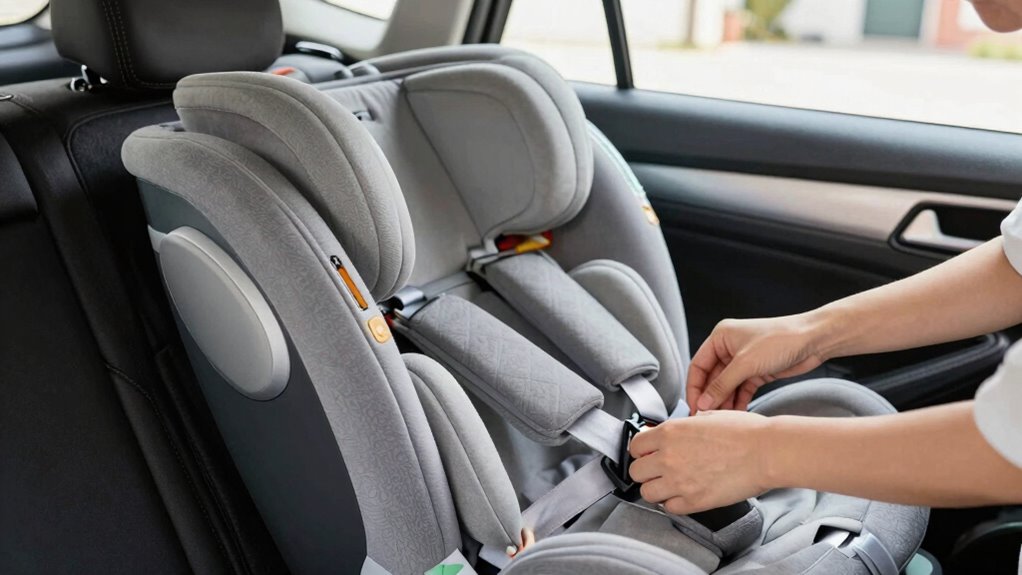

It’s best to install and practice attaching your car seat before your baby arrives, so you can become familiar with the process and verify it’s secure. Start by reviewing the manufacturer’s instructions and checking regional safety regulations. Practice installing the seat using both seat belt and LATCH systems, aiming for a tight fit with minimal movement. Doing this ahead of time will boost your confidence and help you make any adjustments needed once your little one is here. Keep going to learn more about ensuring safety and proper fit.

Turn the school run and nap time into listening time
- Thousands of audiobooks, podcasts and originals
- Listen on your phone, tablet or Echo — also offline
- Cancel anytime
Key Takeaways
- Install and familiarize yourself with the car seat before birth to ensure confidence and proper setup.
- Follow manufacturer and regional safety guidelines when installing and adjusting the seat.
- Use the seat belt or LATCH system tightly, with minimal movement (≤1 inch), during installation practice.
- Seek expert guidance from certified technicians or inspection stations for correct installation techniques.
- Practice adjusting harnesses and straps to accommodate your growing baby for quick post-birth modifications.

Installing your baby’s car seat before birth might seem early, but it guarantees you’re prepared for the day you bring your newborn home. Getting the seat set up in advance allows you to familiarize yourself with the installation process and ensures everything is in place when the time comes. It’s tempting to wait until after your baby arrives, but taking proactive steps helps reduce last-minute stress and ensures safety from the start.
Preparing your baby’s car seat before birth ensures you’re ready and confident for the big day.
Before installing the car seat, you should review the specific safety regulations for your region and the model you’ve chosen. Different states and countries have precise guidelines about harness heights, seat positioning, and age or weight restrictions. Knowing these safety regulations helps you avoid common mistakes, like installing the seat too loosely or placing it in a seat position that’s not recommended for infants. Taking the time to understand these rules now means you’ll be confident that your setup complies with legal standards and safety best practices.
When it comes to installation techniques, you’ll want to carefully follow the manufacturer’s instructions. Most seats can be secured using either the seat belt or the LATCH (Lower Anchors and Tethers for Children) system. Whichever method you choose, make sure the seat is tightly secured—there should be no more than an inch of movement side-to-side or front-to-back when you push on it at the base. Practice the installation a few times if needed, so it becomes second nature. This not only ensures you’re doing it correctly but also gives you peace of mind that your baby will be safe in case of sudden stops or accidents.
Additionally, consider visiting a local car seat inspection station or seeking guidance from certified child passenger safety technicians. They can verify your installation techniques and offer personalized advice. Many hospitals or community centers hold classes or workshops on car seat safety, which can be incredibly valuable for first-time parents. Practicing the installation now means you’ll be more confident when handling it for real, and you’ll better understand how to adjust straps and harnesses properly as your baby grows.
infant car seat installation kit
As an affiliate, we earn on qualifying purchases.
As an affiliate, we earn on qualifying purchases.
Frequently Asked Questions
Is It Safe to Practice Car Seat Installation During Pregnancy?
Yes, it’s safe to practice car seat installation during pregnancy, as long as you take precautions for pregnancy safety. This prenatal preparation helps you become confident in securing your baby correctly. Make sure you’re comfortable, avoid heavy lifting, and take breaks if needed. Practicing now can reduce stress later and ensure you’re ready when your little one arrives. Always listen to your body and consult your healthcare provider if you have concerns.
How Early Can I Start Practicing Car Seat Installation?
The early bird catches the worm, so you can start practicing your car seat installation as soon as you’re comfortable, often around the second trimester. Focusing on child safety, practice different installation techniques to guarantee a secure fit. This prep builds confidence and helps you become familiar with your car seat, making actual installation smoother. Remember, the sooner you start, the better prepared you’ll be to keep your little one safe.
Do I Need Help to Install the Car Seat Properly?
Yes, you should seek help to guarantee proper child safety and vehicle compatibility when installing your car seat. Having someone experienced double-check your installation reduces risks and guarantees your seat is secure. Proper installation is vital for your baby’s safety during travel. Don’t hesitate to ask for assistance or visit a certified technician; it’s a small step that makes a big difference in protecting your little one.
Can Practicing Installation Affect My Pregnancy?
Practicing installation is like rehearsing a dance—it’s important, but too much can tire your steps. During pregnancy, it’s safe if you listen to your body, avoiding strenuous effort. Focus on gentle, careful installation practice to boost pregnancy safety and confidence. Remember, slow and steady wins the race, and you don’t need to rush. If you feel dizzy or uncomfortable, pause and seek help to make sure both you and your baby stay healthy.
What Tools Are Recommended for a Secure Installation?
You should use essential tools like a level, a snug fitting harness, and the seat’s manual to guarantee a secure installation. Follow your installation checklist carefully, confirming all parts are correctly assembled. Adhere to safety guidelines, such as checking the seat’s angle and tightness. Using these tools and guidelines helps you create a safe, reliable setup, giving your baby the best protection from day one.
As an affiliate, we earn on qualifying purchases.
Conclusion
By practicing car seat installation before your baby arrives, you guarantee both safety and confidence on the road. Some believe that early preparation can reduce stress during those hectic first days, but studies show that consistent, correct installation truly minimizes risks in emergencies. So, take the time now—familiarize yourself with the process, double-check everything, and stay prepared. It’s a simple step that makes a big difference for your baby’s safety from day one.
As an affiliate, we earn on qualifying purchases.
As an affiliate, we earn on qualifying purchases.
Cold & flu season Picks
humidifiers
As an affiliate, we earn on qualifying purchases.