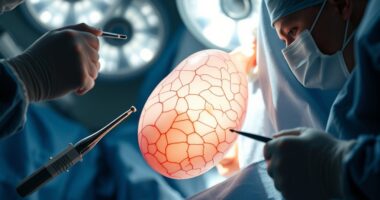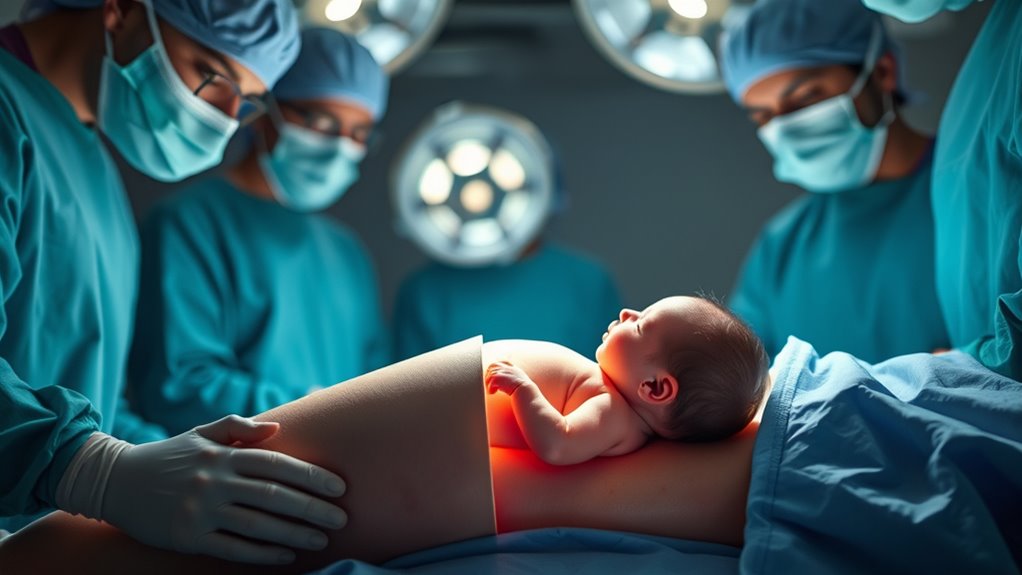

A cesarean section becomes necessary when your labor encounters complications, such as slow progress or fetal distress, or if health risks to you or your baby arise. Medical conditions like placenta previa or multiple prior surgeries can make vaginal delivery unsafe. Your doctor will recommend surgery to guarantee a safe birth for both of you. Understanding the situations that require a cesarean can help you prepare—there’s more to take into account beyond this overview.

Turn the school run and nap time into listening time
- Thousands of audiobooks, podcasts and originals
- Listen on your phone, tablet or Echo — also offline
- Cancel anytime
Key Takeaways
- Cesarean sections are necessary when vaginal delivery poses risks to the mother or baby’s health.
- Common medical indications include fetal distress, abnormal positioning, or placental issues.
- C-sections are also performed in cases of labor complications or previous cesarean scars.
- Emergency surgery may be required if labor progresses poorly or complications arise unexpectedly.
- Planned C-sections are scheduled when medical conditions or personal choices make vaginal birth unsafe.
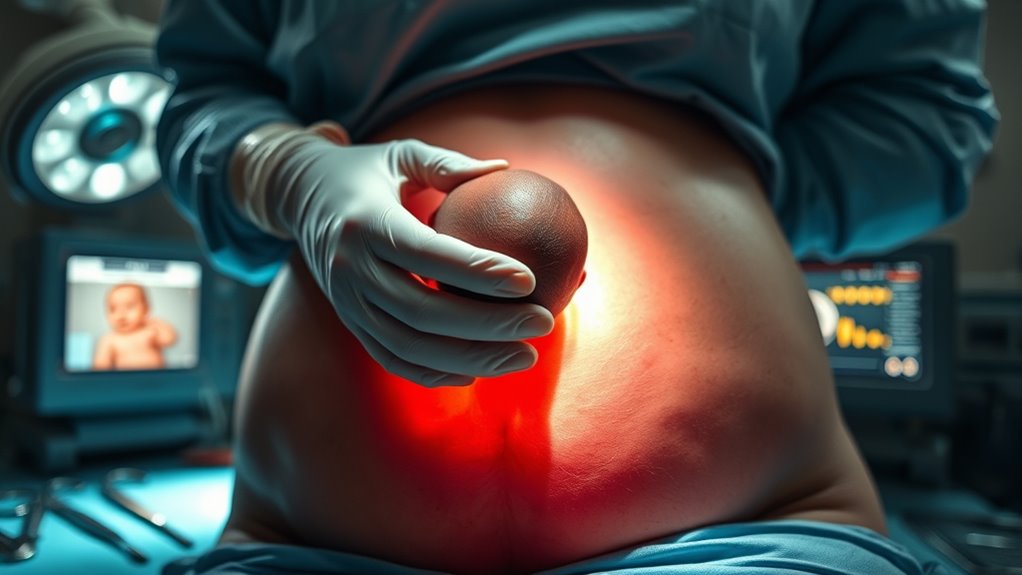
A cesarean section, often called a C-section, is a surgical procedure used to deliver a baby through incisions in the mother’s abdomen and uterus. While it’s a common and generally safe method, it comes with its own set of recovery challenges and emotional impacts. You might find that the physical healing process takes longer than you expected, especially if this isn’t your first birth. The incisions need time to heal, and you may experience pain, fatigue, or discomfort for several weeks. Moving around might feel awkward or painful initially, and you’ll likely need help with daily tasks like lifting, bending, or even caring for your newborn.
A C-section involves abdominal and uterine incisions, requiring time to heal and patience during recovery.
The recovery process often involves more than just physical healing. You may face emotional challenges that catch you off guard. It’s normal to feel a mix of relief and disappointment, especially if you had envisioned a different birth experience. Some women feel a sense of loss about not being able to have a natural delivery, which can lead to feelings of sadness or even guilt. Others might feel anxious about the surgery itself or worried about their ability to bond with their baby initially. These emotional impacts are valid and common, but they can be difficult to navigate without support.
You might also experience mood swings or feelings of frustration as your body recovers. The hormonal shifts after a C-section can amplify these emotions, making you feel overwhelmed at times. It’s important to remember that these feelings are temporary, and many women find that talking to loved ones or a mental health professional helps them process their emotions. Support groups for mothers recovering from cesarean births can also provide comfort and reassurance.
Physically, your body needs time to regain strength, and this can be frustrating if you’re *enthusiastic* to resume your usual activities. You’ll need to avoid heavy lifting and strenuous exercise for several weeks, which might feel restrictive. You may also experience issues like incision soreness, numbness, or itching, which can add to your discomfort. Managing these physical challenges requires patience, and following your doctor’s instructions carefully accelerates healing and minimizes complications. Additionally, understanding the importance of high refresh rates and low input lag can help you appreciate the technical aspects that contribute to a seamless recovery and overall well-being.
postpartum abdominal incision support belt
As an affiliate, we earn on qualifying purchases.
As an affiliate, we earn on qualifying purchases.
Frequently Asked Questions
Can I Choose a C-Section Over Natural Birth?
Yes, you can choose a C-section over natural birth, but it’s usually considered an elective choice unless medical indications suggest otherwise. Your healthcare provider will discuss the risks and benefits of elective C-sections versus natural labor. While some women prefer the predictability of a planned C-section, doctors recommend it only when medically necessary, as it can carry additional risks compared to vaginal birth.
How Long Does Recovery Typically Take After a C-Section?
Recovery after a C-section usually takes about 4 to 6 weeks. During this time, you’ll notice that postoperative mobility gradually improves as your wound heals. You might experience some discomfort, but gentle movement helps with healing. It’s important to rest when needed, follow your doctor’s advice, and avoid strenuous activities until your wound is fully healed. Patience is key to a smooth recovery process.
Are There Risks Associated With Repeat C-Sections?
Oh, the joys of repeat C-sections! You risk adhesions that could turn your insides into a tangled mess, and it might impact breastfeeding by complicating your recovery. Plus, there’s a higher chance of complications like bleeding or infection. While some women sail through with minimal issues, others face these risks, making each subsequent C-section a little more adventurous. So, weigh your options carefully, and discuss concerns with your doctor.
Will a C-Section Affect Future Pregnancies?
A C-section can affect your future pregnancies by creating a vaginal scar that might increase the risk of complications like uterine rupture or placenta issues. While many women go on to have healthy pregnancies afterward, it’s important to discuss your specific situation with your doctor. They can help you understand how a previous C-section may influence your future fertility and pregnancy plans, ensuring you receive personalized care.
What Are the Options for Pain Management During a C-Section?
You can choose from various pain relief options during a C-section, with epidural anesthesia being the most common. It numbs the lower body, allowing you to stay awake and alert. Some women also opt for spinal blocks or general anesthesia, depending on medical advice. Visualize epidural anesthesia as a shield that blocks pain signals while keeping you conscious. Discuss these options with your doctor to find the best plan for your comfort.
cesarean recovery essentials kit
As an affiliate, we earn on qualifying purchases.
As an affiliate, we earn on qualifying purchases.
Conclusion
While cesarean sections might seem like a quick fix, they remind you that sometimes, taking the easier route can lead to unexpected twists. Instead of a natural journey, you’re handed a surgical detour, complete with scars and recovery time. Ironically, what’s meant to make things simpler can turn into a memorable chapter of your story—one marked by precision, but also a reminder that even in surgery, nature’s way often wins the race.
post-surgery comfort nursing pillow
As an affiliate, we earn on qualifying purchases.
As an affiliate, we earn on qualifying purchases.
emotional support for C-section recovery
As an affiliate, we earn on qualifying purchases.
As an affiliate, we earn on qualifying purchases.
Fall Picks
fall essentials
As an affiliate, we earn on qualifying purchases.