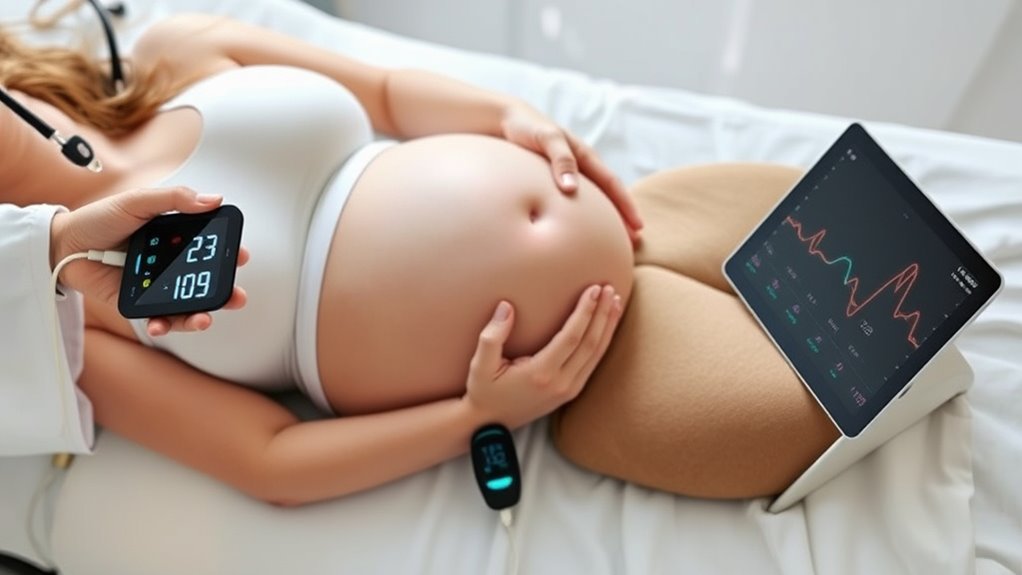

The evolution of prenatal care technology has moved from bulky hospital Dopplers to sleek, portable devices that let you monitor your baby’s heartbeat at home. Today, wearable tech continuously tracks essential signs and fetal movements, offering real-time insights and alerts. Pregnancy apps and gadgets connect seamlessly, providing personalized advice and data sharing with healthcare providers. This shift makes pregnancy more engaging and proactive. Keep exploring how these innovations could transform your prenatal journey even further.

Turn the school run and nap time into listening time
- Thousands of audiobooks, podcasts and originals
- Listen on your phone, tablet or Echo — also offline
- Cancel anytime
Key Takeaways
- Transition from bulky hospital Doppler devices to portable, user-friendly fetal monitoring tools for home use.
- Integration of pregnancy apps for tracking symptoms, appointments, and real-time health data sharing.
- Development of wearable devices that monitor maternal vital signs and fetal well-being continuously.
- Enhanced prenatal care through combined use of apps, wearables, and portable Doppler technology for proactive management.
- Future trends focus on personalized, accessible, and innovative digital solutions improving maternal and fetal health outcomes.

Have you ever wondered how technology is transforming prenatal care? Today, it’s more accessible and personalized than ever before. With advances in fetal monitoring and the rise of pregnancy apps, you can now stay connected to your health and your baby’s development in ways that weren’t possible a few decades ago. Traditional methods involved regular visits to the doctor’s office, but now, you have a range of tools at your fingertips that offer real-time insights and greater peace of mind.
Fetal monitoring has come a long way from the bulky, hospital-based machines of the past. Portable devices now allow you to track your baby’s heartbeat from the comfort of your home. These devices use ultrasound and Doppler technology, making it easy to listen to your baby’s heartbeat whenever you want. They’re designed to be user-friendly, giving you instant audio feedback and helping you feel more connected to your pregnancy journey. This shift toward home-based fetal monitoring doesn’t replace professional care but complements it, allowing you to share more detailed information with your healthcare provider and catch potential issues early. Additionally, home-based fetal monitoring has been shown to improve early detection of potential complications, enhancing overall prenatal safety. Advances in medical technology continue to drive this transformation, making monitoring more accurate and accessible. As remote health monitoring becomes more sophisticated, the potential for early intervention and personalized care continues to grow. Incorporating digital health tools can also help you better understand and manage your pregnancy.
Home fetal monitoring devices make it easy to listen to your baby’s heartbeat anytime, enhancing connection and early detection.
Equally impressive are pregnancy apps, which have revolutionized how you manage prenatal health. These apps serve as extensive guides, offering tailored advice, appointment reminders, and tracking features for symptoms, weight gain, and fetal movements. Some even sync with wearable devices or fetal monitors, providing a seamless flow of data that you can review at any time. With these tools, you can log your daily experiences and monitor trends, making it easier to communicate concerns during medical visits. Many apps also provide educational content, pregnancy milestones, and nutritional tips, empowering you to make informed decisions throughout your pregnancy.
Wearable technology takes this a step further by continuously tracking vital signs, activity levels, and sleep patterns. Smartwatches and fitness bands now include features specifically designed for pregnant women, alerting you to potential issues like abnormal heart rates or irregular sleep. When combined with fetal monitoring devices and pregnancy apps, wearables create an integrated health management system, giving you a thorough picture of your well-being and your baby’s development. Additionally, self-watering plant pots exemplify how innovative systems can optimize resource use and care, paralleling how modern prenatal tech optimizes health monitoring and management.
All these technological advancements are transforming prenatal care from a reactive process into a proactive, personalized experience. They give you more control, more information, and greater reassurance as you navigate pregnancy. The evolution from traditional checkups to digital health tools means you’re no longer just a passive participant but an active partner in ensuring a healthy pregnancy. As technology continues to evolve, expect even more innovative solutions to support you and your baby every step of the way.
As an affiliate, we earn on qualifying purchases.
Frequently Asked Questions
How Accurate Are Prenatal Wearables Compared to Traditional Methods?
You might wonder how accurate prenatal wearables are compared to traditional methods. These devices can effectively monitor fetal movement and maternal health, providing real-time data. While they’re quite reliable for tracking trends and early alerts, they may not replace more precise traditional tools entirely. Wearables are a valuable supplement, giving you continuous insights into your pregnancy, but it’s still important to consult your healthcare provider for exhaustive care.
What Are the Privacy Concerns With Prenatal Monitoring Devices?
Imagine your personal data as a delicate thread, connecting your dreams and fears. With prenatal monitoring devices, you might worry about data security breaches or unauthorized access. You must ensure your user consent is clear, giving you control over who sees your information. Protecting your privacy is essential, so read privacy policies carefully, and choose trusted devices that prioritize data security, keeping your intimate health details safe and in your hands.
Can Wearable Technology Detect Genetic Abnormalities During Pregnancy?
You might wonder if wearable technology can detect genetic abnormalities during pregnancy. While wearable diagnostics are improving, they primarily focus on monitoring essential signs and fetal health, not genetic screening. Currently, genetic screening requires specialized tests like blood draws or ultrasounds. However, future advancements could enable wearables to assist in early detection of genetic issues, making prenatal care more accessible and less invasive.
How Affordable Are Advanced Prenatal Care Technologies for All Expectant Mothers?
You might wonder about the affordability of advanced prenatal care technologies. Cost barriers can make access challenging for many, but insurance coverage is gradually expanding to include some of these innovations. While prices vary, efforts are underway to reduce costs and improve accessibility. Ultimately, your healthcare provider can help you navigate options and find solutions that fit your budget, ensuring you receive the best care without unnecessary financial strain.
What Future Innovations Are Expected in Prenatal Care Technology?
You can expect future prenatal care innovations to focus on fetal movement tracking and maternal health monitoring. New wearable devices might offer continuous, non-invasive insights into your pregnancy, allowing you to track your baby’s movements and monitor your health in real-time. These advancements could enable earlier detection of complications, personalized care, and greater peace of mind, making prenatal care more accessible and effective for every expectant mother.
As an affiliate, we earn on qualifying purchases.
Conclusion
As you explore the evolution of prenatal care, it’s clear technology has transformed how you monitor your pregnancy. From Dopplers to wearables, these innovations empower you to stay connected and informed. Did you know that over 70% of pregnant women now use some form of digital health tool? This shift highlights how technology not only improves health outcomes but also gives you greater confidence and peace of mind during this special journey.
wearable maternal health monitor
As an affiliate, we earn on qualifying purchases.
As an affiliate, we earn on qualifying purchases.
fetal heartbeat monitor for pregnancy
As an affiliate, we earn on qualifying purchases.
As an affiliate, we earn on qualifying purchases.
Fall Picks
fall essentials
As an affiliate, we earn on qualifying purchases.