

Travel during pregnancy can be safe if you plan carefully based on each trimester. In your first trimester, limit travel due to fatigue and nausea, but short trips may be okay with medical approval. During the second trimester, it’s often the best time—you’re usually more comfortable and energy levels are higher. In your third trimester, avoid long trips to prevent complications. Always check with your healthcare provider first; there’s more to contemplate for a smooth journey ahead.

Turn the school run and nap time into listening time
- Thousands of audiobooks, podcasts and originals
- Listen on your phone, tablet or Echo — also offline
- Cancel anytime
Key Takeaways
- The second trimester is often safest and most comfortable for travel, with fewer pregnancy-related health risks.
- Always consult your healthcare provider before planning travel, regardless of the trimester.
- During the first trimester, avoid travel if experiencing symptoms like nausea or fatigue.
- In the third trimester, limit travel and check airline or travel restrictions for pregnant women.
- Prioritize hydration, regular movement, and carrying prenatal records throughout all trimesters.
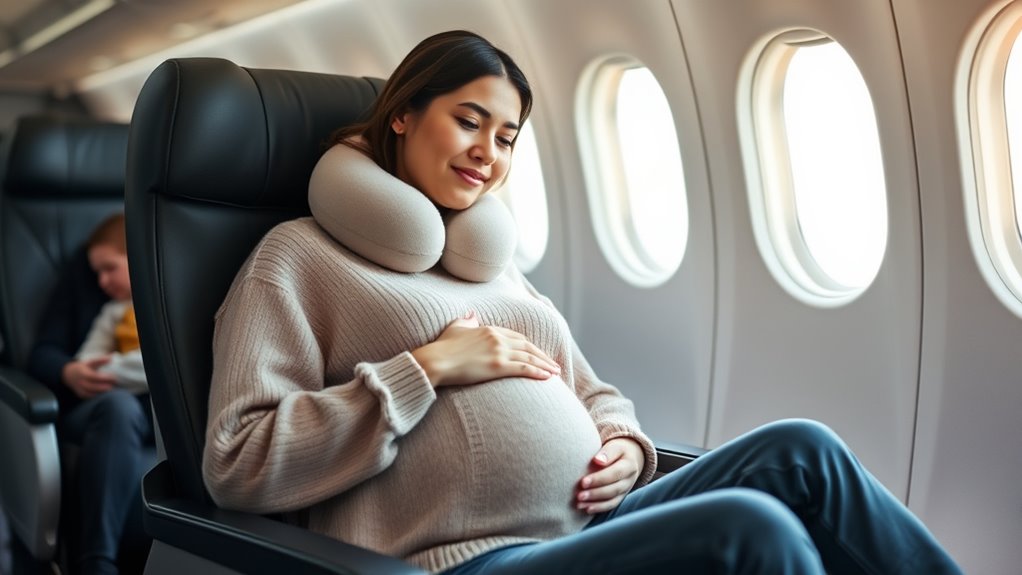
Traveling during pregnancy can be safe and enjoyable when you plan thoughtfully and take necessary precautions. Whether you’re flying or hitting the road, understanding how to guarantee your comfort and safety is key. When it comes to airplane safety, it’s important to check with your healthcare provider before booking your flight. Most airlines allow pregnant women to fly up to 36 weeks, but policies can vary. During your flight, stay well-hydrated, move around periodically to reduce the risk of blood clots, and choose an aisle seat for easier access to the restroom. Carrying your prenatal records might be helpful if any questions arise during security checks or in-flight medical emergencies.
If you’re considering a road trip, thorough planning is essential. Start by mapping out your route, identifying potential rest stops, and ensuring your vehicle is in good condition. Pack plenty of water, healthy snacks, and comfortable pillows to make the journey more pleasant. Plan for frequent breaks so you can stretch your legs, promote circulation, and use the restroom comfortably. Avoid driving during peak fatigue hours, and don’t hesitate to switch drivers if you’re traveling with someone else. Wearing your seatbelt properly—across your hips and below your belly—is vital for safety, providing protection without putting pressure on your abdomen. Additionally, selecting a lightweight and comfortable vehicle can make your trip safer and more enjoyable. Being aware of pregnancy-related travel restrictions can help you avoid potential complications during your journey.
Regardless of your mode of travel, keep your healthcare provider informed about your plans. They might recommend specific precautions or adjustments based on your pregnancy stage. For example, during the second trimester, most women feel their best and are less prone to complications, making travel easier. Still, avoid travel if you have pregnancy-related issues such as high blood pressure, risk of preterm labor, or other complications. Always carry your prenatal records, a list of emergency contacts, and necessary medications.
Frequently Asked Questions
Can I Travel Internationally During Pregnancy?
You can generally travel internationally during pregnancy, but you should prioritize pregnancy travel safety. Check with your healthcare provider first, especially if you’re in the later stages or have complications. Follow international travel tips like staying hydrated, moving around frequently, and avoiding risky situations. Make sure your health insurance covers pregnancy-related issues abroad, and carry necessary medical records. Planning ahead guarantees a safe and comfortable journey for you and your baby.
Are There Specific Travel Insurance Policies for Pregnant Travelers?
You should look for travel insurance policies that offer prenatal coverage, as many standard plans have limitations for pregnant travelers. Some policies exclude pregnancy-related issues or have specific age or gestation restrictions. It’s crucial to review the travel policy limitations carefully and choose a plan that covers potential complications during pregnancy. Always disclose your pregnancy details upfront to ensure you get the appropriate coverage and avoid surprises if medical help becomes necessary.
How Should I Pack for Comfort During Long Journeys?
Picture your journey as a gentle boat ride, where comfort keeps you afloat. To guarantee pregnancy comfort during long trips, pack essentials like supportive pillows, loose clothing, and snacks to stay energized. Don’t forget compression socks to boost circulation and a water bottle to stay hydrated. By carrying these packing essentials, you create a smooth voyage, making your travel experience more relaxed and enjoyable for both you and your baby.
What Are Emergency Procedures if I Go Into Labor While Traveling?
If you go into labor while traveling, stay calm and call your emergency contacts immediately. Describe your symptoms clearly and follow their guidance. Seek the nearest medical facility equipped to handle labor complications. Keep your prenatal records handy, and inform your travel companions about your situation. Remember, quick action and clear communication with emergency services can assure you get the help you need promptly.
Are There Travel Restrictions Based on Pregnancy Complications?
They say “forewarned is forearmed,” and that’s true for pregnancy risk and travel restrictions. You should check with your healthcare provider because certain pregnancy complications, like high blood pressure or preterm labor, may impose travel restrictions. These restrictions aim to protect you and your baby. Always get personalized advice, and avoid travel if your doctor advises against it, ensuring a safe journey during pregnancy.
Conclusion
As you plan your journey, remember that each trimester brings new considerations—and surprises. Staying informed and prepared keeps you safe, but the real adventure begins when you trust your instincts and listen to your body. Will you recognize the signs that signal it’s time to pause? Your pregnancy is a remarkable chapter, and gentle travel can make it even more special—if you choose wisely. Are you ready to take that next step confidently?
Cold & flu season Picks
humidifiers
As an affiliate, we earn on qualifying purchases.