Understanding the difference between baby blues and postpartum depression helps you recognize when you need support. Baby blues are common, mild mood swings that peak around days three to four after birth and typically fade within two weeks. PPD is more severe, lasting beyond two weeks, and can interfere with daily life, causing feelings of hopelessness or worthlessness. Knowing these signs can guide you to seek help early—continue exploring to learn how to manage and recover effectively.

Turn the school run and nap time into listening time
- Thousands of audiobooks, podcasts and originals
- Listen on your phone, tablet or Echo — also offline
- Cancel anytime
Key Takeaways
- Baby blues are common, mild, and temporary, usually resolving within two weeks; PPD is more severe and lasts longer.
- Baby blues typically peak around days 3-4 postpartum, while PPD can develop anytime within the first year.
- Symptoms of baby blues include tearfulness and mood swings; PPD involves hopelessness, loss of interest, and functional impairment.
- Emotional support and early recognition are crucial; professional treatment is often needed for PPD.
- Differentiating between baby blues and PPD helps women seek appropriate help and promotes better recovery and bonding.
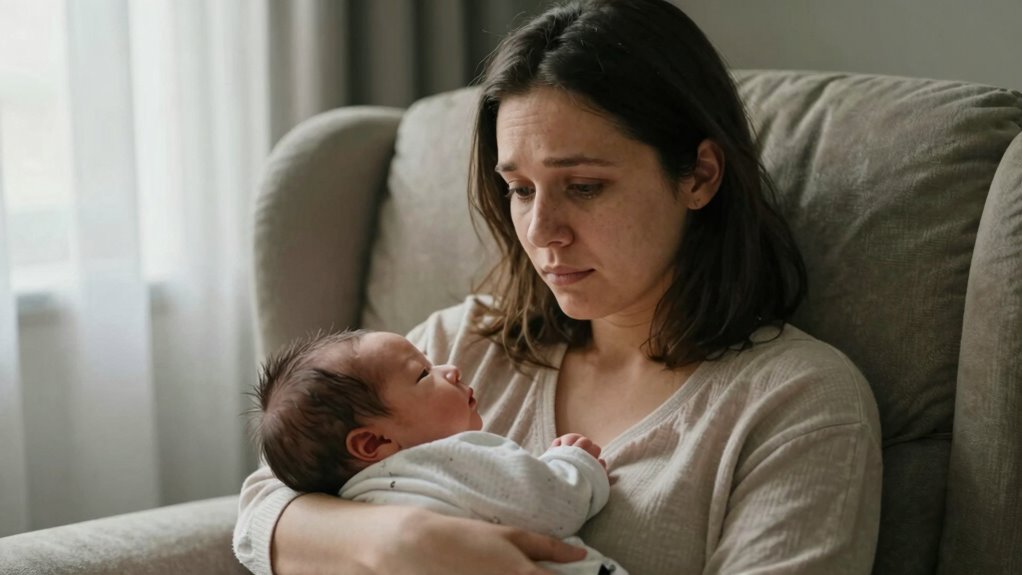
After giving birth, many women experience shifts in their mood that can range from mild to severe. These changes are often linked to hormonal shifts that happen suddenly after delivery. Your body adjusts to the drop in hormones like estrogen and progesterone, which can cause feelings of sadness, irritability, or anxiety. During this time, emotional support from loved ones becomes essential. Having someone to talk to and lean on can make a substantial difference in how you navigate these initial days. It’s natural to feel overwhelmed or emotional as your body and mind adapt to your new role as a mother.
Postpartum hormonal shifts can cause mood swings and emotional changes; support from loved ones is vital during recovery.
The baby blues are a common experience, typically peaking around the third or fourth day after birth and lasting for about two weeks. During this period, you may cry easily, feel tearful without warning, or experience mood swings. These feelings are usually temporary and are considered a normal response to the physical and emotional upheaval of childbirth. The hormonal shifts play a key role here, as they influence neurotransmitters that regulate mood. However, emotional support from your partner, family, or friends can help you manage these rollercoaster feelings. Sharing your experiences, asking for help, and accepting comfort can ease the intensity of the baby blues.
In contrast, postpartum depression (PPD) is more severe and persistent. It can develop anytime within the first year after childbirth but often starts within the first few weeks. Unlike the baby blues, PPD involves symptoms that interfere profoundly with your daily life. You might feel hopeless, have trouble bonding with your baby, struggle with sleep or appetite, or experience intense feelings of worthlessness. The hormonal shifts that initially triggered the baby blues may persist or be compounded by other factors such as lack of sleep, stress, or history of mental health issues. Recognizing the difference is essential, because PPD requires professional treatment. The good news is that help is available, and with the right support, recovery is possible. Additionally, understanding how hormonal shifts affect mood can help you better navigate these emotional changes.
Whether you’re experiencing the fleeting baby blues or more persistent PPD, understanding these differences can empower you to seek help early. Emotional support—whether from loved ones, support groups, or mental health professionals—can make a profound difference. Don’t hesitate to reach out if your mood changes persist or worsen. Remember, you’re not alone, and your mental health is just as important as your physical recovery. Taking care of yourself emotionally is a necessary step toward healing and bonding with your baby, ensuring you find your new normal with strength and support.
postpartum depression support book
As an affiliate, we earn on qualifying purchases.
As an affiliate, we earn on qualifying purchases.
Frequently Asked Questions
How Long Do Baby Blues Typically Last?
Baby blues typically last for about a week or two after your baby’s birth. During this time, hormonal fluctuations and emotional adjustment can make you feel overwhelmed or teary. You might experience mood swings or crying spells, but these feelings usually fade quickly as your body adapts. If symptoms persist beyond two weeks or worsen, it’s important to seek support, as it could indicate postpartum depression rather than normal baby blues.
Can PPD Occur Without Noticeable Symptoms?
Yes, PPD can occur without noticeable symptoms, especially if hormonal fluctuations are subtle or if your emotional resilience is high. You might not recognize the signs or may dismiss them as normal postpartum feelings. It’s important to remain attentive to your emotional health and seek support if you experience persistent sadness, anxiety, or changes in mood, even if symptoms aren’t obvious. Early intervention helps ensure your well-being and recovery.
Are There Specific Risk Factors for Postpartum Depression?
Think of risk factors for postpartum depression as warning signs on a map guiding you through potential trouble spots. You’re more likely to face PPD if you have a history of depression, high stress levels, or lack support. Screening tools help identify these risks early, so you can get help before symptoms become overwhelming. Recognizing these factors empowers you to seek timely assistance and navigate postpartum with confidence.
How Can Partners Support Someone Experiencing PPD?
You can support someone experiencing PPD by actively involving yourself through partner involvement and offering consistent emotional support. Listen without judgment, encourage them to seek professional help, and help with daily tasks to ease their burden. Your presence and understanding make a significant difference, letting them know they’re not alone. Stay patient, gentle, and reassuring, reinforcing that recovery is possible and that you’re there every step of the way.
When Should Professional Help Be Sought for Postpartum Mood Changes?
You should seek professional help when emotional resilience feels overwhelmed by persistent sadness, anxiety, or mood swings that last beyond two weeks. If peer support and self-care don’t improve your mood, don’t hesitate to connect with a mental health professional. Early intervention can make a vital difference, helping you recover and bond with your baby. Remember, reaching out is a sign of strength, not weakness.
As an affiliate, we earn on qualifying purchases.
Conclusion
Understanding the difference between baby blues and postpartum depression helps you seek the right support. For example, imagine Sarah felt overwhelmed for weeks after her baby’s birth, affecting her daily life—this might be PPD. Recognizing these signs early means you can get help before things worsen. Remember, you’re not alone, and with proper care, you can navigate this challenging time. Reach out, ask for support, and prioritize your mental health—you deserve it.
As an affiliate, we earn on qualifying purchases.
emotional support for new mothers
As an affiliate, we earn on qualifying purchases.
As an affiliate, we earn on qualifying purchases.
Fall Picks
fall essentials
As an affiliate, we earn on qualifying purchases.