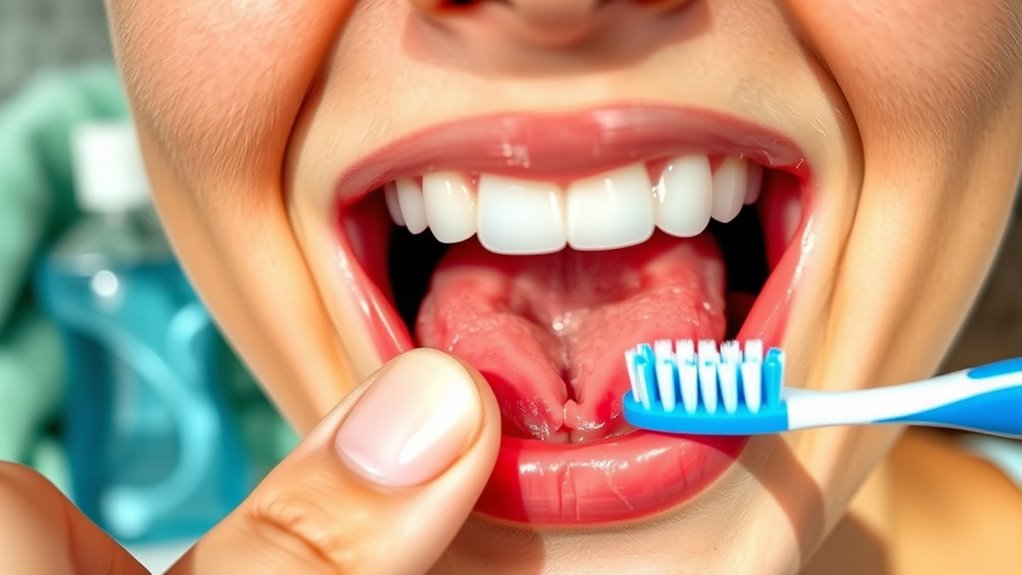

To care for your teeth and gums, brush twice daily with fluoride toothpaste and floss daily to remove plaque and food particles. Visit your dentist regularly for checkups and cleanings, and limit sugary foods and drinks that feed bacteria. Quitting smoking and managing health conditions like diabetes can also boost your oral health. Consistent good habits help prevent cavities and gum disease, keeping your smile bright and healthy for years to come. Keep going to discover even more tips for a healthier mouth.
Key Takeaways
- Brush teeth twice daily with fluoride toothpaste to remove plaque and prevent decay.
- Floss daily to clean between teeth and along the gumline, reducing plaque buildup.
- Schedule regular dental checkups for early detection and professional cleanings.
- Limit sugary foods and beverages to decrease bacteria feeding and cavity risk.
- Maintain good gum health through proper hygiene, smoking cessation, and managing health conditions like diabetes.
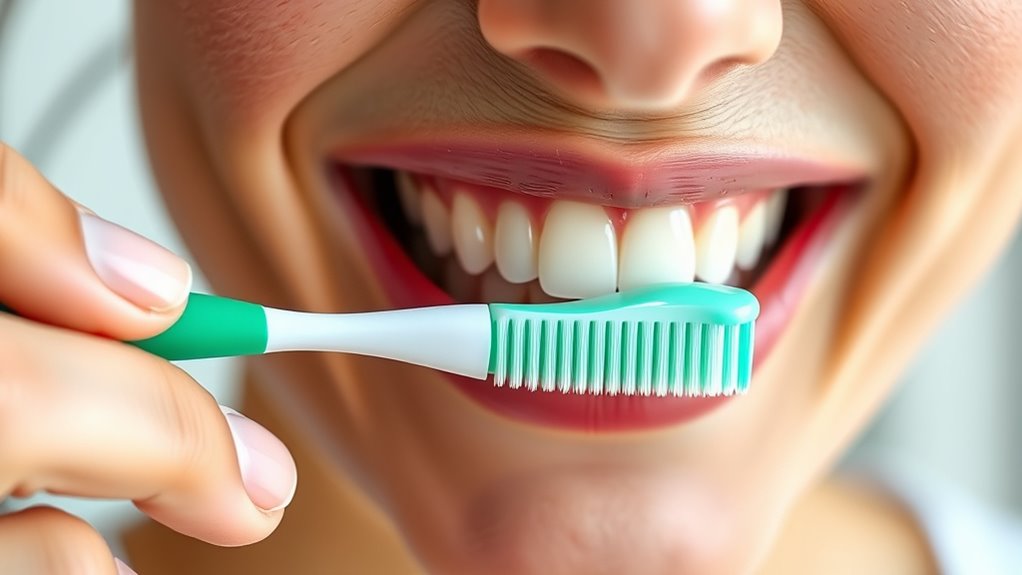
Maintaining good dental health is essential for your overall well-being and confidence. When you take steps to care for your teeth and gums, you reduce the risk of common issues like tooth decay and gum disease, which can cause discomfort, bad breath, and even more serious health problems if left untreated. A proactive approach to dental care involves understanding key practices such as tooth decay prevention and gum disease treatment, which work together to keep your mouth healthy and your smile bright.
Good dental health boosts confidence and overall well-being by preventing decay and gum disease.
Tooth decay prevention starts with good oral hygiene habits. Brushing your teeth at least twice a day with fluoride toothpaste helps remove plaque, the sticky film of bacteria that forms on your teeth. Plaque is a major contributor to tooth decay because it produces acids that erode enamel. Flossing daily is equally important; it reaches areas that your toothbrush can’t, removing food particles and plaque from between your teeth and along the gumline. Regular dental checkups allow your dentist to identify early signs of decay and provide fluoride treatments or sealants that further protect your teeth. Limiting sugary foods and beverages also plays a critical role because sugar feeds harmful bacteria in your mouth, increasing the risk of cavities.
Gum disease treatment is another crucial aspect of maintaining oral health. Gingivitis, the mild form of gum disease, often presents with redness, swelling, and bleeding gums. If you notice these symptoms, it’s essential to visit your dentist promptly. They may recommend professional cleanings to remove plaque and tartar buildup that you can’t eliminate with regular brushing and flossing. If left untreated, gingivitis can progress into periodontitis, a more severe condition that damages the tissues and bones supporting your teeth. Preventing this progression involves good oral hygiene and possibly more intensive treatments like scaling and root planing. Lifestyle factors such as quitting smoking and managing underlying health conditions like diabetes can also improve your gum health. Regular dental visits allow your dentist to monitor your gum health closely and intervene early if signs of disease appear. Additionally, dental health education can empower you to adopt better habits and recognize early warning signs of oral issues.
Incorporating these practices into your routine creates a solid foundation for dental health. Not only will you reduce the chances of developing cavities and gum disease, but you’ll also enjoy fresher breath and a more attractive smile. Remember, good dental care isn’t just about avoiding pain; it’s about investing in your overall health and confidence. By staying vigilant with daily habits and seeking professional care when needed, you set yourself up for a lifetime of healthy teeth and gums. Your commitment to these habits makes all the difference in maintaining a vibrant, healthy smile for years to come.
Frequently Asked Questions
How Often Should I Replace My Toothbrush?
You should replace your toothbrush every three to four months to maintain proper oral hygiene. The toothbrush lifespan is limited because the bristles wear out and become less effective at cleaning. Even if it looks fine, bacteria can build up over time. Regularly changing your toothbrush guarantees you’re cleaning your teeth effectively and supporting your oral health routine. Remember, a fresh toothbrush helps you maintain good oral hygiene frequency.
Can Chewing Gum Help Improve Dental Health?
Chewing sugarless gum can boost your dental health, with studies showing it increases saliva flow by up to 10 times, helping neutralize acids. The benefits include reducing cavity risk and freshening your breath. When you chew sugarless gum after meals, you’re actively aiding your teeth’s defense against decay. So, yes, incorporating chewing gum benefits your oral health—just choose sugarless options to maximize the positive effects on your gums and teeth.
Are Electric Toothbrushes Better Than Manual Ones?
Electric toothbrushes are generally better than manual ones because of advanced toothbrush technology. They provide more consistent brushing, with features like timers and oscillating heads that help remove plaque more effectively. While manual toothbrushes can do the job if used properly, electric toothbrushes make it easier to achieve a thorough clean, especially for those with limited dexterity or busy schedules. Ultimately, choosing an electric toothbrush can improve your dental health.
What Foods Are Most Harmful to Teeth?
Imagine you’re in a medieval tavern—certain foods can still do damage today. You should watch out for sugary treats and high sugar intake, which fuel cavities. Acidic beverages like soda, citrus juices, and energy drinks erode enamel, causing sensitivity and decay. Avoid frequent snacking on sweets and sipping on acidic drinks, as they weaken your teeth over time. Instead, choose water and healthy snacks to protect your smile.
How Does Smoking Affect Oral Health?
Smoking markedly harms your oral health by increasing your risk of gum disease and oral cancers. Tobacco weakens your immune system, making it harder to fight off infections, which can lead to gum disease. Additionally, smoking accelerates cavity formation by reducing saliva flow, which normally protects your teeth. Quitting smoking reduces these risks and helps improve your overall oral health, making your teeth and gums stronger and healthier.
Conclusion
Think of your teeth and gums as a delicate garden. With daily care—brushing, flossing, visiting the dentist—you’re tending to this garden, keeping weeds of decay at bay and flowers of health in full bloom. Neglect it, and weeds will take over, choking out the beauty. But with consistent attention, your smile can flourish like a vibrant, thriving garden. So, nurture your dental garden every day, and watch your confidence and health blossom.