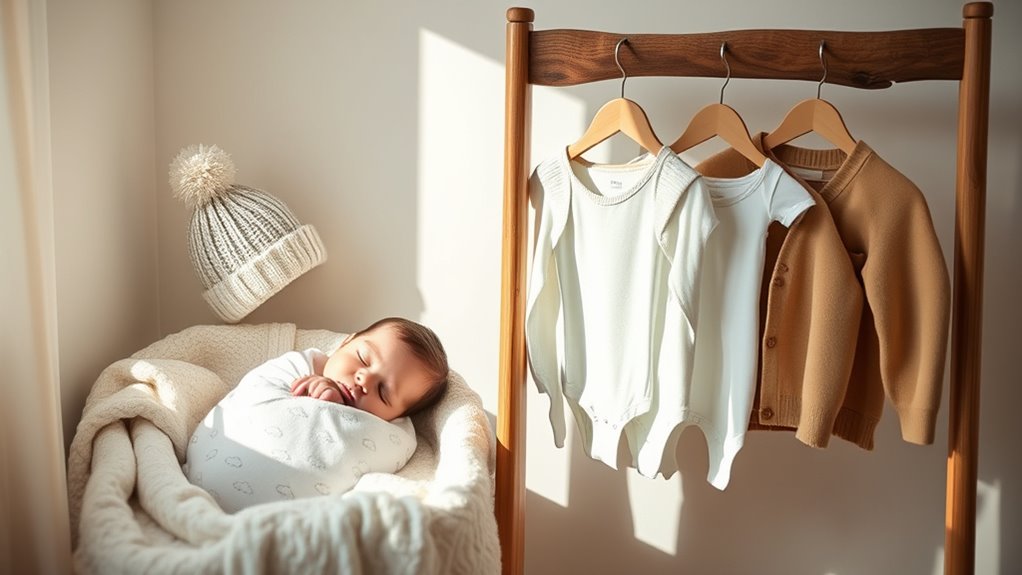

When dressing your newborn, consider the season to keep them comfortable and safe. In cold weather, layer with snug onesies and cozy hats, while in summer, opt for lightweight, breathable fabrics to prevent overheating. Always choose soft, natural materials like cotton and monitor fit as your baby grows. Be cautious of temperature changes, adjusting layers as needed. If you want to learn more about fabric selection and safety tips, keep exploring!

Turn the school run and nap time into listening time
- Thousands of audiobooks, podcasts and originals
- Listen on your phone, tablet or Echo — also offline
- Cancel anytime
Key Takeaways
- For winter, layer with a snug onesie, sweater, and hats to keep the baby warm while preventing overheating.
- In summer, choose lightweight cotton clothing and ensure minimal bedding to maintain coolness and comfort.
- Always prioritize soft, breathable fabrics to avoid skin irritation and ensure comfort for your newborn.
- Regularly check the fit of clothing; babies grow quickly, and sizes can vary significantly across brands.
- Monitor your baby’s temperature and adjust layers to prevent overheating, especially during sleep.
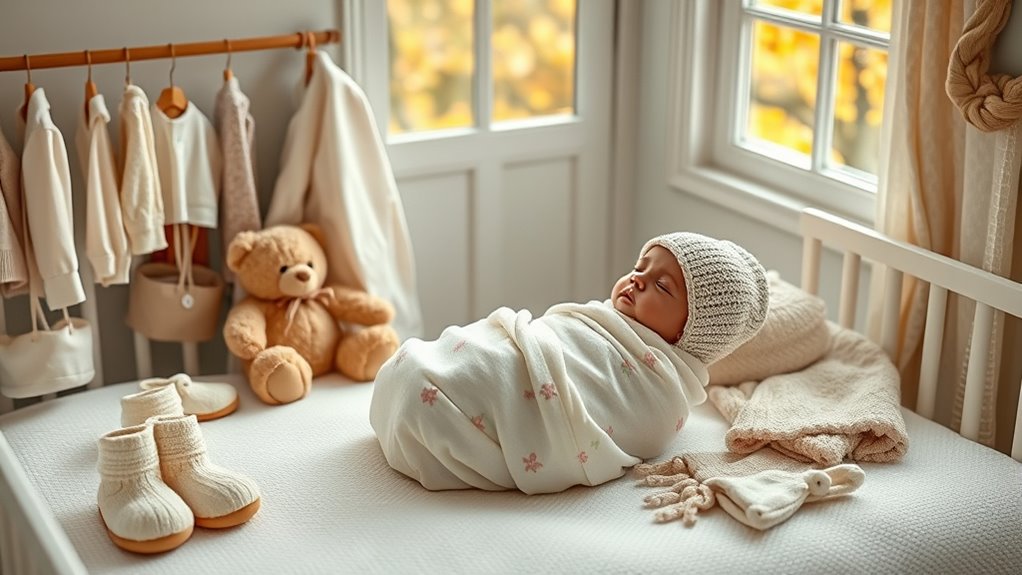
How can you ensure your newborn is dressed comfortably and safely? Start by prioritizing soft, comfortable fabrics that won’t irritate your baby’s sensitive skin. Natural materials like cotton are excellent choices because they’re breathable and skin-friendly. You’ll want to avoid any clothing that’s too tight or rough, as this can lead to discomfort.
Prioritize soft, breathable fabrics for your newborn to ensure comfort and avoid irritation on their sensitive skin.
When dressing your little one, think about layering. This is especially important during colder months. Begin with a snug onesie as a base layer, then add a sweater or jacket as needed.
As you navigate through winter, remember that layering is key. It’s a good idea to include warm hats and mittens to help prevent heat loss from your baby’s head and hands. Footed pajamas are perfect for chilly nights, ensuring your baby stays warm without the risk of losing socks.
Always choose breathable fabrics that allow moisture to escape, which helps prevent chilling. It’s also wise to carry extra clothes, as spills and temperature changes can happen unexpectedly.
In contrast, during the summer, dressing your newborn requires a different approach. Opt for lightweight, breathable fabrics that keep your baby cool. Lightweight cotton is ideal, helping to wick away sweat and maintain comfort.
You should also consider sun protection; hats with brims are great for shielding your baby from direct sunlight. Keep bedding and nightwear minimal to prevent overheating, and always ensure your little one stays hydrated in the warm weather.
When outdoors, try to keep your baby in the shade whenever possible.
When selecting newborn clothes, you’ll find that sizes can vary significantly. It’s best to compare items instead of relying solely on labels, and remember that your baby will grow quickly, so avoid over-purchasing in each size.
Look for clothing that’s easy to care for and has low fire hazard labels for safety.
Safety is paramount when dressing your newborn, so be cautious about overheating, especially during sleep. Always keep your baby’s face uncovered and avoid placing hot water bottles or electric blankets near them. It’s important to monitor your baby’s temperature regularly and adjust layers based on their comfort level, as overheating can be dangerous for newborns. By staying mindful of these seasonal tips, you can ensure your newborn is dressed comfortably and safely throughout the year.
As an affiliate, we earn on qualifying purchases.
Frequently Asked Questions
How Do I Know if My Newborn Is Too Hot or Cold?
To know if your newborn’s too hot or cold, check their skin; it should feel warm but not sweaty. Use a thermometer to ensure their temperature is normal.
Look for fussiness or lethargy as signs of discomfort. For cold, watch for pale skin or shivering.
Adjust clothing layers based on these cues and maintain a comfortable room temperature.
Keep an eye on their breathing patterns, as rapid breathing can indicate overheating.
Can I Use Baby Blankets for Dressing My Newborn?
You can use baby blankets for dressing your newborn, but it’s important to prioritize safety.
Loose blankets can pose a suffocation risk, so consider alternatives like sleep sacks or swaddles, which keep your baby warm without the hazards.
If you do use a blanket, make sure it’s securely tucked under the mattress and doesn’t cover your baby’s face.
Always monitor your baby’s temperature to ensure they’re comfortable and safe while sleeping.
What Fabrics Are Best for Newborn Clothing?
When choosing fabrics for newborn clothing, you’ll want to prioritize comfort and safety.
Organic cotton is a top choice, as it’s gentle on delicate skin. Bamboo is another great option due to its softness and breathability.
For cooler months, consider merino wool for warmth without overheating. Lightweight muslin works well for warmer weather, while jersey knit offers year-round flexibility.
Always ensure the fabric is free from irritants and easy to care for.
Should I Dress My Newborn Differently for Nighttime?
Imagine wrapping your newborn in a warm, cozy cocoon as night falls.
Yes, you should dress your little one differently for nighttime. Layering is essential, allowing you to adapt to temperature changes.
Choose soft, breathable fabrics like cotton, and avoid loose blankets—opting instead for sleep sacks.
Keep an eye on the room temperature, ensuring it stays between 16-20°C (60-68°F), so your baby sleeps peacefully through the night.
How Often Should I Change My Newborn’s Outfit?
You should plan to change your newborn’s outfit about 2-4 times a day.
Babies get messy from spit-up, diaper blowouts, or during playtime. Regular changes help keep your little one clean and comfortable.
Consider easy-access clothing, like onesies with snaps, to make these changes less stressful. Being prepared with extra outfits is a smart move, as you’ll definitely encounter unexpected situations that require immediate wardrobe adjustments.
lightweight breathable baby summer outfits
As an affiliate, we earn on qualifying purchases.
As an affiliate, we earn on qualifying purchases.
Conclusion
Dressing a newborn can seem daunting, but with these seasonal tips, you’ll keep your little one comfortable and cozy. Did you know that newborns lose heat 4 times faster than adults? That’s why layering is key! By dressing your baby appropriately for the season, you’re not just ensuring their comfort, but also their safety. So, keep these tips in mind, and enjoy those precious moments with your bundle of joy, knowing they’re snug and secure.
baby sun protection hat with brim
As an affiliate, we earn on qualifying purchases.
As an affiliate, we earn on qualifying purchases.
baby footed pajamas for cold weather
As an affiliate, we earn on qualifying purchases.
As an affiliate, we earn on qualifying purchases.
Cold & flu season Picks
humidifiers
As an affiliate, we earn on qualifying purchases.