Focusing on consistent sleep habits like routines and regular bedtimes usually makes a bigger difference than relying solely on sleep tools. Tools such as white noise machines or sleep sacks can support your efforts but aren’t quick fixes. To help your child develop healthy sleep patterns, it’s best to combine good habits with appropriate tools and approaches. If you keep exploring, you’ll find effective strategies to create lasting sleep success for your little one.
Key Takeaways
- Sleep habits like consistent routines and environment create a strong foundation for long-term sleep improvement.
- Sleep training tools can support routines but are not substitutes for establishing healthy sleep habits.
- Approaches like cry it out or gentle methods require commitment and are tailored to the child’s temperament.
- Combining tools with consistent habits enhances effectiveness and promotes better sleep for the child.
- Patience and consistency are key, regardless of using tools or focusing on habits, to achieve lasting sleep success.
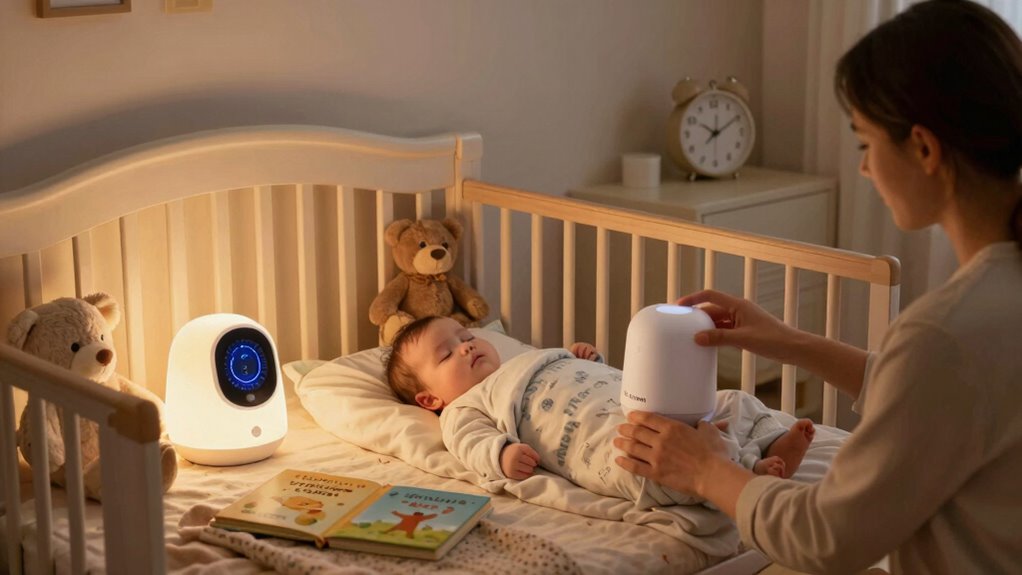
When it comes to helping your child sleep better, understanding the difference between sleep training tools and sleep habits is essential. One common method parents hear about is the cry it out technique, which involves allowing your child to cry for a set period before offering comfort. While some see it as a quick fix, others view it as too harsh. If you’re uncomfortable with letting your child cry alone, a gentle approach might be more your style. Gentle methods focus on gradually teaching your child to fall asleep independently without prolonged crying. This can include comforting your child at regular intervals, soothing with gentle words, or rocking them until they’re drowsy but not fully asleep. The goal is to create a calming environment that fosters trust and security while encouraging better sleep habits over time.
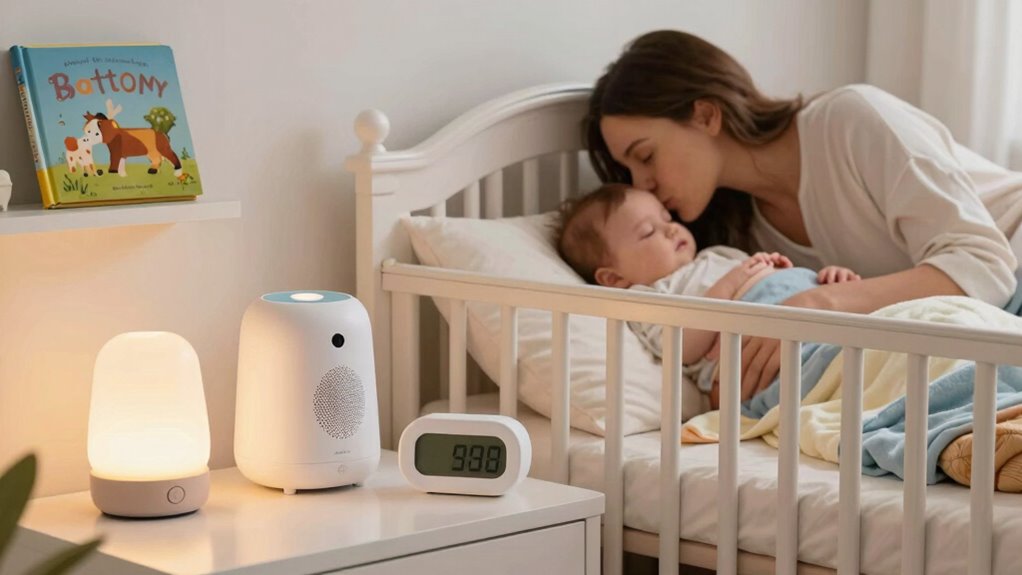
However, it’s important to recognize that sleep training tools are just that—tools. They’re designed to support you in establishing routines or addressing specific challenges. For example, white noise machines or sleep sacks can create a consistent environment that signals bedtime. These tools aren’t magic solutions but can complement your chosen approach, whether that’s cry it out, gentle, or something in between. Building healthy sleep habits, on the other hand, involves consistent routines, regular bedtimes, and sleep-friendly environments. These habits form the foundation of good sleep hygiene and can often eliminate the need for more intensive training methods. Incorporating smart home devices like automated lighting or sound machines can further enhance sleep routines and create an optimal environment.
You should think about your child’s temperament and your comfort level when choosing an approach. If you prefer a gentle approach, you might gradually reduce your presence during bedtime, offering reassurance without immediately resorting to cry it out. This method encourages your child to develop self-soothing skills at a pace that respects their emotional needs. Conversely, if you choose to try cry it out, setting clear boundaries and sticking to a routine can help your child understand when it’s time to sleep, even if it involves some initial discomfort. Ultimately, both approaches aim for the same goal: better sleep for your child and peace of mind for you. The key is consistency and patience, regardless of which method you select. Sleep training tools can support your efforts, but establishing healthy sleep habits remains the core of long-term success.
Frequently Asked Questions
How Do Sleep Training Tools Impact Long-Term Sleep Patterns?
Sleep training tools can positively impact your long-term sleep patterns if used consistently alongside good bedtime routines. They help establish sleep consistency by teaching your child to fall asleep independently, which promotes healthier sleep habits over time. However, relying solely on tools without maintaining a consistent bedtime routine may limit their effectiveness. Combining these tools with regular sleep habits creates a solid foundation for better sleep in the long run.
Can Sleep Habits Replace the Need for Sleep Training Tools?
Yes, sleep habits can replace the need for sleep training tools if you focus on establishing consistent bedtime routines. By maintaining parental consistency, you create a stable environment that signals to your child it’s time to sleep. Over time, these routines help your child develop healthy sleep patterns naturally, reducing the reliance on tools. Stick to a regular schedule and calming activities to foster better sleep without extra devices or interventions.
Are Certain Sleep Training Tools Better for Specific Age Groups?
Yes, certain sleep training tools work better for specific age groups. You should use age-specific strategies that align with your child’s developmental considerations. For infants, gentle approaches like pick-up-put-down may be effective, while toddlers might benefit from consistent routines and gradual sleep training. Tailoring your approach guarantees you’re respecting developmental milestones, making sleep training more successful and less stressful for both of you.
How Do Cultural Differences Influence Sleep Training Methods?
Cultural differences shape your approach to sleep training, as cultural norms influence parental practices around bedtime routines, co-sleeping, and independence. You might find that in some cultures, communal sleeping is common, while others prioritize independent sleep habits. These norms determine how you introduce sleep training tools or establish habits, aligning your methods with your values. Embracing cultural differences helps you create a sleep routine that feels natural and respectful of your background.
What Are Common Misconceptions About Sleep Training and Habits?
Think of sleep training myths as fog clouds hiding the truth. You might believe that strict bedtime routines are rigid or that parental myths like “cry it out” are harmful, but these ideas aren’t always accurate. In reality, consistent bedtime routines foster security, and gentle methods can be effective. Don’t let misconceptions cloud your judgment; understanding what truly helps promotes healthier sleep habits for your child.
Conclusion
Ultimately, whether you choose sleep training tools or focus on healthy sleep habits, remember that consistency matters. Think of it like planting a seed—you won’t see a tree overnight, but with patience and care, it will grow. I once struggled with my toddler’s sleep, trying every gadget, until I simply established a calming bedtime routine. That small shift made all the difference, showing that sometimes, simple habits nurture the best long-term results.