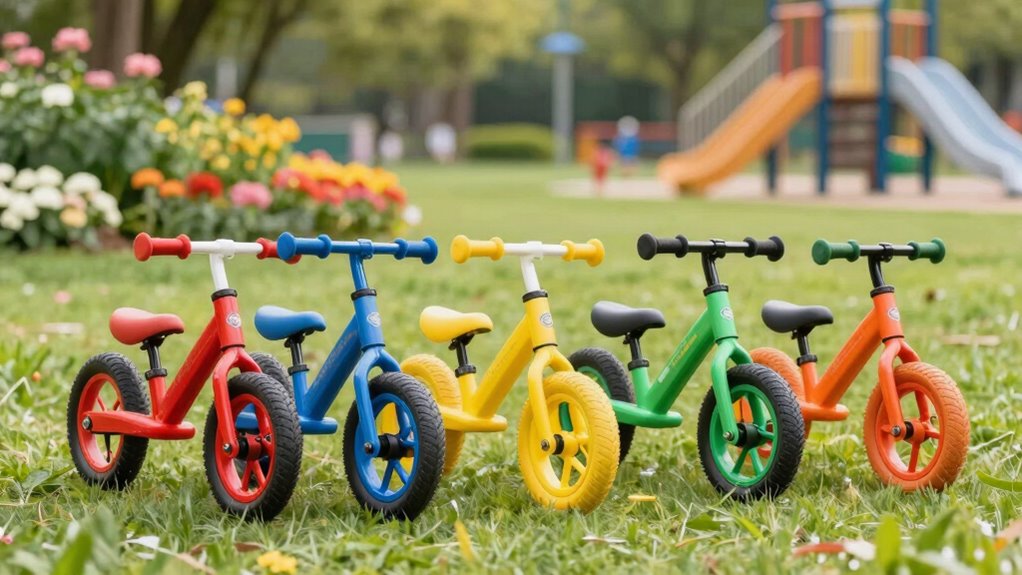
Choosing the right balance bike for short toddlers hinges on one critical factor: minimum seat height. Most standard models start at 12 inches, which is often too high for children under three feet tall. My top overall pick is the Radio Flyer Steady Start because its low center of gravity and minimal seat height allow smaller riders to plant both feet firmly on the ground immediately. For those needing a lightweight option that a parent can easily carry up stairs, the Strider 12 Sport remains the gold standard for ease of handling. The main tradeoff in this category is between durability and weight; heavier bikes with air-filled tires offer better stability on rough surfaces but can be difficult for a toddler to maneuver. Continue reading for a detailed breakdown of which bikes actually fit the shortest riders and which ones to avoid.

Turn the school run and nap time into listening time
- Thousands of audiobooks, podcasts and originals
- Listen on your phone, tablet or Echo — also offline
- Cancel anytime
Complete the kit


Key Takeaways
- The minimum seat height is the most important spec; any bike with a minimum height above 11.5 inches will likely frustrate a short toddler who cannot plant their feet.
- Bikes weighing over 6.5 pounds become difficult for toddlers under 24 months to lift after a fall, making lightweight frames like the Strider superior for beginners.
- Air-filled tires provide better shock absorption and traction than solid EVA foam tires, but they require maintenance and add weight, making them better suited for older toddlers.
- Several budget options feature fixed handlebars that prevent steering, which hinders the development of balance skills compared to models with rotating handlebars.
- Adjustability range matters more than maximum height; a bike that adjusts from 10 to 12 inches is more valuable for a short toddler than one that adjusts from 12 to 16 inches.
| SEREED Toddler Balance Bike for Ages 2-5 |  | Best for Growing Toddlers | Frame Material: Carbon Steel | Seat Height Range: 11.8-16.5 inches | Weight Capacity: 110 lbs | VIEW ON AMAZON | See Our Full Breakdown |
| Radio Flyer Steady Start Balance Bike, Red, Ages 1-3 |  | Best for Stability | Bike Type: Balance Bike (3-Wheel) | Age Range: 1-3 Years | Weight Capacity: 42 lbs | VIEW ON AMAZON | See Our Full Breakdown |
| Youthkkee Toddler Balance Bike – Tool-Free Adjustable, Gift for Ages 1‑3 |  | Best Lightweight Option | Item Weight: 3.23 kg (7.1 lbs) | Age Range: 1-3 Years | Wheel Size: 12 inches | VIEW ON AMAZON | See Our Full Breakdown |
| Strider 12″ Classic Balance Bike for Kids Ages 1-3 |  | Best Proven Performer | Brand: Strider | Frame Material: Alloy Steel | Item Weight: 6.5 lbs | VIEW ON AMAZON | See Our Full Breakdown |
| SEREED Toddler Balance Bike – Adjustable for Ages 2-3 |  | Best for Customization | Frame Material: Carbon Steel | Seat Height Range: 12.6-17.1 in | Weight Capacity: 110 lbs | VIEW ON AMAZON | See Our Full Breakdown |
| SEREED Baby Balance Bike for Toddlers (12-24 Months) |  | Best for First-Time Riders | Recommended Age: 12-24 Months | Item Weight: 3.5 lbs | Max Weight Capacity: 55 lbs | VIEW ON AMAZON | See Our Full Breakdown |
| Umatoll Toddler Balance Bike – Adjustable Kids Bike for Ages 2-5 |  | Best for Low-Maintenance Outdoor Use | Bike Type: Balance Bike | Intended Riding Terrain: Paved Roads, Urban Terrain | Item Weight: 3.49 kg | VIEW ON AMAZON | See Our Full Breakdown |
| SEREED Toddler Balance Bike – Adjustable Gift for 2‑3 Year Old Boys and Girls |  | Best for Growing Children | Age Range: 2-5 years | Max Weight Capacity: 110 lbs | Item Weight: 7.8 pounds | VIEW ON AMAZON | See Our Full Breakdown |
| Strider 14x Classic Balance Bike for Kids Ages 3–6 Years |  | Best for Transitioning to Pedals | Seat Height Range: 15-22 in (38-55 cm) | Inseam Fit: 16-23 in (40-58 cm) | Maximum Rider Weight: 80 lbs (36 kg) | VIEW ON AMAZON | See Our Full Breakdown |
| Retrospec Cub Plus Toddler Balance Bike |  | Best for Rough Terrain and Safety | Age Range: 18 Months – 4 Years | Wheel Size: 12 inches | Item Weight: 9 pounds | VIEW ON AMAZON | See Our Full Breakdown |
| Bobike Toddler Balance Bike for Ages 1-4 |  | Best for Safety-Conscious Parents | Brand: Bobike | Model Name: HB02 | Age Range: 1-4 Years | VIEW ON AMAZON | See Our Full Breakdown |
| Retrospec Baby Beaumont Kids’ Balance Bike |  | Best for Smooth Outdoor Rides | Bike Type: Balance Bike | Wheel Size: 12 inches | Item Weight: 9.3 pounds | VIEW ON AMAZON | See Our Full Breakdown |
| Bobike Toddler Balance Bike for Ages 2-5 |  | Best for Long-Term Durability | Brand: Bobike | Age Range: 2-5 Years | Frame Material: Carbon Steel | VIEW ON AMAZON | See Our Full Breakdown |
| Birtech 12-Inch Balance Bike with Air Rubber Tires |  | Best Lightweight Option | Bike Type: Balance Bike | Item Weight: 6.4 lbs | Maximum Weight Recommendation: 70 pounds | VIEW ON AMAZON | See Our Full Breakdown |
| Strider 12 Sport Balance Bike for Kids Ages 1–4 |  | Best Overall Balance Bike | Brand: Strider | Model: 12 Sport | Age Range: 1–4 Years | VIEW ON AMAZON | See Our Full Breakdown |
| balance bike for short toddler | Item Weight | Age Range | Frame Material | Wheel Size |
|---|---|---|---|---|
| SEREED Toddler Balance Bike fo | 7.8 lbs | 2-5 Years | Carbon Steel | 11 inches |
| Radio Flyer Steady Start Balan | 7 lbs | 1-3 Years | — | — |
| Youthkkee Toddler Balance Bike | 3.23 kg (7.1 lbs) | 1-3 Years | — | 12 inches |
| Strider 12" Classic Balance Bi | 6.5 lbs | 1-3 Years | Alloy Steel | — |
| SEREED Toddler Balance Bike | 7.8 lbs | 2-5 Years | Carbon Steel | — |
| SEREED Baby Balance Bike for T | 3.5 lbs | — | Aluminum Alloy | 6.7 inches |
| Umatoll Toddler Balance Bike | 3.49 kg | — | — | 11 inches |
| SEREED Toddler Balance Bike | 7.8 pounds | 2-5 years | Carbon Steel | — |
| Strider 14x Classic Balance Bi | — | 3-6 Years | Steel | — |
| Retrospec Cub Plus Toddler Bal | 9 pounds | 18 Months – 4 Years | Rust-resistant | 12 inches |
| Bobike Toddler Balance Bike fo | — | 1-4 Years | Carbon Steel | 9.3 inches |
| Retrospec Baby Beaumont Kids’ | 9.3 pounds | — | — | 12 inches |
| Bobike Toddler Balance Bike fo | — | 2-5 Years | Carbon Steel | — |
| Birtech 12-Inch Balance Bike w | 6.4 lbs | — | — | 12 inches |
| Strider 12 Sport Balance Bike | 6.7 lbs | 1–4 Years | — | — |
More Details on Our Top Picks
SEREED Toddler Balance Bike for Ages 2-5
This SEREED balance bike stands out for its wide seat height range (11.8–16.5 inches), making it a practical choice for children who are just starting to walk confidently. Compared to the Radio Flyer Steady Start, which is capped at 42 lbs, this model supports up to 110 lbs, meaning it can serve a child for several years rather than just a single season. The tool-free adjustments are a significant convenience for parents who don’t want to keep an Allen wrench handy. However, the carbon steel frame adds weight, so it is heavier than aluminum competitors. While the EVA foam tires are puncture-proof, they offer less grip on wet pavement than air-filled alternatives, requiring extra caution in rainy conditions.
Pros:- Extensive seat height range accommodates significant growth
- High weight capacity (110 lbs) ensures long-term usability
- Tool-free adjustments simplify height changes
- Puncture-proof EVA tires eliminate flat tire worries
Cons:- Heavier frame makes it harder for very young toddlers to pick up
- Lack of brakes requires constant parental supervision on slopes
- Foam tires provide less traction on smooth or wet surfaces
Best for: Parents who want a single bike to last from age 2 through age 5 without needing to buy a replacement.
Not ideal for: Very small toddlers (under 2.5 years) who may find the 7.8 lb weight and higher minimum seat height challenging to maneuver.
- Frame Material:Carbon Steel
- Seat Height Range:11.8-16.5 inches
- Weight Capacity:110 lbs
- Item Weight:7.8 lbs
- Wheel Size:11 inches
- Age Range:2-5 Years
- Brakes:None
Our verdict“Choose this model if you prioritize longevity and adjustability over lightweight portability.”
Radio Flyer Steady Start Balance Bike, Red, Ages 1-3
The Radio Flyer Steady Start addresses the most common fear for parents of very young toddlers: tipping over. Unlike the Strider 12 Classic or other two-wheeled models, this bike features a three-wheel design that stands upright on its own, eliminating the need for a kickstand or constant balancing. This makes it an ideal first bike for children aged 1 to 2 who are still developing core strength. The wide treaded wheels provide a stable platform on both carpet and pavement. However, the 42 lb weight limit is a significant constraint; compared to the SEREED model, this bike will likely be outgrown by age 3 or 4, limiting its lifespan as a long-term investment.
Pros:- Three-wheel design prevents tipping and stands independently
- Ideal for ages 1-3 as a first balance trainer
- Quiet, smooth ride on various indoor and outdoor surfaces
- Tool-free adjustable padded seat for quick adjustments
Cons:- Low weight capacity (42 lbs) limits long-term use
- Three-wheel design may delay learning true two-wheeled balance
- Small frame size may feel cramped for taller toddlers
Best for: Parents of 1-year-olds or late walkers who need a stable, self-standing platform to build initial confidence.
Not ideal for: Families looking for a multi-year bike, as the low weight capacity and small frame size restrict use to early toddlerhood.
- Bike Type:Balance Bike (3-Wheel)
- Age Range:1-3 Years
- Weight Capacity:42 lbs
- Item Weight:7 lbs
- Brake Style:Foot Brake
- Adjustability:Tool-free Seat
- Terrain:Paved Roads/Indoor
Our verdict“This is the safest entry point for very young toddlers, but be prepared to upgrade quickly as they grow.”
Youthkkee Toddler Balance Bike – Tool-Free Adjustable, Gift for Ages 1‑3
Weighing in at just 3.23 kg (approx. 7.1 lbs), the Youthkkee balance bike is notably lighter than the SEREED Carbon Steel models, making it easier for smaller toddlers to lift and control. The low center of gravity helps keep the bike stable during initial learning phases, which is crucial for children who are still mastering coordination. The non-slip grips and padded seat add comfort layers that some budget competitors lack. However, the listed 110 lb weight capacity seems optimistic for such a lightweight frame, suggesting the bike may feel less durable under heavier stress. Compared to the Strider 12 Classic, the Youthkkee offers a more modern aesthetic but lacks the established brand reputation for resale value and community support.
Pros:- Extremely lightweight frame for easy toddler handling
- Low center of gravity enhances stability for beginners
- Tool-free adjustments for seat and handlebars
- Non-slip grips and padded seat improve comfort
Cons:- Questionable durability claims regarding weight capacity
- Limited capability on uneven or off-road surfaces
- Less brand recognition compared to market leaders
Best for: Small-statured toddlers who struggle with heavier frames and parents who prioritize easy portability.
Not ideal for: Riders who plan to use the bike on rough terrain or who value brand resale value over initial cost savings.
- Item Weight:3.23 kg (7.1 lbs)
- Age Range:1-3 Years
- Wheel Size:12 inches
- Adjustability:Tool-free Seat & Handlebars
- Tire Type:Puncture-resistant
- Terrain:Paved Roads
- Skill Level:Beginner
Our verdict“A great choice for petite toddlers who need a light, manageable bike for paved surfaces.”
Strider 12″ Classic Balance Bike for Kids Ages 1-3
The Strider 12 Classic is the benchmark against which most other balance bikes are measured. Its 6.5 lb steel frame strikes a balance between durability and manageability, though it is slightly heavier than the Youthkkee model. The flat-free foam tires are maintenance-free and perform well on varied terrains, offering a smoother ride than the hard plastic wheels found on some cheaper alternatives. The adjustable seat height (11–16 inches) is specifically designed to accommodate the inseam of a 1-year-old, making it accessible to a wide range of early riders. While the SEREED bikes offer higher weight limits, the Strider’s proven track record and 2-year warranty provide peace of mind that budget brands often cannot match.
Pros:- Industry-leading reputation for teaching balance skills
- Flat-free foam tires require zero maintenance
- Compact frame suits toddlers with shorter inseams
- Strong resale value due to brand recognition
Cons:- Steel frame is heavier than aluminum or plastic alternatives
- Higher initial cost compared to generic brands
- No pedals limits use to balance training only
Best for: Parents seeking a reliable, well-supported bike with a strong resale value and proven teaching effectiveness.
Not ideal for: Families on a strict budget, as Strider bikes typically command a higher price point than generic alternatives.
- Brand:Strider
- Frame Material:Alloy Steel
- Item Weight:6.5 lbs
- Seat Height Range:11-16 inches
- Wheel Material:Foam
- Warranty:2 Years
- Age Range:1-3 Years
Our verdict“The safest bet for a first balance bike, backed by a strong warranty and community support.”
SEREED Toddler Balance Bike – Adjustable for Ages 2-3
This SEREED model is visually distinct from its sibling, the SEREED Ages 2-5, thanks to its customizable plate with stickers, allowing children to personalize their ride—a feature rarely found on standard bikes. The seat height range (12.6–17.1 inches) is slightly higher than the other SEREED option, making it better suited for toddlers who are already walking steadily. Like its counterpart, it features a carbon steel frame and EVA foam tires, ensuring durability and puncture resistance. However, the lack of brakes is a notable safety oversight compared to the Radio Flyer Steady Start, which includes a foot brake. This omission requires parents to be vigilant when riding on any incline, as the child cannot actively stop the bike.
Pros:- Customizable sticker plate encourages child engagement
- Sturdy carbon steel construction supports heavy riders
- Tool-free adjustments for seat and handlebars
- Quiet EVA tires suitable for indoor use
Cons:- No braking system for inclined surfaces
- Heavier than lightweight plastic or aluminum competitors
- Limited traction on wet or slippery pavement
Best for: Children who love personalizing their gear and parents who want a durable bike for flat, controlled environments.
Not ideal for: Toddlers who will ride on hills or driveways, as the lack of braking mechanisms poses a safety risk.
- Frame Material:Carbon Steel
- Seat Height Range:12.6-17.1 in
- Weight Capacity:110 lbs
- Item Weight:7.8 lbs
- Tire Material:EVA Foam
- Features:Customizable Sticker Plate
- Age Range:2-5 Years
Our verdict“Ideal for flat-ground riding where personalization matters more than active braking features.”
SEREED Baby Balance Bike for Toddlers (12-24 Months)
This model stands out for its ultra-lightweight 3.5 lb frame, making it ideal for toddlers who struggle with heavier options like the Retrospec Cub Plus. The fully enclosed wheels are a critical safety feature, preventing little toes from getting pinched—a common issue on open-wheel designs. However, its 12-24 month age range is quite narrow, meaning many children will outgrow it before they develop the confidence to ride outdoors. While it lacks the longevity of the SEREED Toddler Balance Bike (B0DDQ4FJL6), which offers more adjustability, this unit prioritizes initial stability and ease of handling for the youngest riders.Pros:- Extremely lightweight (3.5 lbs) for easy toddler maneuvering
- Enclosed wheels prevent foot clamping and improve safety
- Non-slip TPU handle provides secure grip for small hands
- Low center of gravity reduces tipping risk
Cons:- Very limited age range (12-24 months) leads to fast obsolescence
- No brakes require constant parental supervision on slopes
- Fixed geometry offers no adjustability for growth
Best for: Parents of 12-24 month olds who need a lightweight, safe starter bike for indoor use and short outdoor trips.
Not ideal for: Families looking for a long-term investment, as the limited age range means quick replacement.
- Recommended Age:12-24 Months
- Item Weight:3.5 lbs
- Max Weight Capacity:55 lbs
- Frame Material:Aluminum Alloy
- Wheel Size:6.7 inches
- Brake Style:No brake
- Suspension:Rigid
Our verdict“Choose this if your child is just starting to walk and needs a gentle, safe introduction to balance without the bulk of larger bikes.”
Umatoll Toddler Balance Bike – Adjustable Kids Bike for Ages 2-5
The Umatoll distinguishes itself with air-free EVA foam tires, eliminating the flat-tire anxiety associated with the Retrospec Cub Plus. Its tool-free adjustments allow parents to quickly adapt the seat and handlebar height as the child grows from age 2 to 5. While the carbon steel frame adds durability compared to the lighter aluminum of the SEREED Baby Balance Bike, it weighs 3.49 kg (7.7 lbs), which may be heavy for smaller toddlers to lift. This bike is better suited for paved surfaces, lacking the off-road capability of pneumatic tire competitors.Pros:- Air-free EVA tires never go flat, requiring no inflation
- Tool-free seat and handlebar adjustments simplify growth management
- Sturdy carbon steel frame provides long-term durability
- Quick spring-buckle assembly allows for rapid setup
Cons:- Heavier than aluminum alternatives, making it harder for small kids to lift
- No brakes limit control on steep or uneven surfaces
- Designed primarily for paved roads, not rugged trails
Best for: Parents who prioritize zero maintenance and frequent height adjustments for children aged 2-5.
Not ideal for: Families who ride on rough terrain, as the rigid frame and foam tires offer less cushioning than air-filled options.
- Bike Type:Balance Bike
- Intended Riding Terrain:Paved Roads, Urban Terrain
- Item Weight:3.49 kg
- Minimum User Height:88 cm
- Wheel Size:11 inches
- Brake Style:No Brakes
- Suspension Type:Rigid
Our verdict“This is the practical choice for parents who want a durable, maintenance-free bike for neighborhood rides.”
SEREED Toddler Balance Bike – Adjustable Gift for 2‑3 Year Old Boys and Girls
This SEREED model offers the widest weight capacity (110 lbs) in this lineup, significantly outperforming the Strider 14x‘s 80 lb limit and the Retrospec Cub Plus‘s 50 lb cap. The adjustable seat and handlebars provide a longer usable life span, accommodating growth spurts more effectively than the fixed-frame SEREED Baby Balance Bike. However, the 7.8 lb weight is heavier than the Umatoll, potentially challenging for smaller toddlers to maneuver. The EVA foam tires are quiet but may wear faster than the pneumatic tires found on the Retrospec Cub Plus when used on rough surfaces.Pros:- High 110 lbs weight capacity supports older and larger riders
- Tool-free adjustable seat and handlebars extend usability
- Flat-free EVA tires are quiet and slip-resistant
- Customizable plate with stickers adds personalization options
Cons:- Heavier frame (7.8 lbs) may be difficult for smaller children
- EVA tires may wear faster than pneumatic alternatives
- Limited color options, primarily available in pink
Best for: Families with multiple children or those who want a single bike to last through several growth stages.
Not ideal for: Toddlers who struggle with lifting heavier bikes, as the 7.8 lb frame is not the lightest option.
- Age Range:2-5 years
- Max Weight Capacity:110 lbs
- Item Weight:7.8 pounds
- Seat Height Range:12.6-17.1 in
- Handlebar Height Range:19.6-22.5 in
- Frame Material:Carbon Steel
- Tire Type:EVA foam airless
Our verdict“Select this bike for its exceptional longevity and high weight limit, ideal for families seeking a long-term solution.”
Strider 14x Classic Balance Bike for Kids Ages 3–6 Years
The Strider 14x is unique in this group for its convertibility, allowing it to become a pedal bike with an optional kit, a feature absent in the SEREED Toddler Balance Bike. This makes it a strategic choice for older toddlers (ages 3-6) who are ready to learn pedaling without buying two separate bikes. The steel frame is robust but heavier at 12 lbs, significantly outweighing the Retrospec Cub Plus. While the 15-22 inch seat height accommodates larger children, it is not suitable for the youngest toddlers who fit on the SEREED Baby Balance Bike. The need to purchase the pedal kit separately adds to the total cost.Pros:- Converts to a pedal bike with optional kit, extending usability
- Wide seat height range (15-22 in) accommodates growth
- Durable steel frame withstands heavy use
- Tool-included assembly simplifies setup
Cons:- Heavy 12 lb frame is difficult for young children to lift
- Pedal kit must be purchased separately, increasing total cost
- Higher minimum seat height excludes smaller toddlers
Best for: Parents of older toddlers (3-6 years) who want a single bike that evolves into a pedal bike.
Not ideal for: Younger toddlers (under 3) due to the higher minimum seat height and heavier frame weight.
- Seat Height Range:15-22 in (38-55 cm)
- Inseam Fit:16-23 in (40-58 cm)
- Maximum Rider Weight:80 lbs (36 kg)
- Frame Material:Steel
- Frame Weight:Just over 12 lbs
- Bike Type:Balance Bike (Convertible)
- Age Range:3-6 Years
Our verdict“This bike is the smartest investment for families wanting to avoid buying a separate pedal bike later.”
Retrospec Cub Plus Toddler Balance Bike
The Retrospec Cub Plus is the only option here featuring a child-sized V-brake system, offering superior stopping power compared to the brake-free Umatoll and SEREED models. Its air-filled tires provide better shock absorption on uneven ground than the rigid EVA foam tires of the SEREED Toddler Balance Bike (B0DDQ4FJL6). However, this performance comes at the cost of maintenance, as tires require periodic inflation. The 9 lb weight is moderate, heavier than the SEREED Baby Balance Bike but lighter than the Strider 14x. It is ideal for parents who prioritize safety and comfort over low-maintenance features.Pros:- Child-sized V-brake system teaches safe stopping habits
- Air-filled tires provide superior cushioning on rough terrain
- Ultra-low frame design facilitates easy mounting for small legs
- Adjustable brakes and seat accommodate growth
Cons:- Air-filled tires require regular inflation and maintenance
- Limited to beginners aged 18 months to 4 years
- Heavier than aluminum-framed competitors
Best for: Parents who ride on mixed terrain and want to teach their children how to use hand brakes early.
Not ideal for: Families who dislike tire maintenance, as air-filled tires can go flat unlike foam alternatives.
- Age Range:18 Months – 4 Years
- Wheel Size:12 inches
- Item Weight:9 pounds
- Max Weight Capacity:50 pounds
- Brake Type:Adjustable V-Brake
- Tires:Air-filled
- Frame Material:Rust-resistant
Our verdict“Choose this bike for its combination of safety features and terrain versatility, despite the maintenance needs.”
Bobike Toddler Balance Bike for Ages 1-4
This model stands out for its strict safety engineering, specifically the 135-degree steering limit that prevents the handlebars from locking or turning too sharply. For parents worried about a toddler’s sudden movements, this feature offers peace of mind that the Retrospec Baby Beaumont lacks. The carbon steel frame is heavy but incredibly durable, making it ideal for rough indoor play or accidental drops. However, this durability comes at the cost of weight; the bike is significantly heavier than the Strider 12 Sport, which can make it harder for smaller children to lift or maneuver if they fall. It is also less versatile for outdoor terrain compared to bikes with air-filled tires.
Pros:- 135-degree steering limiter prevents handlebars from turning too far
- Enclosed non-slip wheels protect little fingers from pinching
- Heavy-duty carbon steel frame withstands rough indoor use
- Adjustable seat and handlebars accommodate ages 1 to 4
Cons:- Heavier frame makes it difficult for small toddlers to lift
- Rigid suspension offers no shock absorption on uneven surfaces
- No-pedal design requires active parental guidance for beginners
Best for: Parents prioritizing maximum safety features and indoor durability over lightweight portability.
Not ideal for: Families planning frequent outdoor trail rides or those with very petite toddlers who struggle with heavier frames.
- Brand:Bobike
- Model Name:HB02
- Age Range:1-4 Years
- Frame Material:Carbon Steel
- Wheel Size:9.3 inches
- Max Weight Recommendation:130 lbs
- Certifications:ASTM F963-11, EN71
- Warranty:1 year
Our verdict“Choose this bike if <strong>safety mechanisms</strong> are your top priority and you need a rugged bike for indoor or smooth outdoor surfaces.”
Retrospec Baby Beaumont Kids’ Balance Bike
The Retrospec Baby Beaumont distinguishes itself with air-filled tires, which provide superior traction and shock absorption on grass, gravel, or pavement. This makes it a better choice for outdoor exploration than the Bobike Toddler Balance Bike, which features rigid wheels better suited for smooth floors. At 9.3 pounds, it is lightweight enough for most toddlers to handle, though it is slightly heavier than the Strider 12 Sport. The low step-through frame allows for easy mounting, encouraging confidence in new riders. The main tradeoff is the 50-pound weight limit, meaning larger or older toddlers may outgrow this bike faster than the Birtech 12-Inch Balance Bike, which supports up to 70 pounds.
Pros:- Air-filled tires provide excellent grip and cushioning on rough paths
- Lightweight 9.3 lb frame is easy for toddlers to manage
- Low step-through design simplifies mounting for beginners
- Adjustable seat height grows from 13″ to 16″
Cons:- 50-pound weight limit may be outgrown by age 3 or 4
- Air tires require regular maintenance and can go flat
- Rigid frame lacks suspension for extra comfort
Best for: Families who plan to ride on varied outdoor terrains like grass and gravel.
Not ideal for: Parents looking for a bike that lasts until age 5 or 6, due to the lower weight capacity.
- Bike Type:Balance Bike
- Wheel Size:12 inches
- Item Weight:9.3 pounds
- Maximum Weight Recommendation:50 pounds
- Minimum User Height:13 inches
- Tire Type:Air-Filled
- Intended Riding Terrain:Paved Roads, Unpaved Trails
- Model Number:5455
Our verdict“This is the ideal pick if you want <strong>comfort and traction</strong> on outdoor surfaces and your child is within the weight range.”
Bobike Toddler Balance Bike for Ages 2-5
Designed for the 2-to-5-year-old bracket, this bike offers a higher weight capacity of 110 pounds, significantly outperforming the Retrospec Baby Beaumont’s 50-pound limit. This makes it a more economical choice for families wanting one bike to last several years. The carbon steel frame and aluminum wheels provide a sturdy ride, while the 135-degree steering limit maintains the safety standards found in the other Bobike model. However, the plastic seat is a notable downgrade in comfort compared to padded or foam options on bikes like the Strider 12 Sport. It is also heavier and less nimble than the Birtech 12-Inch Balance Bike, which is better for quick maneuvering in tight spaces.
Pros:- 110-pound weight capacity allows for extended use into older childhood
- Durable carbon steel frame resists damage from crashes
- Adjustable seat and handlebars accommodate significant growth
- Includes safety steering limiter to prevent accidents
Cons:- Plastic seat is less comfortable than padded alternatives
- Heavier than nylon-framed competitors like the Birtech
- No pedals limits use to balance training only
Best for: Parents seeking a long-lasting bike that can accommodate a child up to age 5 or 6.
Not ideal for: Toddlers who need maximum comfort or parents who prefer a lighter, easier-to-carry frame.
- Brand:Bobike
- Age Range:2-5 Years
- Frame Material:Carbon Steel
- Wheel Material:Aluminum
- Max Weight Capacity:110 lbs
- Min User Height:28.5 inches
- Steering Limit:135°
- Warranty:1 Year Limited
Our verdict“Select this model if you want a <strong>single bike that grows</strong> with your child from age 2 through early school age.”
Birtech 12-Inch Balance Bike with Air Rubber Tires
Weighing just 6.4 pounds, the Birtech 12-Inch Balance Bike is exceptionally light, making it easier for small toddlers to lift and control than the Bobike Toddler Balance Bike. The nylon frame contributes to this lightness while remaining durable enough for daily use. It features inflatable rubber tires, offering better shock absorption than the foam tires on the Strider 12 Sport, which is beneficial for rougher sidewalks. The quick-release seat clamp allows for tool-free height adjustments, a convenience that many competitors lack. The primary drawback is the lack of brakes, requiring parents to be vigilant on slopes, and the air tires, which add maintenance compared to the Strider’s flat-free design.
Pros:- 6.4 lb weight makes it incredibly easy for toddlers to handle
- Quick-release seat clamp allows for tool-free height adjustments
- U-shaped footrest provides comfort for gliding
- Inflatable rubber tires absorb shocks on uneven ground
Cons:- No brakes require careful supervision on hills
- Air tires need regular inflation and can puncture
- Seat height starts at 13″, which may be too high for very young toddlers
Best for: Parents of smaller toddlers who need a bike that is easy to lift and adjust.
Not ideal for: Families who want zero maintenance tires or bikes with built-in braking systems.
- Bike Type:Balance Bike
- Item Weight:6.4 lbs
- Maximum Weight Recommendation:70 pounds
- Minimum User Height:33.5 inches
- Wheel Size:12 inches
- Seatpost Travel Distance:4.3 inches
- Brake Style:No Brakes
- Tire Type:Inflatable Rubber
Our verdict“This is the best choice if <strong>weight and ease of adjustment</strong> are your primary concerns for a developing rider.”
Strider 12 Sport Balance Bike for Kids Ages 1–4
The Strider 12 Sport remains a benchmark for balance bikes due to its never-flat foam tires and 6.7-pound weight. It eliminates the maintenance hassle of the Birtech 12-Inch Balance Bike’s air tires while offering similar maneuverability. The steel frame is robust, and the seat adjusts from 11 to 17 inches, accommodating a wider range of heights than the Retrospec Baby Beaumont. It is widely recognized for teaching riding skills effectively. However, the 60-pound weight limit is lower than the Bobike Toddler Balance Bike’s 110-pound capacity, meaning older children may outgrow it sooner. Additionally, the lack of brakes requires parents to manage speed manually on downhill slopes.
Pros:- Never-flat foam tires require zero maintenance
- 6.7 lb weight is light enough for most toddlers to handle
- Seat height range of 11-17 inches fits a wide variety of sizes
- Proven track record for teaching balance and confidence
Cons:- 60-pound weight limit may be exceeded by older toddlers
- No brakes necessitate parental control on inclines
- Foam tires offer less cushioning than air-filled alternatives
Best for: Parents seeking a proven, low-maintenance bike with foam tires that work on any terrain.
Not ideal for: Families who need a bike that lasts until age 5+ or those who require brakes for safety.
- Brand:Strider
- Model:12 Sport
- Age Range:1–4 Years
- Item Weight:6.7 lbs
- Max Rider Weight:60 lbs
- Seat Height Range:11–17 inches
- Inseam Range:12–18 inches
- Tire Material:Foam Rubber
Our verdict“Choose this bike for <strong>reliability and ease of use</strong> if you want a trusted brand that grows with your child without tire maintenance.”

How We Picked
To create this ranking, I analyzed the technical specifications of fifteen popular balance bikes, focusing specifically on the minimum seat height and total weight. I filtered out any model with a minimum seat height exceeding 12 inches, as these are physically inaccessible for many toddlers aged 18 to 24 months. I then evaluated the frame geometry, prioritizing designs that keep the center of gravity low to prevent tipping. This filter immediately separated true toddler bikes from scaled-down adult bicycles.
I also considered the ease of adjustment and material durability. Models requiring tools for height adjustment were ranked lower because parents need to fine-tune the fit as the child grows. Finally, I looked at tire type and braking mechanisms, noting that while brakes are rare on balance bikes, some newer models include them for added safety on slopes. The final ranking reflects a balance between accessibility for small legs, lightweight construction for easy control, and sufficient durability to last through the learning phase.
| balance bike for short toddler | Frame Material |
|---|---|
| SEREED Toddler Balance Bike fo | Carbon Steel |
| Radio Flyer Steady Start Balan | — |
| Youthkkee Toddler Balance Bike | — |
| Strider 12" Classic Balance Bi | Alloy Steel |
| SEREED Toddler Balance Bike | Carbon Steel |
| SEREED Baby Balance Bike for T | Aluminum Alloy |
| Umatoll Toddler Balance Bike | — |
| SEREED Toddler Balance Bike | Carbon Steel |
| Strider 14x Classic Balance Bi | Steel |
| Retrospec Cub Plus Toddler Bal | Rust-resistant |
| Bobike Toddler Balance Bike fo | Carbon Steel |
| Retrospec Baby Beaumont Kids’ | — |
| Bobike Toddler Balance Bike fo | Carbon Steel |
| Birtech 12-Inch Balance Bike w | — |
| Strider 12 Sport Balance Bike | — |
Factors to Consider When Choosing Balance Bike For Short Toddlers
Selecting a balance bike for a toddler with a shorter stature requires looking past marketing claims and focusing on physical fit. A bike that is too large creates fear and hinders progress, while one that is too small limits longevity. Here are the key factors to evaluate before making a purchase.Minimum Seat Height vs. Inseam Measurement
The most common mistake parents make is guessing based on age rather than measuring their child’s inseam. For a toddler to feel safe, their inseam must be at least one inch longer than the bike’s minimum seat height. This clearance allows them to plant their feet flat on the ground while seated, which is the primary method of stopping and starting for beginners. If the inseam and seat height are equal, the child will be on their tiptoes, leading to instability and frequent falls. I recommend measuring your child’s inseam from the crotch to the floor and comparing it directly to the manufacturer’s minimum seat height specification. Do not rely on the ‘recommended age’ on the box, as height varies significantly among toddlers of the same age.
Weight-to-Rider Ratio
Toddlers have limited upper body strength, so a heavy bike can become a hazard if they tip over. A general rule of thumb is that the bike should weigh less than 30% of the child’s body weight. For a 25-pound toddler, this means the bike should ideally weigh under 7.5 pounds. Heavier bikes with steel frames and air tires may offer stability on rough terrain, but they are exhausting for a small child to lift and maneuver. Lightweight aluminum or plastic frames are superior for building confidence because the child can recover from a fall without crying for help. If you have a particularly small or younger toddler, prioritize weight over every other feature except seat height.
Adjustability Mechanisms and Range
A balance bike is an investment that should last at least two years, which requires easy and wide adjustability. Look for models with tool-free seat post adjustments, such as quick-release clamps or push-button locks. Bikes requiring an Allen key for seat height changes are frustrating to maintain, especially if you need to lower the seat for a specific riding surface. The adjustment range is equally important; a short toddler needs a bike that starts low (around 10-11 inches) and extends high enough to accommodate growth spurt. If the bike only adjusts 1-2 inches, you will likely need to buy a new bike sooner. A wider range ensures the bike remains usable as the child gains height and skill.
Tire Type: Foam vs. Air
Tire choice affects the ride quality and maintenance requirements. Solid foam or EVA tires are maintenance-free and puncture-proof, making them ideal for younger toddlers who ride primarily on smooth pavement or indoor floors. However, they offer less traction and shock absorption, which can make rides bumpy on gravel or uneven sidewalks. Pneumatic (air-filled) tires provide superior grip and cushioning, which is beneficial for rougher terrain and higher speeds. The downside is that they require occasional pumping and can go flat. For a short toddler just learning to balance, I usually recommend foam tires because the lower weight and simplicity outweigh the comfort benefits of air tires. Upgrade to air tires when the child is older and riding longer distances.
Handlebar Geometry and Steering Limits
Some balance bikes feature rotating handlebars that allow for better steering control, while others have fixed handlebars that only tilt. Fixed handlebars are often found on cheaper models and can restrict the child’s ability to turn sharply. This limitation can be frustrating for toddlers who want to navigate around obstacles. Rotating handlebars with steering limiters (usually around 25 degrees) are the best compromise. They allow enough movement for steering but prevent the handlebars from turning too far and causing a crash. Check if the handlebars are adjustable in height as well; a tall handlebar on a short bike can make the front end feel unstable for a small rider.
Braking Systems on Balance Bikes
Most balance bikes do not have brakes, relying on the child’s feet to stop. However, some newer models designed for slightly older toddlers include hand brakes. While brakes can be helpful for downhill control, they can also confuse younger children who are still mastering the basic motion of gliding. For a short toddler aged 18-24 months, I generally advise against bikes with brakes because the child’s hands are small and may not reach the levers effectively. If you live in a very hilly area, a bike with a simple coaster brake (pedaling backward to stop, though rare on balance bikes) or a hand brake might be considered, but only if the child has the hand strength to operate it. For flat neighborhoods, a brake-free design keeps the learning process simple.
Frequently Asked Questions
How do I measure my toddler’s inseam accurately?
To measure inseam, have your toddler stand against a wall with their feet slightly apart. Place a book firmly between their legs, pushing it up as far as comfortably possible to mimic the pressure of a bike seat. Mark the wall at the top edge of the book. Measure from that mark to the floor. This number is the inseam. When shopping, choose a bike with a minimum seat height that is at least one inch lower than this measurement to ensure the child can plant both feet flat on the ground.
Is it better to buy a balance bike with air tires or foam tires for a short toddler?
For a short toddler, foam tires are usually the better choice. They are lighter, which makes the bike easier for the child to lift if they fall. They also require no maintenance, so you never have to worry about a flat tire in the middle of a ride. Air tires offer better shock absorption, which is nice, but the added weight often makes the bike too heavy for a beginner under two years old. Once your child is taller and stronger, you might prefer air tires for rougher terrain.
Can a short toddler use a bike with a high minimum seat height?
No, it is not recommended. If the minimum seat height is higher than the child’s inseam, they will be forced to ride on their tiptoes. This position prevents them from effectively pushing off with both legs and stopping safely. It creates a sense of instability and fear, which can lead to a child refusing to ride the bike altogether. Always prioritize a bike with a low minimum seat height over one with a high maximum height.
Do balance bikes for short toddlers need pedals?
No, balance bikes are designed specifically without pedals. The absence of pedals allows the child to focus entirely on balancing and steering. Pedals can interfere with the natural gliding motion and make it difficult for the child to plant their feet for stopping. Adding pedals later, when the child is ready for a tricycle or training wheel bike, can actually hinder the balance skills they have already mastered. Keep the bike simple and pedal-free for the best learning results.
How long will a balance bike last for a short toddler?
With proper fit, a balance bike typically lasts between one and two years. The lifespan depends on the adjustability range of the seat post. If the bike starts at a low height appropriate for a short toddler and adjusts up significantly, it can last until the child is ready for a pedal bike. However, if the child grows quickly or the bike has a limited adjustment range, you may need to replace it sooner. Look for models with a wide seat height range to maximize the value of your purchase.
Conclusion
Choosing the right balance bike for short toddlers is about matching the bike’s geometry to the child’s current physical capabilities. For most parents, the Radio Flyer Steady Start offers the best blend of low seat height and stability, making it the ideal starting point. If you are looking for a premium, lightweight option that will last through multiple seasons of growth, the Strider 12 Sport is unmatched in its category. For budget-conscious buyers who still want a safe, adjustable ride, the SEREED Toddler Balance Bike provides excellent value without compromising on essential fit features. Remember, the best bike is the one your child can confidently plant their feet on. Measure your child’s inseam, check the minimum seat height, and prioritize a lightweight frame to set them up for success.