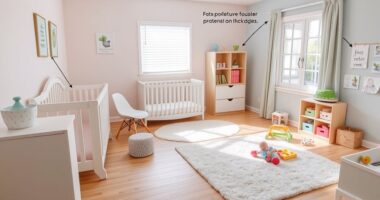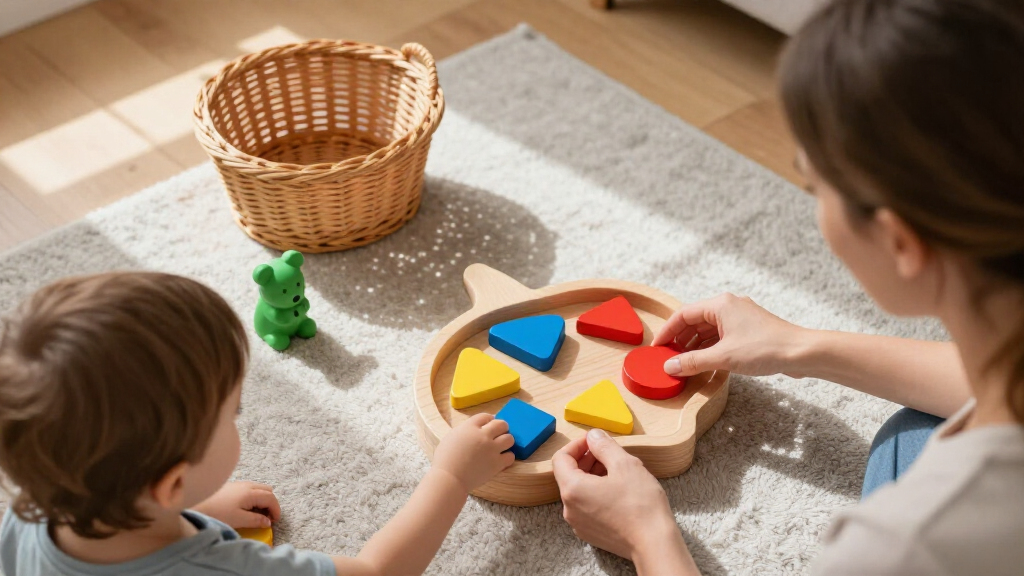
Use this guide to choose a small set of educational toys for a preschooler, check that each one is safe and age-appropriate, and set it up for play at home. It is for parents and caregivers with little or no experience selecting learning toys. The process takes about 30-60 minutes, including time to review labels and compare options.

Turn the school run and nap time into listening time
- Thousands of audiobooks, podcasts and originals
- Listen on your phone, tablet or Echo — also offline
- Cancel anytime

BEESTECH Alphabet Learning Toy with Wooden Letters and Flash Cards
- ✔ Recommended age: 3-4 years
- ✔ Flash cards: 28
- ✔ Wooden letters: 52 blocks (two of each letter)

Magnetic Wooden Fishing Game Puzzle for Preschoolers with Alphabet and Numbers
- ✔ Brand: NASHRIO
- ✔ Age range: 3 years and up
- ✔ Material: Wood
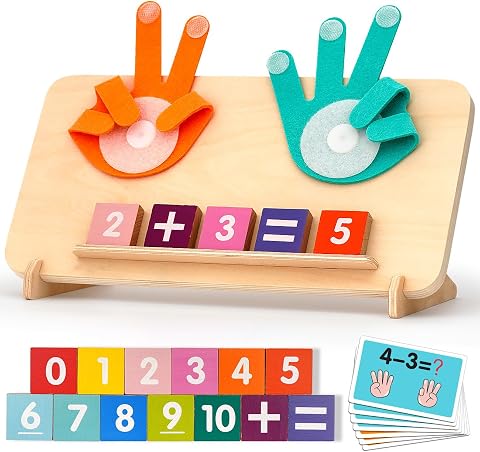
MOTREE Preschool Math Manipulatives Learning Toys for Toddlers 2-4
- ✔ Includes: 1 wooden finger board, 13 number blocks, 8 flash cards, 1 holder
- ✔ Material: Natural basswood, non-toxic water-based paint
- ✔ Age range: 3-5 years
You will finish with toys that invite the child to explore, communicate, move, create, and solve simple problems. Educational toys do not need screens or complicated instructions: open-ended materials such as blocks, pretend-play items, puzzles, and art supplies can support learning through ordinary play.
Difficulty: Beginner | Time: 30-60 minutes
What You’ll Need
Tools & Materials:
- A short list of the child’s interests and current abilities
- A tape measure if checking toy size or storage space
- Access to toy labels or product information
- A clear, supervised play area
Knowledge:
- Basic awareness of the child’s age and abilities
- Willingness to supervise play, especially with small parts, art materials, or toys with moving pieces
Allow 30-60 minutes to select and prepare toys. Check the age range and safety information on each item, and follow the manufacturer’s instructions. If the child has a known allergy, disability, or sensory need, account for it when choosing materials and ask a qualified professional for advice when needed.
BEESTECH Alphabet Learning Toy with Wooden Letters and Flash Cards
The BEESTECH alphabet set earns our top spot because it covers the widest slice of the preschool curriculum in one box. With 52 wooden letter blocks (two of every letter) and 28 flash cards, children can start with simple letter-to-card matching and progress to spelling short words as they approach kindergarten. That built-in progression is what separates it from the other two picks: the fishing game tops out at recognition, and the MOTREE set is math-only, while this set grows with the child across a full school year or more.The polished, corner-free wooden letters feel substantial compared with cardboard flash card sets, and the included storage bag solves the problem that plagues every multi-piece toy in this lineup, including the fishing set’s easily lost fish. Our main hesitation is the stated age range of 3 to 4 years, which is narrower than the other two products and suggests younger toddlers may not get full use from it right away. The manufacturer also does not specify the wood type, which matters to parents comparing it against the MOTREE’s clearly labeled natural basswood.
Pros:
- Teaches both letter recognition and word building in a single set
- 52 letter blocks and 28 flash cards provide long-lasting replay value
- Polished wood with no sharp corners is safe for small hands
- Storage bag keeps pieces organized between sessions
Cons:
- Narrow stated age range of 3-4 years limits long-term use
- Wood type is not specified, unlike some competing sets
Best for: Families who want one toy that covers letter recognition and early word building for a child heading toward kindergarten
Not ideal for: Parents of younger toddlers under 3, or anyone who wants full material transparency on wood type
Bottom line: The most complete literacy purchase in this lineup and the safest default choice for most preschool families.
“The most complete literacy purchase in this lineup and the safest default choice for most preschool families.”
Magnetic Wooden Fishing Game Puzzle for Preschoolers with Alphabet and Numbers
Not every preschooler will sit still long enough to match cards, and that is exactly the gap this fishing game fills. Instead of asking a child to sit at a table, it turns letter and number practice into a physical catching game, where each wooden fish carries a letter or number. Compared with the BEESTECH set, it trades depth for motion: children are recognizing symbols rather than building words, but they are also developing hand-eye coordination and fine motor control that a flash card set simply cannot teach.The build quality is a strong point, with smooth polished wood and non-toxic water-based dye, and the game format makes it a better social option too, since siblings or parents can take turns fishing. The tradeoffs are real, though. The small fish pieces require adult supervision for younger children, the loose magnetic pieces and pole are easy to lose if not stored carefully, and children over about five will likely outgrow it, giving it a shorter useful window than the BEESTECH set.
Pros:
- Turns letter and number recognition into a physical, engaging game
- Builds hand-eye coordination and fine motor skills, not just academics
- Smooth polished wood with non-toxic water-based dye
- Works well as a turn-taking social activity with siblings or parents
Cons:
- Small fish pieces require adult supervision for younger children
- Too simple for children older than 5
- Fishing pole and magnetic pieces are easily lost without careful storage
Best for: High-energy 3 to 5 year olds who learn through movement and need motor skill development alongside academics
Not ideal for: Children over 5, or families who dislike tracking many small loose pieces
Bottom line: The right pick when your preschooler needs to move, offering recognition practice plus motor skills that seated sets cannot match.
“The right pick when your preschooler needs to move, offering recognition practice plus motor skills that seated sets cannot match.”
MOTREE Preschool Math Manipulatives Learning Toys for Toddlers 2-4
Where the other two sets stay at the recognition level, the MOTREE set teaches an actual kindergarten-readiness skill: addition and subtraction within 10. Using a Montessori-style finger board with 13 colorful number blocks and 8 flash cards, children physically count and combine quantities, which is how most early-childhood educators recommend introducing arithmetic. If your child already knows their letters and you want the next challenge, this is a more focused tool than either the BEESTECH or the fishing set.Material quality is the strongest in this lineup, with natural basswood and non-toxic water-based paint, a step up in transparency from the BEESTECH set’s unspecified wood. The multi-component design (board, blocks, cards, and holder) also supports varied lesson formats. The limitations are clear: it is math-only, so it will not help with literacy, and it is capped at numbers within 10, meaning a quick learner may exhaust it within a year or two. Note also that despite the toddler-friendly packaging, the small blocks mean children under 3 need close supervision.
Pros:
- Natural basswood construction with non-toxic water-based paint
- Teaches addition and subtraction within 10, deeper than recognition-level toys
- Montessori hands-on approach using physical counting
- Multiple components (board, blocks, cards, holder) allow varied learning activities
Cons:
- Limited to math skills within 10, with no literacy content
- Small parts may pose a choking hazard for children under 3
- Narrow skill ceiling for children who master arithmetic quickly
Best for: Parents focused on kindergarten math readiness who want a hands-on, Montessori-style counting tool
Not ideal for: Families wanting a general-purpose toy covering literacy as well as math
Bottom line: The deepest single-subject tool here, ideal once your child’s letters are solid and math readiness becomes the priority.
“The deepest single-subject tool here, ideal once your child’s letters are solid and math readiness becomes the priority.”
As an Amazon Associate we earn from qualifying purchases.
Before You Start
Decide how much space and money you can use before shopping. A few versatile toys are often easier to use and store than a large collection. Check current product safety notices in your region and inspect secondhand toys for missing parts, damage, peeling paint, exposed batteries, or unsafe repairs. Keep toys with small pieces away from children who still mouth objects, and supervise any activity that could present a choking, pinching, or ingestion risk.
Step-by-Step Instructions
Step 1: Notice what the child enjoys
Write down three activities the child chooses during ordinary play, such as building, drawing, singing, pretending to cook, sorting objects, or moving to music. Add one skill the child is practicing, such as using words to describe things, matching shapes, taking turns, or balancing. Use these notes to guide the selection instead of choosing only by a toy’s label or advertised learning claims.
Tip: Observe the child across a few everyday play sessions if their interests change quickly. Do not treat a toy as a way to test or diagnose development.
Check: Your notes include a few genuine interests and one skill or type of play you would like to encourage.
Step 2: Set a practical budget and space limit
Choose a spending limit and identify where the toys will be stored and used. Measure a shelf or play surface if space is tight. Decide whether you want toys that can be shared with siblings or reused in different ways, such as blocks for building and pretend play.
Tip: Count storage containers and pieces as part of the space needed. A toy that cannot be put away safely may be hard to keep in regular use.
Check: You know your budget and have a place where the selected toys can be stored and played with.
Step 3: Choose a mix of play types
Select toys that invite more than one kind of learning. For example, consider blocks or large construction pieces for spatial thinking and problem-solving; picture books and puppets for language and storytelling; pretend-play items for imagination and social play; simple puzzles and sorting toys for matching and persistence; and washable crayons, large paper, or child-safe dough for creative and hand movements. Add a ball, ride-on toy, or music item when the child has a safe place to move.
Choose a few items that can be used in several ways. Open-ended toys give the child room to invent rather than requiring a single right answer.
Tip: A toy does not need to teach every skill. Pick items the child can use independently at their current ability, with room to try new ways to play.
Check: Your shortlist includes activities the child likes and offers a reasonable mix of creative, language, problem-solving, pretend, or physical play.
Step 4: Check age guidance and safety details
Read the package or product listing for the recommended age, warnings, materials, cleaning instructions, and any required adult supervision. Check for loose or detachable small parts, sharp edges, long cords, pinch points, magnets, and accessible batteries. For toys used outdoors or for movement, check that the surface and equipment suit the child’s size and ability. Do not buy an item if its safety information is missing or unclear.
Tip: Age guidance is a safety and suitability reference, not a measure of a child’s intelligence. Choose within the stated range and supervise according to the label.
Check: You can explain why each shortlisted toy is suitable for the child’s age and how you will supervise its use.
Step 5: Compare options by play value
Compare two or three suitable options within your budget. Look for durable construction, pieces that are easy for the child to handle, clear cleaning instructions, and play that can change as the child invents ideas. Check whether replacement pieces are available if the toy depends on them. Read product details carefully instead of relying on pictures or claims such as “educational” alone.
Tip: Avoid selecting a toy solely because it has many features, lights, or sounds. Consider whether the child will be able to make choices and lead the play.
Check: You have selected a small set of toys that fit the budget, storage space, safety needs, and the child’s interests.
Step 6: Prepare the toys before offering them
Follow the assembly and cleaning instructions. Remove packaging, check that all pieces are present, and test moving parts yourself. Store any pieces that are too small or unsuitable for the child. Put the toys in a clear play area with enough room for the activity, and keep instructions or safety information where an adult can find them.
Tip: Do not let the child play with a toy before it is fully assembled and checked. Keep packaging, batteries, and spare parts out of reach.
Check: The toys are clean, complete, assembled as directed, and placed where the child can use them safely.
Step 7: Introduce one activity and follow the child’s lead
Offer one toy or activity at a time, show a simple way to begin, and invite the child to try. For blocks, build a short tower and ask what else could be made. For a book, point to a picture and invite the child to describe it. For art materials, demonstrate safe use and let the child choose colors or shapes. Give the child time to explore instead of correcting every result or turning play into a quiz.
Tip: Stay nearby and offer help when needed. Adjust the activity if the child is frustrated, tired, or using the toy in a way that creates a safety risk.
Check: The child can begin playing, make choices, and explore with an adult close enough to supervise.
Step 8: Rotate toys and check their condition
After play, help the child return the pieces to a safe storage place. Check toys regularly for cracks, loose parts, damaged cords, leaking batteries, or peeling surfaces. Remove damaged items until they can be repaired according to the manufacturer’s directions or discarded safely. If the child stops choosing a toy, put it away for a while and bring it back later rather than adding more items immediately.
Tip: Keep toys that need close supervision or have small parts in a separate, adult-managed container.
Check: The play area is clear, pieces are accounted for, and damaged or unsuitable items are out of reach.
Common Mistakes to Avoid
- Buying a toy because its packaging promises advanced learning. — Check whether the child can use it safely and enjoys the kind of play it supports. Favor toys with clear, flexible ways to explore over broad marketing claims.
- Choosing toys that are too difficult or require an adult to operate them throughout play. — Pick a toy the child can start with little help, then offer one small challenge or variation when they are ready.
- Offering too many toys at once. — Put out a few choices and store the rest. Rotate items when the child wants new activities, and keep all small pieces supervised.
- Ignoring age warnings, cleaning directions, or missing pieces. — Read the safety and care information before use. Check the toy after assembly and remove it from play if it is damaged or incomplete.
Troubleshooting
Problem: The child ignores the new toy.
Solution: Put it away and try again later, or demonstrate a short activity connected to something the child already likes. Avoid insisting that the child use it; interest may develop with time or the toy may not suit them.
Problem: The activity frustrates the child.
Solution: Make the task simpler, reduce the number of pieces, or show one step at a time. Stop if the child is tired or upset and offer another activity.
Problem: Pieces keep getting lost.
Solution: Use a labeled container, offer the toy only in a supervised area, and set aside time to count pieces before and after play. Put small pieces away when they are not being used.
Problem: The toy is difficult to clean or store.
Solution: Follow the care instructions and do not soak or disassemble parts unless the manufacturer permits it. If safe cleaning or storage is impractical, choose another toy that better fits the home.
What Success Looks Like
You have a manageable set of toys that fit your budget and storage space, suit the child’s age and abilities, and support activities the child enjoys. Each toy has been checked, prepared according to its instructions, and placed in a supervised play area. During play, the child can explore, make choices, and try ideas without needing an adult to direct every move. You can identify when a toy needs cleaning, repair, storage, or removal from use.
Next Steps
Observe which toys the child returns to and which activities hold their attention. Rotate toys when interest fades, check their condition during routine cleanup, and review age guidance as the child grows. Add a new item only when it fills a real gap in play, safety, or accessibility. If a toy appears to create a safety concern, stop use and follow the manufacturer’s advice or local product-safety guidance.
Frequently Asked Questions
How many educational toys does a preschooler need?
There is no fixed number. Start with a few safe, varied toys that the child can access and use in different ways. Rotate items instead of putting the entire collection out at once.
Do educational toys need to use screens?
No. Books, blocks, pretend-play materials, puzzles, art supplies, and outdoor play equipment can all support learning through active play. Choose based on the child’s interests, age, and safety needs.
Should I choose toys above the recommended age range?
Follow the manufacturer’s age guidance and warnings, especially when a toy includes small parts or other hazards. Choose activities that fit the child’s current abilities and supervise as directed.
What should I do if the child uses a toy differently than its instructions suggest?
Allow safe, imaginative use when the toy’s instructions permit it. Step in if the child is using it in a way that could cause injury, break the toy, or expose them to small parts, batteries, or materials they should not handle.