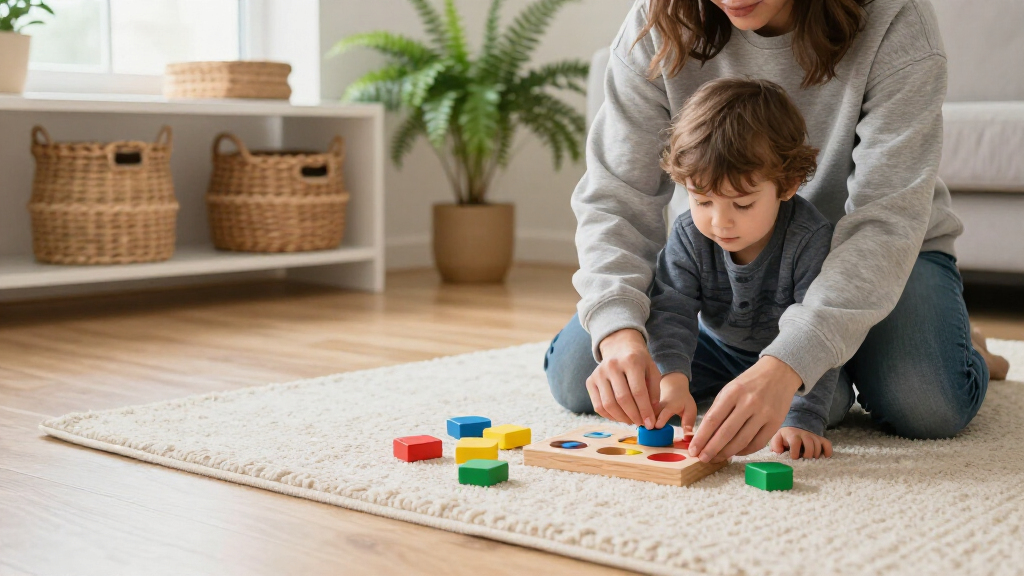

When choosing educational toys for preschoolers, the real decision is whether a child learns more from directing play or responding to built-in activities. Open-ended wooden toys—such as blocks, puzzles, counting pieces, and pretend-play sets—leave the rules flexible. Electronic toys use lights, buttons, voices, or screens to prompt specific tasks and give immediate feedback. Both can support early learning, but they encourage different habits.

Turn the school run and nap time into listening time
- Thousands of audiobooks, podcasts and originals
- Listen on your phone, tablet or Echo — also offline
- Cancel anytime

BEESTECH Alphabet Learning Toy with Wooden Letters and Flash Cards
- ✔ Recommended age: 3–4 years
- ✔ Flash cards: 28
- ✔ Wooden letters: 52 blocks (two of each letter)

Magnetic Wooden Fishing Game Puzzle for Preschoolers with Alphabet and Numbers
- ✔ Brand: NASHRIO
- ✔ Age range: 3 years and up
- ✔ Material: Wood with non-toxic water-based dye
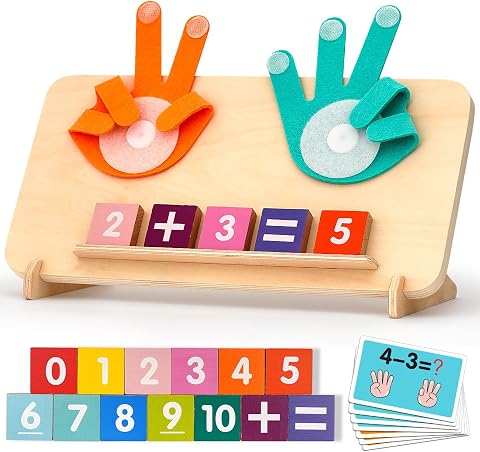
MOTREE Preschool Math Manipulatives Learning Toys for Toddlers 2-4
- ✔ Age range: 3–5 years
- ✔ Includes: 1 wooden finger board, 13 number blocks, 8 flash cards, 1 holder
- ✔ Material: Natural basswood, non-toxic water-based paint
Wooden toys are usually the stronger everyday choice for children who enjoy building, pretending, sorting, and making up their own games. Electronic toys can be a better fit for children who respond to sound and feedback, or for families seeking a toy with structured practice in letters, numbers, or matching. The comparison below focuses on learning, independence, engagement, durability, cost, and ease of use so you can choose based on how your preschooler actually plays.
At a Glance
| Criteria | Open-ended wooden educational toys | Electronic educational toys | Winner |
|---|---|---|---|
| Learning approach | Child-led exploration of shapes, numbers, language, and relationships | Guided prompts and immediate responses, often focused on specific skills | Depends |
| Creativity and pretend play | High; pieces can become many things in play | Usually narrower, depending on the toy’s activities | A |
| Independent use | Often high once the child understands the pieces | Can be easy to start, though help may be needed for setup or menus | A |
| Engagement and feedback | Engagement comes from the child’s own ideas | Sound, lights, and responses can hold attention | B |
| Durability and longevity | Often sturdy; usefulness can carry across ages | Depends on electronics, buttons, and software; may be outgrown as interests change | A |
| Cost and upkeep | Usually no batteries or digital upkeep; prices vary by materials and brand | Costs vary; batteries or charging may add upkeep | A |
| Best everyday role | Open-ended play and shared activities | Short practice sessions and interactive feedback | Depends |
BEESTECH Alphabet Learning Toy with Wooden Letters and Flash Cards
This set is the most structured literacy tool of the three, pairing 52 polished wooden letter blocks with 28 flash cards so children physically match letters to the words and images in front of them. That two-of-each-letter design is more significant than it sounds: it allows a child to spell simple words like "MOM" or "BEE" without running out of characters, which neither the fishing game nor the math board can support. Compared with the NASHRIO set, which teaches letters incidentally through play, BEESTECH makes the alphabet the entire point of the session — better for a child actively preparing for pre-K or kindergarten.The tactile quality here also earns its place. Letters that a child can hold, trace, and slot into place reinforce shape recognition more effectively than printed cards alone, and BEESTECH pairs both formats deliberately. The included storage bag addresses the biggest practical weakness of wooden-piece sets — scattered blocks — and gives the whole package giftable polish.The tradeoffs are real, though. This is a matching-and-drill toy, not a game, so children who resist structured activities may drift back toward the fishing game’s more playful format. The 3–4 year age recommendation also narrows its useful window, and the listing doesn’t specify the wood species, which matters to parents comparing it against MOTREE’s explicitly named natural basswood.
Pros:
- Combines letter recognition with early word-building in one activity
- 52 blocks include two of each letter, enabling simple word spelling
- Wooden letters are polished with no sharp corners for safer handling
- Storage bag keeps the 80-piece set organized between sessions
Cons:
- Recommended age range of 3–4 years limits how long the toy stays relevant
- Matching format lacks the game appeal that keeps reluctant learners engaged
- Wood type is not specified, unlike some competing wooden sets
Best for: Parents prioritizing letter recognition and early spelling ahead of preschool or kindergarten
Not ideal for: Children who lose interest in structured matching activities, or families wanting math coverage too
Bottom line: The strongest pure literacy pick here, ideal for preschool prep — provided your child responds to matching-style learning rather than needing a game hook.
“The strongest pure literacy pick here, ideal for preschool prep — provided your child responds to matching-style learning rather than needing a game hook.”
Magnetic Wooden Fishing Game Puzzle for Preschoolers with Alphabet and Numbers
Where BEESTECH asks a child to sit and match, the NASHRIO fishing game gets the same letters learned while a preschooler is fully absorbed in play. Using a magnetic pole to catch fish marked with letters and numbers turns recognition practice into something a child will request voluntarily — and that engagement advantage is why it earns our value pick. It also has the broadest skill coverage of the three: letters, numbers, and color recognition in one board, versus BEESTECH’s literacy-only focus and MOTREE’s math-only design.The developmental benefit is different in kind, not just degree. Guiding a magnetic pole to a specific fish builds hand-eye coordination and fine motor control more actively than placing letters into cards, because the child must track, aim, and lift with a steady hand. The polished wood and non-toxic water-based dye construction puts it in the same quality tier as the other two wooden sets.The compromises follow directly from its breadth. Because letters and numbers are printed on fish rather than forming a curriculum, recognition stays shallow — there’s no path from this game to spelling or arithmetic the way there is with the other two picks. The loose pieces (fish plus pole) are easy to lose, and children past age 5 will likely outgrow the simplicity. Younger siblings warrant supervision around the small fish pieces.
Pros:
- Teaches letters, numbers, and colors through genuinely fun gameplay
- Magnetic fishing builds hand-eye coordination and fine motor control
- Polished wood with non-toxic water-based dye for safer play
- Broadest skill coverage of the three options
Cons:
- Recognition stays surface-level — no spelling or arithmetic progression
- Fishing pole and fish pieces are easily lost if not stored carefully
- Too simple for children older than 5, shortening its useful life
Best for: Preschoolers who resist sit-down learning but respond well to games
Not ideal for: Children over 5, or parents wanting depth in literacy or math specifically
Bottom line: The best choice when engagement is the hurdle — it teaches the widest range of basics, just not as deeply as the specialized sets.
“The best choice when engagement is the hurdle — it teaches the widest range of basics, just not as deeply as the specialized sets.”
MOTREE Preschool Math Manipulatives Learning Toys for Toddlers 2-4
The MOTREE board is the only pick here that actually teaches arithmetic, using a Montessori finger-counting board to make addition and subtraction within 10 physical and visible. Instead of memorizing symbols, a child places colorful number blocks on a finger board and manipulates them to see what "3 plus 2" means — a conceptual depth neither BEESTECH’s letter matching nor NASHRIO’s fish-labeled numbers approaches. For a child already comfortable with counting who’s ready for the next step, this is the clear choice.Material transparency is another differentiator. MOTREE names its wood — natural basswood with non-toxic water-based paint — where BEESTECH leaves the species unspecified, which will matter to safety-conscious buyers comparing wooden sets. The multi-component design (finger board, 13 number blocks, 8 flash cards, and a holder) gives parents several ways to run a session, from free exploration to card-guided problems.Its limits are the mirror image of its strengths. The math scope stops at numbers within 10, so a child who masters that will outgrow the set quickly, and it contributes nothing to literacy — you’d pair it with the BEESTECH set rather than choose between them for a balanced learner. The 3–5 age range is honest, but the small blocks mean children under three need to be kept away entirely due to choking risk, a firmer restriction than the other two sets carry.
Pros:
- Only set here that teaches addition and subtraction concepts
- Natural basswood construction with non-toxic water-based paint, fully specified
- Montessori hands-on approach builds genuine number sense, not just recognition
- Multiple components support varied lesson formats
Cons:
- Math scope is capped at numbers within 10, limiting longevity
- Contains small parts that pose a choking hazard for children under 3
- No literacy content — needs to be paired with another set for balanced learning
Best for: Preschoolers ages 3–5 who have counting down and are ready for addition and subtraction
Not ideal for: Children under 3 (choking hazard), or those still working on letter skills first
Bottom line: The deepest single-subject pick of the three — choose it when your child is ready for real math, and accept its narrow scope as the price of that focus.
“The deepest single-subject pick of the three — choose it when your child is ready for real math, and accept its narrow scope as the price of that focus.”
As an Amazon Associate we earn from qualifying purchases.
Key Differences
The central difference is who directs the activity. With blocks or a pretend-play set, a child decides what to build, what the pieces represent, and when the game changes. That flexibility gives one toy room to support counting one day, storytelling the next, and cooperative play later. It can be less immediately engaging for a child who wants clear instructions or a response to every action.
Electronic toys provide that response. A toy may ask a question, play a sound, or signal a correct match, giving a child a clear next step. This can make short learning sessions easier to start, but the activity is usually bounded by what the toy was designed to do. A high-quality electronic toy may teach a skill effectively; it simply offers fewer ways to repurpose play than a set of blocks or figures.
For most households, a small mix works better than treating either type as a complete learning plan. Choose durable, open-ended toys as the core and add an electronic toy when its specific activity suits your child’s interests. Adult conversation, shared play, books, movement, and everyday routines also contribute to learning; a toy’s category alone does not determine its educational value.
Detailed Comparison
Learning approach (moderate difference)
Wooden toys let children explore a concept through handling, trial, and imagination. A counting set can support number recognition, sorting, and comparing quantities, with the adult or child deciding how to use it. Electronic toys more often teach through a planned sequence, such as hearing a letter and selecting a matching button. Neither approach is automatically better: choose based on whether your child benefits more from free exploration or clear prompts. The advantage depends on the skill and the child, so this is a moderate difference rather than a universal win.
Creativity and pretend play (Open-ended wooden educational toys wins — moderate)
Open-ended wooden pieces can stand for many things and support stories that change as the child plays. Blocks become a bridge, a shop, or a pattern; figures can take on new roles. Electronic toys tend to funnel play toward their built-in questions or responses, even when they include several modes. Wooden toys win by a moderate margin for imaginative play. That matters most when you want one toy to inspire repeated, changing stories rather than a set of defined tasks.
Independent use (Open-ended wooden educational toys wins — moderate)
Simple wooden toys usually have few controls, so children can begin without navigating menus or choosing an activity mode. They may still need help understanding a puzzle or getting pieces organized. Electronic toys can also be easy for a preschooler to start, but setup, instructions, volume controls, or battery changes can bring an adult back into the activity. Wooden toys have a moderate edge for straightforward, child-led use, especially when adults want play to continue without screen-like prompts or setup.
Engagement and feedback (Electronic educational toys wins — moderate)
Electronic toys win for immediate feedback: a spoken cue, sound, or light can make a child’s action feel noticed and can clarify whether a response matched the toy’s rules. This can help some children stay with a short activity. Wooden toys rely on the child’s interest, challenge, or interaction with another person. The advantage is moderate and situational. If your child enjoys responsive games, electronics may hold attention longer; if sound and repeated prompts distract or frustrate them, the same features may reduce enjoyment.
Durability and longevity (Open-ended wooden educational toys wins — moderate)
Wooden toys often have fewer parts that can stop working and can remain useful as a child’s play becomes more complex. A basic block set can move from stacking to construction and imaginative play. Electronic toys depend on components such as buttons, speakers, batteries, and sometimes software; their useful life can end when a feature fails or the child loses interest in its fixed activities. This is a moderate advantage for wooden toys, though actual durability depends on build quality, care, and the specific product.
Cost and upkeep (Open-ended wooden educational toys wins — moderate)
Wooden toys are available at many price points, and basic sets usually need no batteries or charging. A well-used set may offer years of play, which can make it better value over time. Electronic toys also range widely in price, but battery replacement or charging adds some upkeep, and a toy centered on one feature may be outgrown sooner. Wooden toys win moderately for low-maintenance value when the child will use them repeatedly. A higher purchase price is only worthwhile when materials or design support lasting use.
Best everyday role (moderate difference)
For everyday play, wooden toys are a dependable foundation because they can fit many moods and activities without requiring a particular lesson. Electronic toys work better as a targeted addition when a child enjoys a specific format, such as sound-based letter games or guided matching. The best choice depends on what is missing from the child’s play: flexible materials or responsive practice. This is a moderate difference in role, not a reason to exclude either category.
Open-ended wooden educational toys: Pros and Cons
Pros:
- Supports imaginative play and child-led exploration
- Can be reused across different ages and games
- Usually has no batteries, charging, or menus
- Often straightforward to share with a caregiver or sibling
Cons:
- May not provide immediate feedback or clear instructions
- Some children need an adult to introduce ways to play
- Quality materials and craftsmanship can raise the purchase price
Electronic educational toys: Pros and Cons
Pros:
- Offers clear prompts and immediate responses
- Can make focused practice feel like a game
- May engage children who enjoy sounds, buttons, and structured tasks
Cons:
- Activities and play styles are often more limited
- May need batteries, charging, setup, or adult help
- Electronic parts can fail, and fixed activities may be outgrown
Who Should Choose What
Choose Open-ended wooden educational toys if:
- Your child invents stories, builds, sorts, or enjoys using objects in different ways.
- You want a durable everyday toy that can support several kinds of play.
- You prefer low-maintenance toys without batteries or digital prompts.
Choose Electronic educational toys if:
- Your child is motivated by sounds, lights, spoken prompts, or immediate responses.
- You want a toy for short, guided practice in a clearly defined skill.
- The child can use its controls comfortably and the activities match their current interests.
Skip both if: Skip both categories if the particular toy does not suit the child’s age, abilities, interests, or available play space; choose a book, art materials, outdoor activity, or shared game instead.
Value for Money
For most families, open-ended wooden toys offer better everyday value when the child returns to them and uses them in new ways. Their longer useful life and lack of battery upkeep can justify paying more for solid construction, safe finishes, and pieces that can support different games. A premium price alone does not guarantee better play, so compare what is included and whether the child will use it.
Pay more for an electronic toy only when its particular interaction adds something your child wants, such as spoken prompts or feedback during a focused activity. If the toy repeats a skill your child already practices elsewhere or is likely to lose its appeal quickly, the extra cost is harder to justify. A modest mix—reliable open-ended basics plus one well-chosen interactive toy—usually offers more flexibility than buying a large set of either type.
Final Verdict
Make open-ended wooden toys the foundation for most preschool play. They offer more room for imagination, simple independent use, and repeated play as a child’s interests develop. Choose an electronic educational toy when your child responds strongly to guided activities and you have a specific skill or interaction in mind. The biggest deciding factor is whether your child prefers to invent the activity or follow a prompt. For a single everyday purchase, choose a versatile wooden toy; pay more for electronics only when the feedback itself is part of the value you want.
Frequently Asked Questions
Are electronic educational toys better for teaching letters and numbers?
They can make focused practice engaging with spoken prompts and immediate responses. Wooden letters, counting pieces, books, and everyday games can teach the same basics through conversation and hands-on play. Choose the format your child enjoys and use it together when that helps.
Do preschoolers need both wooden and electronic toys?
No. A small selection of toys that fits the child’s interests can be enough. Wooden toys are versatile everyday options; an electronic toy is an optional addition if its activities hold the child’s attention and fit your goals.
Which type is better for independent play?
Simple wooden toys usually make it easier for a child to start and change activities without adult help. Electronic toys may also support independent use, but setup, controls, or instructions can require assistance. The child’s familiarity with the specific toy matters.
Is an expensive wooden toy worth the extra cost?
It can be when durable construction and flexible play mean the child will use it for years. Check whether the pieces support multiple activities and suit the child’s age. A higher price is less compelling when the toy offers only one narrow activity or is unlikely to be used often.
Fall Picks
fall essentials
As an affiliate, we earn on qualifying purchases.