Choosing incompatible travel system components can seem convenient but often leads to safety risks and unexpected expenses. When parts don’t fit properly, you may need adapters, new bases, or even an entirely new system—costing hundreds more. These compatibility issues can also limit your options and compromise safety. To avoid costly mistakes, confirm all parts are designed to work together. Stay with us to discover how to make smarter, safer choices for your travel setup.
Key Takeaways
- Compatibility issues can lead to costly purchases of adapters, bases, or new travel systems, increasing overall expenses.
- Assuming universal compatibility often results in needing additional, expensive components or replacements later.
- Mismatched parts may compromise safety, risking damage to the system and potential safety hazards for your child.
- Limited brand or model choices due to compatibility constraints can force parents into more expensive or less suitable options.
- Thoroughly checking manufacturer guidelines and expert advice prevents costly mistakes caused by incompatible travel system components.
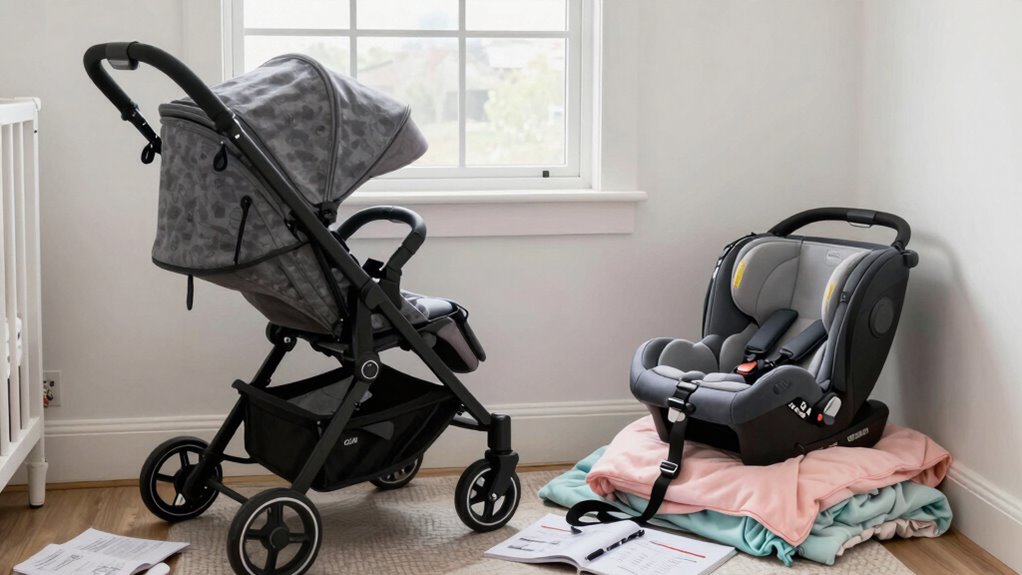
When shopping for a travel system, it’s easy to assume that all components are interchangeable, but the compatibility trap can catch you off guard. You might find yourself drawn to popular brands or attractive prices, only to discover later that the car seat, stroller, and base don’t quite fit together seamlessly. This oversight isn’t just frustrating—it can pose serious safety concerns. Using incompatible parts might compromise the stability of the car seat or cause it to detach unexpectedly, putting your little one at risk during travel. Even minor mismatches can lead to improper installation, which is one of the most common safety issues parents face. It’s vital to verify that each component is designed to work with the others, rather than assuming universal compatibility****. Doing so helps ensure your child’s safety and peace of mind during every trip.
Additionally, understanding the specific compatibility requirements can help prevent the need for additional purchases or replacements that might not be compatible with your existing gear. Beyond safety, the compatibility trap can also hit your wallet hard through hidden costs. When parts don’t fit together, you may need to buy adapters, new bases, or even an entirely new travel system—expenses that quickly add up. Many parents overlook this potential cost when initially purchasing a travel system, assuming that what they buy will be a one-time investment. But incompatible components often mean you’re purchasing duplicate or unnecessary items later on, often at premium prices. This can turn what seemed like a budget-friendly choice into a costly mistake. To avoid this, it’s wise to conduct a thorough cost analysis upfront, comparing the prices of compatible systems versus potential add-ons or replacements. Sometimes, spending a little more initially on a system with confirmed compatibility can save you hundreds in the long run.
Additionally, compatibility issues can limit your options, forcing you into specific brands or models that may not meet your needs or preferences. This can restrict your ability to choose features like adjustable handles, ease of folding, or storage options, which are often tied to specific product lines. If you ignore compatibility details, you might end up sacrificing convenience, comfort, or even safety features just to find something that fits. Therefore, it’s essential to read product specifications carefully, consult manufacturer guidelines, and seek expert advice if needed. This approach ensures that you’re making an informed decision, avoiding the pitfalls of incompatible components that can cost you both safety and money.
Frequently Asked Questions
Which Brands Are Most Compatible With Travel Systems?
You’ll find that brands like Graco, Chicco, and Britax are most compatible with travel systems, guaranteeing stroller safety and smooth connections. Always check stroller weight limits to make sure your child fits comfortably and safely. These brands typically design their products to work seamlessly together, reducing the risk of compatibility issues. By choosing recognized brands, you ensure a safer, more convenient travel system for your little one.
How Do I Identify Incompatible Travel System Components?
Think of incompatible travel system components as puzzle pieces that don’t quite fit. To identify them, check for safety certification labels on each part and verify they match the manufacturer’s compatibility guidelines. Also, confirm warranty coverage to see if mismatched components might void it. If parts seem loose or don’t attach securely, or if the manufacturer warns against mixing brands, those are clear signs they’re incompatible.
Are There Universal Adapters for Different Travel System Brands?
Yes, universal adapters exist that help connect different travel system brands, reducing your worries about brand compatibility. These adapters allow you to avoid component mismatch and cut down on costly replacements. However, keep in mind that not all adapters work with every brand, so check compatibility carefully. If you’re considering an upgrade, these adapters can be a cost-effective way to extend your travel system’s lifespan without buying new components.
What Is the Average Cost to Replace Incompatible Parts?
The average cost to replace incompatible parts ranges from $50 to $150, depending on the specific component and brand. You should do a cost comparison between original replacement options and third-party alternatives, as the latter can sometimes be more affordable. Keep in mind, incompatible parts often require purchasing entire adapters or new travel systems, so weighing your options helps you avoid overspending and ensures better compatibility for your needs.
Can I Upgrade My Travel System Without Buying a New One?
Think of your travel system as a puzzle—upgrading is like finding compatible pieces. Yes, you can often upgrade your travel system without buying a new one, but compatibility issues can block your way. Check if your current stroller and car seat components are compatible with new accessories or upgrades. Always verify with the manufacturer to avoid mismatched parts that might compromise safety or functionality, saving you money and hassle in the long run.
Conclusion
In the end, maneuvering the world of travel systems can feel like walking a tightrope—balancing convenience with hidden pitfalls. While it’s tempting to focus on what looks best on the surface, taking a closer look guarantees you don’t miss the subtle nuances that could lead to unexpected expenses. With a little extra vigilance, you’ll find yourself confidently sidestepping the compatibility trap, making every journey smoother for your family’s peace of mind.