
Before you buy a stroller, make sure it has reliable safety features like a five-point harness, sturdy frame, and smooth brakes. Check its real-world performance on different terrains and guarantee maneuverability with appropriate wheel size and swivel options. Consider how easy it is to handle daily, especially in crowded spaces. To avoid future issues, focus on safety and practicality first—you’ll find more tips that can save you from costly mistakes later.
Key Takeaways
- Verify the stroller has a five-point harness and sturdy frame for maximum safety and durability.
- Ensure reliable brakes that lock securely and operate smoothly in various environments.
- Check wheel size and type to confirm good maneuverability on different terrains.
- Test handling features like swivel wheels and ease of steering to prevent frustration during daily use.
- Prioritize safety and real-life performance over aesthetics to make a smart, long-term investment.
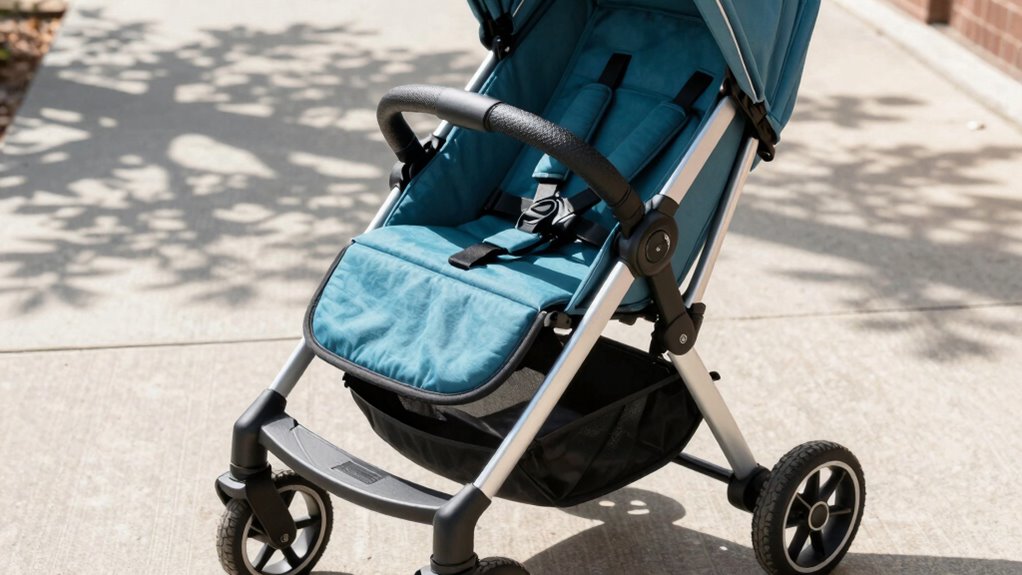
Buying a stroller without considering key deal-breakers can lead to frustration and wasted money. It’s easy to get caught up in stylish designs or brand names, but ignoring critical features like safety and maneuverability can turn your shopping experience into a headache. Safety features are non-negotiable because they directly impact your child’s well-being. Look for a stroller equipped with a five-point harness, sturdy frame, and reliable brakes. These elements help keep your little one secure during every outing. Additionally, check for a secure, well-padded seat that offers proper support and prevents accidental falls. If the stroller has a harness that’s easy to adjust and comfortable for your child, you’ll find it easier to keep them safe and content. Remember, safety isn’t just about the stroller’s build; it’s also about how well it performs in real-life situations. Test the brakes to ensure they lock firmly and release smoothly, and examine the frame for signs of flimsy construction. A well-designed safety system gives you peace of mind, especially when maneuvering busy streets or uneven terrains. Moreover, understanding the importance of contrast ratio can help you choose a stroller with better visibility and comfort in different lighting conditions.
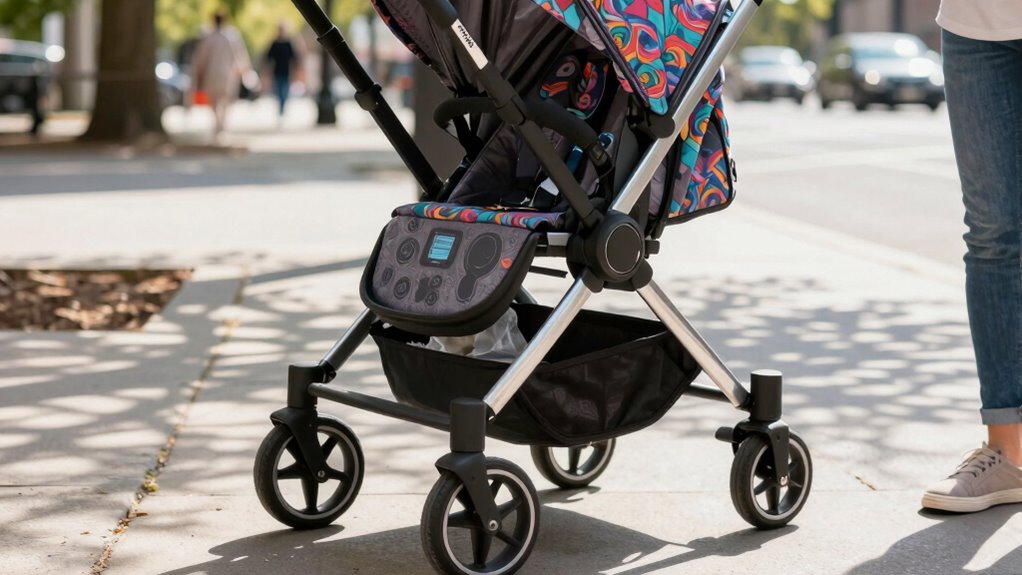
Navigating is equally important and often overlooked. You want a stroller that’s easy to steer and handle, especially if you plan to use it daily or in crowded spaces. Pay attention to the stroller’s wheel size and type—larger wheels typically handle bumps better and offer smoother rides. Swivel wheels make turning effortless in tight spots, while fixed wheels provide stability on rough terrain. Check how easily you can push and steer the stroller with one hand, as this comes in handy when holding your child’s hand or carrying other items. Test its ability to navigate narrow aisles, crowded sidewalks, or uneven surfaces. If it feels cumbersome or stiff, it might cause frustration during daily outings. Also, consider the stroller’s weight; a lightweight model offers better maneuverability but still needs to feel sturdy enough to withstand regular use. A stroller with good maneuverability reduces fatigue and makes outings more enjoyable for both you and your child.
Ultimately, never overlook these essential features when choosing a stroller. Safety features ensure your child stays secure, while maneuverability makes every trip smoother and more manageable. Taking the time to evaluate both aspects helps you avoid the pitfalls of buying a stroller that looks appealing but doesn’t perform well in practical situations. When you prioritize safety and ease of handling, you’re investing in a product that will serve you well through years of adventures. This thoughtful approach saves you money, reduces stress, and guarantees your little one’s comfort and safety at every turn.
Frequently Asked Questions
How Do I Determine the Best Stroller Weight for My Lifestyle?
You can’t afford to pick a stroller that’s too heavy or too light—your lifestyle depends on it! To find the perfect stroller weight, consider how often you’ll carry it, your daily activities, and storage space. If you’re always on the go, choose a lightweight stroller for easy maneuvering. For longer outings or rough terrain, a sturdier, heavier stroller might be better. Match the stroller weight to your lifestyle for effortless parenting adventures!
Are There Safety Standards I Should Verify Before Purchasing?
You should verify that the stroller meets safety standards like ASTM F833 or EN 1888. Check that it has reliable baby harnesses to keep your child secure and consider stroller accessories like reflective strips for visibility. confirm the frame is sturdy, the brakes are effective, and the wheels are durable. Doing this helps prevent accidents and guarantees comfort, giving you peace of mind during your outings.
What Storage Options Should I Look for in a Stroller?
Did you know that parents typically carry around 20 pounds of gear daily? When choosing a stroller, look for ample storage compartments to hold essentials and avoid juggling bags. Cup holders are also handy for drinks on the go. Opt for a stroller with spacious, easily accessible storage options, ensuring you can store diapers, snacks, and your coffee without hassle, making outings smoother and more enjoyable.
How Important Is the Stroller’s Foldability for Daily Use?
Foldability is essential for daily use, so you should prioritize a stroller with a compact design and a one-handed fold feature. This makes it easy to store and carry, especially when you’re juggling errands or handling other kids. A stroller that folds quickly and compactly saves time and effort, ensuring convenience during busy days. Look for models that offer these features to make your daily routine smoother and more manageable.
Can I Use a Car Seat With This Stroller Model?
Think of your stroller as a puzzle piece—you want it to fit perfectly. Many models are compatible with popular car seats through specific stroller attachments. Check if the stroller supports your preferred car seat brand; some offer adapters for added flexibility. I once used a stroller that easily attached my car seat, making errands smoother. Always verify compatibility before buying to guarantee seamless shifts between car and stroller.
Conclusion
Before you buy a stroller, remember these deal-breakers like you’d spot a red flag in a crowded market. Think of it as your treasure map—guiding you to the best choice for your little one. Don’t rush into a decision; take your time and check all the boxes. That way, you’ll end up with a stroller that’s as perfect as a puzzle piece fitting into place, making both you and your baby happy and stress-free.