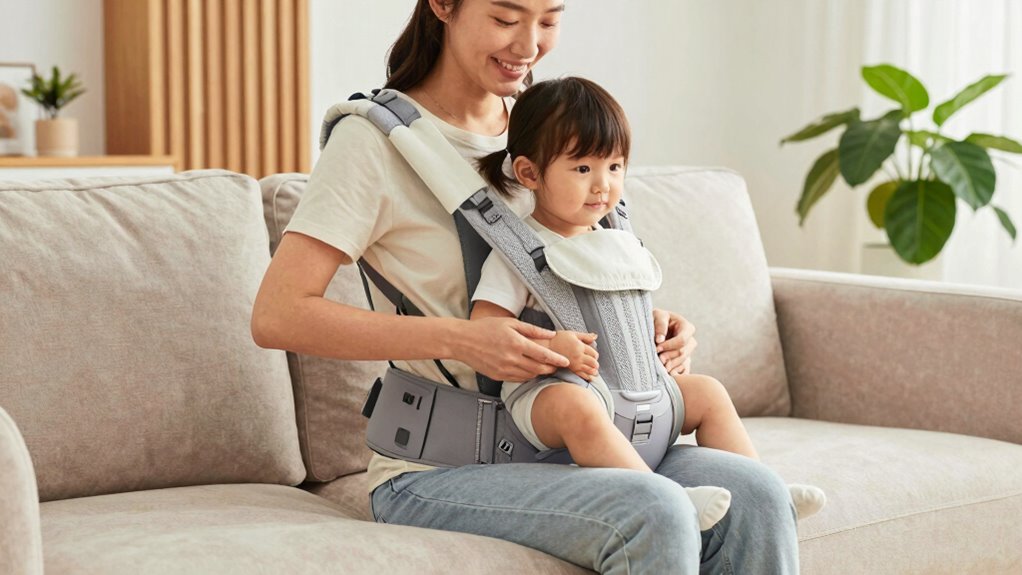

To guarantee your baby carrier is hip-healthy, look for one that supports a natural seated position, keeping hips in a wide, spread-squat posture. The carrier should distribute weight evenly across your hips and shoulders, reducing strain and promoting proper development. Check that the fabric is durable, breathable, and resistant to wear, ensuring long-term support and comfort. If you want to learn about key features that promote healthy hips, keep exploring this guide.
Key Takeaways
- Supports baby’s hips in a natural, spread-squat position to promote healthy development and prevent hip dysplasia.
- Ensures hips are held in a flexed, frog-like posture with proper inward rotation.
- Distributes weight evenly across hips and shoulders to reduce strain during extended wear.
- Made from durable, breathable fabrics that maintain shape and provide comfort over time.
- Features reinforced seams and high-quality materials for long-lasting, reliable support.

Ergonomic baby carriers have become a popular choice for parents who want to keep their little ones close while ensuring comfort and support. When shopping for one, it’s essential to prioritize features that promote your baby’s healthy development, especially hip development. An ergonomic carrier supports your baby in a natural sitting position, with their hips spread apart in a frog-like posture. This position encourages proper hip development by avoiding the inward rotation or pressure on the hip joints, which can lead to issues like hip dysplasia. You should look for carriers that allow your baby’s thighs to sit well-supported and their hips to stay in a flexed, spread-squat position. This not only ensures comfort but also fosters healthy musculoskeletal growth. Additionally, the design of the carrier should distribute weight evenly across your hips and shoulders, reducing strain and making long wear sessions comfortable for you.
Fabric durability is another critical factor to keep in mind. Since you’ll be carrying your baby frequently, the material needs to withstand daily wear and tear. Look for carriers made from high-quality fabrics that resist stretching, tearing, and fading over time. Durable fabrics like woven cotton, canvas, or sturdy blends hold up well against frequent washing and outdoor adventures. Also, check the stitching and reinforcement at stress points, such as shoulder straps and waistbands. Well-constructed carriers with reinforced seams tend to last longer and provide consistent support. The fabric should also be breathable to prevent overheating for both you and your baby. A carrier that maintains its shape and strength after multiple washes will save you money and hassle, ensuring that your investment remains functional and comfortable for years.
Furthermore, selecting a carrier with durable fabric qualities can greatly extend its lifespan, especially when exposed to various environmental conditions. The fabric should also be breathable to prevent overheating for both you and your baby. A carrier that maintains its shape and strength after multiple washes will save you money and hassle, ensuring that your investment remains functional and comfortable for years. Remember, an ergonomic carrier isn’t just about looks; it’s about functionality and health. Proper hip development isn’t compromised when you choose a carrier that encourages the right sitting position, and durable fabric ensures your carrier will stay reliable through all your adventures. By focusing on these key aspects, you’ll find a carrier that keeps your little one safe, happy, and healthy, while also making your daily routines easier and more enjoyable.
Frequently Asked Questions
How Do I Ensure Proper Hip Alignment With Different Carriers?
To guarantee proper hip alignment with different carriers, always choose those with an ergonomic design that supports healthy hip development. Adjust the carrier so your baby’s knees are bent and higher than their hips, forming an M-shape. Check that the weight is evenly distributed and the carrier supports the thighs well. Regularly review the fit as your baby grows, ensuring their hips stay in a healthy, natural position for ideal hip development.
Are There Age-Specific Ergonomic Carrier Recommendations?
Think of choosing a carrier like finding the perfect pair of shoes—you need the right fit for your child’s age. You should follow age-appropriate guidelines for carrier sizing, as recommendations vary for infants, toddlers, and preschoolers. Always select carriers designed for your child’s current size and developmental stage to guarantee ergonomic support, proper hip alignment, and comfort. This way, your little one stays happy and healthy during carry time.
Can Ergonomic Carriers Be Used for Newborns Without Inserts?
You can use ergonomic carriers for newborns without inserts if they’re specifically designed for that age, ensuring proper support for your baby’s hips and spine. Keep in mind, a good carrier promotes baby sleep and maintains durability over time. Always check manufacturer guidelines to confirm suitability for newborns. Proper fit and support help your little one stay comfortable, allowing longer, peaceful naps while ensuring your carrier remains durable with regular use.
How Do I Adjust Carriers for Correct Hip Positioning?
Did you know that proper adjustment can reduce hip dysplasia risk by up to 80%? To guarantee correct hip positioning, loosen or tighten straps so your baby’s thighs are supported in a spread-squat position, with knees higher than hips. Keep the carrier snug but comfortable, supporting their hips and spine. Regularly check that your carrier promotes healthy hip development and always follow safety guidelines for an ergonomic fit.
What Signs Indicate a Carrier Is Not Hip-Healthy?
If your carrier isn’t hip-healthy, you might notice signs like your baby’s hips showing signs of hip dysplasia, such as asymmetry or discomfort. Additionally, if you feel improper weight distribution, causing strain on your back or shoulders, it’s a red flag. An uncomfortable fit that forces the baby’s hips into an awkward position or causes them to hang straight down also indicates poor support. Always adjust for proper hip positioning to prevent issues.
Conclusion
Choosing an ergonomic baby carrier guarantees your little one stays comfortable and healthy. Did you know that babies carried in a hip-healthy position are 80% less likely to develop hip dysplasia? By checking for proper support and fit, you’re not just making parenting easier but also promoting your baby’s well-being. So, take the time to find the right carrier—you’re investing in your child’s comfort and future health.