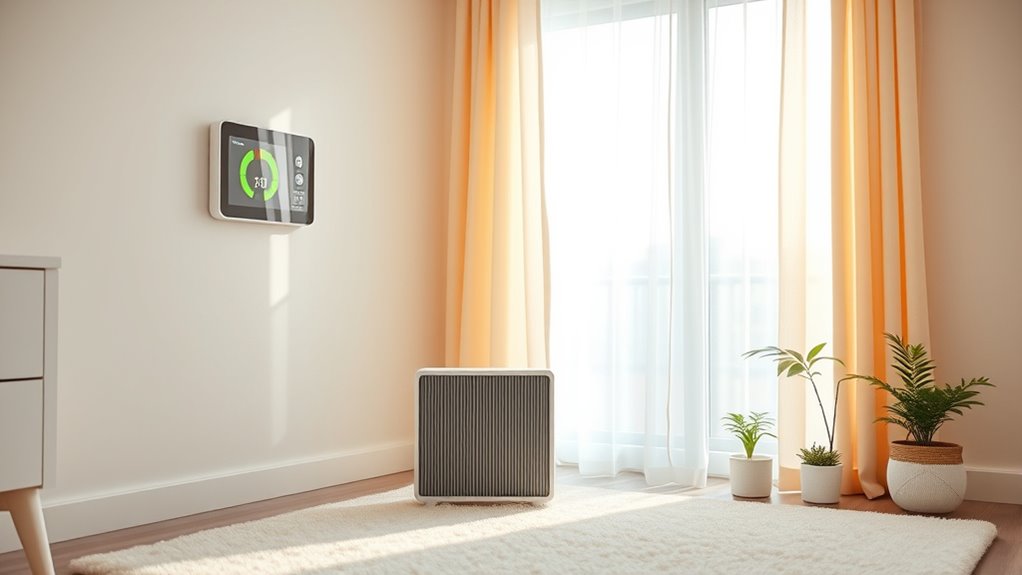

To improve your nursery air quality, use a reliable air purifier with HEPA and activated carbon filters to capture dust, allergens, and odors. Monitor humidity levels with a hygrometer and keep them between 40-60%, adjusting with humidifiers or dehumidifiers as needed. Regularly clean surfaces and bedding, avoid smoking indoors, and ensure proper ventilation. For more tips and setup suggestions, see how the right combination of monitors, filters, and habits can create a safer environment for your baby.

Turn the school run and nap time into listening time
- Thousands of audiobooks, podcasts and originals
- Listen on your phone, tablet or Echo — also offline
- Cancel anytime
Key Takeaways
- Use air quality monitors to track pollutants, humidity, and VOC levels for a safer nursery environment.
- Install HEPA air purifiers with activated carbon filters to effectively remove allergens, dust, and odors.
- Maintain optimal humidity (40-60%) with humidifiers or dehumidifiers, monitored via a hygrometer.
- Regularly clean surfaces, bedding, and filters to reduce dust buildup and improve air quality.
- Avoid indoor smoking and outdoor pollution, and ensure proper ventilation to keep nursery air fresh.
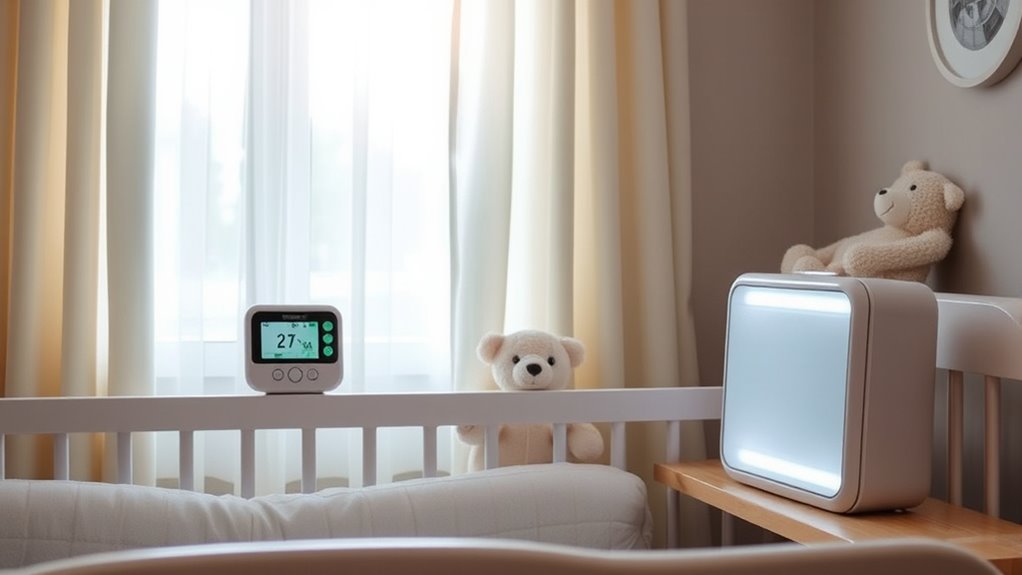
Have you ever thought about the air your little one breathes in their nursery? It’s easy to overlook, but the quality of the air can considerably impact your baby’s health and comfort. One of the best ways to guarantee a clean, safe environment is by using air purifiers. These devices help remove airborne pollutants such as dust, pet dander, and allergens, which can trigger allergies or respiratory issues. When choosing an air purifier, look for one with a HEPA filter, as it effectively captures particles as small as 0.3 microns. Some models also include activated carbon filters that trap odors and volatile organic compounds (VOCs). Regular maintenance, like changing filters as recommended, keeps the purifier functioning at its best. Incorporating an air purifier with a HEPA filter can significantly improve indoor air quality for your baby.
Using a HEPA air purifier helps keep your nursery’s air clean and safe for your baby.
Beyond filtering, humidity control plays a crucial role in maintaining ideal air quality. Too much humidity can foster mold growth and dust mites, while too little can dry out your baby’s delicate skin and respiratory passages. Using a humidifier or dehumidifier, depending on your climate, helps strike the right balance. Ideally, keep humidity levels between 40-60%, which is comfortable for your baby and inhibits mold and dust mites. A hygrometer can help you monitor these levels easily. When humidity is too high, mold can become a problem, so a dehumidifier helps keep moisture in check. Conversely, if the air feels dry, especially during winter months, a humidifier adds moisture, preventing dry skin, congestion, and irritation.
In addition to these devices, maintaining good overall hygiene in the nursery contributes to air quality. Regularly dusting surfaces and washing bedding reduces dust buildup. Avoid smoking indoors, as cigarette smoke introduces harmful toxins that linger in the air. Keep windows open when possible to allow fresh air to circulate, but be mindful of outdoor pollution or pollen levels, which can bring allergens inside. Using air monitors can give you real-time data on the nursery’s air quality, alerting you to pollutants or spikes in particulate matter. This way, you can take immediate action, whether that means increasing ventilation, adjusting humidity, or changing filters.
Ultimately, creating a healthy nursery environment involves a combination of tools and habits. Air purifiers and humidity control devices are your allies in reducing airborne pollutants and maintaining a balanced atmosphere. By staying vigilant and proactive, you ensure your little one breathes in clean, fresh air, helping them sleep better, breathe easier, and stay healthier every day.
As an affiliate, we earn on qualifying purchases.
Frequently Asked Questions
How Often Should I Replace Nursery Air Filters?
You should replace nursery air filters every 30 to 90 days, depending on the filter’s lifespan and your home’s air quality. Regularly check the filters for dirt and dust buildup; if they look dirty sooner, replace them earlier. Following a consistent replacement schedule helps maintain good air quality, keeps your baby safe, and guarantees your HVAC system runs efficiently. Always follow the manufacturer’s recommendations for ideal results.
Are There Specific Air Quality Standards for Nurseries?
You should know that nursery air quality standards are guided by regulatory standards and certification requirements to guarantee a safe environment for children. While specific standards may vary by location, many organizations recommend maintaining low levels of pollutants like VOCs, dust, and allergens. Regular monitoring helps you stay compliant and safe. Always check local regulations and certification criteria to ensure your nursery meets the necessary air quality standards.
Can Air Purifiers Reduce Nursery Allergies Effectively?
Yes, air purifiers can effectively reduce nursery allergy triggers when properly maintained. Regular air purifier maintenance guarantees filters work efficiently, capturing dust, mold, and pet dander that cause allergies. By consistently replacing or cleaning filters, you improve air quality, creating a healthier environment for your little ones. This proactive approach considerably minimizes nursery allergy triggers, helping children breathe easier and reducing allergy symptoms over time.
What Are the Signs of Poor Air Quality in a Nursery?
You’ll notice signs of poor air quality in a nursery through coughing, sneezing, or itchy eyes, which indicate airborne pollutants. You might also observe lingering odors, increased allergy symptoms, or stuffy noses among children and staff. Ventilation issues often cause these problems, making it harder for fresh air to circulate. If you see these signs, it’s time to check your air filters and improve ventilation to create a healthier environment.
Do Natural Remedies Improve Nursery Air Quality Safely?
Natural remedies can improve nursery air quality safely when used properly. You might consider adding air-purifying plants like spider plants or pothos, but make sure they’re non-toxic for children. Regularly opening windows helps with natural air purification, reducing indoor pollutants. Using essential oils cautiously and in small amounts can also help, but avoid strong scents. Always monitor your space and consult professionals if you’re unsure about natural remedies’ safety for your nursery environment.
baby room humidifier with hygrometer
As an affiliate, we earn on qualifying purchases.
As an affiliate, we earn on qualifying purchases.
Conclusion
Think of your nursery as a delicate garden, where pure air is the sunlight that nurtures growth. By monitoring, filtering, and maintaining ideal air quality, you’re cultivating a safe haven for your little one to flourish. Remember, each breath they take is a seed of their future. With care and vigilance, you create a sanctuary where health and happiness blossom—because a healthy nursery is the foundation for their brightest tomorrow.
activated carbon filter air purifier
As an affiliate, we earn on qualifying purchases.
As an affiliate, we earn on qualifying purchases.
As an affiliate, we earn on qualifying purchases.
Fall Picks
fall essentials
As an affiliate, we earn on qualifying purchases.