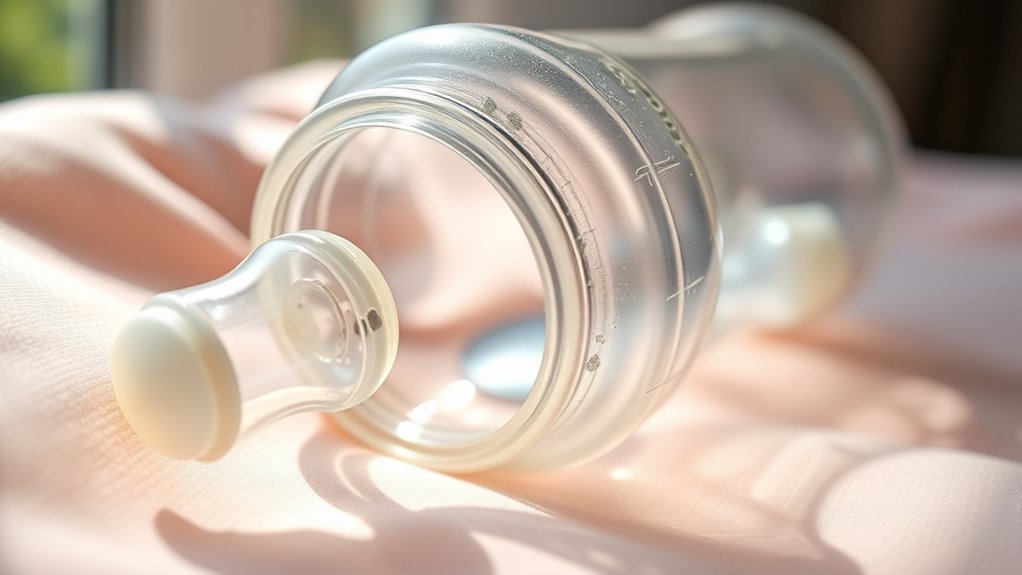

Baby bottles may hide risks like chemical leaching, especially when heated or scratched, which can expose your little one to hormone-disrupting substances like BPA or BPS. Deteriorating plastics, improper sterilization, and unclear labeling also increase dangers. Choosing glass or high-quality BPA-free bottles, inspecting them regularly, and following proper cleaning routines can help. If you want to understand more about these hidden hazards and how to keep your child safe, keep exploring these vital tips.

Turn the school run and nap time into listening time
- Thousands of audiobooks, podcasts and originals
- Listen on your phone, tablet or Echo — also offline
- Cancel anytime
Key Takeaways
- Chemical leaching from heated or worn plastic bottles can introduce harmful substances like BPA and BPS into your baby’s milk.
- Recycling codes don’t guarantee safety; some plastics still contain chemicals that can disrupt hormones or cause health issues.
- Using glass bottles or high-quality BPA-free plastics designed for sterilization minimizes chemical exposure risks.
- Damaged or scratched bottles are more prone to leaching harmful chemicals, so regular inspection and replacement are essential.
- Proper sterilization and avoiding microwaving unless approved prevent breakdown of plastics and reduce chemical release.
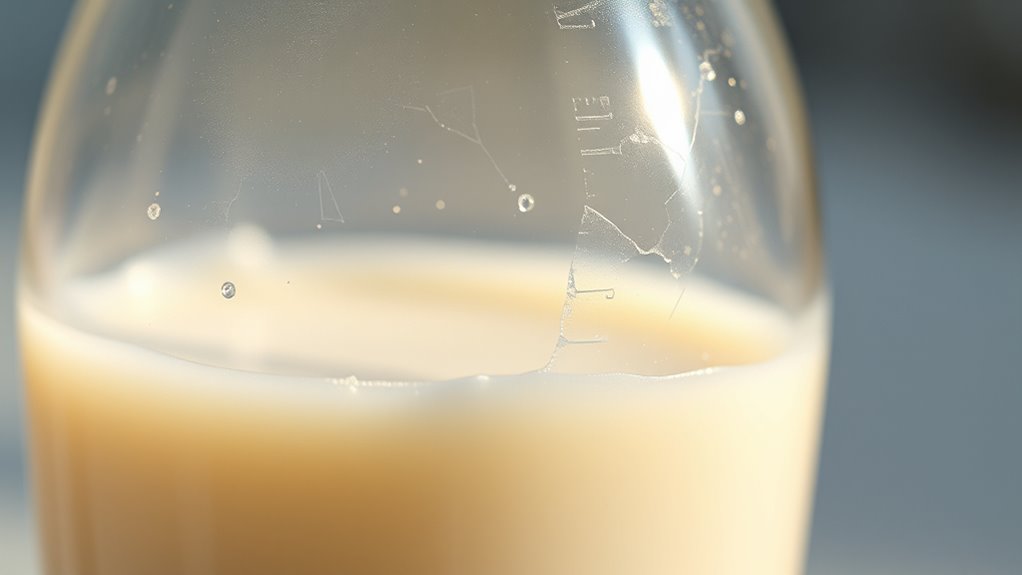
Baby bottles are a common part of everyday life for many parents, but what’s often overlooked are the hidden dangers they may pose. One of the most concerning issues is plastic leaching, which can lead to chemical exposure. When bottles are made from certain plastics, especially if they’re heated or worn out, chemicals can seep into your baby’s milk or formula. This isn’t just a minor concern; these chemicals are linked to hormone disruption and other health problems. You might not see or smell anything unusual, but that doesn’t mean your baby isn’t absorbing harmful substances.
Many plastic bottles are labeled with recycling codes, but that doesn’t always tell the full story. Some plastics, like polycarbonate, contain BPA, a chemical that mimics hormones and can interfere with development. Even BPA-free plastics aren’t necessarily safe, as they might contain other chemicals like BPS or BPF, which can also leach out over time. The heat from sterilizing or warming bottles can accelerate this process, increasing the risk of chemical exposure. It’s important to be aware that the longer a plastic bottle is used or exposed to high temperatures, the more likely it is to release these hazardous substances.
To minimize these risks, you should opt for bottles made from safer materials. Glass bottles are an excellent choice because they don’t contain plastics that leach chemicals, and they’re easy to sterilize without degrading. If you prefer plastic, look for bottles labeled as BPA-free and designed for high-temperature sterilization. Always follow the manufacturer’s instructions for cleaning and avoid using abrasive scrubbers that can scratch the surface, creating more opportunities for chemicals to leach out. Never microwave bottles unless they’re specifically marked as microwave-safe; the uneven heating can cause plastics to break down faster. Regularly checking for plastic deterioration can help prevent unintentional chemical exposure. Additionally, choosing bottles with durable materials can improve longevity and safety.
Choosing safe materials can offer greater peace of mind. Additionally, selecting bottles with proper sterilization guidelines can help prevent chemical degradation. It’s also wise to replace old or scratched bottles promptly. Damaged bottles are more prone to leaching chemicals, and you don’t want your child’s health compromised just because a bottle has seen better days. Regularly inspecting bottles for cracks or cloudiness helps catch these issues early. By choosing safer materials, following proper cleaning procedures, and replacing worn-out bottles, you can considerably reduce your baby’s risk of chemical exposure caused by plastic leaching. Being aware of manufacturing practices and staying informed about potential risks can further help safeguard your child’s health. Ultimately, being vigilant about the type and condition of the bottles you use is a straightforward way to protect your little one from hidden dangers lurking in their everyday essentials.
Frequently Asked Questions
Are All Plastic Baby Bottles Unsafe?
Not all plastic baby bottles are unsafe. You should check for labels indicating BPA-free bottles, as BPA is linked to health concerns. Opt for bottles made from plastics that are recyclable through plastic recycling programs, which often use safer BPA alternatives. By choosing bottles labeled as BPA-free and made from eco-friendly plastics, you reduce potential risks and support safer feeding practices for your baby.
How Can I Tell if My Bottle Is Contaminated?
Imagine your baby’s bottle as a tiny fortress—if it’s contaminated, cracks might show. You can spot contamination symptoms like a strange smell or discoloration. To keep threats at bay, practice regular bottle sterilization, especially if you notice anything unusual. If your bottle looks cloudy or feels slimy, it’s time to replace it. Trust your senses and keep up with sterilization to protect your little one from hidden dangers.
Do Glass Bottles Pose Any Risks?
Glass bottles are generally safer regarding chemical exposure because they don’t contain plastics that can leach harmful substances. However, you should handle them carefully to prevent breakage and potential injury. Make sure to check for cracks or chips regularly, as damaged glass can pose safety risks. Proper cleaning and sterilization are essential to maintain glass safety, ensuring your baby’s bottles stay hygienic and free from contamination.
What Are the Signs of Chemical Leaching?
You might notice signs of chemical leaching if your baby shows health symptoms like skin irritation, fussiness, or stomach upset after bottle use. Chemical exposure from leaching plastics or other materials can cause these issues. Keep an eye out for unusual odors or discoloration in bottles, which can also indicate chemical migration. Regularly inspecting and replacing bottles helps prevent health risks associated with chemical leaching.
Are There Natural Alternatives to Plastic Bottles?
They say, “You are what you choose,” so selecting safe materials matters. Yes, there are natural alternatives to plastic bottles, like glass, stainless steel, or silicone, which are eco-friendly options. These choices are free from harmful chemicals, making them safer for your little one. Switching to these options helps reduce plastic waste and guarantees your baby’s health, proving that eco-conscious decisions benefit everyone in the long run.
Conclusion
Now that you know these hidden dangers, don’t let your little one become a victim of unseen threats lurking in their bottles. Every sip could be a silent gamble with their health—poisonous plastics, harmful chemicals, and bacteria waiting to strike. Take action now; your baby’s safety is worth more than a moment’s worry. Protect their future today by choosing safer bottles and staying vigilant. Because nothing is more precious than their health and happiness.
Halloween Picks
halloween
As an affiliate, we earn on qualifying purchases.