Many shoppers mistakenly buy simple sound amplifiers, which raise all volume levels and often cause feedback or distortion in noisy environments. This guide focuses strictly on hearing aids not amplifiers, devices equipped with digital signal processing to treat specific frequencies. The ELEHEAR Beyond OTC Hearing Aids stand out as the best overall pick due to their AI noise cancellation and 50 dB gain, offering clinical-grade clarity without prescription barriers. For those prioritizing discretion, the Audien Atom One provides an invisible fit with surprisingly robust sound shaping, while the Vivtone Supermini offers superior value with its 16-channel processing. The primary tradeoff lies between maximum power for severe loss and the discreet, lower-power profiles suited for mild to moderate cases. Read on to understand which technology matches your specific hearing profile.

Turn the school run and nap time into listening time
- Thousands of audiobooks, podcasts and originals
- Listen on your phone, tablet or Echo — also offline
- Cancel anytime
Complete the kit



Key Takeaways
- Digital signal processing (DSP) with at least 11 channels is the baseline for distinguishing true hearing aids from basic amplifiers.
- Over-the-counter (OTC) devices now offer AI-driven noise reduction that was previously exclusive to prescription models.
- Rechargeable lithium-ion batteries have largely replaced disposable batteries in top-tier OTC models, improving convenience and cost-efficiency.
- Invisible-in-the-canal (IIC) models often sacrifice battery life and power output for aesthetics, making them unsuitable for severe hearing loss.
- Bluetooth connectivity adds significant value for phone calls and media streaming but can drain battery faster than standard operation.
| ELEHEAR Beyond OTC Hearing Aids for Seniors |  | Best for Tech-Savvy Users | Amplification: 50 dB | Noise Cancellation: AI technology, reduces background noise by 24 dB | Scene Modes: 4 tailored modes | VIEW ON AMAZON | See Our Full Breakdown |
| ELEHEAR Beyond Pro OTC Hearing Aids |  | Best Premium Features | Amplification: 50 dB | Technology: VocClear 2.0 AI | Connectivity: Bluetooth 5.3 | VIEW ON AMAZON | See Our Full Breakdown |
| Rechargeable OTC Hearing Aids for Seniors (Ausculto Z-117) |  | Best for Simplicity | Power Source: Charging Case and Battery | Special Features: Echo Cancellation, Noise Reduction, Auto-On/Off | Fit Type: In-Ear | VIEW ON AMAZON | See Our Full Breakdown |
| True Hearing Aids for Seniors – Invisible Rechargeable | 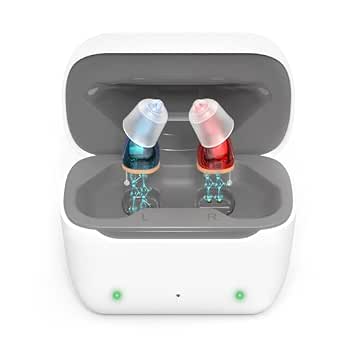 | Most Discreet Design | Power Source: Battery Powered | Fit Type: In-Ear | Control Type: Button Control | VIEW ON AMAZON | See Our Full Breakdown |
| Karthus OTC Hearing Aids for Seniors |  | Best for Ease of Use | Fit Type: Behind-the-Ear | Battery Cell Composition: Lithium Ion | Battery Voltage: 3.7 volts | VIEW ON AMAZON | See Our Full Breakdown |
| Vivtone Supermini Rechargeable Digital Hearing Aids (Pair) |  | Best Basic Digital Pair | Sound Processing: 16-Channel Digital | Battery Type: Rechargeable Lithium | Control Method: Auto On/Off | VIEW ON AMAZON | See Our Full Breakdown |
| Audien Atom One OTC Hearing Aids |  | Best for Tech-Averse Users | Control Type: Analog Dials (Volume & Frequency) | Battery Life: 24 Hours | Charging Interface: USB-C | VIEW ON AMAZON | See Our Full Breakdown |
| Rechargeable CIC Hearing Aids for Seniors |  | Best for Noisy Environments | Special Features: Audio Tracker, Noise Reduction, Auto On/Off | Battery Life: 20 Hours (Continuous) | Case Backup: 80 Hours | VIEW ON AMAZON | See Our Full Breakdown |
| True Hearing Aids – 11 Channel Professional Rechargeable Hearing Aids | 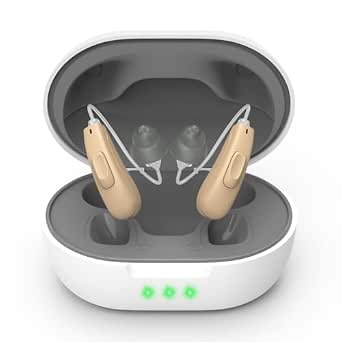 | Best Behind-the-Ear Option | Fit Type: Behind-the-Ear (BTE) | Sound Processing: 11-Channel DSP | Charging Case Life: 100 Hours | VIEW ON AMAZON | See Our Full Breakdown |
| Ceretone Core One Pro Tiny Invisible Rechargeable Hearing Aid |  | Best Ergonomic Fit | Digital Chip: Intricon® | Fit Shape: 30° Ergonomic | Ear Tips: S/M/L Medical-Grade | VIEW ON AMAZON | See Our Full Breakdown |
| ELEHEAR Beyond Pro Bluetooth Hearing Aids for Seniors |  | Best Overall for Tech-Savvy Users | Technology: VocClear 2.0 AI Processing | Speech Clarity: +30% Improvement | Latency: 8ms (Ultra-Low) | VIEW ON AMAZON | See Our Full Breakdown |
| Vivtone Supermini Rechargeable Digital Hearing Aids |  | Best for Discreet Invisibility | Sound Processing: 16-Channel Digital | Design Size: 30% Smaller than Standard | Battery Life: 16+ Hours per Charge | VIEW ON AMAZON | See Our Full Breakdown |
| Audien Atom X OTC Hearing Aid |  | Best for Ease of Use | Control Type: Touchscreen Case | Listening Modes: 4 (Conversation, Crowd, TV, Comfort) | Battery Life: Up to 16 Hours per Charge | VIEW ON AMAZON | See Our Full Breakdown |
| True Hearing Aids – Digital Rechargeable Hearing Aid |  | Best Feedback-Free Experience | Fit Type: Behind-the-Ear (BTE) | Battery Life: Up to 18 Hours | Battery Type: Rechargeable NiMH | VIEW ON AMAZON | See Our Full Breakdown |
| True Professional Hearing Aids for Seniors | | Best Value for Light-to-Medium Loss | Fit Type: Behind-the-Ear (BTE) | Sound Processing: 16-Channel DSP | Special Features: Active Noise Cancellation | VIEW ON AMAZON | See Our Full Breakdown |
| hearing aids not amplifier | Fit Type | Control Type |
|---|---|---|
| ELEHEAR Beyond OTC Hearing Aid | — | — |
| ELEHEAR Beyond Pro OTC Hearing | Receiver-in-Canal (RIC) | — |
| Rechargeable OTC Hearing Aids | In-Ear | Button Control |
| True Hearing Aids for Seniors | In-Ear | Button Control |
| Karthus OTC Hearing Aids for S | Behind-the-Ear | One-button control, no app |
| Vivtone Supermini Rechargeable | — | — |
| Audien Atom One OTC Hearing Ai | In-Ear Nano | Analog Dials (Volume & Frequency) |
| Rechargeable CIC Hearing Aids | In-Ear (CIC) | Button Control |
| True Hearing Aids | Behind-the-Ear (BTE) | Button Control |
| Ceretone Core One Pro Tiny Inv | — | — |
| ELEHEAR Beyond Pro Bluetooth H | — | — |
| Vivtone Supermini Rechargeable | — | — |
| Audien Atom X OTC Hearing Aid | In-Ear | Touchscreen Case |
| True Hearing Aids | Behind-the-Ear (BTE) | — |
| True Professional Hearing Aids | Behind-the-Ear (BTE) | Button Control |
More Details on Our Top Picks
ELEHEAR Beyond OTC Hearing Aids for Seniors
This model stands out for its AI-driven noise cancellation and robust app control, making it ideal for those who want granular audio customization. Unlike the Karthus OTC Hearing Aids, which rely on simple button controls, the Beyond offers four distinct scene modes and frequency tuning via Bluetooth. The 50 dB amplification is potent for mild-to-moderate loss, and the 100-hour total battery life with the case is class-leading. However, the dependency on a smartphone is a genuine hurdle for seniors who may struggle with app interfaces or pairing issues. It is a powerful tool, but only if you are comfortable managing digital settings daily.Pros:- AI noise cancellation reduces background noise by 24 dB
- 100 hours total battery life with charging case
- Detailed app control for frequency and directionality
- Four tailored scene modes for different environments
Cons:- Requires smartphone and app for full functionality
- Limited to mild-to-moderate hearing loss
- Complexity may overwhelm non-tech-savvy users
Best for: Users comfortable with smartphone apps who want precise control over sound profiles and noise cancellation settings.
Not ideal for: Tech-averse seniors who prefer plug-and-play simplicity without needing to pair devices or adjust settings on a phone.
- Amplification:50 dB
- Noise Cancellation:AI technology, reduces background noise by 24 dB
- Scene Modes:4 tailored modes
- App Control:Bluetooth app for volume, frequency, directionality
- Battery Runtime:Up to 20 hours per charge
- Total Battery Life:100 hours with case
- Fast Charge:15 minutes provides 6 hours runtime
- Dome Sizes:9 sizes
Our verdict“Choose this if you want maximum control over your hearing experience and are comfortable using a companion app daily.”
ELEHEAR Beyond Pro OTC Hearing Aids
The Beyond Pro upgrades the standard Beyond with VocClear 2.0 technology, claiming 30% clearer speech. It retains the 50 dB amplification and app connectivity but adds tinnitus masking and 20 soundscapes, features absent in the Ausculto Z-117. The Receiver-in-Canal (RIC) design is often more comfortable for extended wear than deep in-ear models. While the Champagne Gold finish is stylish, the real value lies in the specialized audio processing for those with tinnitus. The tradeoff remains the same as its sibling: full feature access requires a smartphone, which limits its appeal for users seeking standalone simplicity.Pros:- VocClear 2.0 improves speech clarity by 30%
- Includes tinnitus masking and 20 soundscapes
- Fast charging: 15 minutes for 6 hours of use
- Lightweight RIC design with comfortable domes
Cons:- Software update support timeline is unclear
- Requires smartphone for adjustments and features
- Higher complexity than basic OTC models
Best for: Individuals with mild tinnitus or specific sound sensitivity needs who value advanced audio processing and aesthetic design.
Not ideal for: Users who do not have tinnitus or who find the extra app features unnecessary for their daily needs.
- Amplification:50 dB
- Technology:VocClear 2.0 AI
- Connectivity:Bluetooth 5.3
- Battery Life:20 hours per charge, 100 hours total
- Charging Time:15 minutes for 6 hours use
- Fit Type:Receiver-in-Canal (RIC)
- Features:Noise Cancellation, Tinnitus Masking, Music Mode
- Weight:18.9 g (battery)
Our verdict“A strong choice for those needing tinnitus relief or superior speech clarity who are already comfortable with Bluetooth-enabled devices.”
Rechargeable OTC Hearing Aids for Seniors (Ausculto Z-117)
This device strips away the complexity of app-based controls found in the ELEHEAR Beyond in favor of dual independent processors and physical button control. It focuses on delivering natural, distortion-free sound without requiring a smartphone connection. The Audio Tracker technology automatically adjusts to environments, which is less customizable than the ELEHEAR’s manual modes but far easier for many seniors. With 20 hours of runtime and a discreet in-ear fit, it serves those who want reliable amplification without digital fuss. However, the lack of granular control means you cannot fine-tune frequencies for specific hearing loss profiles.Pros:- Dual processors deliver natural, distortion-free sound
- Simple button control with no app required
- 20 hours runtime with 80-hour backup case
- Discreet in-ear design with three dome sizes
Cons:- No smartphone app for detailed customization
- Limited to mild-to-moderate hearing loss
- Fewer scene modes compared to app-enabled competitors
Best for: Seniors who want reliable, automatic sound enhancement without dealing with smartphone apps or Bluetooth pairing.
Not ideal for: Users who need to customize sound profiles for specific environments or who have complex hearing loss patterns.
- Power Source:Charging Case and Battery
- Special Features:Echo Cancellation, Noise Reduction, Auto-On/Off
- Fit Type:In-Ear
- Control Type:Button Control
- Battery Cell Composition:Lithium Polymer
- Battery Weight:2 g
- Materials:Plastic, Silicone
- Modes:2 Modes
Our verdict“Ideal for users prioritizing ease of use and automatic performance over manual audio customization.”
True Hearing Aids for Seniors – Invisible Rechargeable
If invisibility is your priority, this 1 g super tiny model is hard to beat. It uses 11-channel noise reduction to clarify conversations while remaining virtually undetectable in the ear. Compared to the bulkier Karthus OTC Hearing Aids, this in-ear design offers a more aesthetic solution for social settings. The rechargeable case eliminates the hassle of small disposable batteries. However, the nonstandard battery type means you are locked into their specific charging ecosystem. Additionally, the single-item count and basic button controls suggest a focus on utility over advanced features, making it less versatile than the ELEHEAR series.Pros:- Virtually invisible 1 g super tiny design
- 11-channel noise reduction for clear audio
- Rechargeable case eliminates disposable batteries
- Ergonomic fit for extended comfort
Cons:- Nonstandard battery requires specific charger
- Limited to mild-to-moderate hearing loss
- Single item pack may not replace both ears simultaneously
Best for: Professionals or individuals in social settings who prioritize a completely invisible appearance over advanced audio features.
Not ideal for: Users with severe hearing loss or those who need robust noise cancellation for very loud environments.
- Power Source:Battery Powered
- Fit Type:In-Ear
- Control Type:Button Control
- Battery Cell Composition:NiMH
- Rechargeable:Yes
- Style:Super Tiny, Invisible
- Weight:1 g
- Material:Plastic
Our verdict“The best option for those who refuse to wear visible hearing aids and have mild hearing loss.”
Karthus OTC Hearing Aids for Seniors
The Karthus model prioritizes accessibility with a one-button control system and no Bluetooth or app requirements. Its 16-channel digital processing offers more sophisticated sound management than the 11-channel True Hearing Aids, particularly in noisy environments. The Behind-the-Ear (BTE) design is easier to handle for those with limited dexterity compared to the tiny in-ear models. With up to 30 hours of listening time, it outlasts many competitors. The tradeoff is the lack of customization; you cannot tweak frequency responses or noise settings. It is a straightforward, reliable amplifier that works right out of the box.Pros:- Simple one-button operation with no app needed
- 16-channel digital processing for speech clarity
- 30 hours listening time per charge
- Comfortable BTE design compatible with glasses
Cons:- No Bluetooth or smartphone connectivity
- Only seven volume levels may feel limiting
- Visible behind-the-ear style
Best for: Seniors with limited dexterity or tech confidence who want a simple, powerful behind-the-ear solution.
Not ideal for: Users who want to customize sound profiles or prefer the invisibility of in-canal devices.
- Fit Type:Behind-the-Ear
- Battery Cell Composition:Lithium Ion
- Battery Voltage:3.7 volts
- Charging Case Capacity:100 hours total
- Listening Time:Up to 30 hours
- Quick Charge:15 minutes for several hours
- Control Type:One-button control, no app
- Volume Levels:7
Our verdict“A user-friendly choice for those who want powerful amplification without the complexity of digital customization.”
Vivtone Supermini Rechargeable Digital Hearing Aids (Pair)
The Vivtone Supermini stands out for offering 16-channel digital processing in a compact, rechargeable format. Unlike the Audien Atom One, which relies on simple analog dials, this device uses digital sound segmentation to separate speech from background noise, resulting in clearer audio in moderately busy environments. The auto on/off feature is a genuine convenience, eliminating the need to fiddle with tiny switches when inserting or removing the aids. However, the lack of dedicated noise cancellation means it struggles in very loud settings compared to the Rechargeable CIC Hearing Aids with Audio Tracker technology. It is a solid entry-level digital option, but those expecting advanced environmental adaptation may find it limited. The color-coded blue and red units help with orientation, a small but useful touch for daily wear.
Pros:- 16-channel digital processing improves sound clarity over analog models
- Auto on/off functionality simplifies daily use
- Color-coded units prevent confusion between left and right
- Rechargeable design eliminates recurring battery costs
Cons:- No dedicated noise cancellation or directional microphone features
- Basic control scheme limits fine-tuning capabilities
Best for: Budget-conscious buyers who want digital sound processing without paying for premium noise cancellation features.
Not ideal for: Users who frequently attend loud events or need strong directional microphone focus, as it lacks advanced noise reduction.
- Sound Processing:16-Channel Digital
- Battery Type:Rechargeable Lithium
- Control Method:Auto On/Off
- Unit Count:2 (Pair)
- Color Options:Blue & Red
- Battery Weight:0.09 g
- OTC Status:Yes
Our verdict“A solid entry-point into digital hearing aids for those who want better sound than analog models without the complexity of advanced processing.”
Audien Atom One OTC Hearing Aids
The Audien Atom One is designed for simplicity, featuring analog dials for volume and frequency adjustment rather than complex apps or digital interfaces. This makes it significantly easier to operate than the Vivtone Supermini, which requires understanding digital channels. The nano-design is exceptionally discreet, often less visible than the Ceretone Core One Pro despite similar sizing. With a 24-hour battery life and USB-C charging, it offers reliable daily endurance. However, the analog nature means it cannot adapt dynamically to changing noise environments like the Rechargeable CIC Hearing Aids. It is best suited for those who prefer mechanical simplicity over digital sophistication, accepting that sound quality will be consistent but not adaptive.
Pros:- Simple analog dials require no technical setup
- Extremely discreet nano-design
- 24-hour battery life with quick USB-C charging
- No prescription or doctor visit required
Cons:- Analog controls limit sound customization options
- Not suitable for moderate to severe hearing loss
Best for: Older adults or tech-averse users who prefer physical dials over smartphone apps or digital menus.
Not ideal for: Users who need automatic adaptation to noisy environments or detailed frequency customization.
- Control Type:Analog Dials (Volume & Frequency)
- Battery Life:24 Hours
- Charging Interface:USB-C
- Weight:5 g
- Fit Type:In-Ear Nano
- Warranty:1 Year
- Included Accessories:Dock, Cable, Cleaning Brush, Domes
Our verdict“The ideal choice for users who prioritize ease of use and discretion over advanced digital sound processing.”
Rechargeable CIC Hearing Aids for Seniors
This model distinguishes itself with Audio Tracker technology, which follows moving speakers—a feature absent in the simpler Vivtone Supermini. This capability makes it far more effective in dynamic social settings like parties or meetings where people move around. The 20-hour continuous battery life is impressive, and the 80-hour case backup provides peace of mind for travel. Compared to the Audien Atom One, this device offers superior noise reduction and speech clarity through multi-channel DSP and echo cancellation. However, the button controls can be challenging for users with limited dexterity, unlike the dial-based Audien. It is a powerful option for active social users who need their hearing aids to keep up with fast-paced conversations.
Pros:- Audio Tracker follows multiple speakers for natural sound
- Extended 80-hour backup case life
- Advanced noise reduction and echo cancellation
- Invisible CIC design for maximum discretion
Cons:- Small button controls may be difficult for some users
- No smartphone app for remote customization
Best for: Active seniors who frequently engage in group conversations or move between different noise environments.
Not ideal for: Users with arthritis or limited finger strength who struggle with small button controls.
- Special Features:Audio Tracker, Noise Reduction, Auto On/Off
- Battery Life:20 Hours (Continuous)
- Case Backup:80 Hours
- Control Type:Button Control
- Fit Type:In-Ear (CIC)
- Materials:Plastic, Medical-Grade Silicone
- Battery Weight:2 g
Our verdict“A robust choice for social users who need directional focus and noise management in dynamic environments.”
True Hearing Aids – 11 Channel Professional Rechargeable Hearing Aids
For users who find in-ear devices uncomfortable or difficult to handle, the True Hearing Aids offer a behind-the-ear (BTE) design that is easier to manipulate than the tiny CIC models like the Ceretone Core One Pro. The 11-channel DSP chip provides decent sound separation, though it lacks the advanced speaker-tracking of the Rechargeable CIC Hearing Aids. The magnetic charging case is a standout feature, offering up to 100 hours of use, which is more than double the capacity of the Vivtone’s basic charging. However, the BTE style is more visible and bulkier, which may deter those seeking complete invisibility. It also requires a backup AAA battery, adding a layer of maintenance that fully rechargeable options avoid.
Pros:- Larger BTE design is easier to handle and insert
- Magnetic charging case with 100-hour capacity
- 11-channel DSP reduces background noise effectively
- No feedback whistling issues
Cons:- More visible than in-canal alternatives
- Requires backup AAA batteries for extended use
Best for: Users with manual dexterity issues who prefer larger, easier-to-handle devices over tiny in-ear models.
Not ideal for: Users who prioritize complete invisibility or dislike having a device behind their ear.
- Fit Type:Behind-the-Ear (BTE)
- Sound Processing:11-Channel DSP
- Charging Case Life:100 Hours
- Battery Type:NiMH Rechargeable + AAA Backup
- Control Type:Button Control
- Noise Cancellation:Yes
- Recommended Use:Light to Medium Hearing Loss
Our verdict“A practical choice for those who value ease of handling and long battery life over discreetness.”
Ceretone Core One Pro Tiny Invisible Rechargeable Hearing Aid
The Ceretone Core One Pro focuses on ergonomic comfort with its 30° shape and multiple medical-grade ear tip sizes, addressing a common complaint about generic in-ear aids. This attention to fit makes it more comfortable for all-day wear than the rigid plastic of the Audien Atom One. The Intricon digital chip provides clear sound, and the wind noise reduction is particularly useful for outdoor users, a feature not explicitly highlighted in the Vivtone Supermini. However, it is limited to mild to moderate hearing loss, similar to the Audien, and may require professional fitting for optimal results. It strikes a balance between the simplicity of the Audien and the digital capabilities of the Vivtone, prioritizing physical comfort above all.
Pros:- Ergonomic 30° shape enhances comfort
- Three sizes of medical-grade ear tips included
- Wind noise reduction for outdoor use
- Discreet skin-tone design
Cons:- May require professional fitting for best results
- Limited to mild to moderate hearing loss
Best for: Users with sensitive ear canals who need a precise, comfortable fit to wear hearing aids all day.
Not ideal for: Users with severe hearing loss or those who want a ‘plug and play’ experience without fitting adjustments.
- Digital Chip:Intricon®
- Fit Shape:30° Ergonomic
- Ear Tips:S/M/L Medical-Grade
- Noise Reduction:Wind Noise Reduction
- Power Source:Rechargeable Case
- Color:Skin-Tone
- Control:Easy Volume Control
Our verdict“Ideal for users who prioritize physical comfort and a custom fit over complex digital features.”
ELEHEAR Beyond Pro Bluetooth Hearing Aids for Seniors
This model stands out for its VocClear 2.0 technology, which claims a 30% improvement in speech clarity compared to standard amplification. Unlike the True Hearing Aids which rely on basic DSP, the Beyond Pro integrates AI translation and immersive soundscapes, making it a versatile tool for global travelers or those who consume media on their phones. The 8ms ultra-low latency is a critical feature for watching videos, ensuring audio stays in sync with the screen. However, this feature-rich experience comes with a dependency on a smartphone app for full control, which may frustrate users who prefer physical buttons. It is a premium choice for those who want connectivity over simplicity.
Pros:- Ultra-low 8ms latency ensures perfect audio-visual sync for streaming video
- 20-hour battery life with fast charging reduces anxiety about running out of power
- AI translation in 20 languages adds unique utility for bilingual households
- Automatic on/off simplifies daily routine by removing manual power steps
Cons:- Full feature set requires smartphone app integration
- Complex feature list may overwhelm users seeking simple amplification
Best for: Tech-comfortable seniors who watch TV on smartphones or need real-time language translation during conversations.
Not ideal for: Users who struggle with smartphone apps or prefer a strictly analog, button-based interface.
- Technology:VocClear 2.0 AI Processing
- Speech Clarity:+30% Improvement
- Latency:8ms (Ultra-Low)
- Battery Life:Up to 20 Hours
- Charging Case:4 Additional Full Charges
- Design Type:Receiver-in-Canal (RIC)
- Connectivity:Bluetooth (iOS/Android)
- Translation:20 Languages Supported
Our verdict“Choose this if you want a smart device that bridges hearing aids with modern smartphone conveniences.”
Vivtone Supermini Rechargeable Digital Hearing Aids
The Vivtone Supermini prioritizes aesthetics and comfort above all else. Its design is 30% smaller than standard devices, making it nearly invisible in social settings, a significant advantage over the bulkier True Professional Hearing Aids. The 16-channel sound processing provides nuanced audio separation, helping users distinguish voices in noisy rooms. This model excels for those who wear glasses or masks, as the compact fit avoids interference with eyewear arms. However, the tiny form factor means controls are minimal, relying heavily on auto-on/off and memory functions rather than manual adjustment. It is the ideal choice for users who want hearing support without the visual stigma of a device.
Pros:- Supermini design is virtually undetectable when worn
- 16-channel processing offers detailed sound separation
- Auto-on/off and memory function simplify daily use
- Secure fit does not interfere with glasses or masks
Cons:- Requires precise earbud sizing for optimal comfort and seal
- Limited manual controls due to compact design
Best for: Professionals or socialites who prioritize a completely invisible profile and wear glasses or masks frequently.
Not ideal for: Users with severe hearing loss who need larger devices for higher amplification power or manual volume control.
- Sound Processing:16-Channel Digital
- Design Size:30% Smaller than Standard
- Battery Life:16+ Hours per Charge
- Case Standby:1 Week
- Modes:General, Noisy Environment
- Features:Auto-On/Off, Noise Reduction
- Earbud Sizes:X-Small, Small, Medium, Large
- Charging Time:2 Hours
Our verdict“This is the go-to option if you want high-fidelity sound in a package that no one else will see.”
Audien Atom X OTC Hearing Aid
The Audien Atom X solves the common frustration of fiddling with tiny buttons or navigating complex apps. Its standout feature is the touchscreen control on the charging case, allowing users to adjust settings intuitively without handling the small hearing aids themselves. This contrasts sharply with the Vivtone Supermini, which offers less direct user control. The inclusion of a complimentary expert-guided setup session is a significant value-add for seniors who may feel intimidated by technology. While the four pre-programmed modes cover most daily scenarios, they lack the granular customization of app-based systems. It is designed for those who want simplicity and support, not technical tinkering.
Pros:- Touchscreen case eliminates the need for apps or tiny buttons
- Expert-guided setup included with purchase
- 48-hour total battery life with the charging case
- 4 distinct listening modes cover common environments
Cons:- Touchscreen learning curve may challenge some seniors
- No disposable battery option; strictly rechargeable
Best for: Seniors who prefer physical, intuitive controls over smartphone apps and value professional setup assistance.
Not ideal for: Users who require fine-tuned, custom frequency adjustments that go beyond four preset modes.
- Control Type:Touchscreen Case
- Listening Modes:4 (Conversation, Crowd, TV, Comfort)
- Battery Life:Up to 16 Hours per Charge
- Case Capacity:Up to 48 Hours Total
- Fit Type:In-Ear
- Material:Silicone
- Setup Support:Expert-Guided Session Included
- Power Source:Rechargeable Lithium Ion
Our verdict“Pick this if you want a straightforward, app-free experience with professional support included.”
True Hearing Aids – Digital Rechargeable Hearing Aid
This model focuses heavily on eliminating the annoying whistling or squealing that plagues many budget devices. The advanced DSP chips are tuned specifically for feedback-free operation, making them comfortable for phone calls and close conversations where other aids might fail. Compared to the Audien Atom X, this BTE style offers a more traditional fit that some seniors find easier to handle physically. The 18-hour battery life ensures all-day coverage. However, the use of nonstandard NiMH batteries raises concerns about long-term replaceability if the internal cell degrades. It is a solid, no-nonsense choice for users whose primary complaint with other aids is acoustic feedback.
Pros:- Feedback-free design prevents whistling during phone calls
- 18-hour battery life supports full-day usage
- Advanced noise cancellation aids in clearer conversation
- Rechargeable eliminates battery replacement hassles
Cons:- Nonstandard NiMH battery may be difficult to replace
- Unknown software update support limits future improvements
Best for: Users who experience frequent feedback (whistling) with other hearing aids and prefer a traditional BTE handle.
Not ideal for: Users concerned about long-term repairability due to nonstandard battery components.
- Fit Type:Behind-the-Ear (BTE)
- Battery Life:Up to 18 Hours
- Battery Type:Rechargeable NiMH
- Key Feature:Feedback-Free Operation
- Processor:Advanced DSP Chip
- Color:Skin Tone
- Software Updates:Status Unknown
- Battery Weight:1 g
Our verdict“Ideal for those who prioritize silence from feedback over advanced connectivity features.”
True Professional Hearing Aids for Seniors
This option targets users with light-to-medium hearing loss who need reliable amplification without premium bells and whistles. The 16-channel DSP provides solid noise reduction, comparable to the Vivtone Supermini, but in a more traditional, easy-to-handle BTE form factor. It lacks the Bluetooth connectivity of the ELEHEAR Beyond Pro, which keeps the cost and complexity down. The self-adjustment capability allows users to manage settings independently, though the unspecified battery life is a notable omission that requires caution. It is a pragmatic choice for those who want straightforward, professional-grade sound processing in a classic design.
Pros:- 16-channel DSP delivers clear sound and noise reduction
- Lightweight BTE design ensures all-day comfort
- Rechargeable with case simplifies power management
- Self-adjustable without professional assistance
Cons:- No Bluetooth streaming capability
- Battery life per charge is not specified in specs
Best for: Individuals with light-to-medium hearing loss who want a simple, traditional BTE device without streaming needs.
Not ideal for: Users with severe hearing loss or those who need to stream phone calls and media directly to their aids.
- Fit Type:Behind-the-Ear (BTE)
- Sound Processing:16-Channel DSP
- Special Features:Active Noise Cancellation
- Control Type:Button Control
- Power Source:Rechargeable
- Recommended Use:Light to Medium Hearing Loss
- Materials:Plastic, Silicone
- Streaming:None
Our verdict“A practical, no-frills solution for those who need clear sound without digital connectivity.”

How We Picked
I evaluated these devices based on their ability to process sound digitally rather than merely amplifying it. The primary criterion was the number of frequency channels; devices with fewer than six channels were excluded as they function more like amplifiers. I also assessed noise reduction capabilities, prioritizing models with active directional microphones and AI-based feedback suppression. Battery life, charging convenience, and app connectivity were secondary factors that influenced ranking among comparable audio performance tiers.
Fit and comfort were equally weighted, as even the best audio processing fails if the user cannot wear the device for a full day. I compared form factors from behind-the-ear (BTE) to invisible-in-the-canal (IIC), noting that smaller devices often trade power for discretion. The final ranking reflects a balance of audio fidelity, ease of use, and long-term wearability for mild to moderate hearing loss.
| hearing aids not amplifier | Fit Type | Control Type |
|---|---|---|
| ELEHEAR Beyond OTC Hearing Aid | — | — |
| ELEHEAR Beyond Pro OTC Hearing | Receiver-in-Canal (RIC) | — |
| Rechargeable OTC Hearing Aids | In-Ear | Button Control |
| True Hearing Aids for Seniors | In-Ear | Button Control |
| Karthus OTC Hearing Aids for S | Behind-the-Ear | One-button control, no app |
| Vivtone Supermini Rechargeable | — | — |
| Audien Atom One OTC Hearing Ai | In-Ear Nano | Analog Dials (Volume & Frequency) |
| Rechargeable CIC Hearing Aids | In-Ear (CIC) | Button Control |
| True Hearing Aids | Behind-the-Ear (BTE) | Button Control |
| Ceretone Core One Pro Tiny Inv | — | — |
| ELEHEAR Beyond Pro Bluetooth H | — | — |
| Vivtone Supermini Rechargeable | — | — |
| Audien Atom X OTC Hearing Aid | In-Ear | Touchscreen Case |
| True Hearing Aids | Behind-the-Ear (BTE) | — |
| True Professional Hearing Aids | Behind-the-Ear (BTE) | Button Control |
Factors to Consider When Choosing Hearing Aids Not Amplifiers
Choosing between hearing aids and amplifiers requires understanding the technical differences that impact daily communication.Digital Signal Processing vs. Linear Amplification
The core difference between a hearing aid and an amplifier is digital signal processing (DSP). An amplifier boosts all sounds equally, meaning background noise becomes as loud as speech, which leads to fatigue and confusion. A true hearing aid uses DSP to separate speech from noise, boosting only the frequencies where you have hearing loss. Look for devices with at least 8 to 16 channels; each channel allows the device to adjust volume for a specific range of pitches. Without multi-channel processing, the device cannot tailor sound to your unique audiogram, making it ineffective for complex listening environments like restaurants or meetings.
The Importance of Noise Cancellation Algorithms
Noise cancellation is not just about reducing volume; it is about clarity and focus. Basic devices use simple compression, which can squash dynamic range and make speech sound unnatural. Advanced models, such as those with AI noise cancellation, analyze sound environments in real-time to suppress steady-state noises like hums or fans while preserving transient sounds like voices. This feature is critical for users who struggle with speech-in-noise perception. When evaluating options, check if the noise reduction is adaptive or fixed; adaptive systems adjust automatically, whereas fixed systems require manual switching and may fail in changing environments.
Fit Factors: Power vs. Discretion
There is an inherent tradeoff between power and discretion. Invisible-in-the-canal (IIC) or completely-in-canal (CIC) models are favored for aesthetics but house smaller microphones and speakers, limiting their maximum output and battery size. Behind-the-ear (BTE) or receiver-in-canal (RIC) styles offer more power and better handling of high frequencies, which is essential for severe high-frequency loss. If your hearing loss is mild and primarily affects speech clarity in quiet rooms, a small IIC device may suffice. However, for active lifestyles or moderate-to-severe loss, the larger BTE/RIC form factors provide more headroom and reliability.
Rechargeability and Battery Life Management
Rechargeable batteries have become the standard for convenience, but charging cycles and lifespan vary. Most modern OTC hearing aids use lithium-ion batteries that last 16 to 30 hours per charge. Consider whether you prefer a portable charging case, which allows for on-the-go recharging, or a stationary home charger. Users with dexterity issues often struggle with tiny disposable batteries, making rechargeable models a safer choice. However, note that battery performance degrades over time, typically after 2-3 years, so check if the manufacturer offers battery replacement services or if the unit is disposable after that period.
Connectivity and Smart Features
Bluetooth connectivity transforms hearing aids into personal audio hubs. This allows you to stream phone calls, music, and podcast audio directly into the devices, bypassing the need for separate headphones. While this feature adds convenience, it also introduces complexity and potential battery drain. Some users find the connectivity unstable or difficult to pair with different devices. If you rarely use your phone for calls or media, you might prioritize a device with longer battery life and simpler controls over one with Bluetooth. Conversely, for tech-savvy users, direct streaming is a major quality-of-life improvement.
Frequently Asked Questions
Why can’t I just use a cheap amplifier for my hearing loss?
Cheap amplifiers boost all sounds equally, which means background noise, wind, and traffic become just as loud as the person speaking to you. This creates a confusing soundscape where your brain has to work harder to filter out irrelevant data, leading to listening fatigue. True hearing aids use digital channels to boost only the frequencies you have trouble hearing, preserving the natural balance of sound. Using an amplifier can actually worsen your ability to understand speech over time because your auditory system isn’t receiving the specific frequency correction it needs.Do OTC hearing aids require a professional fitting?
Over-the-counter hearing aids are designed to be self-fitted using a mobile app or a built-in hearing test within the device. You do not need to visit an audiologist for the initial setup, which makes them more accessible and affordable. However, they are only suitable for perceived mild to moderate hearing loss. If you have severe hearing loss, asymmetrical hearing loss, or underlying medical conditions like ear infections, you should consult a professional, as OTC devices may not provide adequate power or could mask serious issues.How many channels do I actually need in a hearing aid?
The number of channels determines how finely the device can adjust sound across different frequencies. A 4-channel device is often too coarse for complex environments, while devices with 12 to 16 channels, like the Vivtone Supermini, offer much more precise tuning. For most users, 8 channels is the sweet spot between performance and cost, providing enough resolution to distinguish speech from noise. If you frequently struggle in noisy places like restaurants, aiming for 12 or more channels will yield better clarity and comfort.Are invisible hearing aids effective for everyone?
Invisible hearing aids, such as the Audien Atom One, are highly effective for mild hearing loss but have physical limitations due to their small size. They typically have less powerful amplifiers and smaller microphones, which means they may not provide enough volume for moderate-to-severe hearing loss or handle high-volume environments well. Additionally, their tiny batteries often require daily charging. If your primary concern is power and battery life, a slightly more visible behind-the-ear or receiver-in-canal model is a more practical choice.What is the difference between noise cancellation and feedback suppression?
Noise cancellation reduces background sounds like hums, fans, or traffic to make speech clearer. Feedback suppression prevents the high-pitched whistling sound that occurs when amplified sound leaks out of the ear and is picked up again by the microphone. Both are critical for a comfortable experience. Basic amplifiers have neither, leading to loud background noise and constant whistling. Advanced hearing aids use algorithms to detect and eliminate feedback instantly while simultaneously lowering non-speech noise, ensuring you can listen comfortably without distraction.Conclusion
Selecting the right device depends on your specific hearing profile and lifestyle needs. For most users seeking a balance of power and clarity, the ELEHEAR Beyond OTC Hearing Aids represent the Best Overall choice due to their robust AI noise cancellation and high gain. If you prioritize invisibility and have mild loss, the Audien Atom One is the Best for Discretion, though it trades some power for size. Budget-conscious buyers should look at the Vivtone Supermini as the Best Value, offering 16-channel processing at a competitive price point. Those new to hearing aids will find the True Hearing Aids series to be the Best for Beginners thanks to their intuitive controls and reliable performance. Always remember that a true hearing aid processes sound intelligently, whereas an amplifier merely makes everything louder; choosing DSP-enabled devices is the key to regaining clear communication.