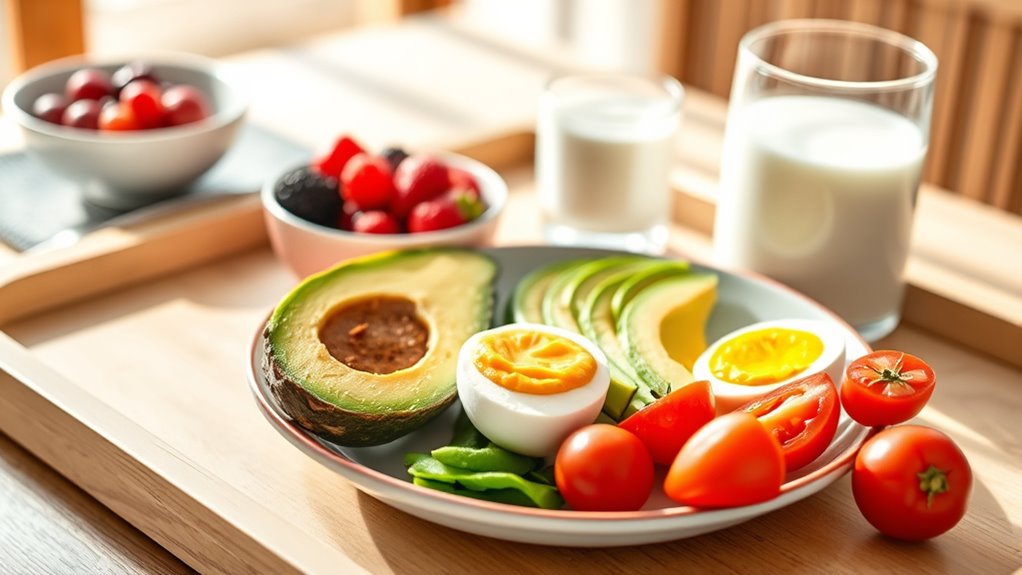

To keep blood sugar on track with gestational diabetes, focus on balanced meals with controlled carbs from whole grains, vegetables, and legumes. Pair snacks with protein, fiber, and healthy fats, and eat at regular intervals to prevent spikes. Monitoring your blood sugar helps guide your diet choices. Managing portion sizes and choosing slow-digesting carbs make a big difference. For more practical tips on staying balanced and healthy, continue exploring strategies tailored for your pregnancy needs.

Turn the school run and nap time into listening time
- Thousands of audiobooks, podcasts and originals
- Listen on your phone, tablet or Echo — also offline
- Cancel anytime
Key Takeaways
- Count carbohydrates accurately at each meal and snack, focusing on complex carbs like whole grains, vegetables, and legumes.
- Maintain regular eating schedule with balanced meals and snacks every 3-4 hours to prevent blood sugar spikes.
- Combine protein, fiber, and healthy fats in snacks to promote blood sugar stability and curb hunger.
- Monitor blood sugar levels regularly to make timely dietary adjustments and avoid spikes.
- Incorporate physical activity and stay hydrated to support overall blood sugar management during pregnancy.

Managing your diet is essential when you have gestational diabetes, as what you eat directly affects your blood sugar levels and your baby’s health. One of the most effective ways to stay in control is through carbohydrate counting. This means paying close attention to how many carbs you consume at each meal and snack. Carbohydrates have the biggest impact on blood sugar, so understanding portion sizes and choosing the right types of carbs can make a real difference. Focus on complex carbs like whole grains, vegetables, and legumes, which digest slower and cause less blood sugar spike. Using a carbohydrate counting chart or working with your healthcare provider can help you learn how many carbs are in common foods, making it easier to plan balanced meals.
Snack strategies are equally important, especially when you need to maintain steady blood sugar levels between meals. Instead of reaching for sugary or processed snacks, opt for options that combine protein, fiber, and healthy fats. For example, a handful of nuts with a piece of fruit, or Greek yogurt with berries, can help stabilize your blood sugar. Keep portion sizes in check to avoid overeating, which can cause blood sugar to rise. Having healthy snacks readily available makes it easier to resist temptations and prevents you from getting too hungry, which often leads to overeating or choosing less nutritious options. Incorporating mindful eating techniques can further support your blood sugar management by encouraging better portion control and awareness of hunger cues. Additionally, maintaining a balanced diet ensures your body receives essential nutrients for both you and your baby. Being aware of blood sugar levels through regular monitoring can help you make timely adjustments to your diet and activity routines.
It’s also helpful to establish a routine around your meals and snacks. Eating at regular intervals prevents your blood sugar from dropping too low or spiking too high. Aim for three balanced meals and two to three snacks daily, spaced about three to four hours apart. This consistency helps your body manage glucose levels more effectively. When planning snacks, consider combining lean protein with fiber-rich foods to create a satisfying, blood sugar-friendly option. For example, sliced turkey with raw vegetables or a small apple with almond butter can be both delicious and blood sugar-conscious. Additionally, incorporating regular physical activity can further assist in maintaining stable blood sugar levels and improve overall health.
gestational diabetes carbohydrate counting chart
As an affiliate, we earn on qualifying purchases.
As an affiliate, we earn on qualifying purchases.
Frequently Asked Questions
Can Gestational Diabetes Affect Long-Term Health?
You might wonder if gestational diabetes affects your long-term health. It can increase your long-term risks for type 2 diabetes and heart disease if not managed well. Regular health monitoring is essential to catch any issues early. Staying proactive with diet, exercise, and medical check-ups helps reduce these risks and keeps your health on track long after pregnancy. Don’t ignore the importance of ongoing health management.
Are Artificial Sweeteners Safe During Pregnancy?
You’re wondering if artificial sweeteners are safe during pregnancy. While some artificial sweeteners are approved for pregnancy safety, it’s best to use them in moderation. Not all sweeteners are tested thoroughly, so check labels and consult your healthcare provider. Remember, a balanced diet with natural sugars from fruits and vegetables is preferable. Always prioritize natural options to support your health and your baby’s development during pregnancy.
How Does Exercise Influence Blood Sugar Levels?
Exercise plays a crucial role in blood sugar regulation, helping you manage your levels effectively. When you stay active, your muscles use more glucose for energy, which lowers blood sugar. The exercise benefits include improved insulin sensitivity and better overall blood sugar control. Regular activity, like walking or prenatal yoga, can make a significant difference in keeping your blood sugar stable and supporting a healthy pregnancy.
What Are Some Quick Snack Options for Gestational Diabetes?
Quick, quality snacks can quell cravings and keep blood sugar steady. Think of pairing protein-packed options like Greek yogurt or nuts with healthy fats such as avocado or seeds. These choices provide sustained energy and stabilize blood sugar levels. You’ll feel fuller longer and avoid spikes. Remember, simple, satisfying snacks like cheese sticks, hard-boiled eggs, or veggie sticks with hummus are excellent, easy options to keep you nourished throughout your busy day.
Is It Safe to Indulge in Small Desserts Occasionally?
You might wonder if small desserts are safe occasionally. While indulging in dessert moderation can be okay, it’s best to choose sweet treat alternatives like fruit or sugar-free options. Keep portions small and limit frequency to avoid blood sugar spikes. Always listen to your body and consult your healthcare provider for personalized advice. Remember, balance and mindful choices help you enjoy treats without compromising your health.
high-protein healthy snacks for gestational diabetes
As an affiliate, we earn on qualifying purchases.
As an affiliate, we earn on qualifying purchases.
Conclusion
By following these diet tips, you can stay on top of your blood sugar and make your pregnancy smoother. Remember, small changes can make a big difference, so don’t throw in the towel if things get tough. Keep your eye on the prize and stay committed to healthy eating. With patience and consistency, you’ll find that managing gestational diabetes becomes more manageable than you thought—proving that slow and steady wins the race.
blood sugar monitoring kit for pregnancy
As an affiliate, we earn on qualifying purchases.
As an affiliate, we earn on qualifying purchases.
whole grain legume vegetable meal prep containers
As an affiliate, we earn on qualifying purchases.
As an affiliate, we earn on qualifying purchases.
Cold & flu season Picks
humidifiers
As an affiliate, we earn on qualifying purchases.