Postpartum hair loss is normal and usually occurs around three to six months after childbirth due to hormonal shifts that cause increased shedding. It’s temporary, and most hair begins to regrow within a year as hormone levels stabilize. You should ask for help if shedding continues beyond a year, or if you notice patches, scalp problems, or other signs of underlying issues. More tips on managing and understanding this process can help you feel more prepared.

Turn the school run and nap time into listening time
- Thousands of audiobooks, podcasts and originals
- Listen on your phone, tablet or Echo — also offline
- Cancel anytime
Key Takeaways
- Postpartum hair loss is common around 3-6 months after birth due to hormonal shifts, and usually resolves within a year.
- Normal shedding involves increased hair in brushes and drains, not complete bald patches.
- Seek medical advice if hair loss persists beyond one year, or if there are patches, scalp inflammation, or other symptoms.
- Gentle hair care, a healthy diet, and rest can support natural hair regrowth during postpartum recovery.
- Persistent or severe hair loss, or signs of underlying issues like thyroid problems, warrant professional evaluation.
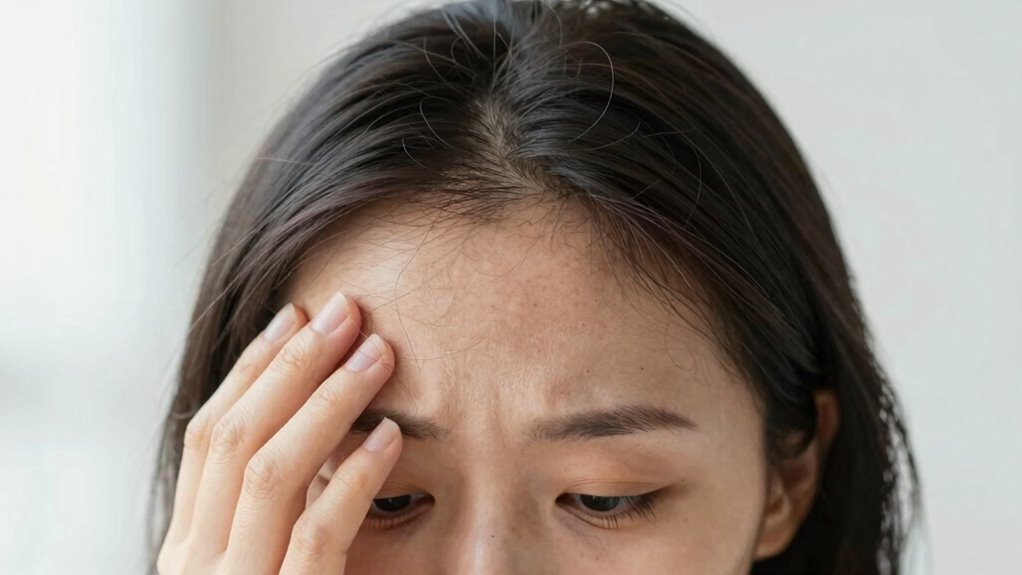
After giving birth, many women notice their hair shedding more than usual, and this common experience is known as postpartum hair loss. It can be surprising and sometimes upsetting, especially if you’ve always taken pride in your hair’s fullness. This increased shedding is primarily caused by hormonal changes that happen during and after pregnancy. During pregnancy, your body produces high levels of estrogen, which helps keep hair in the growth phase, resulting in thicker, shinier hair. However, after birth, estrogen levels drop rapidly, causing many hair follicles to shift from the growth phase into the shedding phase. This sudden shift leads to a noticeable increase in hair thinning and shedding, often most prominent around three to six months postpartum.
Postpartum hair loss occurs due to hormonal shifts after pregnancy, leading to temporary thinning around three to six months postpartum.
Hormonal fluctuations are the main culprits behind this temporary hair loss. As your hormone levels stabilize, usually by the six to twelve-month mark, your hair growth cycle should return to normal. During this period, you might see clumps of hair in your brush or shower drain—this is typical and not usually a cause for concern. Your scalp might look a little less full, but the good news is, this hair thinning is generally temporary. It’s important to remember that your hair’s shedding pattern follows a natural cycle, and postpartum hair loss is simply your body’s response to the hormonal rollercoaster of new motherhood.
You might notice that your hair feels thinner or looks less voluminous, but it’s essential to be patient. Usually, within a year, your hair will start to regrow, regaining its previous fullness. During this time, taking care of your hair with gentle shampoos and avoiding harsh treatments can help minimize additional stress on your fragile hair. Maintaining a healthy diet rich in vitamins and minerals like iron, biotin, and zinc supports hair regrowth as well. Keep in mind that stress, fatigue, and lack of sleep, which are common postpartum experiences, can also contribute to hair thinning, so prioritizing rest and self-care plays a crucial role.
While postpartum hair loss is normal and temporary for most women, it’s important to monitor your situation. If you notice excessive shedding that persists beyond a year, or if you see patches of baldness or scalp inflammation, it’s wise to consult a healthcare professional. Sometimes, underlying issues like thyroid imbalances or nutritional deficiencies can contribute to persistent hair loss. Remember, your body is adjusting to a new rhythm, and with time, your hair should bounce back to its usual volume. Patience and gentle care are your best allies during this transitional phase. Additionally, understanding that hormonal changes are a natural and temporary part of postpartum recovery can help you manage expectations and reduce stress during this period.
gentle postpartum hair loss shampoo
As an affiliate, we earn on qualifying purchases.
As an affiliate, we earn on qualifying purchases.
Frequently Asked Questions
Can Postpartum Hair Loss Be Prevented?
You can’t fully prevent postpartum hair loss, but you can minimize it with good hair care and nutritional support. Keep your scalp healthy by avoiding harsh treatments and gentle brushing. Eat a balanced diet rich in vitamins like biotin, iron, and zinc to support hair strength. Staying hydrated and managing stress also help. While some shedding is normal, these steps can promote healthier hair recovery after childbirth.
How Long Does Postpartum Hair Shedding Last?
Think of postpartum hair shedding as a seasonal change—it’s usually temporary. Typically, it lasts for about 3 to 6 months after your baby is born, as your hormones settle down. During this time, hormonal changes cause increased hair shedding, but don’t worry, your hair will bounce back. If it persists beyond that or feels excessive, it’s a good idea to talk to a healthcare provider for guidance.
Are There Safe Treatments for Postpartum Hair Loss?
Yes, there are safe treatments for postpartum hair loss. Focus on nourishing your hair growth and scalp health by using gentle, sulfate-free shampoos, and consider supplements like biotin or vitamin D after consulting your doctor. Keep your scalp clean and avoid harsh chemicals. Regular scalp massages can stimulate circulation and promote healthier hair growth. Remember, most postpartum hair loss is temporary, so patience and proper care support your hair’s recovery.
Does Postpartum Hair Loss Affect Hair Thickness Long-Term?
Postpartum hair loss usually doesn’t affect your hair density long-term, as most women regain their pre-pregnancy thickness over time. The hormonal impact after childbirth causes temporary shedding, but once hormones stabilize, your hair’s density should return to normal. If you notice persistent thinning beyond a year or significant changes, it’s a good idea to consult a specialist to rule out other issues and explore options to support hair growth.
When Should I See a Doctor About Hair Loss?
Think of your hair as a delicate garden needing care—if your hair keeps thinning or falls out excessively after six months, it’s time to seek help. You should see a doctor for a thyroid evaluation and nutritional assessment if your hair loss persists or worsens. Don’t wait for the damage to be irreversible; early intervention can restore health and confidence. Trust your instincts and get professional advice.
As an affiliate, we earn on qualifying purchases.
Conclusion
Remember, postpartum hair loss is a common, temporary phase—your hair’s not falling out in a tsunami, even if it feels like it. If your hair loss feels overwhelming or persists beyond a few months, don’t hesitate to reach out for help. You’re doing an incredible job managing so much at once, and seeking support can make this challenging time feel a little less like an uphill battle. You’re stronger than you realize—take care of yourself.
As an affiliate, we earn on qualifying purchases.
As an affiliate, we earn on qualifying purchases.
Fall Picks
fall essentials
As an affiliate, we earn on qualifying purchases.