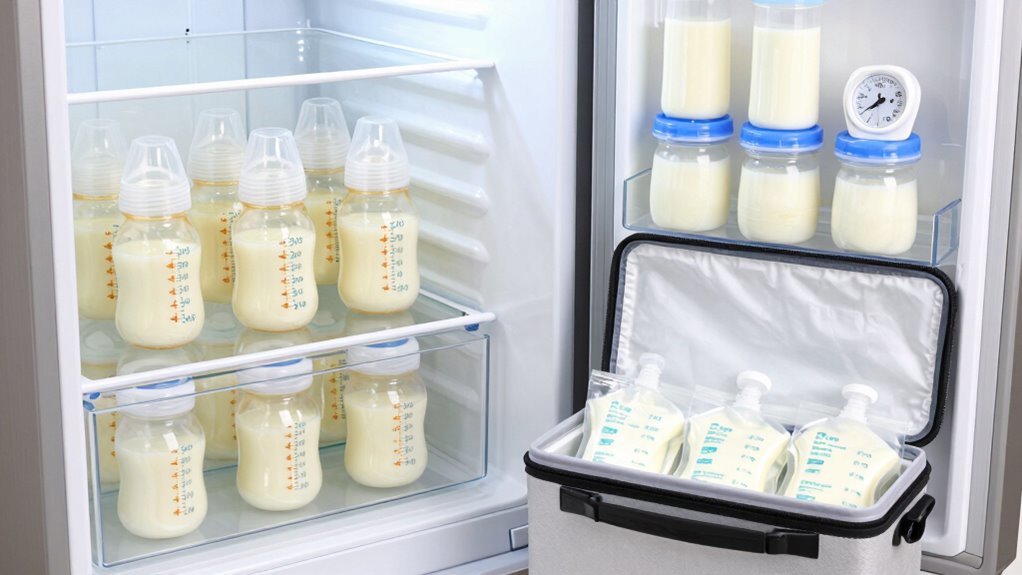

To store breast milk safely, use clean, sterilized containers that are BPA-free and leak-proof. Label each with the date of expression and store fresh milk in the back of your fridge at or below 39°F, using it within four days. For longer storage, freeze milk at 0°F or below, in small portions, for up to six months. When traveling, pack the milk in insulated cooler bags with ice packs. Keep your milk safe by following these tips—you’ll find more helpful advice below.
Key Takeaways
- Use sterile, BPA-free containers and label with the expression date for proper storage and rotation.
- Keep refrigerated milk at or below 39°F (4°C) and use within four days.
- Freeze milk at 0°F (-18°C) for up to six months, with smaller portions to minimize waste.
- Transport breast milk in insulated cooler bags with ice packs, avoiding hot cars and refreezing thawed milk.
- Thaw frozen milk safely in the fridge or warm water, and consume within 24 hours; do not microwave.
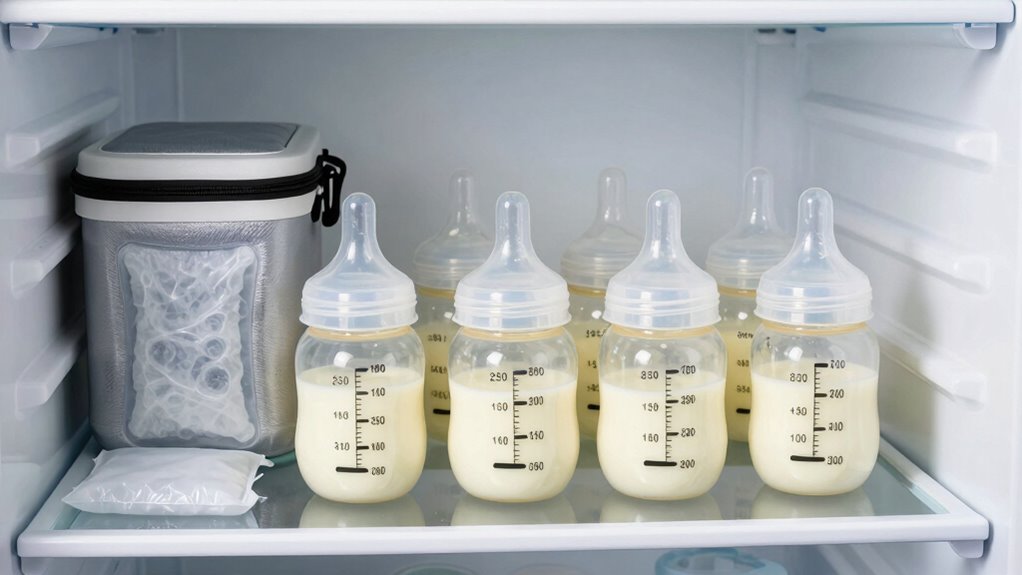
Ever wonder how to keep your breast milk fresh and safe for your baby? Proper storage is crucial to guarantee your little one gets the best nutrition without risking spoilage or contamination. Starting with your breastfeeding techniques, it’s essential to express milk carefully, using clean hands and sterilized equipment. Once you’ve pumped, the next step is choosing the right milk storage containers. Opt for BPA-free, leak-proof containers or specialized breast milk storage bags designed for freezing and refrigeration. These containers should be designed to prevent spills and protect the milk from freezer burn or contamination. Always label each container with the date you expressed the milk, so you use the oldest milk first and avoid waste. To maintain the quality of stored breast milk, keep in mind that vetted wave and wind conditions can impact how long milk remains safe, especially during transport or outdoor storage. When storing breast milk in the fridge, ensure the temperature is consistently at or below 39°F (4°C). Place the milk in the back of the refrigerator, where the temperature is most stable, rather than in the door where it fluctuates more frequently. Use the milk within four days for maximum freshness, but if you’re planning to use it later, freezing is a better option. For longer storage, transfer the milk into the freezer, ideally in small, manageable portions to avoid thawing more than you need. Freezing breast milk at 0°F (-18°C) or below allows you to keep it safe for up to six months, although using it within three months is best for maximum nutrients. When freezing, leave some space at the top of the container because the milk expands as it freezes, preventing spills or cracks. Transporting breast milk requires extra care, especially if you’re going out for extended periods. Use insulated cooler bags with ice packs to keep the milk cold and prevent spoilage. Make sure the milk is stored in leak-proof containers, and avoid leaving it in a hot car for long. When you’re ready to feed your baby, don’t refreeze thawed milk; instead, use it within 24 hours if kept refrigerated, or discard any leftovers. Remember to thaw frozen milk safely by placing it in the fridge overnight or submerging the container in warm water. Never microwave breast milk, as this can create hot spots that burn your baby’s mouth and degrade the milk’s nutrients.

Medela Breast Milk Collection and Storage Bottles with Solid Lids – 6pk/5oz-150mL Breastmilk Container, Compatible Breast Pumps and Made Without BPA
COMPLETE COMPATIBILITY: Tailored to work seamlessly with all Medela pumps that come with bottles, ensuring a hassle-free and…
As an affiliate, we earn on qualifying purchases.
As an affiliate, we earn on qualifying purchases.
Frequently Asked Questions
Can I Reheat Breast Milk Multiple Times Safely?
You shouldn’t reheat breast milk multiple times. Each time, you risk bacteria growth, especially if you don’t follow proper thawing techniques. Always use clean, sterile storage containers and reheat only what your baby needs. After warming, gently swirl the milk—avoid vigorous shaking—and discard any leftovers. Reheating breast milk more than once compromises its safety and nutritional quality. It’s best to prepare fresh portions for each feeding.
How Do I Prevent Milk Spoilage During Storage?
To prevent milk spoilage during storage, you should keep breast milk at the right temperature, ideally in the fridge at 4°C (39°F) or colder, and in a freezer if long-term. Use clean, airtight storage containers to avoid contamination. Label each container with the date, and avoid leaving milk out at room temperature for more than a few hours. Regularly check for signs of spoilage like sour smell or change in appearance.
Is It Okay to Mix Fresh and Frozen Breast Milk?
Sure, go ahead and mix fresh and frozen breast milk—because who doesn’t love a little surprise in every feed? Just follow storage guidelines and avoid unpredictable spoilage. Mixing milk isn’t forbidden, but to keep your baby safe, make certain both are at similar temperatures and use clean containers. Remember, consistency in storage guidelines protects your milk’s quality and your peace of mind. Enjoy your milk-mixing adventure!
How Long Can I Store Breast Milk at Room Temperature?
You can store breast milk at room temperature for up to 4 hours if you use clean, airtight storage containers. Keep the milk at a safe temperature, ideally around 77°F (25°C), to prevent bacterial growth. If your room is warmer, try to use the milk sooner. Always check the smell and appearance before feeding. When in doubt, it’s best to refrigerate or freeze the milk promptly.
What Are Signs That Stored Breast Milk Has Gone Bad?
Think of breast milk as a delicate treasure that can spoil if not cared for. If it develops a sour smell, changes in color, or a slimy texture, it’s a sign of contamination. Always check for unusual odors or separation. Remember, contamination can happen if storage containers aren’t clean. Trust your senses—if anything seems off, it’s best to discard the milk to keep your baby safe.

Mancro Breastmilk Cooler Bag with Ice Pack, Fits 6 Baby Bottles Up to 9 Ounce Insulated Baby Bottle Bag, Breast Milk Cooler on The go with Strap, Bottle Storage Bag for Nursing Mom Daycare, Black
Large Capacity: Size: 8.66 * 7 * 8.66 inch, which is large enough to fits 6 baby bottles…
As an affiliate, we earn on qualifying purchases.
As an affiliate, we earn on qualifying purchases.
Conclusion
Remember, storing breast milk safely is essential for your baby’s health. Whether you’re using the fridge, freezer, or traveling, proper storage techniques guarantee your milk stays fresh and nutritious. Coincidentally, just as your milk’s quality depends on how you store it, your peace of mind depends on following these guidelines. So, keep these tips in mind—because when it comes to your baby’s nourishment, a little extra care makes all the difference.

Lansinoh Breastmilk Storage Bags, 100 Count, Baby Essentials, Fast Freeze & Thaw Breast Milk Bags for Baby Bottle Feeding, Strength & Stretch, 6 Ounce
SUPERIOR STRENGTH & STRETCH – Lansinoh's breastmilk storage bags are designed to expand with your milk as it…
As an affiliate, we earn on qualifying purchases.
As an affiliate, we earn on qualifying purchases.

2 Pack Refrigerator Thermometer, 30-30°C/20-80°F, Classic Fridge Thermometer Large Dial with Red Indicator Thermometer for Freezer Refrigerator Cooler
Convenient and practical: Our refrigerator thermometer is suitable for traditional refrigerators, freezers, insulated boxes, etc. It has a…
As an affiliate, we earn on qualifying purchases.
As an affiliate, we earn on qualifying purchases.