
If you’re choosing between a mini crib and a full crib, consider your space and long-term plans. Mini cribs are perfect if you need a compact, portable option for smaller rooms or frequent mobility. Full cribs are larger and more durable, often converting into toddler beds for lasting use. Your choice depends on your current space and future growth needs—stick with a mini crib for flexibility and learn more about which suits your lifestyle best.

Turn the school run and nap time into listening time
- Thousands of audiobooks, podcasts and originals
- Listen on your phone, tablet or Echo — also offline
- Cancel anytime
Key Takeaways
- Mini cribs save space and are ideal for small nurseries or shared rooms, while full cribs require more room but offer longer-term use.
- Mini cribs are lightweight and portable, perfect for frequent movement or travel; full cribs are heavier and more permanent.
- Full cribs are generally more durable and often convert into toddler beds, providing lasting value as your child grows.
- Mini cribs create a cozy, snug sleep environment suited for infants, whereas full cribs offer a larger space for comfort and longer use.
- The choice depends on available space, mobility needs, and whether long-term durability or space-saving convenience is a priority.
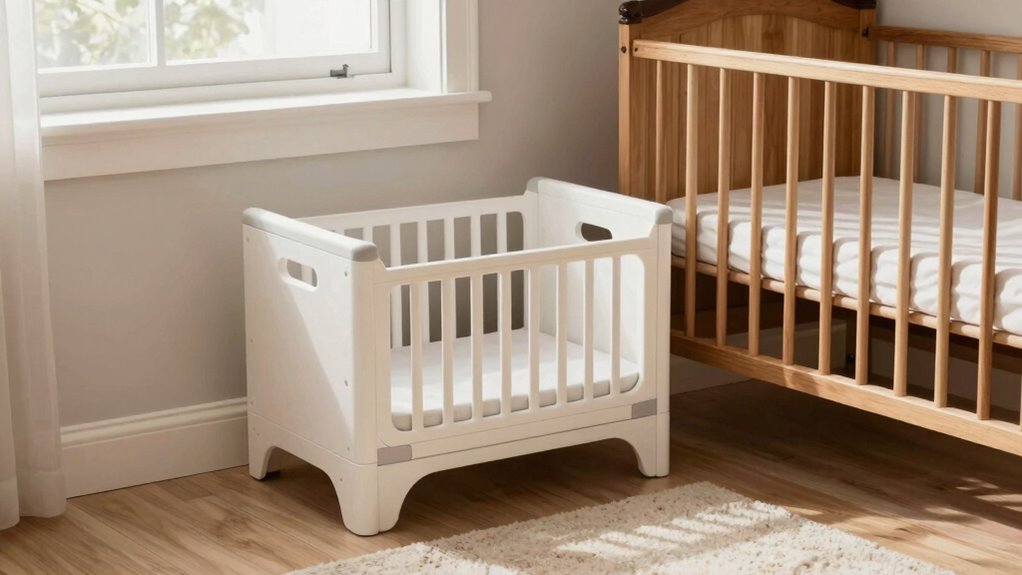
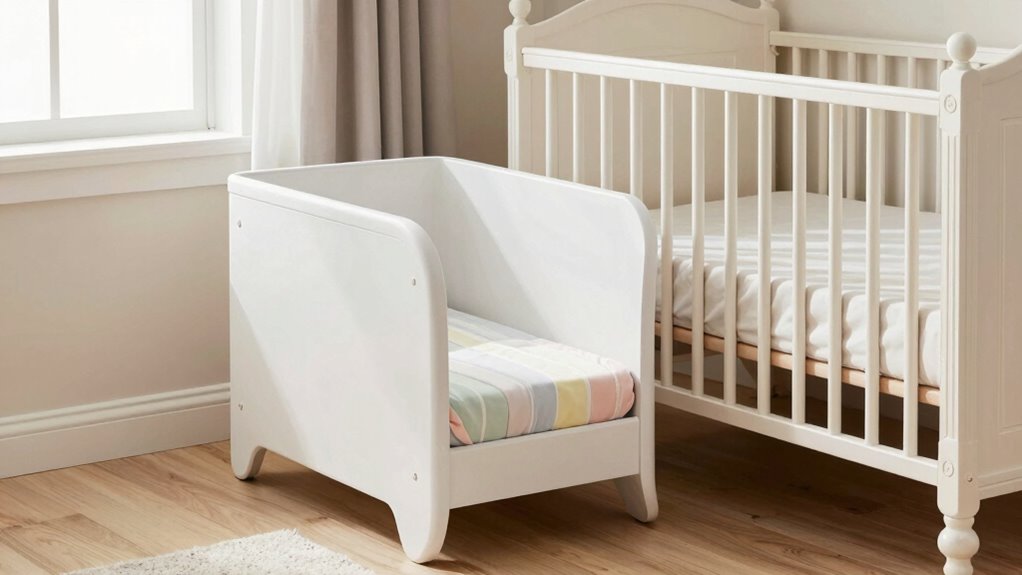
Choosing between a mini crib and a full-size crib can be a significant decision for parents looking to maximize space and comfort in their nursery. If you’re short on room but still want a safe and cozy place for your baby to sleep, a mini crib offers portable convenience that’s hard to beat. These compact cribs are designed to fit into smaller spaces, making them ideal for apartments, shared rooms, or even for use in your living area. Their lightweight design means you can easily move them around, allowing you to adapt your nursery setup as your needs change. This portability also makes it simple to shift the crib between rooms or bring it along when visiting family, ensuring your baby’s sleep environment remains familiar and comfortable wherever you go.
In contrast, a full-size crib typically provides a more traditional and spacious sleep environment, often with features like adjustable mattress heights and more substantial construction. While they take up more room, full cribs are usually more durable and can serve your child for many years, often converting into toddler beds or daybeds. When it comes to the sleep environment, a full-size crib offers the advantage of a larger sleeping area, which can be more comfortable for your growing baby. It also tends to feel more like a permanent fixture in the nursery, giving a sense of stability and familiarity that can help with sleep routines.
However, if space is limited, a mini crib’s smaller size doesn’t mean sacrificing safety or comfort. Many mini cribs are designed with the same safety standards as full-size models, and their compact design can actually create a more intimate, enclosed sleep environment that some babies find soothing. Additionally, since mini cribs are portable, you can place them near your bed or in different rooms, allowing you to keep a close eye on your little one at all times. This flexibility enhances your ability to create a secure and cozy sleep environment tailored to your lifestyle.
Ultimately, your choice hinges on your space constraints, long-term plans, and how much you value portability versus traditional size. A mini crib might be perfect if you need a space-efficient, portable solution that still prioritizes safety and comfort. Meanwhile, a full-size crib can serve as a lasting fixture that provides a spacious sleep environment and grows with your child. Weighing these factors carefully will help you decide which option best suits your home and your baby’s needs.
mini crib with adjustable mattress height
As an affiliate, we earn on qualifying purchases.
As an affiliate, we earn on qualifying purchases.
Frequently Asked Questions
Can Mini Cribs Be Converted Into Full-Size Beds Later?
Yes, mini cribs can often be converted into full-size beds, but it depends on the model. Check the convertibility options carefully before purchasing, as some mini cribs are designed for easy bed size changeover, while others aren’t. If you want flexibility, choose a mini crib that offers conversion kits or accessories that allow you to transform it into a full bed later, saving you money and space long-term.
Are Mini Cribs Suitable for Long-Term Use?
You might find a mini crib surprisingly suitable for long-term use, especially if your nursery decor is flexible and space is limited. Its compact size offers travel convenience, making it easier to move around, but it’s best for infants up to age two. If your child grows quickly or needs more space, consider shifting to a full crib later. Keep in mind, mini cribs provide practicality without sacrificing comfort.
Which Type Offers Better Resale Value?
A full crib generally offers better resale value because it appeals to more buyers in the resale market and tends to depreciate less over time. Mini cribs often have a narrower resale market and may experience quicker value depreciation due to their limited size and appeal. If you’re thinking long-term resale, investing in a full crib can help you recoup more of your initial cost later on.
How Do Safety Standards Differ Between Mini and Full Cribs?
You’ll find that safety standards for mini and full cribs are quite similar, emphasizing safety compliance and material standards. Both types must meet strict regulations, including sturdy frames, non-toxic finishes, and secure slats. However, mini cribs often have additional safety features tailored for smaller spaces. Always check for certification labels like JPMA or ASTM to make certain whichever crib you choose adheres to the latest safety standards.
Are There Weight Limits for Mini Cribs?
Yes, there are weight restrictions for mini cribs to guarantee proper crib safety. Typically, mini cribs are designed to support babies up to around 15-20 pounds, but always check the manufacturer’s guidelines for specific weight limits. Staying within these limits is vital for safety, as exceeding them can compromise the crib’s stability. Always monitor your child’s weight and follow the recommended safety standards to keep them secure.
convertible full size crib toddler bed
As an affiliate, we earn on qualifying purchases.
As an affiliate, we earn on qualifying purchases.
Conclusion
Ultimately, choosing between a mini crib and a full crib depends on your space and your child’s needs. Remember, “A stitch in time saves nine”—making the right choice early on can save you hassle later. If space is tight, a mini crib offers a practical, lasting solution. But if you have room and want a future-proof option, a full crib might be best. Whichever you pick, it’s about creating a safe, cozy space for your little one’s growth.
portable mini crib for small nursery
As an affiliate, we earn on qualifying purchases.
As an affiliate, we earn on qualifying purchases.
full size baby crib with safety standards
As an affiliate, we earn on qualifying purchases.
As an affiliate, we earn on qualifying purchases.
Fall Picks
fall essentials
As an affiliate, we earn on qualifying purchases.