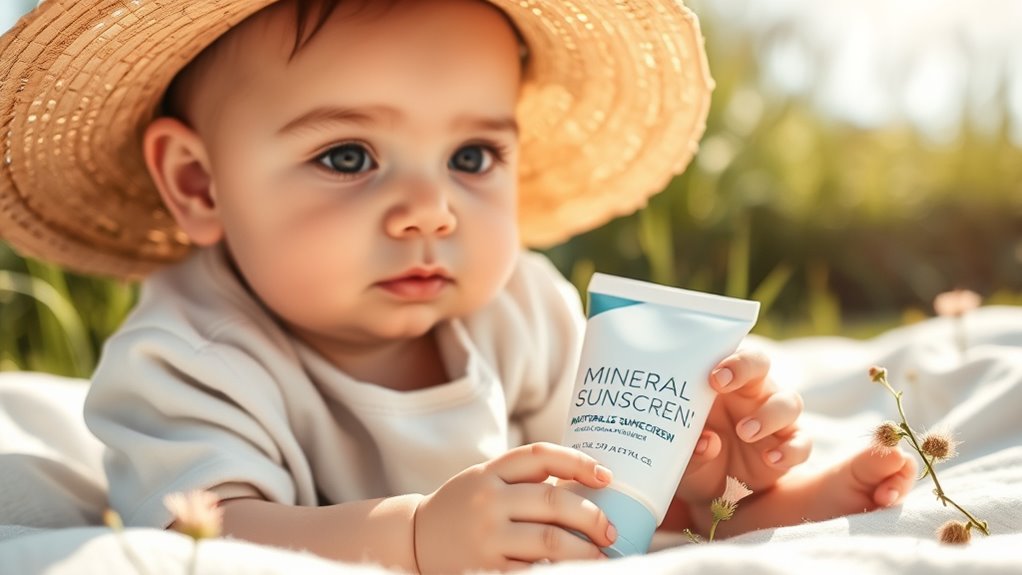

When choosing a mineral sunscreen for your baby, opt for formulas with zinc oxide or titanium dioxide, as they sit on the skin and reflect UV rays, offering broad-spectrum protection. Look for products labeled for sensitive or baby skin, and guarantee they are fragrance-free and hypoallergenic to reduce irritation. Applying generously before outdoor exposure and reapplying regularly helps keep your little one safe. For more tips on selecting the best mineral sunscreen, keep exploring.

Get baby and family essentials delivered free — and shop member deals
- Fast, free delivery on millions of items
- Access to Prime Big Deal Days deals on October 6–7
- Prime Video, Amazon Music and more included
Key Takeaways
- Choose mineral sunscreens with zinc oxide or titanium dioxide for safe, effective protection.
- Ensure the product is labeled specifically for babies or sensitive skin.
- Opt for broad-spectrum formulas that shield against UVA and UVB rays.
- Select fragrance-free, hypoallergenic, and gentle formulations to reduce skin irritation.
- Reapply every two hours and before outdoor activities for continuous protection.

Protecting your baby from the sun is vital to prevent sunburns and long-term skin damage. When choosing a sunscreen, many parents are turning to mineral options because they tend to be gentler on delicate skin and provide effective, broad-spectrum protection. Unlike chemical filters, mineral sunscreens use active ingredients like zinc oxide or titanium dioxide, which sit on top of the skin and reflect or scatter UV rays. This makes them a safer choice for infants, especially those with sensitive or allergy-prone skin. Before applying, make sure the sunscreen is labeled specifically for babies or sensitive skin to guarantee it’s gentle enough.
Application tips are fundamental for providing consistent protection. Start by applying the mineral sunscreen generously, covering all exposed areas—face, ears, neck, arms, and legs. Don’t forget to cover often-missed spots like behind the ears, the back of the neck, and around the hairline. To maximize effectiveness, apply the sunscreen about 15 minutes before heading outside so it has time to set and form a protective barrier. Reapply every two hours or immediately after your baby has been in water, wiped with a towel, or sweated excessively. Using a broad, gentle, and fragrance-free formula reduces the risk of irritation and guarantees your baby’s skin isn’t exposed to unnecessary chemicals.
When it comes to chemical filters, it’s best to avoid sunscreens containing ingredients like oxybenzone, avobenzone, or octocrylene for infants. These chemical filters can sometimes cause skin irritation or allergic reactions in sensitive skin. Mineral sunscreens, on the other hand, start working immediately upon application and provide protection against both UVA and UVB rays from the moment you put them on. They are less likely to cause skin reactions, making them ideal for babies.
mineral baby sunscreen zinc oxide
As an affiliate, we earn on qualifying purchases.
As an affiliate, we earn on qualifying purchases.
Frequently Asked Questions
Can Babies Wear Sunscreen if They Have Sensitive Skin?
Yes, babies with sensitive skin can wear sunscreen, but you should choose carefully. Look for mineral sunscreens with zinc oxide or titanium dioxide, as they’re gentle and reduce the risk of rash. Conduct a patch test first to check for reactions. Always prioritize sensitive skin considerations and avoid fragrances or harsh chemicals to prevent irritation and rash. Applying sunscreen properly and early helps protect your baby from harmful UV rays.
How Often Should I Reapply Mineral Sunscreen on My Baby?
Reapplying mineral sunscreen on your baby is like revitalizing a favorite drink—frequently and when needed. You should reapply sunscreen reapplication every two hours during sun exposure, or immediately after your baby swims or sweats. For effective baby sun protection, keep a close eye on the time and reapply promptly to ensure continuous coverage. Regular reapplication helps keep your little one safe and protected from harmful UV rays.
Are There Mineral Sunscreens Suitable for Newborns?
Yes, there are mineral sunscreens suitable for newborns. Look for options with natural ingredients and no chemical filters, as these are gentler on sensitive skin. Always choose products labeled specifically for newborns or infants, and consult your pediatrician before use. These sunscreens typically contain zinc oxide or titanium dioxide, providing effective protection without harsh chemicals, so your baby stays safe and comfortable in the sun.
Can Mineral Sunscreens Cause Skin Allergies in Babies?
Mineral sunscreens can cause skin allergies in babies if they trigger chemical reactions or ingredient sensitivities. You should always check the label for potential allergens like zinc oxide or titanium dioxide, which are usually gentle. To minimize reactions, do a patch test first and consult your pediatrician if your baby has known sensitivities. Using a mineral sunscreen with simple, natural ingredients helps reduce the risk of skin allergies.
What Are the Best Application Techniques for Baby Mineral Sunscreens?
To guarantee proper coverage, gently apply mineral sunscreens to your baby’s skin using your fingertips or a soft sponge, spreading it evenly in a generous layer. Focus on all exposed areas, including ears, neck, and hands, and reapply every two hours or after swimming or sweating. Be sure to cover delicate spots and avoid rubbing too hard to prevent irritation, ensuring effective sun protection for your little one.
hypoallergenic baby sunscreen broad spectrum
As an affiliate, we earn on qualifying purchases.
As an affiliate, we earn on qualifying purchases.
Conclusion
As you shield your baby’s delicate skin from the bright sun, imagine a gentle, invisible shield of mineral sunscreen wrapping around them like a cozy blanket. With every application, you’re not just protecting their skin today but nurturing a future free from sun damage. So, choose wisely and let the warm rays kiss their cheeks without worry. Your love and care create a safe haven under the sun’s glow, ensuring happy, sun-kissed adventures ahead.
fragrance-free baby sunscreen for sensitive skin
As an affiliate, we earn on qualifying purchases.
As an affiliate, we earn on qualifying purchases.
As an affiliate, we earn on qualifying purchases.
Halloween Picks
halloween
As an affiliate, we earn on qualifying purchases.