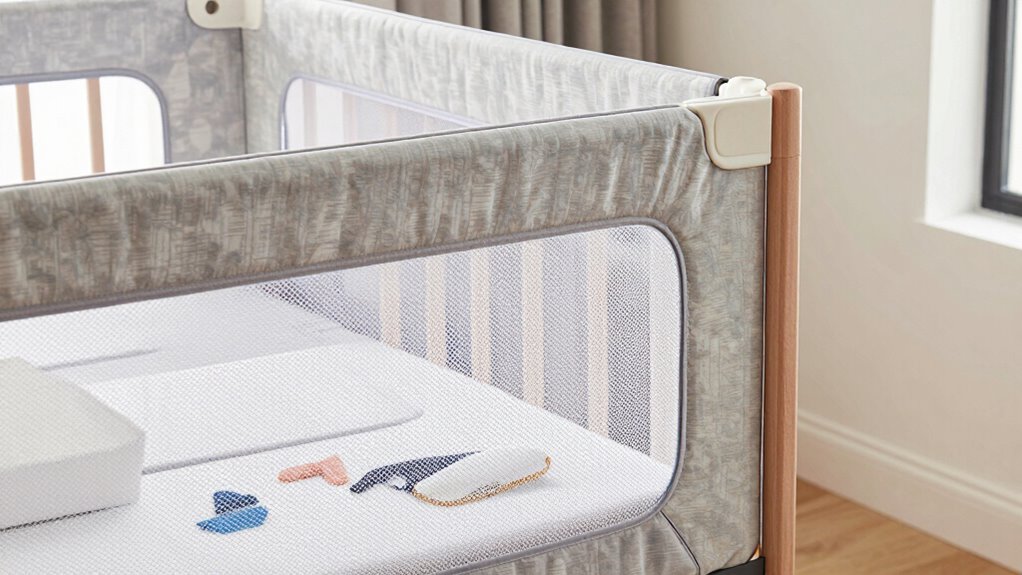

When shopping for a crib, focus on safety features most parents overlook. Make sure it meets current standards, with sturdy construction, fixed sides, and slats no more than 2 3/8 inches apart. Check that the mattress fits snugly, is firm, and that there are no gaps or sharp edges. Also, consider convertible models and buy from reputable brands. Keep your baby’s sleep environment simple and safe—if you want to know more, you’ll find helpful tips below.
Key Takeaways
- Verify the crib meets current safety standards, including sturdy construction and no sharp edges or loose hardware.
- Ensure slats are no more than 2 3/8 inches apart to prevent entrapment.
- Confirm the mattress fits snugly, with no gaps, and is appropriate for the child’s age and weight.
- Check for convertible features that support long-term safe use as your child grows.
- Buy from reputable brands and retailers to ensure compliance with safety regulations and quality standards.
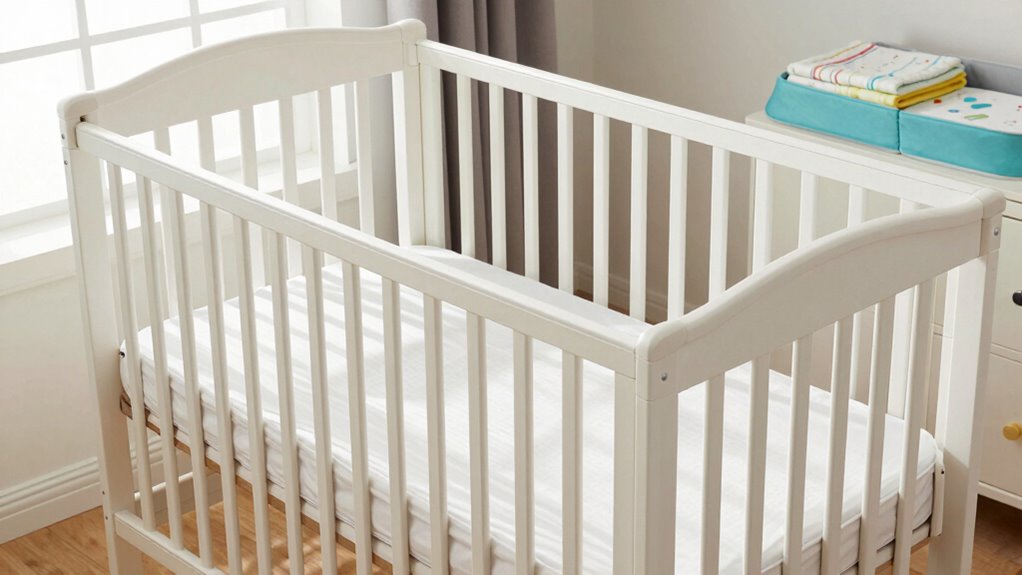
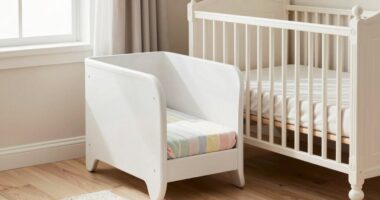
Shopping for a crib can be exciting, but safety should always come first. As you look at different options, consider how the crib will fit into your nursery decor and support safe baby sleeping arrangements. The style and aesthetics might catch your eye, but it’s essential to prioritize safety features that often get overlooked. Before making your final decision, double-check that the crib meets current safety standards, ensuring it’s sturdy and free of potential hazards. Look for a model with fixed sides rather than drop sides, which have been banned in many regions due to safety concerns. The slats should be no more than 2 3/8 inches apart to prevent your baby’s head from slipping through. Also, verify that there are no sharp edges, loose hardware, or splinters that could cause injury.
Prioritize safety: ensure the crib has fixed sides, slats no more than 2 3/8 inches apart, and no sharp edges.
When inspecting a crib, don’t just focus on how it looks; think about its impact on your baby’s sleeping arrangements. The mattress should fit snugly with no gaps to prevent entrapment or suffocation risks. Ensure the mattress height can be adjusted as your baby grows, and that it’s firm enough to support safe sleep. Soft bedding, pillows, or stuffed animals should be avoided in the crib to reduce the risk of suffocation and SIDS. Opt for a simple, sturdy design that encourages safe sleep habits, even if it doesn’t perfectly match your nursery decor. Remember, safety isn’t sacrificed for style.
It’s also wise to review the age and weight limits of the crib. Some models are designed for infants only, while others can be used longer as your child grows. If you plan to use the crib for several years, check that it can convert into a toddler bed or has adjustable features that extend its usability. Pay attention to the construction quality—solid wood tends to be more durable, but always ensure there are no loose joints or wobbling parts. Additionally, selecting a crib with proper ventilation can help maintain a comfortable sleep environment and reduce the risk of overheating.
Finally, keep in mind that crib standards and regulations can vary, so always buy from reputable retailers or brands known for safety compliance. Don’t let attractive nursery decor distract you from essential safety considerations. Your primary goal is to create a secure environment where your baby can sleep peacefully. By following this safety checklist, you ensure that your crib provides a safe haven, giving you peace of mind as your little one begins their journey of restful sleep and growing independence.
As an affiliate, we earn on qualifying purchases.
Frequently Asked Questions
Are Secondhand Cribs Safe for Infants?
Secondhand cribs can be safe if you carefully check for safety issues and make sure they meet current crib regulations. Look for recalls, broken parts, or missing hardware, and verify that the crib’s age doesn’t exceed safety guidelines. Always clean and disinfect thoroughly before use. Remember, adhering to secondhand safety standards and crib regulations is essential to protect your infant. If unsure, consider buying a new crib for added peace of mind.
How Often Should I Replace a Crib?
You should replace your crib every 10 years or sooner if it shows signs of damage. For example, a family kept their crib for over 12 years, and it finally broke during assembly, risking safety. Regularly check the crib bedding and nursery decor for wear and tear. If you notice splinters, loose hardware, or peeling paint, substitute the crib immediately to ensure your baby’s safety and comfort.
What Specific Features Ensure a Crib’s Safety?
To guarantee a crib’s safety, check that it’s made from non-toxic, sturdy materials like solid wood or metal. Make sure the crib material is free from splinters and harmful chemicals. Verify mattress compatibility; the mattress should fit snugly with no gaps to prevent suffocation risks. Also, look for a stable frame, proper slat spacing, and secure hardware. These features help keep your baby safe and comfortable.
Is It Safe to Modify or DIY a Crib?
You shouldn’t DIY or modify a crib because it can compromise safety. DIY safety isn’t guaranteed, and modification risks include loose parts, sharp edges, or weakened structures that could harm your baby. Always follow manufacturer instructions and stick to approved models. If you want changes, consult a professional or buy a crib designed with those features. Prioritize safety over saving money or time with DIY projects.
Are There Any Recent Safety Recalls I Should Check?
You should definitely check for recent recall alerts and safety notices before purchasing or using a crib. Visit the Consumer Product Safety Commission website or the manufacturer’s site to find the latest updates. Staying informed helps you avoid potential hazards from recalled cribs. Regularly reviewing safety notices guarantees your baby’s crib remains safe and compliant with current standards, giving you peace of mind during those precious early years.
As an affiliate, we earn on qualifying purchases.
Conclusion
As you pick out that perfect crib, remember to keep safety close at heart. A little extra attention to details can make a world of difference, giving both you and your little one peace of mind. Trust your instincts, stay informed, and don’t rush the process. In the end, it’s about creating a cozy space where your baby can dream and grow, wrapped in comfort and care. Your thoughtful choices will set the stage for countless happy moments ahead.
As an affiliate, we earn on qualifying purchases.

Graco Premium Foam Baby Crib & Toddler Bed Mattress
- OEKO-TEX Certified Cover: Safe, soft, and tested for harmful substances
- Waterproof Sleep Surface: Machine washable and easy to clean
- GREENGUARD Gold Certified: Low chemical emissions for healthier indoor air
As an affiliate, we earn on qualifying purchases.
As an affiliate, we earn on qualifying purchases.