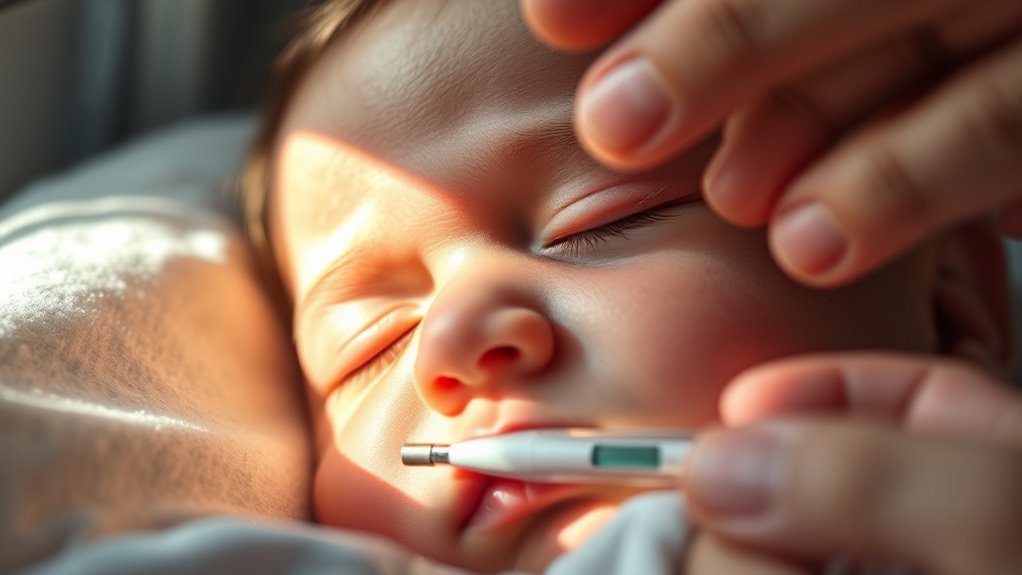

If your infant has a fever of 100.4°F or higher, you need to take action. For infants under 3 months, any fever is a medical emergency. Look for severe symptoms like lethargy, difficulty breathing, or a rash—these warrant immediate help. Ensure your child stays hydrated and dress them lightly. If the fever lasts more than three days or if you have concerns, consult a healthcare professional. You’ll discover more signs to watch for and how to manage fevers effectively.

Turn the school run and nap time into listening time
- Thousands of audiobooks, podcasts and originals
- Listen on your phone, tablet or Echo — also offline
- Cancel anytime
Key Takeaways
- Seek immediate medical attention for any infant under 3 months with a fever of 100.4°F or higher.
- Monitor for severe symptoms like lethargy, difficulty breathing, or convulsions, and act promptly.
- If fever lasts more than three days, consult a healthcare professional for advice.
- Look for additional concerning symptoms such as rash, vomiting, or dehydration signs like fewer wet diapers.
- Ensure the infant stays hydrated and dress them lightly to help manage fever.
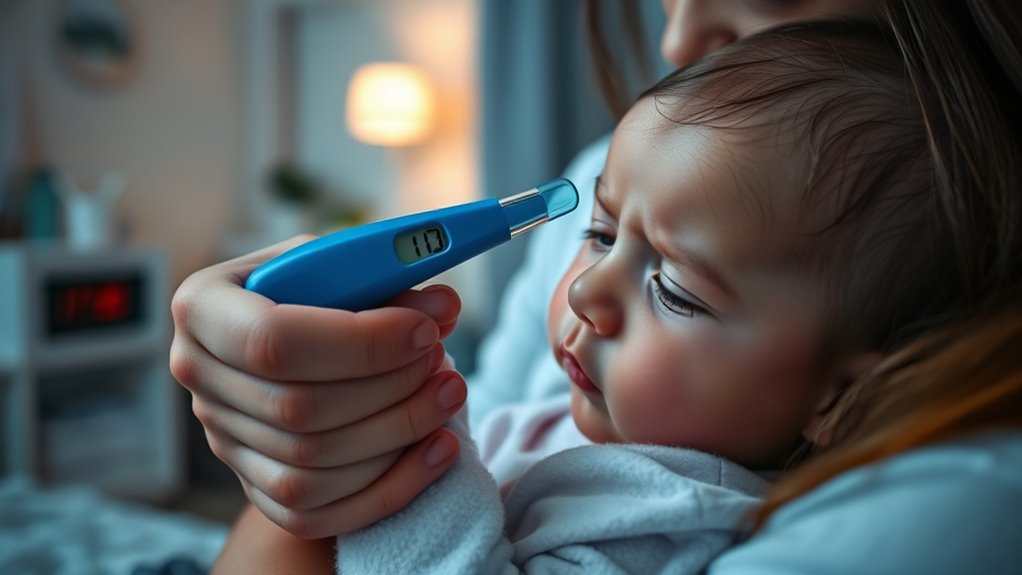
When your little one runs a fever, it can be concerning, especially for new parents. Understanding what constitutes a fever is crucial. For infants, a normal temperature ranges from 97 to 100.3 degrees Fahrenheit. A fever is defined as a temperature of 100.4 degrees Fahrenheit or higher. You can measure their temperature using various methods, but a rectal thermometer is often the most accurate for infants. Just remember to avoid mercury thermometers due to potential mercury exposure.
Understanding fever in infants is essential for parents; a temperature of 100.4°F or higher signals a fever.
As you monitor your child, watch for common symptoms of fever like crankiness, loss of appetite, sweating, shivering, and lethargy. Severe symptoms might include convulsions, a rash, vomiting, diarrhea, or a sore throat. If your little one seems uninterested in play, has trouble sleeping, or is crying inconsolably, it’s time to pay attention.
Physical signs may include looking ill, body aches, and headaches. Also, keep an eye on their hydration; fewer wet diapers could indicate dehydration. Fever is a natural response to fight off germs, and understanding this can help alleviate some concerns during fever episodes.
Most fevers are caused by infections, often viral in nature. However, overheating from overdressing or prolonged exposure to heat can also raise their temperature. Dehydration and vaccination side effects can contribute to fever as well. If your infant is between 0-3 months and has a fever, it’s a serious concern that requires immediate medical attention.
For those aged 3-6 months, fever may indicate an infection, and you should seek medical advice if it seems severe. Infants aged 6-12 months often have viral fevers, but it’s essential to evaluate any persistent fever.
When managing a fever, ensure your little one stays hydrated by offering extra fluids. Light clothing can help with heat loss, preventing overheating. For infants older than 3 months with a fever above 102°F, consider using acetaminophen. Ibuprofen is suitable for those over 6 months. However, avoid overmedicating; fever medication isn’t always necessary.
Be vigilant about warning signs. If your child shows severe symptoms like lethargy or difficulty breathing, act immediately. Remember, a fever in infants under 3 months is a medical emergency.
If the fever lasts more than three days or if additional symptoms like a rash or vomiting appear, don’t hesitate to consult a healthcare professional. Keeping an eye on your child’s health and staying informed can help you manage fever situations effectively.
Frequently Asked Questions
Can Teething Cause a Slight Fever in Infants?
Teething can lead to a slight elevation in temperature, but it typically doesn’t cause a true fever above 100.4°F.
You might notice your baby being irritable, drooling more, or rubbing their gums during this process.
While some parents believe teething causes fever, it’s important to monitor your child closely for any signs of illness.
If a higher fever occurs, it’s best to consult a healthcare provider to rule out infections.
What Are Home Remedies for Reducing Infant Fever?
To reduce your infant’s fever, dress them in light clothing to avoid heat trapping and keep their environment cool around 20°C.
Ensure they stay hydrated with fluids and let them rest undisturbed.
You can give lukewarm sponge baths or apply cool compresses to their forehead.
Using a fan can help circulate air, but be careful not to overcool them.
Always monitor their temperature and consult a doctor if needed.
Is It Safe to Give Infants Fever-Reducing Medication?
When your little one feels like a hot summer day, it’s natural to worry.
Yes, it can be safe to give infants fever-reducing medication, but caution’s key. For infants over 12 weeks, acetaminophen can help, but always measure based on their weight.
Avoid aspirin at all costs, and don’t mix medications without advice.
Trust your instincts, monitor closely, and consult a healthcare provider to ensure your baby’s safety and comfort.
How Can I Monitor My Infant’s Temperature Accurately?
To monitor your infant’s temperature accurately, use a digital thermometer, as it’s quick and reliable.
For infants under 3 months, the rectal method is best, while the temporal artery method works well for those over 3 months.
Make sure to avoid taking temperature after baths or when your child is overdressed.
Always follow the manufacturer’s instructions for your thermometer, and remember to keep your child calm during the process for the best results.
What Causes Fevers in Infants Besides Infections?
They say, “You can’t judge a book by its cover.”
Similarly, fevers in infants can arise from various causes beyond infections. You might encounter fevers from vaccination reactions, overheating, or non-infectious conditions like Kawasaki disease.
Environmental factors, such as extended crying or playing in the sun, can also contribute.
Conclusion
When your little one has a fever, it can feel overwhelming, but trust your instincts. Just as you might coincidentally bump into an old friend when you need support, reaching out to a healthcare professional can provide the reassurance you seek. Remember, acting promptly can make all the difference. You’re not just a caregiver; you’re a detective, piecing together clues about your baby’s health. Stay vigilant, stay calm, and you’ll navigate this together.
Fall Picks
fall essentials
As an affiliate, we earn on qualifying purchases.