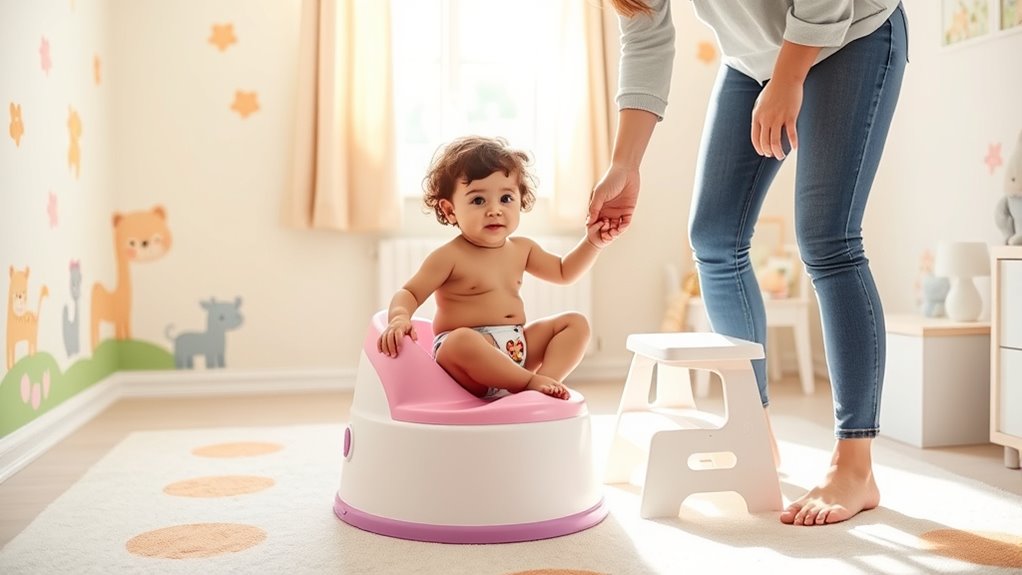

To know if your child is ready for potty training, look for signs like staying dry for longer periods, showing interest in bathroom routines, and recognizing their toileting cues such as squirming or facial expressions. Respond promptly and encourage them gently, creating a positive environment with praise and routine potty times. Patience is key—trust their signals and progress at their pace. Keep exploring these strategies to make the shift smoother for both of you.

Turn the school run and nap time into listening time
- Thousands of audiobooks, podcasts and originals
- Listen on your phone, tablet or Echo — also offline
- Cancel anytime
Key Takeaways
- Look for signs like diaper independence, staying dry, and interest in bathroom routines to assess readiness.
- Respond promptly to consistent toileting cues such as squirming or facial expressions.
- Use positive reinforcement and create a relaxed environment to encourage potty use.
- Establish routine potty times after waking, meals, and before bed to build consistency.
- Be patient, respect the child’s pace, and avoid pushing before they show genuine interest.

Deciding when your child is ready to start potty training can feel overwhelming, but recognizing the right signs makes the process smoother. One of the first indicators is diaper independence. If your little one starts showing interest in your bathroom habits, such as wanting to sit on the potty or imitate you, it’s a good sign they’re getting ready. Also, if they begin staying dry for longer stretches—typically two hours or more—or wake up dry from naps, it indicates their bladder control is developing. Keep an eye out for toileting cues, which are specific signals your child gives when they need to go. These cues can include squirming, holding their genitals, or making specific facial expressions. When you notice these signs consistently, it’s a strong indication that your child is prepared to learn.
Understanding your child’s toileting cues is vital because it helps you respond promptly and create a routine. When your child starts showing consistent cues, you can gently introduce the idea of using the potty. It’s best to wait until they’re showing genuine interest rather than pushing them before they’re ready. For example, if they start tugging at their diaper or expressing discomfort with a soiled diaper, these are clear signs they’re aware of their bodily functions and may want to transition to using the toilet. Encouraging your child to recognize these cues and respond to them can foster independence and confidence. Sit with them during diaper changes to observe their reactions and talk about what’s happening. This helps them connect their feelings and sensations with the need to use the potty.
Additionally, using positive reinforcement like praise and small rewards can motivate your child and make the process more enjoyable. Your role is to create a relaxed environment where your child feels safe exploring this new skill. Use positive language and praise their efforts, even if they only sit on the potty without doing anything. When they show toileting cues, gently remind them of the potty and encourage them to try. Avoid rushing or pressuring them, as that can cause frustration. Instead, focus on building a routine that incorporates regular potty times, such as after waking, meals, and before bed. This consistency helps your child associate specific times with using the toilet, making the process more predictable. Trust your child’s signals and progress—they’ll let you know when they’re truly ready to take the next step toward diaper independence. Patience and observance are key; by recognizing toileting cues and respecting your child’s pace, you’ll make potty training a positive experience for both of you.
potty training seat for toddlers
As an affiliate, we earn on qualifying purchases.
As an affiliate, we earn on qualifying purchases.
Frequently Asked Questions
How Do I Handle Regression During Potty Training?
When your child experiences regression during potty training, stay calm and patient. Use positive reinforcement to encourage progress and maintain consistency in your routine. Reassure your child that setbacks are normal, and avoid punishment. Stick to familiar routines, celebrate small successes, and offer praise to boost confidence. Remember, regression is temporary, and your steady support helps your child regain their confidence and continue progressing in their potty training journey.
What if My Child Refuses to Sit on the Potty?
Like a knight facing dragons, you can gently encourage independence and offer choices, making sitting on the potty less intimidating. If your child refuses, don’t push too hard—use potty training patience and try different times or rewards. Maybe let them flush or bring a favorite toy. Stay calm and positive, showing you’re supportive. Over time, your child will feel more confident and willing to try sitting on the potty.
How Can I Encourage Nighttime Dryness?
To encourage nighttime dryness, establish consistent bedtime routines that help your child relax and recognize bladder cues. Limit fluids before bed and make certain they go to the bathroom right before sleeping. Consider using moisture alarms, which alert them when they wet the bed, reinforcing awareness. Over time, these strategies help your child develop better control, making nighttime dryness more achievable and boosting their confidence.
Are There Specific Signs for Boys Versus Girls?
Like a seasoned explorer, you’ll notice that gender differences influence potty training milestones. Boys often show signs of readiness through increased bladder capacity and occasional dry nights, while girls may reach these milestones earlier with consistent dryness. Look for cues such as staying dry for longer periods during the day and expressing discomfort with dirty diapers. These signs help you gauge when your child is ready, regardless of gender, to progress in potty training.
When Should I Consider Professional Help?
You should consider professional help if your child isn’t reaching typical potty training milestones by age three or four, or if they’ve been struggling for several months without progress. Age considerations are important, but also observe their interest and comfort level. If your child shows signs of resistance or regression despite consistent efforts, consulting a pediatrician or specialist can provide tailored strategies and support to help them succeed.
As an affiliate, we earn on qualifying purchases.
Conclusion
Remember, most children are ready for potty training between 18 and 24 months, but patience is key. By recognizing signs of readiness, you help your child succeed with less stress. Did you know that, on average, children take about 3 to 6 months to master potty training? Stay consistent, celebrate small wins, and trust your child’s pace. With your support, they’ll be confidently using the toilet in no time!
training pants for potty training
As an affiliate, we earn on qualifying purchases.
As an affiliate, we earn on qualifying purchases.
As an affiliate, we earn on qualifying purchases.
Cold & flu season Picks
humidifiers
As an affiliate, we earn on qualifying purchases.