The best portable generators for camping balance enough power for your gear with manageable weight, noise, and fuel needs. I’d make the 2500W Portable Inverter Generator my best overall pick for campers who want gas-powered output, while the Jackery Explorer 1000 v2 stands out for quiet, fuel-free campsite power and the BLUETTI Elite 30 V2 for a compact battery option. The main tradeoff is straightforward: gas generators can run longer with refueling but make noise and exhaust, while battery stations are quiet yet have finite capacity and need recharging. Smaller stations are easier to carry but may not run higher-wattage appliances. Read on for the full comparison and advice on matching capacity and power type to your camping setup.

Turn the school run and nap time into listening time
- Thousands of audiobooks, podcasts and originals
- Listen on your phone, tablet or Echo — also offline
- Cancel anytime
Complete the kit


Key Takeaways
- The lineup divides into two distinct camps: gas inverter generators such as the 2500W and AIVOLT models provide fuel-based runtime, while the Jackery, BLUETTI, Anker, and smaller stations run quietly without exhaust at the campsite.
- The Jackery Explorer 1000 v2 is the stronger fit for longer battery-powered trips than the 292Wh Jackery models, while its solar-generator bundle adds a panel for buyers who want a bundled recharging option.
- Compact capacity brings real limits: the 88Wh MARBERO and 192Wh 300W station suit modest device charging better than extended use of power-hungry camping appliances.
- Higher wattage and larger capacity solve different problems: a generator’s watt rating affects which devices it can run at once, while watt-hours help indicate how long a battery station can supply them.
- The 4400W Oxseryn is aimed at heavier loads, not minimalist camping: its greater output can suit larger setups, but an open-frame gas design is a bulkier, noisier proposition than compact battery stations.


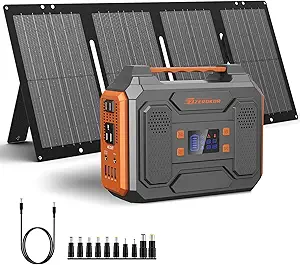


| portable generators for camping | Weight | Dimensions |
|---|---|---|
| 2500W Portable Inverter Genera | 39.46 pounds | — |
| LIBRIDS Portable Power Station | 16.3 pounds | — |
| Anker SOLIX S2000 Portable Pow | 35.7 pounds | 8.19 x 11.1 x 12.7 inches |
| Oxseryn 2800-Watts Portable In | 39 pounds | — |
| Jackery Solar Generator 300 wi | 12.9 pounds | 15.43 x 9.92 x 11.89 inches |
| Jackery Explorer 1000 v2 Porta | 23.8 lb | 12.87 x 8.82 x 9.72 in |
| Jackery Solar Generator 1000 v | 23.8 lb | 12.87 x 8.82 x 9.72 in |
| Portable Solar Generator 300W | — | — |
| Portable Power Station 300W | 8.8 lb | 5.9 x 9.4 x 7.3 in |
| AIVOLT 1600W Super Quiet Inver | 28 lb | — |
| MARBERO Portable Power Station | 1.04 kg | 6.5 x 4.6 x 3.1 inches |
| Jackery Explorer 300 Portable | 7.5 lbs | 9.1 x 5.2 x 7.8 inches |
| Oxseryn 4400 Watts Inverter Ge | 56 lbs | — |
| HOWEASY Portable Power Station | 2.3 lbs | 6.6 x 3 x 4 inches |
| BLUETTI Elite 30 V2 Portable P | 9.4 lbs | 9.8 x 7 x 6.6 inches |
More Details on Our Top Picks
2500W Portable Inverter Generator for Home and Camping, Ultra Lightweight, Quiet, CO Sensor Protect, EPA, ECO Mode
For campers who need more than a battery station can provide, this generator balances usable output, low carry weight, and long runtime. Its 1,900 running watts can handle several everyday camping loads, while clean inverter power is suited to sensitive electronics. The claimed runtime of up to 17 hours from a 1.06-gallon tank is a stronger fit for overnight use than the Oxseryn 2800-Watts model, which is rated for up to 9 hours at a quarter load. At 39.46 pounds and under 59 dBA, it is relatively manageable and quiet for a gasoline generator, though it still needs to run outdoors, away from sleeping areas. The tradeoff is modest capacity for demanding appliances and only four outlets, so multiple devices may call for extension cords.
Pros:- Up to 1,900 running watts offers more power than the battery stations in this group.
- Claimed runtime of up to 17 hours from a 1.06-gallon fuel tank suits extended outings.
- At 39.46 pounds and under 59 dBA, it is comparatively portable and quiet for a gas generator.
- Clean inverter output is suited to sensitive electronics.
Cons:- Gas operation requires outdoor use and fuel handling, unlike the LIBRIDS C600 or Jackery Solar Generator 300.
- Four outlets may not cover a campsite with many devices without extension cords.
- Its 1,900 running watts may not support heavy power tools or high-demand appliances.
Best for: Car campers who want gas-powered runtime for several modest loads, including electronics, without carrying a heavier generator.
Not ideal for: Backpackers, campers seeking silent nighttime power, or anyone who needs to run high-wattage appliances or several devices without extension cords.
- Fuel:Gasoline
- Peak output:2,500 watts
- Running output:1,900 watts
- Fuel tank:1.06 gallons
- Claimed runtime:Up to 17 hours
- Noise:Under 59 dBA
- Weight:39.46 pounds
- Engine:80 cc, 4-stroke
- Outlets:4
Our verdict“Choose this gas inverter for longer camping trips where quiet, portable power matters more than the simplicity of a battery station.”
LIBRIDS Portable Power Station C600, 640Wh Solar Generator, 600W
The LIBRIDS C600 is a practical middle ground for campers who want battery power without carrying a full-size unit. Its 640Wh capacity and four AC outlets give it more room for charging several devices than the 292Wh Jackery Solar Generator 300, while the 600W continuous limit keeps it aimed at electronics and modest appliances rather than cooking gear or power tools. The LiFePO4 battery rated for over 4,000 cycles suits frequent trips, and the listed 1.5-hour charging time can help between outings when using a compatible charging source. At 16.3 pounds, it is much easier to move than the 35.7-pound Anker SOLIX S2000, but its capacity is smaller. There is no solar panel included, so off-grid recharging requires separate equipment.
Pros:- 640Wh capacity exceeds the 292Wh Jackery Solar Generator 300 for longer device-charging needs.
- Four AC outlets and eight total output ports offer flexible charging at camp.
- LiFePO4 battery is rated for over 4,000 cycles.
- Listed 1.5-hour charging time and AC, solar, car, and generator input options support varied recharge plans.
Cons:- 600W continuous output rules out many high-draw appliances.
- At 16.3 pounds, it is less suitable for trips where gear must be carried far.
- Solar panel is not included, adding a separate item for off-grid recharging.
Best for: Car campers who need to charge several phones, cameras, and small electronics from one battery station and value multiple AC outlets.
Not ideal for: Campers planning to run high-wattage appliances, or those who want a complete solar-ready kit without buying a panel separately.
- Battery capacity:640Wh
- Continuous AC output:600W
- Surge power:1,200W
- Battery type:LiFePO4
- Total output ports:8
- AC outlets:4
- Weight:16.3 pounds
- Charging time:1.5 hours
Our verdict“Pick the C600 for car camping with several small devices to charge, but skip it if your main goal is running appliances above 600 watts.”
Anker SOLIX S2000 Portable Power Station, 2010Wh, 1500W
When a camping setup needs substantial stored energy without a gas engine, the Anker SOLIX S2000 stands apart with a 2,010Wh LiFePO4 battery and 1,500W continuous output. That capacity is more than three times the LIBRIDS C600’s 640Wh, giving it a better fit for extended trips or several higher-draw devices—though it still cannot run loads beyond its output limit. Its stated lifespan of up to 10,000 charge cycles is a standout durability claim for frequent use. The cost of that capacity is physical: at 35.7 pounds, it is more of a car-camping power hub than a grab-and-go station, especially beside the 12.9-pound Jackery Solar Generator 300. It also lacks a 12V DC port, which limits direct connection to some vehicle-style accessories.
Pros:- 2,010Wh capacity offers a substantially larger reserve than the LIBRIDS C600.
- 1,500W continuous output accommodates more demanding loads than 300W or 600W stations.
- LiFePO4 battery is rated for up to 10,000 charge cycles.
- Compact listed dimensions make it easier to fit in a vehicle than a bulky generator.
Cons:- At 35.7 pounds, it is heavy for carrying beyond a vehicle or campsite.
- No 12V DC port for direct use with some vehicle accessories.
- The 1,500W continuous limit still excludes higher-wattage appliances.
Best for: Frequent car campers who want a large battery reserve for multiple devices or modest appliances and can manage a 35.7-pound unit.
Not ideal for: Backpackers, campers who need a 12V DC port, or buyers whose power needs are limited to phones and small electronics.
- Battery capacity:2,010Wh
- Continuous power output:1,500W
- Peak power:3,000W
- Battery type:LiFePO4
- Weight:35.7 pounds
- Dimensions:8.19 x 11.1 x 12.7 inches
Our verdict“Choose the SOLIX S2000 when long battery runtime and higher output matter more than low carry weight or a 12V connection.”
Oxseryn 2800-Watts Portable Inverter Generator for Home and Camping
The Oxseryn offers the highest running output among the two gas generators in this group: 2,000 watts, compared with 1,900 watts from the 2500W Portable Inverter Generator. That small advantage can help when a camping setup has several moderate loads, but it does not make this a heavy-appliance generator. It is also rated under 58 dBA from 23 feet and weighs 39 pounds, keeping it in the same portable, relatively quiet class as the lighter-output alternative. The main tradeoff is fuel endurance: its 1.1-gallon tank is rated for up to 9 hours at 25% load, well short of the other generator’s claimed 17 hours. USB and Type-C outlets add convenience, but campers above 4,000 feet need a high-altitude kit.
Pros:- 2,000 running watts is the highest continuous output among the two gas generators reviewed here.
- Under 58 dBA at 23 feet is relatively quiet for a fuel-powered generator.
- At 39 pounds, it remains reasonably portable for car camping.
- USB and Type-C outlets add direct charging options.
Cons:- Up to 9 hours at 25% load is shorter than the 2500W generator’s claimed 17-hour runtime.
- Use above 4,000 feet requires a high-altitude kit.
- Gas odor may be present on arrival, and operation requires fuel handling and outdoor placement.
Best for: Car campers who want a gas generator with a little more running output than the 2500W model and can refuel during longer trips.
Not ideal for: Campers prioritizing long runtimes between refills, trips above 4,000 feet without a high-altitude kit, or anyone seeking silent, indoor-safe power.
- Peak output:2,800 watts
- Running output:2,000 watts
- Engine:79.8 cc, 4-stroke OHV
- Fuel tank:1.1 gallons
- Claimed runtime:Up to 9 hours at 25% load
- Noise:Under 58 dBA at 23 feet
- Weight:39 pounds
Our verdict“Choose the Oxseryn if a modest increase in gas-powered output matters more than longer runtime between refills.”
Jackery Solar Generator 300 with 40W Solar Panel, 292Wh, 300W AC
For a short car-camping trip built around phones, cameras, and a laptop, this Jackery kit keeps the power setup simple: a 292Wh battery, 300W AC output, and an included 40W solar panel. That panel makes it a more complete solar starting point than the LIBRIDS C600, which requires a separately purchased panel, though the Jackery stores less energy and delivers less output. Its 12.9-pound weight is easier to manage than the 35.7-pound Anker SOLIX S2000, but this is still better suited to a vehicle than a long hike. The LiFePO4 battery rated for over 4,000 cycles supports repeated use. The central limitation is capacity: 300W continuous output will not cover many appliances, and solar recharging depends on access to suitable sunlight.
Pros:- Included 40W solar panel makes it a more ready-to-use solar kit than the LIBRIDS C600.
- At 12.9 pounds, it is lighter than the larger power stations in this group.
- LiFePO4 battery is rated for over 4,000 charge cycles.
- Three outlets support basic charging needs at camp.
Cons:- 292Wh capacity is much smaller than the LIBRIDS C600 and Anker SOLIX S2000.
- 300W continuous output excludes many appliances and high-draw gear.
- Solar charging depends on sunlight, and the included panel is only 40W.
Best for: New car campers and day-trip users who want a small battery station with a solar panel included for charging personal electronics.
Not ideal for: Campers needing to run appliances above 300W, power multiple high-draw devices, or rely on fast recharging regardless of weather.
- Battery capacity:292Wh
- Continuous AC output:300W
- Surge output:600W
- Included solar panel:40W
- Battery type:LiFePO4
- Outlets:3
- Weight:12.9 pounds
- Dimensions:15.43 x 9.92 x 11.89 inches
Our verdict“Pick this Jackery kit for modest electronics charging with an included solar panel, not for powering appliances or a large campsite setup.”
Jackery Explorer 1000 v2 Portable Power Station, 1070Wh, 1500W
I’d choose the Explorer 1000 v2 when a camping setup needs more than phone charging: its 1070Wh capacity and 1500W AC output can support several devices or modest appliances, subject to their draw and the battery’s runtime. Unlike the AIVOLT 1600W inverter generator, it runs without fuel or engine noise at camp, but it cannot keep supplying power once its battery is depleted unless you can recharge it. Its fast charging and solar compatibility make that tradeoff easier to manage, though the solar panel is not included. At 23.8 pounds, it is portable for car camping, not a casual addition to a backpack. I’d pick it over the smaller 192Wh Portable Power Station 300W when capacity matters more than carrying weight.
Pros:- 1070Wh capacity gives substantially more stored energy than the 192Wh Portable Power Station 300W.
- 1500W AC output supports a broader range of camp devices than compact 300W stations.
- Battery operation avoids the engine noise and fuel handling of the AIVOLT inverter generator.
- Fast charging and solar compatibility offer options for replenishing the battery.
Cons:- At 23.8 pounds, it is best suited to vehicle-based camping rather than carrying far.
- Solar panel is not included, so solar recharging requires a separate compatible panel.
- The listed full-load runtime is only about 42 minutes; actual runtime depends on device draw.
Best for: Car campers who want quiet, battery-based power for several devices and can recharge from an outlet or compatible solar panel.
Not ideal for: Backpackers and campers who need all-night, high-wattage power without a way to recharge; its weight and finite battery capacity work against both needs.
- Battery capacity:1070Wh
- AC output:1500W
- Starting wattage:3000W
- Power source:Battery-powered; solar-compatible
- Outlets:7 total power outlets
- Weight:23.8 lb
- Dimensions:12.87 x 8.82 x 9.72 in
- Battery type:LiFePO4
Our verdict“Choose the Explorer 1000 v2 for quiet, high-capacity car-camping power if you can accommodate its weight and plan how to recharge it.”
Jackery Solar Generator 1000 v2 with 200W Solar Panel, 1070Wh, 1500W AC
This bundle pairs the 1070Wh Explorer 1000 v2 with a 200W solar panel, making it a stronger fit for campers who want a path to recharge away from an outlet. Its 1500W AC output and generous capacity mirror the standalone Explorer 1000 v2, so the key difference is the included panel—not more stored energy or greater output. That distinction matters: sunlight and conditions affect solar charging, so the panel does not promise uninterrupted power. Compared with the smaller Portable Solar Generator 300W with 60W panel, this Jackery offers far more battery capacity and output, but weighs 23.8 pounds and takes more room. I’d favor it over the standalone model when solar charging is part of the camping plan, while checking the bundle contents and delivery details before departure.
Pros:- 1070Wh capacity and 1500W AC output suit a broader range of campsite devices than the 300W solar generator.
- The bundle includes a 200W solar panel, unlike the standalone Explorer 1000 v2.
- Battery power provides quiet operation without gasoline or engine exhaust at camp.
- Listed five-year warranty provides a defined coverage period.
Cons:- At 23.8 pounds, the station is a vehicle-camping choice rather than a backpacking option.
- Solar charging depends on available sunlight and conditions, so the panel is not a guaranteed replacement for grid charging.
- The station’s listed full-load runtime is about two hours, limiting heavy continuous use.
Best for: Car campers who want a high-capacity battery station and a bundled solar panel for recharging during multi-day trips.
Not ideal for: Campers seeking a light, packable setup or those who mostly camp near outlets; its size and weight are harder to justify when solar charging is unnecessary.
- Battery capacity:1070Wh
- AC output:1500W
- Solar panel:200W included
- Power source:Battery-powered; solar-powered
- Outlets:3 total power outlets
- Weight:23.8 lb
- Dimensions:12.87 x 8.82 x 9.72 in
- Warranty:5 years
Our verdict“Pick this bundle over the standalone Explorer 1000 v2 if you want its capacity plus a bundled solar panel and have room to transport it.”
Portable Solar Generator 300W with 60W Solar Panel
I’d shortlist this kit for campers who mainly need to keep phones, tablets, or a laptop topped up: its 300W output and included 60W foldable solar panel keep the setup simpler than buying a panel separately for the Explorer 1000 v2. The lower output also draws a clear boundary around its use: it is not meant for appliances above 300W or other high-demand gear. Multiple charging routes—AC, solar, and car—help when weather or campsite access changes, while the built-in safety management system and SOS flashlight add practical touches. Compared with the 192Wh Portable Power Station 300W, this kit specifies a solar panel but does not provide a battery capacity figure, making runtime harder to judge from the listed data. I’d choose it for modest loads, not as a substitute for a larger power station.
Pros:- Includes a 60W foldable solar panel, unlike the standalone Jackery Explorer 1000 v2.
- AC, solar, and car charging give campers several ways to replenish the unit.
- Multiple USB, DC, and AC outputs accommodate common small electronics.
- Built-in battery management system and SOS flashlight add safety and emergency utility.
Cons:- 300W maximum output rules out devices with higher power demands.
- Battery capacity is not specified, so expected runtime is difficult to estimate.
- The junction box is not waterproof, calling for care around rain and wet ground.
Best for: Campers who want a compact-style solar charging setup for phones, tablets, laptops, and other small devices, and can keep their loads below 300W.
Not ideal for: Campers running high-draw appliances or anyone who needs a clear, specified battery capacity to plan runtime; the listed information does not state capacity.
- Power output:300W
- Solar panel:60W monocrystalline, foldable
- AC outlets:2, 300W maximum
- USB ports:3 x 5V/3A and 1 quick-charge USB
- DC port:9V–12.6V/10A maximum
- Charging methods:AC, solar, and car
- Conversion efficiency:20.5%
- Battery management:Built-in BMS
Our verdict“Choose this kit for basic electronics and included solar charging, but skip it if your camping gear needs more than 300W or predictable runtime figures.”
Portable Power Station 300W, 600W Surge Solar Generator 192Wh
At 8.8 pounds and 192Wh, this station is easier to carry and store than either Jackery 1000 v2, but that portability comes with a much smaller energy reserve. I’d use it for phones, lights, and other modest campsite loads—not for coffee makers or hair dryers, which the supplied description rules out. The 300W output and 600W surge rating give it a little headroom for compatible devices, while LiFePO4 cells are listed with more than 4000 charge cycles. Its one-hour recharge to 80% is useful between outings or during a stop, though a solar panel and car charger are not included. Compared with the Portable Solar Generator 300W with 60W panel, this model provides a stated 192Wh capacity and a lighter, clearly specified package, but the other kit includes solar hardware.
Pros:- At 8.8 pounds, it is far lighter than the 23.8-pound Jackery 1000 v2 stations.
- LiFePO4 battery is specified for more than 4000 charge cycles.
- Recharge reaches 80% in one hour according to the supplied specifications.
- Two AC outlets, USB ports, and a car outlet cover common small-device connections.
Cons:- 192Wh capacity is limited for multi-day use or several devices drawing power at once.
- 300W output is not suited to high-wattage appliances such as coffee makers or hair dryers.
- Solar panel and car charger are not included.
Best for: Campers who prioritize a relatively light station for phones, lights, and small electronics, with access to AC charging between trips.
Not ideal for: Campers who need long runtimes, high-wattage appliances, or an included solar panel; its 192Wh capacity and separate-panel requirement limit those uses.
- Battery capacity:192Wh
- Surge power:600W
- Battery type:LiFePO4
- Charge cycles:4000+
- Recharge time:1 hour to 80%
- Weight:8.8 lb
- Dimensions:5.9 x 9.4 x 7.3 in
- Output ports:2 AC, 1 USB-C PD, 2 USB-A, 1 car outlet
Our verdict“Choose this compact station for light campsite electronics and easier carrying, not for appliance use or extended off-grid power.”
AIVOLT 1600W Super Quiet Inverter Generator for Camping
The AIVOLT is the fuel-powered choice here for campers who want to keep a steady load running without tracking a battery’s remaining charge. It provides 1260W running power and is listed for up to eight hours at 25% load; the tradeoff is that runtime depends on load and it needs gasoline, unlike the silent-at-use Jackery Explorer 1000 v2. Its 57 dBA rating and clean-power output make it better suited to campsites where noise and sensitive electronics matter, though a running engine is still a different experience from a battery station. At 28 pounds, it is not ultralight, and the 3.5-gallon tank and recoil start add fuel-handling tasks. I’d choose it over the 192Wh Portable Power Station 300W for sustained power, but not for campers who prioritize quiet, fuel-free operation.
Pros:- 1260W running output supports higher continuous loads than the 300W battery stations.
- Listed runtime reaches eight hours at 25% load, avoiding battery-only operation limits.
- 57 dBA noise rating and pure sine wave output are suited to camping and sensitive electronics.
- CO auto-shutdown protection is listed as a safety feature.
Cons:- Requires gasoline and produces engine noise, unlike the Jackery battery stations.
- Eight-hour runtime applies at 25% load; heavier use reduces time between refueling.
- Recoil starting and a 3.5-gallon tank add handling and transport considerations.
Best for: Car campers who need sustained power for compatible devices, can carry gasoline, and prefer an inverter generator to a finite-capacity battery station.
Not ideal for: Campers seeking silent, fuel-free power or planning to carry their generator far from the vehicle; it has a running engine and weighs 28 pounds.
- Starting wattage:1600W
- Running wattage:1260W
- Fuel:Gas
- Tank volume:3.5 gallons
- Runtime:Up to 8 hours at 25% load
- Engine displacement:60cc
- Starting system:Recoil
- Weight:28 lb
Our verdict“Pick the AIVOLT for sustained fuel-powered campsite electricity, but choose a battery station if quiet operation and avoiding gasoline matter more.”
MARBERO Portable Power Station 88Wh, 120W Surge, Solar Generator
At just 1.04 kg, the MARBERO is the easiest pick here to carry as a small backup for phones, lights, and other modest loads. Its 88Wh capacity and 120W surge rating put it well below the Jackery Explorer 300 and BLUETTI Elite 30 V2 for energy on hand and output headroom, so I’d treat it as a device charger rather than a way to run camping appliances. The mix of AC, USB, and DC ports gives you flexibility, while solar compatibility can help extend a trip if you have a compatible panel. A built-in SOS flashlight adds useful emergency lighting without packing another item. The tradeoff is short reserve capacity: buyers planning multiple days off-grid should choose a larger station.
Pros:- Very light and compact at 1.04 kg
- AC, USB, and DC outputs support a range of small devices
- Can recharge through an AC adapter or compatible solar panel
- Built-in LED flashlight includes an SOS mode
Cons:- 88Wh capacity limits how many recharges or hours of use it can provide
- 120W surge rating rules out many higher-draw appliances
- No wireless charging feature
Best for: Solo campers who mainly need to recharge phones and small electronics while keeping their pack light.
Not ideal for: Campers who want to power a cooler, cooking appliance, or several devices across a multi-day trip; 88Wh offers limited reserve.
- Capacity:88Wh
- Surge power:120W
- Weight:1.04 kg
- Dimensions:6.5 x 4.6 x 3.1 inches
- Output ports:8
- Voltage:230 volts
- Frequency:60 Hz
- Battery type:Cylindrical batteries meeting UL standards
Our verdict“Choose the MARBERO for lightweight charging and emergency lighting, not for running power-hungry camping gear.”
Jackery Explorer 300 Portable Power Station, 292Wh
The Jackery Explorer 300 is a practical middle ground for campers who need more reserve than pocket-sized stations provide but don’t want to carry a fuel generator. Its 292Wh capacity is over three times the MARBERO’s, giving you more room for repeated phone, camera, and light charging; its 300W continuous output still limits it to modest loads. At 7.5 lbs, it remains manageable for car camping, and the USB-C PD port is handy for compatible devices. The listed LiFePO4 chemistry and cycle-life claim favor repeated use over a short-lived emergency-only unit. Unlike the BLUETTI Elite 30 V2, it doesn’t offer 600W continuous output. It also lacks an included solar panel, so solar recharging requires separate gear.
Pros:- 292Wh capacity offers substantially more reserve than the MARBERO 88Wh
- 7.5-pound weight is manageable for car camping and travel
- Includes USB-C PD, USB-A, AC, and car-port outputs
- LiFePO4 battery chemistry is specified with over 4,000 charge cycles
Cons:- 300W continuous output is not suited to many high-draw appliances
- Solar panel is not included
- 292Wh may fall short for extended use without recharging
Best for: Car campers and weekend travelers who want a portable station for several small devices and value a battery designed for repeated charging cycles.
Not ideal for: Campers who need to run higher-wattage appliances or expect solar charging gear to come in the box.
- Capacity:292Wh
- Weight:7.5 lbs
- Dimensions:9.1 x 5.2 x 7.8 inches
- Output power:300W continuous, 600W peak
- Outlets:2 AC, 1 USB-C PD, 2 USB-A, 1 car port
- Charge time:4 hours
- Battery chemistry:LiFePO4
- Color:Black
Our verdict“Pick the Explorer 300 for portable, repeatable charging of small camping electronics, but look to the BLUETTI for more output power.”
Oxseryn 4400 Watts Inverter Generator Gas Powered, Portable Open Frame, Low Noise with ECO Mode, RV Ready, Emergency Home Backup
For campers who need generator-level output rather than USB charging, the Oxseryn’s 3,400 running watts make it a different class of option from the MARBERO, Jackery Explorer 300, and BLUETTI Elite 30 V2. That headroom can suit an RV setup or several larger loads, while the 2-gallon gasoline tank and stated 14-hour runtime reduce how often you need to refuel under the specified conditions. At 56 lbs, it is portable for a fuel generator, but much less convenient to lift and pack than any of the battery stations here. The open-frame design and gasoline-only operation also bring fuel handling and campsite noise into the decision; the listed noise figure is under 72 dBA, not silent. I’d choose it for power capacity, not quiet, lightweight camping.
Pros:- 3,400W running output supports much larger loads than the battery stations
- 56-pound weight is relatively portable for a gasoline generator
- Fuel gauge, low-oil shutdown, and overload protection are listed
- Two-gallon tank and stated runtime support longer operation between refuels
Cons:- Gasoline-only operation requires fuel storage and refueling
- At 56 lbs, it is far heavier than the battery-powered options
- Under-72-dBA operation may still be intrusive at a quiet campsite
Best for: RV campers who need substantial 120V output and can transport, fuel, and operate a gasoline generator.
Not ideal for: Tent campers seeking quiet, low-maintenance charging or anyone who needs a compact unit they can carry by hand over a distance.
- Running wattage:3,400W
- Starting wattage:4,400W
- Fuel type:Gasoline
- Weight:56 lbs
- Tank volume:2 gallons
- Engine:208 cc, 4-stroke
- Outlets:4
- Voltage and frequency:120 volts, 60 Hz
- Stated runtime:14 hours
Our verdict“Choose the Oxseryn when RV-scale power matters more than quiet operation, light carry weight, and fuel-free convenience.”
HOWEASY Portable Power Station, 120W Solar Generator
The HOWEASY keeps the basic camping-power setup simple: a 2.3-pound body, eight outlets, built-in lighting, and three stated recharging methods. That makes it easier to pack and handle than the Jackery Explorer 300, though the trade is a much smaller operating ceiling: its 120W output is for modest electronics, not larger appliances. The listed runtime of about four hours at full load also means the rated output should not be mistaken for all-day power. For a first camping station used to top up small devices and provide a light, its compact format is approachable. Solar charging is supported, but the panel is not included. I’d move up to the Jackery for longer device-charging trips and to the BLUETTI if higher output is the priority.
Pros:- Weighs just 2.3 pounds and has a compact footprint
- Eight outlets provide multiple connection options
- Supports AC, solar, and car recharging
- Built-in LED lighting adds a useful campsite light source
Cons:- 120W output excludes many appliances and high-draw devices
- Solar panel is not included
- Approximately four hours of runtime at full load limits sustained use
Best for: New campers who want a lightweight station for small electronics and campsite lighting, with several ways to recharge it.
Not ideal for: Campers planning to run high-wattage gear or rely on full output for long stretches.
- Output wattage:120W
- Weight:2.3 lbs
- Dimensions:6.6 x 3 x 4 inches
- Output ports:8
- Voltage:110 volts
- Recharging methods:AC, solar, and car power
- Cycle life:More than 1,500 cycles
- Stated runtime:Approximately 4 hours at full load
- Warranty:24 months
Our verdict“The HOWEASY suits beginners who want a light station for basic charging and lighting, but not sustained appliance power.”
BLUETTI Elite 30 V2 Portable Power Station 288Wh 600W LFP Solar Generator
The BLUETTI Elite 30 V2 stands out among these battery stations for pairing a 600W continuous output with a still-portable 9.4-pound body. That gives it more room for higher-draw gear than the Jackery Explorer 300’s 300W continuous limit, while its 288Wh capacity is close to the Jackery’s 292Wh. The key distinction is output, not stored energy: it can handle a wider range of compatible loads, but neither station is built for long runs of power-hungry equipment. AC, solar, and car charging offer flexibility on the road, and the listed fast-charge and UPS functions may suit campers who also want backup for critical devices at home. The tradeoff is that frequent high-output use can drain its modest capacity quickly; solar panels are not specified as included.
Pros:- 600W continuous output exceeds the Jackery Explorer 300’s 300W rating
- 288Wh capacity in a 9.4-pound portable unit
- AC, solar, and car charging options support varied trip setups
- Listed UPS backup and fast charging add use beyond camping
Cons:- 288Wh capacity can be depleted quickly by higher-draw devices
- Solar panel is not specified as included
- At 9.4 lbs, it is heavier than the Explorer 300
Best for: Car campers who need more output headroom than a small power station offers and want a compact unit that can also serve as home backup.
Not ideal for: Campers who need long runtimes for large appliances or want a solar panel included with the station.
- Capacity:288Wh
- Weight:9.4 lbs
- Dimensions:9.8 x 7 x 6.6 inches
- Output power:600W continuous, 1,500W surge
- Battery technology:LFP
- Charging modes:AC, solar, car, and others
- Adjustable input power:380W
- Fast charging:0–80% in 45 minutes
- UPS backup:≤10 ms
Our verdict“Choose the BLUETTI for greater output headroom in a portable battery station, while accepting that its capacity still limits long appliance runs.”

How We Picked
I compared these 15 options around the needs that shape a camping power choice: usable output, stored energy or fuel-based runtime, portability, noise and campsite practicality. Battery stations were judged by their stated watt-hours and output, plus whether a solar panel is included; gas models were judged by rated power, inverter format, and features such as ECO mode and CO sensing where listed. I also weighed how clearly each product’s role fits a camping setup, from charging small electronics to supporting more demanding loads.
The ranking favors products with a clear camping use case and a sensible balance of capability and carryability, rather than rewarding the largest wattage alone. That puts versatile, manageable options ahead of oversized or very small units for most campers, while still recognizing specialized picks for higher loads, solar bundles, and minimal charging needs. Product names and specifications supplied for this roundup do not establish runtime under a specific load, noise measurements, or compatibility with every appliance, so buyers should verify those details before purchase.
Factors to Consider When Choosing Portable Generators For Camping
Before choosing from this lineup, I’d start with the devices you plan to power and the conditions at your campsite. A generator that looks capable on its headline wattage can still be a poor fit if it cannot run your appliance, lasts too briefly, or is unsuitable for the campground’s rules.
Match Output to the Devices You’ll Actually Run
List each device’s running wattage and, for appliances with motors, its startup demand; that brief surge can be higher than the normal draw. A unit’s advertised peak or surge number is not the same as the power it can supply continuously. Add together the loads you expect to use at the same time, then leave some headroom rather than planning around the exact limit. Small battery stations can handle phones and lights yet fall short for a kettle, heater, or other high-draw appliance. Check the manufacturer’s specifications for both continuous and surge output before buying, and confirm that the appliance can operate from the generator’s output type.
Estimate Battery Runtime From Energy Use
For a battery power station, watt-hours describe stored energy; watts describe how much power it can deliver at once. Estimate runtime by dividing the station’s watt-hours by the combined watts of your devices, then expect actual use to vary with conversion losses, temperature, and device cycling. A higher-wattage station is not automatically a longer-running one if its capacity is modest. One common mistake is treating a 600W output rating as a promise of several hours of use at 600W. If you need overnight power, calculate the load across the full night and leave a reserve for unexpected needs.
Choose Between Fuel and Battery Power for Your Campsite
Gas models can keep supplying power as long as they have fuel, which suits longer stays or loads that would drain a battery quickly. Their exhaust, operating noise, and fuel storage make them a poor fit for some campgrounds and close neighbors. Battery stations avoid combustion at the campsite and are generally better suited to quiet settings, but their runtime is limited by stored energy and recharging access. Never run a fuel-burning generator inside a tent, vehicle, or enclosed space; follow the unit’s safety instructions and campground rules. Before choosing gas, check whether the site permits generators and any limits on operating hours.
Treat Solar Panels as a Recharging Option, Not a Guarantee
A bundled panel can simplify solar recharging, but its rated output is a best-case figure, not a fixed daily energy supply. Shade, cloud cover, panel angle, season, and daylight hours all affect how much power reaches the station. Compare the panel’s output with the station’s charging input limits and confirm that the connectors are compatible. Do not assume a solar bundle will replenish a heavily used station during a short stop or overcast weekend. For trips where reliable recharge matters, plan around wall charging, vehicle charging, or a backup power source as well.
Count the Weight of the Whole Setup
Portability means more than the generator’s advertised weight: a solar panel, fuel, cables, and protective storage add to what you carry. A larger station can reduce charging anxiety but may be awkward to move from the car to a walk-in site. A compact model is easier to pack, though its lower capacity may force you to ration devices or recharge more often. Think through the actual route from vehicle to campsite, including stairs, uneven ground, and how much room remains in your vehicle. For car camping, a heavier unit may be manageable; for carrying gear on foot, every extra component matters.
Check Safety, Charging, and Long-Term Care
Before a trip, check the maker’s guidance for storage temperature, charging, ventilation, and maintenance. Gas generators need proper fuel handling and the maintenance schedule set by their manufacturer; a CO sensor is a safety feature, not permission to use a generator in an enclosed area. Battery stations avoid fuel and engine maintenance, but still need suitable storage and periodic charging according to their instructions. Verify which charging inputs and cables are included rather than assuming a panel or vehicle cable will fit. A little setup planning can prevent a dead station, incompatible accessory, or unsafe campsite arrangement.
Frequently Asked Questions
Can I run a small refrigerator or cooler from a 300W power station?
It depends on the refrigerator’s running draw, startup surge, and how often its compressor cycles. Compare both the appliance’s surge demand and continuous wattage with the station’s output rating, then estimate energy use across the hours you need it running. A 300W rating alone does not tell you how long the battery will last; capacity in watt-hours matters too. For a multi-day trip, plan for recharging or choose a higher-capacity station if the calculations leave little reserve. Check the appliance and generator manuals for compatibility before relying on the setup.
Is a gas inverter generator or a battery station better for a quiet campground?
A battery station is generally the more suitable choice when quiet operation and no exhaust at the campsite matter most. A gas inverter generator can offer continued power with refueling, but its noise and emissions may conflict with campground rules or nearby campers. Even quiet-oriented gas models still burn fuel and need outdoor placement with safe clearance. Check site restrictions before bringing any generator, since some campgrounds limit generator use or operating hours. If you choose a battery station, size it around your total energy needs and charging opportunities.
Is the Jackery Explorer 1000 v2 bundle worth choosing over the station alone?
The bundle makes more sense if you want a compatible solar panel included and expect to recharge away from a wall outlet. The Explorer 1000 v2 station alone may be a better fit if you already own a compatible panel or mainly charge it before leaving home. Solar output varies with weather, shade, and panel placement, so the included panel should be treated as a charging option rather than a guaranteed refill. Compare the bundle’s panel specifications and connection requirements with the station’s charging limits. Either way, work out your expected daily consumption before deciding how much capacity you need.
How much battery capacity do I need for a weekend camping trip?
There is no single capacity that fits every weekend: a phone, lights, and occasional device charging use far less energy than a fridge, fan, or cooking appliance. Write down each device’s wattage and expected hours of use, then add the daily energy estimates across the trip. Compare that total with the station’s watt-hours, allowing for conversion losses and a reserve rather than planning to drain it completely. Also factor in whether you can recharge from a vehicle, wall outlet, or solar panel during the trip. If your estimate is uncertain, reducing the load can be as effective as carrying a larger station.
Can I use a portable generator inside my tent or vehicle if it has a CO sensor?
No. A carbon-monoxide sensor does not make it safe to operate a fuel-burning generator inside a tent, vehicle, or other enclosed or partly enclosed space. Exhaust can build up to dangerous levels, so follow the generator manufacturer’s placement and ventilation instructions and applicable safety guidance. Keep fuel-burning equipment outside and away from openings where exhaust could enter. A battery power station avoids combustion during use, which is one reason it suits enclosed sleeping areas better, though it still needs proper handling and charging. Check campground rules and the manual for both generator types before your trip.
Conclusion
For a broad mix of camping needs, I’d choose the 2500W Portable Inverter Generator as the best overall pick when gas power and higher output matter, while the Jackery Explorer 1000 v2 is my best premium choice for campers who want substantial battery capacity without campsite exhaust. The Jackery Explorer 300 is a straightforward best-for-beginners option for modest electronics, and the LIBRIDS C600 is my best-value style pick for buyers seeking more capacity than the smallest stations without moving to a large unit. For minimal carry weight and basic device charging, look at the MARBERO 88Wh; for heavier gas-powered loads, the Oxseryn 4400W is the specialized choice, provided its open-frame format suits your campsite. Match the final pick to your actual appliance loads, trip length, and campground rules rather than choosing by wattage alone.