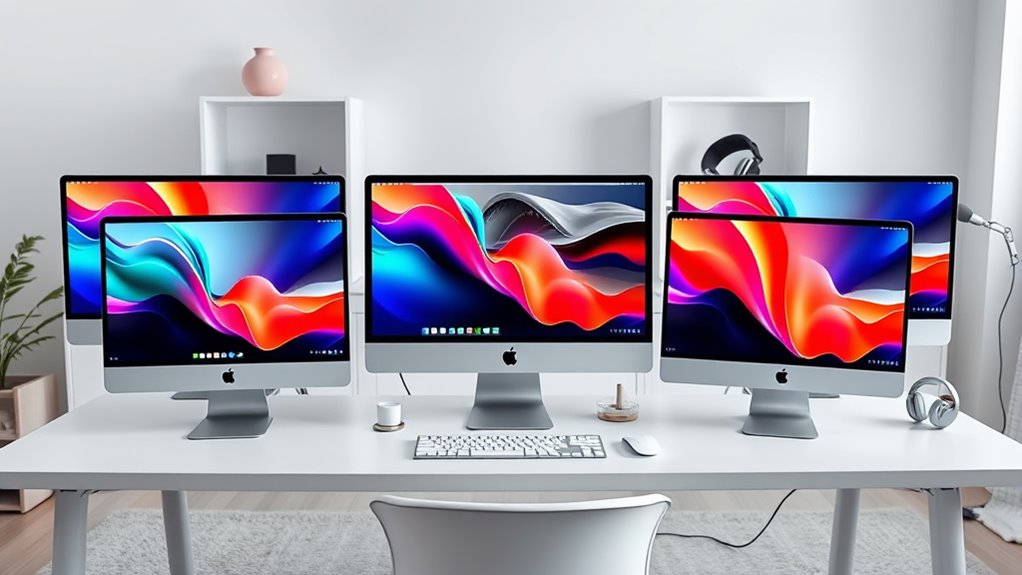

For most home office power users, I’d start with the 2024 M4 iMac with 24GB memory and a 512GB SSD: among these picks, its newer chip, larger memory allotment, and roomy storage make it the strongest balance for demanding multitasking. The 16GB M4 iMac is a more restrained current-generation choice, while the 27-inch 2019 5K iMac with 16GB RAM and a 1TB SSD favors a larger workspace and internal storage. The main tradeoff is between newer Apple silicon and a 24-inch display versus older 27-inch Intel models with 5K screens, whose age and renewed condition require extra scrutiny. Memory, storage, software compatibility, and screen size matter more here than appearance alone. Read on for how I’d rank all 10 and which compromise fits your workload.

Turn the school run and nap time into listening time
- Thousands of audiobooks, podcasts and originals
- Listen on your phone, tablet or Echo — also offline
- Cancel anytime
Complete the kit


Key Takeaways
- The 24GB M4 model leads this lineup for sustained multitasking: it pairs the newest listed chip with more memory and a 512GB SSD than the other M4 configurations.
- The 16GB M4 iMac is the sensible current-generation alternative for buyers who do not need the 24GB model’s extra memory and storage headroom.
- The 27-inch 5K Intel iMacs offer the largest listed screen, but their older processors and renewed status make them a more conditional choice than the M4 systems.
- Several older listings have 8GB RAM or spinning-drive storage; those specs can constrain heavy multitasking and large project workflows even when the screen is appealing.
- The M3 and M1 24-inch models sit between old Intel and current M4 options: they retain Apple silicon and SSD storage, but their 8GB memory configurations are less compelling for demanding workloads.
| Apple 27-inch 2019 iMac with Retina 5K Display, 3.0GHz Intel Core i5, 8GB RAM, 1TB Fusion Drive (Renewed) |  | Best for a Large 5K Workspace | Display: 27-inch Retina 5K, 5120 x 2880 | Processor: 3.0GHz 6-core Intel Core i5 | Graphics: Radeon Pro 570X, 575X, or 580X | VIEW ON AMAZON | See Our Full Breakdown |
| Apple 2021 iMac with M1 Chip, 24-inch, 8GB RAM, 512GB SSD, Silver (Renewed) |  | Best Compact Refurbished Option | Display: 24-inch Retina, 4480 x 2520 | Processor: Apple M1, 8-core CPU | Graphics: Integrated 8-core GPU, shared memory | VIEW ON AMAZON | See Our Full Breakdown |
| Apple 27-inch Retina 5K iMac (Early 2019) with 3.0GHz Intel Core i5, 16GB RAM, 1TB SSD, Silver (Renewed) |  | Best Legacy Mac for Multitasking | Display: 27-inch Retina 5K, 5120 x 2880 | Processor: 3.0GHz 6-core Intel Core i5 | Graphics: Radeon Pro 570X with 4GB GDDR5 | VIEW ON AMAZON | See Our Full Breakdown |
| Apple 2024 iMac All-in-One Desktop Computer with M4 Chip, 24-inch Retina Display, 16GB Memory, 256GB SSD – Silver | 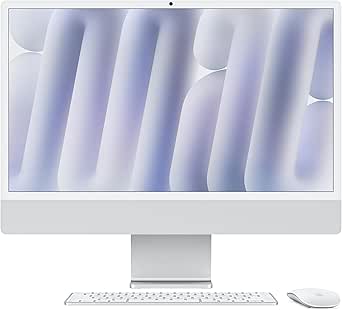 | Best Current-Generation Entry Point | Display: 24-inch Retina, 4.5K, 500 nits | Processor: Apple M4, 8-core CPU | Graphics: 8-core GPU | VIEW ON AMAZON | See Our Full Breakdown |
| Apple 2024 iMac All-in-One Desktop Computer with M4 Chip, 24-inch Retina Display, 24GB Memory, 512GB SSD, Blue |  | Best Overall for Home-Office Power Users | Display: 24-inch Retina, 4.5K resolution | Processor: Apple M4, 10-core CPU | Graphics: 10-core GPU | VIEW ON AMAZON | See Our Full Breakdown |
| Apple iMac with Retina 4K Display (21.5-inch, 8GB RAM, 1TB Storage) – Renewed |  | Best Compact Intel Pick | Display: 21.5-inch Retina 4K, 3840 x 2160 | Processor: 3 GHz quad-core Intel Core i5 | Memory: 8GB DDR4 | VIEW ON AMAZON | See Our Full Breakdown |
| Apple iMac 27-Inch Retina 5K Desktop (Renewed) |  | Best Large-Screen Workspace | Display: 27-inch Retina 5K | Processor: 3.2GHz quad-core Intel Core i5 | Memory: 8GB | VIEW ON AMAZON | See Our Full Breakdown |
| Apple iMac 27-Inch Desktop, 3.4 GHz Intel Core i7, 16 GB RAM, 1TB HDD, macOS High Sierra (Renewed) |  | Best Legacy Multitasking Configuration | Display size: 27 inches | Processor: 3.4 GHz Intel Core i7 | Memory: 16GB DDR3 SDRAM | VIEW ON AMAZON | See Our Full Breakdown |
| Apple 2023 iMac with M3 Chip, 24-inch, 8GB RAM, 512GB SSD, Silver (Renewed) |  | Best Renewed Apple-Silicon Upgrade | Display: 24-inch Retina, 1920 x 1080 as listed | Processor: Apple M3, 8-core CPU, 4.05 GHz | Memory: 8GB DDR4 as listed | VIEW ON AMAZON | See Our Full Breakdown |
| Apple 2024 iMac Air with M4 Chip, 24-inch Retina Display, 16GB RAM, 256GB SSD, Silver (Renewed) |  | Best for Current Multitasking | Display: 24-inch 4.5K Retina, 4480 x 2520 | Processor: Apple M4, 8-core, 3.2 GHz | Memory: 16GB SDRAM | VIEW ON AMAZON | See Our Full Breakdown |
| imac for home office power user | Processor | Graphics | Memory | Storage |
|---|---|---|---|---|
| Apple 27-inch 2019 iMac with R | 3.0GHz 6-core Intel Core i5 | Radeon Pro 570X, 575X, or 580X | 8GB DDR4 | 1TB Fusion Drive |
| Apple 2021 iMac with M1 Chip | Apple M1, 8-core CPU | Integrated 8-core GPU, shared memory | 8GB | 512GB SSD |
| Apple 27-inch Retina 5K iMac | 3.0GHz 6-core Intel Core i5 | Radeon Pro 570X with 4GB GDDR5 | 16GB | 1TB SSD |
| Apple 2024 iMac All-in-One Des | Apple M4, 8-core CPU | 8-core GPU | 16GB unified memory | 256GB SSD |
| Apple 2024 iMac All-in-One Des | Apple M4, 10-core CPU | 10-core GPU | 24GB unified memory | 512GB SSD |
| Apple iMac with Retina 4K Disp | 3 GHz quad-core Intel Core i5 | Integrated GDDR5 | 8GB DDR4 | 1TB |
| Apple iMac 27-Inch Retina 5K D | 3.2GHz quad-core Intel Core i5 | AMD Radeon R9 M390 | 8GB | 1TB Fusion Drive |
| Apple iMac 27-Inch Desktop | 3.4 GHz Intel Core i7 | NVIDIA GeForce GTX 675MX, 2GB GDDR5 | 16GB DDR3 SDRAM | 1TB HDD |
| Apple 2023 iMac with M3 Chip | Apple M3, 8-core CPU, 4.05 GHz | Integrated, shared RAM | 8GB DDR4 as listed | 512GB SSD |
| Apple 2024 iMac Air with M4 Ch | Apple M4, 8-core, 3.2 GHz | Integrated Apple Graphics, 16GB DRAM as listed | 16GB SDRAM | 256GB SSD |
More Details on Our Top Picks
Apple 27-inch 2019 iMac with Retina 5K Display, 3.0GHz Intel Core i5, 8GB RAM, 1TB Fusion Drive (Renewed)
The 27-inch 5K screen is the main reason to choose this iMac: it gives spreadsheet-heavy work, large timelines, and side-by-side windows more room than the 24-inch M1 and M4 models. Its six-core Intel Core i5 suits demanding everyday office tasks, but the 8GB of RAM and Fusion Drive make this configuration a weaker power-user choice than the 16GB, 1TB SSD 2019 iMac in this lineup. The larger display can be valuable if you prefer one built-in screen over a compact desktop setup, though its 21-pound body needs a substantial desk. I’d choose it for screen space, not maximum responsiveness: the hybrid drive is less direct than an SSD, and renewed condition may bring cosmetic wear.
Pros:- 27-inch 5120 x 2880 Retina display offers more workspace than the 24-inch iMacs
- Six-core Intel Core i5 is suited to substantial everyday office workloads
- 1TB Fusion Drive provides more capacity than the newer 256GB M4 configuration
- All-in-one design combines the computer and display
Cons:- 8GB RAM can constrain heavy multitasking compared with the 16GB 2019 5K model
- Fusion Drive is less responsive than the SSD storage in the other listed configurations
- Renewed condition can include cosmetic imperfections
Best for: Home-office users who prioritize a large, high-resolution built-in display for documents, spreadsheets, and visual work, and are comfortable with older hardware.
Not ideal for: Heavy multitaskers who keep many demanding apps open, or users who need fast SSD storage and more memory without relying on upgrades.
- Display:27-inch Retina 5K, 5120 x 2880
- Processor:3.0GHz 6-core Intel Core i5
- Graphics:Radeon Pro 570X, 575X, or 580X
- Memory:8GB DDR4
- Storage:1TB Fusion Drive
- Connectivity:Wi-Fi 802.11ac, Thunderbolt 3 (USB-C), HDMI
- Dimensions:32 x 11 x 27 inches
- Weight:21 pounds
Our verdict“Choose this renewed iMac if a roomy 5K screen matters more than SSD speed and memory headroom.”
Apple 2021 iMac with M1 Chip, 24-inch, 8GB RAM, 512GB SSD, Silver (Renewed)
This renewed M1 iMac is the more space-conscious alternative to the 27-inch 2019 models: its 24-inch 4.5K display and 15.6-pound frame fit home offices where a large desktop would crowd the desk. The M1’s 8-core CPU and GPU, paired with a 512GB SSD, make it a more responsive everyday office setup than the Fusion Drive configuration. It also brings Wi-Fi 6 and a sharp, color-rich screen. The limit for power users is 8GB of shared memory; unlike the 16GB 2019 5K iMac, it offers less room for memory-heavy multitasking, and its screen is smaller. Its 90-day limited warranty and renewed status also make it a less reassuring pick than a new M4 model.
Pros:- M1 8-core CPU and GPU handle everyday work in a compact all-in-one
- 512GB SSD offers faster access than the 2019 Fusion Drive model
- 4.5K Retina display provides high resolution in a smaller footprint
- Wi-Fi 6 and four USB ports support modern home-office connections
Cons:- 8GB shared memory limits headroom for intensive multitasking
- 24-inch screen provides less workspace than either 27-inch 5K iMac
- Renewed unit has a 90-day limited warranty and may have cosmetic wear
Best for: Remote workers with limited desk space who want a compact Mac for video calls, office apps, and moderate creative tasks.
Not ideal for: Professionals running memory-intensive workloads or maintaining many large applications at once, since this configuration has only 8GB of memory.
- Display:24-inch Retina, 4480 x 2520
- Processor:Apple M1, 8-core CPU
- Graphics:Integrated 8-core GPU, shared memory
- Memory:8GB
- Storage:512GB SSD
- Connectivity:Wi-Fi 6, Bluetooth 5.0, four USB ports, two Thunderbolt/USB 4 ports
- Weight:15.6 pounds
- Warranty:90-day limited warranty
Our verdict“Pick this M1 model for a compact, SSD-equipped office Mac, but favor a 16GB option for heavier workloads.”
Apple 27-inch Retina 5K iMac (Early 2019) with 3.0GHz Intel Core i5, 16GB RAM, 1TB SSD, Silver (Renewed)
Among the older large-screen choices here, this is the one I’d favor for sustained office multitasking: its 16GB of RAM and 1TB SSD address two of the main limitations of the 8GB Fusion Drive 2019 iMac. The 27-inch 5K display gives analysts, editors, and other desk-based workers space for dense work without making a second monitor essential. Its six-core Intel processor and Radeon Pro 570X add capacity for creative applications, though this remains an older Intel system, not the newer M4 platform in the 2024 models. The tradeoff is a bulky 21-pound chassis and renewed-product uncertainty; buyers seeking a smaller, current machine should compare it with the 24-inch M4 iMac, while those prioritizing storage speed and screen area have a strong case here.
Pros:- 16GB RAM provides more multitasking headroom than the 8GB renewed models
- 1TB SSD combines substantial capacity with faster storage access than a Fusion Drive
- 27-inch 5K display supports detailed work and multiple on-screen windows
- Radeon Pro 570X includes 4GB GDDR5 graphics memory
Cons:- Large, 21-pound design takes considerable desk space
- Older Intel platform lacks the newer M4 hardware in the 2024 iMacs
- Renewed status may mean limited warranty coverage
Best for: Power users who need a large 5K workspace, 16GB of memory, and 1TB SSD capacity for office and creative files.
Not ideal for: Buyers who want a compact desk setup, a newer Apple silicon platform, or a clearly stated warranty beyond the renewed listing details.
- Display:27-inch Retina 5K, 5120 x 2880
- Processor:3.0GHz 6-core Intel Core i5
- Graphics:Radeon Pro 570X with 4GB GDDR5
- Memory:16GB
- Storage:1TB SSD
- Connectivity:Wi-Fi 802.11ac, Bluetooth 4.2
- Dimensions:32.25 x 27.25 x 10.49 inches
- Weight:21 pounds
Our verdict“Choose this 2019 5K iMac when memory, SSD capacity, and a large built-in display outweigh having the newest platform.”
Apple 2024 iMac All-in-One Desktop Computer with M4 Chip, 24-inch Retina Display, 16GB Memory, 256GB SSD – Silver
This 2024 M4 configuration is the most current platform in the group, pairing a 16GB unified-memory setup with an 8-core CPU and GPU in a notably light, 9.72-pound all-in-one. That makes it a cleaner fit for a modern home office than the renewed Intel 5K models, especially when desk space and support for newer apps matter more than a 27-inch panel. It also supports two external 6K displays, giving multi-screen workers a way to expand beyond its 24-inch built-in screen. The main compromise is 256GB of SSD storage, which is leaner than the 512GB M1 or 1TB 2019 options; large project libraries may call for external storage. Compared with the 24GB M4 model, this one gives up memory and CPU/GPU cores.
Pros:- M4 chip offers a current-generation platform for productivity and creative apps
- 16GB unified memory exceeds the 8GB configurations in the renewed models
- Supports two external 6K displays for an expanded desk setup
- Lightweight all-in-one design takes less room than the 27-inch Intel iMacs
Cons:- 256GB SSD leaves limited room for large local files and application libraries
- 24-inch display is smaller than the 27-inch 5K screens
- 8-core CPU and GPU are less capable on paper than the 10-core M4 configuration
Best for: Home-office professionals who want a current M4 Mac, 16GB memory, and the option to add two high-resolution external displays.
Not ideal for: Users who keep large local media or project libraries, or who need the 24GB memory and 10-core CPU/GPU configuration of the other 2024 model.
- Display:24-inch Retina, 4.5K, 500 nits
- Processor:Apple M4, 8-core CPU
- Graphics:8-core GPU
- Memory:16GB unified memory
- Storage:256GB SSD
- Connectivity:Wi-Fi 6E, Bluetooth 5.3, up to four Thunderbolt 4 ports
- External displays:Supports two external 6K displays
- Weight:9.72 pounds
Our verdict“Choose this M4 iMac for a current, compact work system if 256GB of built-in storage is enough for your workflow.”
Apple 2024 iMac All-in-One Desktop Computer with M4 Chip, 24-inch Retina Display, 24GB Memory, 512GB SSD, Blue
This is the strongest fit for power users who want a current all-in-one without accepting the 16GB/256GB limits of the other listed 2024 configuration. The 10-core M4 CPU and GPU, 24GB unified memory, and 512GB SSD provide more room for demanding multitasking and larger working files than the 16GB M4 or 8GB M1 options. It also supports two 6K displays, while its 12MP Center Stage camera and six-speaker system suit frequent video meetings. The tradeoff is the same 24-inch built-in screen found on the less powerful M4 model; it cannot match the expansive workspace of the 27-inch 5K iMacs without external displays. Storage and memory details are supplied as configured, so buyers should choose this spec for its included capacity rather than assume upgrades.
Pros:- 10-core M4 CPU and GPU provide the strongest listed 2024 processing configuration
- 24GB unified memory offers more multitasking headroom than the 16GB models
- 512GB SSD provides twice the capacity of the other listed 2024 M4 configuration
- 12MP Center Stage camera, six speakers, and three microphones suit video-heavy work
Cons:- 24-inch display is smaller than the 27-inch 5K panels in the lineup
- No dedicated GPU option is listed
- The provided specs do not state that memory or storage can be upgraded
Best for: Professionals juggling demanding apps, video calls, and substantial files who want a modern M4 desktop and may add external 6K displays.
Not ideal for: Users who require a built-in 27-inch workspace or dedicated graphics, or who prefer a lower-memory, lower-storage setup for basic office tasks.
- Display:24-inch Retina, 4.5K resolution
- Processor:Apple M4, 10-core CPU
- Graphics:10-core GPU
- Memory:24GB unified memory
- Storage:512GB SSD
- Connectivity:Wi-Fi 6E, Bluetooth 5.3, four Thunderbolt 4 ports
- External displays:Supports two 6K displays
- Camera and audio:12MP Center Stage camera, six speakers with Spatial Audio, three microphones
- Weight:9.77 pounds
Our verdict“Pick this configuration for the most memory and M4 processing headroom in the roundup, provided a 24-inch screen suits your workspace.”
Apple iMac with Retina 4K Display (21.5-inch, 8GB RAM, 1TB Storage) – Renewed
This renewed iMac makes the most sense for a home office power user who needs a sharp display and roomy local storage in a smaller footprint. Its 21.5-inch 4K Retina screen is more detailed than the 24-inch 1080p resolution listed for the renewed 2023 M3 iMac, though the 27-inch 5K models offer more workspace for side-by-side documents. A 3 GHz quad-core Core i5 can handle office multitasking and moderate creative work, but 8GB of memory is a ceiling for demanding workloads. The 1TB drive holds more files than the M3 model’s 512GB SSD, with no SSD speed claim in the supplied specifications. Its older Mojave system and 90-day limited warranty are significant compromises for a work-critical computer; I’d choose it over newer options only if the compact 4K format and storage matter more than current hardware and software support.
Pros:- 21.5-inch 3840 x 2160 Retina display gives detailed workspace in a smaller all-in-one
- 3 GHz quad-core Intel Core i5 suits everyday multitasking and moderate workloads
- 1TB storage provides more capacity than the renewed 2023 M3 iMac’s 512GB SSD
- Keyboard and mouse are included
Cons:- 8GB RAM can constrain demanding multitasking and creative software
- macOS Mojave is an older operating system
- Renewed condition may include cosmetic marks, and the limited warranty is 90 days
Best for: Home office users who want a compact 4K screen and substantial onboard file storage for documents, photos, and moderate workloads.
Not ideal for: People running memory-heavy creative apps, needing a current macOS experience, or relying on a long warranty for daily business work.
- Display:21.5-inch Retina 4K, 3840 x 2160
- Processor:3 GHz quad-core Intel Core i5
- Memory:8GB DDR4
- Storage:1TB
- Graphics:Integrated GDDR5
- Operating system:macOS Mojave
- Connectivity:Bluetooth, Wi-Fi 802.11ab
- Warranty:90-day limited
Our verdict“Choose this renewed iMac if compact 4K viewing and 1TB storage matter more than newer hardware, extra memory, or a longer warranty.”
Apple iMac 27-Inch Retina 5K Desktop (Renewed)
For work that benefits from seeing several windows at once, this renewed 27-inch iMac prioritizes screen area and 5K detail over newer components. Its 27-inch Retina panel offers more physical workspace than the 21.5-inch 4K renewed iMac, making spreadsheets, timelines, and reference documents easier to keep visible together. The 3.2GHz quad-core Core i5 and 8GB RAM are suitable for general office use, but they are less compelling for heavy workloads than the 16GB Core i7 configuration of the other renewed 27-inch iMac in this batch. A 1TB Fusion Drive gives ample capacity, but its hybrid design is not the same as an all-flash SSD. This model’s appeal rests on its expansive display, not cutting-edge speed; the renewed status and unspecified warranty details call for careful seller and condition checks.
Pros:- 27-inch Retina 5K display gives ample detailed workspace
- 3.2GHz quad-core Core i5 handles routine office workloads
- 1TB Fusion Drive offers generous file capacity
- AMD Radeon R9 M390 graphics are specified
Cons:- 8GB RAM is limited for heavy multitasking and demanding creative apps
- Fusion Drive is not an all-flash SSD
- Renewed condition and warranty details may be less reassuring than a new model
Best for: Spreadsheet-heavy professionals, writers, and analysts who want a large high-resolution built-in display for keeping multiple work windows visible.
Not ideal for: Power users who need 16GB or more memory, SSD-based storage, or a clearly specified warranty for a business-critical machine.
- Display:27-inch Retina 5K
- Processor:3.2GHz quad-core Intel Core i5
- Memory:8GB
- Storage:1TB Fusion Drive
- Graphics:AMD Radeon R9 M390
- Operating system:macOS X
Our verdict“Pick this renewed 27-inch iMac when a large 5K workspace matters more than modern performance, memory capacity, or SSD storage.”
Apple iMac 27-Inch Desktop, 3.4 GHz Intel Core i7, 16 GB RAM, 1TB HDD, macOS High Sierra (Renewed)
This renewed 27-inch iMac stands out among the older Intel options for its 16GB RAM and Core i7 processor. That combination gives it a stronger starting point for running several productivity apps at once than the 8GB 27-inch 5K iMac, although the supplied specifications do not state its display resolution, so I would not choose it over that model specifically for 5K detail. Its 1TB hard drive provides room for work files, but traditional HDD storage can feel slower during startup and file loading than the 512GB SSD in the renewed 2023 M3 iMac. The dedicated 2GB GeForce GTX 675MX may help with some graphics tasks, but this remains older hardware running High Sierra. It suits buyers with legacy software needs better than anyone seeking a current, low-maintenance workstation.
Pros:- 16GB DDR3 memory gives more multitasking headroom than the 8GB renewed 27-inch 5K iMac
- 3.4 GHz Intel Core i7 is the strongest specified Intel processor in this batch
- 1TB HDD offers substantial storage capacity
- Dedicated NVIDIA graphics and wireless keyboard and mouse are included
Cons:- HDD storage is slower than the SSD in the renewed 2023 M3 iMac
- macOS High Sierra is an older operating system
- Renewed condition and limited warranty details may be a concern for daily business use
Best for: Home office users who need more memory for multitasking and have software or peripherals tied to an older Intel-based Mac environment.
Not ideal for: Buyers who prioritize fast SSD response, a current operating system, modern graphics performance, or a verified 5K display.
- Display size:27 inches
- Processor:3.4 GHz Intel Core i7
- Memory:16GB DDR3 SDRAM
- Storage:1TB HDD
- Graphics:NVIDIA GeForce GTX 675MX, 2GB GDDR5
- Operating system:macOS High Sierra
- Connectivity:Bluetooth, USB, Wi-Fi
- Included accessories:Wireless keyboard, wireless mouse, power cable
Our verdict“Choose this model for its 16GB memory and Intel i7 configuration if legacy compatibility matters more than SSD speed or modern software support.”
Apple 2023 iMac with M3 Chip, 24-inch, 8GB RAM, 512GB SSD, Silver (Renewed)
The renewed 2023 iMac is the clearest step away from aging Intel hardware in this group: its M3 chip and 512GB SSD make it a more current-feeling home office choice than the renewed Core i5 and Core i7 models. The SSD should make everyday file access more responsive than the 1TB HDD in the renewed Intel i7 iMac, while the M3 platform is a better fit for current general-purpose work. There are limits for power users: 8GB memory leaves less room for heavy multitasking than the 16GB Intel i7 option or 16GB M4 model. Also, the supplied display specification lists 1920 x 1080, unlike the 4.5K resolution listed for the M4 iMac, so screen detail is not its strongest stated advantage. A 90-day warranty and renewed condition are additional compromises.
Pros:- Apple M3 8-core CPU is a newer platform than the Intel processors in the renewed models
- 512GB SSD offers faster-style storage than the 1TB HDD in the renewed Intel i7 iMac
- 24-inch Retina display and built-in webcam, speakers, and microphone suit a home office
- Wi-Fi 802.11ax and Ethernet are listed
Cons:- 8GB memory may limit demanding multitasking
- 512GB storage is less capacity than the 1TB drives in the renewed Intel models
- Renewed condition and 90-day limited warranty may not suit work-critical use
Best for: Home office buyers who want Apple silicon and SSD responsiveness for everyday productivity, video calls, and moderate creative work without choosing an older Intel model.
Not ideal for: Power users who keep many demanding apps open, need more than 512GB of storage, or require the highest display resolution in this lineup.
- Display:24-inch Retina, 1920 x 1080 as listed
- Processor:Apple M3, 8-core CPU, 4.05 GHz
- Memory:8GB DDR4 as listed
- Storage:512GB SSD
- Graphics:Integrated, shared RAM
- Operating system:macOS
- Connectivity:Ethernet, HDMI, Thunderbolt, Wi-Fi 802.11ax, Bluetooth
- Warranty:90-day limited
Our verdict“Choose this renewed M3 iMac for a newer Apple-silicon platform and SSD storage, but opt for the 16GB M4 model if heavier multitasking is your priority.”
Apple 2024 iMac Air with M4 Chip, 24-inch Retina Display, 16GB RAM, 256GB SSD, Silver (Renewed)
For a home office power user choosing within this batch, this renewed M4 iMac has the strongest stated mix of newer processing, 16GB memory, and a high-resolution display. Its listed 24-inch 4.5K panel gives more detail than the 1920 x 1080 resolution specified for the renewed M3 model, and twice that model’s memory gives heavier multitasking more breathing room. The 256GB SSD is the main constraint: it holds less than the M3’s 512GB SSD and the 1TB drives in the older Intel iMacs, so large media libraries may need external storage. Integrated graphics also make this a weaker fit for graphics-intensive gaming or specialist GPU work than a machine with dedicated graphics. Compared with the older 27-inch models, it trades a larger screen for newer listed hardware and a more compact all-in-one format; renewed status and a 90-day warranty remain risks.
Pros:- Apple M4 8-core processor is the newest chip specified in this batch
- 16GB memory provides more multitasking headroom than the renewed M3 iMac’s 8GB
- 24-inch 4.5K Retina display offers sharper detail than the M3 model’s listed resolution
- Wi-Fi 6E and Bluetooth 5.3 are specified
Cons:- 256GB SSD offers less capacity than the M3 model’s 512GB SSD and the older 1TB options
- Integrated graphics are not suited to every graphics-intensive workload
- Renewed condition and 90-day limited warranty add risk for business-critical use
Best for: Home office professionals who run several current apps at once, want a detailed 4.5K display, and can keep large files on external or network storage.
Not ideal for: Users with large local media libraries, graphics-heavy workloads that need dedicated GPU power, or a need for a longer warranty.
- Display:24-inch 4.5K Retina, 4480 x 2520
- Processor:Apple M4, 8-core, 3.2 GHz
- Memory:16GB SDRAM
- Storage:256GB SSD
- Graphics:Integrated Apple Graphics, 16GB DRAM as listed
- Connectivity:Bluetooth 5.3, Wi-Fi 6E
- Ports:4 USB ports
- Warranty:90-day limited
Our verdict“Pick this renewed M4 iMac for stronger multitasking and a 4.5K screen if you can work around its limited 256GB storage.”

How We Picked
I ranked these iMacs for people who run demanding home-office workloads, such as large documents, many browser tabs, video calls, and creative or data-heavy apps. I gave the most weight to processor generation, memory capacity, and SSD storage, since these shape responsiveness and how much work can stay open at once. Screen size and resolution also mattered: the 27-inch 5K models offer more visible workspace, while the 24-inch Apple silicon models bring newer hardware in a smaller footprint.
The order favors the configurations that best balance capability and everyday usability, not simply the newest listing or the largest screen. The M4 with 24GB memory ranks first for its stronger listed headroom; the 16GB M4 follows as a capable current-generation option. I placed older 5K Intel configurations below those picks because processor age, variable configuration details, and renewed condition create more uncertainty. Listings with 8GB memory, a Fusion Drive, or a hard disk rank lower for power users unless their specific strengths match a buyer’s priorities.
Factors to Consider When Choosing Imac For Home Office Power Users
Choosing an iMac for demanding work means looking past the all-in-one design and matching the machine to the workload you expect to keep for years. I’d use these factors to decide whether current Apple silicon, a larger 5K screen, or a lower-spec renewed model is the right compromise.
Match Memory to Your Multitasking
Memory affects how comfortably a desktop handles several active applications, large files, and browser tabs at once. For power users, 8GB configurations are the clearest compromise in this group; they may suit focused tasks but leave less room for simultaneous workloads. The 16GB M4 models provide a stronger baseline, while the 24GB M4 configuration gives more headroom for heavier use. Don’t assume a newer processor alone will erase a memory limitation. Before buying, list the apps you routinely keep open together, not just the most demanding app you use occasionally. If your work regularly involves virtual machines, large media projects, or unusually broad multitasking, confirm that the selected iMac can meet those needs before treating it as a long-term workstation.
Choose Screen Area for the Work You Do
A 27-inch 5K display can reduce window shuffling when you compare documents, edit detailed timelines, or keep reference material beside your main app. A 24-inch iMac takes up less desk space and may suit a shared or compact home office better. The larger panel is not automatically the better productivity choice: viewing distance, desk depth, and whether you use one or several windows matter too. Buyers often focus on screen resolution while overlooking the physical width and height available for a comfortable setup. If your workflow depends on broad side-by-side layouts, favor the larger display; if the desk is tight, a newer 24-inch system may be easier to place. Also check the exact listing’s display specifications rather than assuming every 27-inch model has the same configuration.
Treat Storage Type and Capacity as Workflow Decisions
An SSD generally makes everyday access to apps and files feel more responsive than a traditional hard disk, while capacity determines how much active work can stay on the computer. This lineup ranges from 256GB SSDs to 512GB and 1TB SSD configurations, plus older systems with Fusion Drive or HDD storage. A 256GB drive can fill quickly if you keep media libraries, project files, or local archives on the iMac. External storage can help, but it adds another device and a routine for backups and file management. Avoid choosing a large nominal capacity without checking whether it is an SSD, hybrid drive, or hard disk. Estimate the space your current work occupies, then leave room for new projects and system files.
Weigh Apple Silicon Against Legacy Intel Needs
The M1, M3, and M4 options are Apple silicon systems, while the 2019 and older 27-inch models use Intel processors. For a general home office, newer Apple silicon can be an attractive fit, but buyers with specialist software, older peripherals, or established Intel-based workflows should verify compatibility before switching. An older Intel iMac may also make sense when a particular legacy tool or large 5K screen matters more than having a newer chip. A common mistake is to assume that every application and accessory will behave identically across processor generations. Check the developer’s current compatibility guidance for essential tools and confirm that your devices connect as expected. If your work depends on one legacy setup, that requirement may outweigh the appeal of newer hardware.
Inspect Renewed Listings and Exact Configurations
Renewed models can offer access to screen sizes or storage configurations that differ from current iMacs, but the listing details deserve careful attention. Several products here have broad names or incomplete specifications, so verify processor, memory, storage type, included accessories, and condition terms before ordering. Don’t infer a configuration from a product family name: two iMacs with similar titles can differ substantially in RAM or drive technology. Check the seller’s return window and warranty terms, and confirm what happens if the computer arrives with a fault. For a machine central to your workday, the support and return provisions are part of the buying decision, not an afterthought. If those details are unclear, a better-documented configuration may be the safer pick.
Pay for Headroom You Will Actually Use
Higher memory and storage can extend a desktop’s usefulness, but upgrades only make sense when they match your real workload. If you mainly handle email, office documents, and video calls, a 16GB M4 may be a more measured fit than the 24GB configuration. If you keep creative apps, many browser tabs, and large projects open together, added memory and a 512GB SSD can reduce day-to-day limits. Buyers can also overpay in attention, not just money, by choosing a feature that does not address their bottleneck. Identify whether your current frustration comes from too little memory, insufficient storage, or a cramped display before selecting a spec. Prioritize the limitation you encounter most often rather than buying the biggest numbers by default.
Frequently Asked Questions
Is the 24GB M4 iMac worth choosing over the 16GB M4 model for office multitasking?
I’d favor the 24GB version if you regularly keep demanding applications, many browser tabs, and large files open at the same time. Its 512GB SSD also provides more local room than the 256GB configuration. For office documents, video calls, and a moderate number of apps, the 16GB model may already fit the workload. Think about the combination of apps you use during your busiest workday, not just your average session. If you are unsure, prioritize memory and storage headroom when you expect the computer to serve for several years.
Should I choose a renewed 27-inch 5K Intel iMac instead of a 24-inch M4 iMac?
The 27-inch 5K option makes more sense when its larger display is central to your workflow or when a specific Intel-based tool is necessary. The M4 models are newer Apple silicon systems and are the stronger starting point for buyers who want a current-generation iMac. With a renewed Intel model, check the exact processor, RAM, drive type, condition, and seller support rather than relying on the family name. Also confirm that essential software and peripherals work with the processor generation you choose. If screen size is your main reason for picking Intel, compare your desk space and window layout needs carefully before accepting the older hardware.
Is an 8GB M1 or M3 iMac enough for a power-user home office?
It can be enough for a narrower workload built around office apps, calls, and a manageable set of browser tabs. The 8GB configurations in this roundup offer less multitasking headroom than the 16GB and 24GB M4 options, which matters when several demanding apps are active together. The M1 and M3 models still bring Apple silicon and SSD storage, so they may suit buyers whose workload is moderate and whose priorities differ from maximum capacity. Check the requirements of your heaviest software and consider how your work may grow. If you already encounter slowdowns from keeping many apps open, I’d lean toward an M4 model with more memory.
How much should I worry about a Fusion Drive or HDD in an older iMac?
Drive type can affect how quickly the system opens apps and accesses files, while a traditional hard disk can also be less convenient for large active projects. The 2019 27-inch listing with a Fusion Drive and the older i7 listing with a 1TB HDD should not be treated as equivalent to an SSD model simply because the capacity looks ample. A Fusion Drive combines storage technologies, so confirm the exact configuration and understand that its behavior differs from a dedicated SSD. External storage may help with archives, but it will not change the internal drive’s role in everyday use. If responsiveness is a priority, the listed SSD configurations are the more straightforward choices.
What should I verify before buying a renewed iMac for work?
Confirm the exact model year, processor, memory, storage type and capacity, display size, and included accessories. Then read the seller’s condition description, warranty coverage, and return terms, since these affect the risk of relying on the computer for daily work. Check that your important applications support its processor generation and that your peripherals connect to the available ports. For older models, verify the installed operating system and whether it fits your software requirements. If any core specification is missing or contradictory, ask for clarification or choose a listing with clearer details.
Conclusion
Best overall: I’d choose the 2024 M4 iMac with 24GB memory and a 512GB SSD for power users who want the most headroom in this lineup. Best value: the 16GB M4 iMac suits buyers who want current Apple silicon without the larger memory and storage configuration. Best premium: the 24GB M4 model is also my pick for heavier multitasking; the lineup does not include a higher-spec current iMac configuration. Best for beginners: the 16GB M4 offers a capable starting point for a home office without the older hardware tradeoffs. Best for specific needs: choose a 27-inch 5K Intel iMac if you need its larger display or have a verified Intel-dependent workflow, and accept the added age and renewed-condition checks. For most buyers, I’d prioritize the M4 models; choose older listings only when their screen size, storage, or compatibility solves a specific need.


