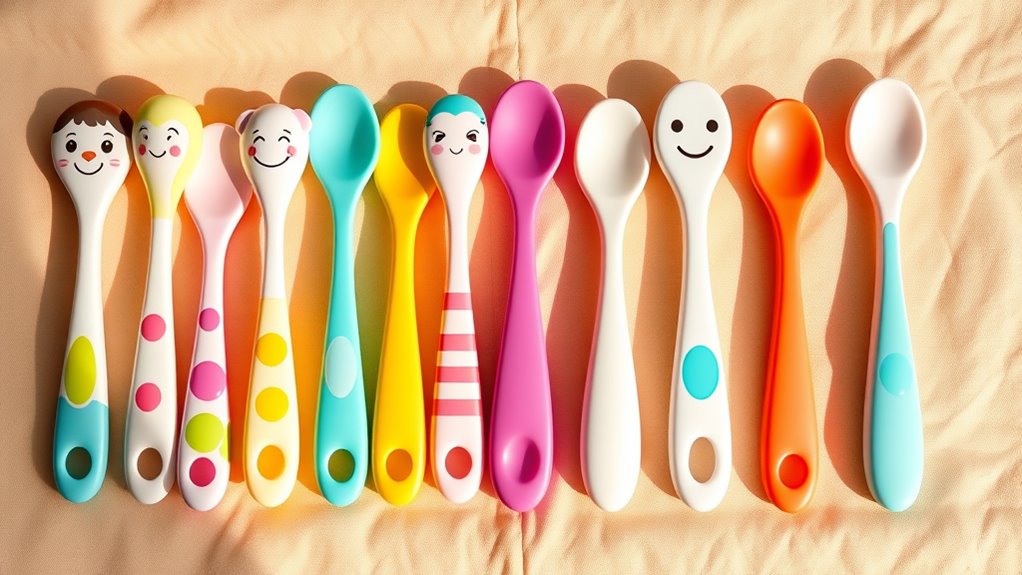

The best baby spoons depend on whether your priority is helping a baby practice self-feeding, making caregiver-led bites easier, or keeping enough utensils on hand for daily meals. My best overall pick is the KeaBabies Silicone Baby Spoons for their self-feeding focus and three-spoon set; NumNum Baby Self-Feeding Spoons stand out for a shape designed for early scooping, while the Munchkin Soft Tip Baby Spoons offer a larger pack for frequent washing and replacements. The main tradeoffs are spoon shape, the baby’s stage and grip, pack size, and whether you want a simple feeding tool or a specialized training spoon. A larger set can be practical, but it may not suit families who want to test one style first. Read on for the full comparison and guidance on matching a spoon to your feeding routine.

Turn the school run and nap time into listening time
- Thousands of audiobooks, podcasts and originals
- Listen on your phone, tablet or Echo — also offline
- Cancel anytime
Complete the kit


Key Takeaways
- Self-feeding and caregiver-led feeding call for different shapes: the KeaBabies and NumNum options focus on baby-led practice, while Dr. Brown’s and Munchkin Soft Tip are more conventional feeding spoons.
- NumNum offers two distinct buying paths: its two-pack suits families who want to try the self-feeding design, while the six-pack Rainbow set is a better fit when having more utensils available matters.
- Pack size changes convenience, not just quantity: Munchkin’s 12-pack and several six-packs can reduce how often utensils need washing, while two- and three-packs take less storage and make a smaller commitment.
- Some options have a narrower purpose: Munchkin White Hot adds a temperature-indicating feature, and the personalized sterling silver set is gift-oriented rather than a practical everyday silicone alternative.
- Versatility varies across the lineup: the Eascrozn toddler utensil set includes more than spoons, while the silicone spoon-only sets keep the choice focused on feeding and practice.
| KeaBabies Silicone Baby Spoons – Self-Feeding, 6–12 Months, 3‑Pack, Slate |  | Best for Growing With Baby | Brand: KeaBabies | Pack size: 3 spoons | Material: Food-grade, BPA-free silicone | VIEW ON AMAZON | See Our Full Breakdown |
| Dr. Brown’s Soft-Tip Toddler Feeding Spoons, 6-Pack |  | Best for Caregiver-Led Feeding | Brand: Dr. Brown’s | Pack size: 6 spoons | Material: Plastic | VIEW ON AMAZON | See Our Full Breakdown |
| PandaEar 6-Pack Silicone Baby Spoons |  | Best for Small, Controlled Bites | Brand: PandaEar | Pack size: 6 spoons | Material: Food-grade silicone | VIEW ON AMAZON | See Our Full Breakdown |
| NumNum Baby Self-Feeding Spoons, 2-Pack, Blue and Orange |  | Best for Early Self-Feeding Practice | Brand: NumNum | Pack size: 2 spoons | Recommended age: 6 to 18 months | VIEW ON AMAZON | See Our Full Breakdown |
| NETANY 6-Piece Silicone Baby Feeding Spoons |  | Best for Flexible, Everyday Feeding | Brand: NETANY | Pack size: 6 spoons | Material: Food-grade silicone | VIEW ON AMAZON | See Our Full Breakdown |
| Munchkin Soft Tip Baby Spoons, BPA-Free, 12-Pack | 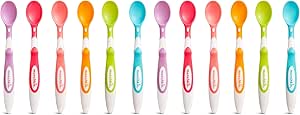 | Best Value for Stocking Up | Brand: Munchkin | Quantity: 12 spoons | Material: Plastic | VIEW ON AMAZON | See Our Full Breakdown |
| Olababy Silicone Baby Training Spoons, 2-Pack (Kiwi/Blueberry) |  | Best for Flexible Self-Feeding | Material: 100% food-grade silicone | Pack size: 2 spoons | Color: Kiwi/Blueberry | VIEW ON AMAZON | See Our Full Breakdown |
| Munchkin White Hot Safety Baby Spoons, 4-Pack |  | Best for Checking Food Temperature | Brand: Munchkin | Pack size: 4 spoons | Heat sensor threshold: 110°F (43.3°C) | VIEW ON AMAZON | See Our Full Breakdown |
| SAMiGO Silicone Baby Self-Feeding Spoons, 6–18 Months |  | Best for Guarded Early Self-Feeding | Material: Food-grade silicone | Age range: 6–18 months | Safety: BPA- and phthalate-free | VIEW ON AMAZON | See Our Full Breakdown |
| Personalized 925 Sterling Silver Baby Spoon and Fork Set with Gift Box |  | Best Keepsake Gift Set | Material: 925 sterling silver | Origin: Made in Italy | Personalization: Laser engraving; any language | VIEW ON AMAZON | See Our Full Breakdown |
| Silicone Baby Spoons for Self-Feeding, 6 Pack |  | Best for Grip Practice | Material: Silicone | Pack size: 6 spoons | Age: 6 months and up | VIEW ON AMAZON | See Our Full Breakdown |
| Eascrozn 6-Piece Toddler Utensil Set with Silicone Handles |  | Best Spoon-and-Fork Set | Pieces: 6 total: 3 forks and 3 spoons | Materials: 18/8 stainless steel and food-grade silicone | Safety: BPA-free | VIEW ON AMAZON | See Our Full Breakdown |
| NumNum Baby Self-Feeding Spoons, 6-Pack, Rainbow |  | Best for Early Feeding Stages | Pieces: 6 | Material: Food-grade silicone | Age range: 6 to 18 months | VIEW ON AMAZON | See Our Full Breakdown |
| Eascrozn Silicone Baby Spoons, 6-Pack, 6+ Months |  | Best for Flexible Cleaning | Material: Food-grade silicone | Pieces: 6 spoons | Recommended age: 6 months and up | VIEW ON AMAZON | See Our Full Breakdown |
| baby spoon | Material | Pack size | Care | Brand |
|---|---|---|---|---|
| KeaBabies Silicone Baby Spoons | Food-grade, BPA-free silicone | 3 spoons | Dishwasher-safe | KeaBabies |
| Dr. Brown’s Soft-Tip Toddler F | Plastic | 6 spoons | Dishwasher- and sterilizer-safe | Dr. Brown’s |
| PandaEar 6-Pack Silicone Baby | Food-grade silicone | 6 spoons | Dishwasher-safe | PandaEar |
| NumNum Baby Self-Feeding Spoon | Food-grade silicone | 2 spoons | Dishwasher-safe; do not microwave or steam sterilize | NumNum |
| NETANY 6-Piece Silicone Baby F | Food-grade silicone | 6 spoons | Dishwasher-safe and boil-proof | NETANY |
| Munchkin Soft Tip Baby Spoons | Plastic | — | — | Munchkin |
| Olababy Silicone Baby Training | 100% food-grade silicone | 2 spoons | Hand wash or dishwasher safe; microwave and freezer safe | — |
| Munchkin White Hot Safety Baby | — | 4 spoons | — | Munchkin |
| SAMiGO Silicone Baby Self-Feed | Food-grade silicone | — | — | — |
| Personalized 925 Sterling Silv | 925 sterling silver | — | — | — |
| Silicone Baby Spoons for Self- | Silicone | 6 spoons | — | — |
| Eascrozn 6-Piece Toddler Utens | — | — | Dishwasher safe and boil safe | — |
| NumNum Baby Self-Feeding Spoon | Food-grade silicone | — | — | — |
| Eascrozn Silicone Baby Spoons | Food-grade silicone | — | Dishwasher safe | — |
More Details on Our Top Picks
KeaBabies Silicone Baby Spoons – Self-Feeding, 6–12 Months, 3‑Pack, Slate
Two scoop sizes give this KeaBabies set a longer useful window than the single-stage PandaEar 6-Pack: the smaller spoon is intended for babies 6 months and up, while the regular scoop suits toddlers ages 1–3. Its weighted, bendable handle is the main distinction, offering little hands a grip designed for early self-feeding while still allowing caregiver assistance. The food-grade, BPA-free silicone is dishwasher-safe, which keeps cleanup simple. The tradeoff is quantity: three spoons provide less rotation than Dr. Brown’s six-pack or NETANY’s six-piece set. Buyers also get only the slate color listed here, and the larger scoop size does not make this the most versatile choice for every feeding stage. I’d choose it for age-range flexibility over maximum spoon count.
Pros:- Two scoop sizes are intended for infants and toddlers.
- Weighted, bendable handles support an easier grip for early self-feeding.
- Food-grade, BPA-free silicone.
- Dishwasher-safe for routine cleanup.
Cons:- Three spoons provide fewer backups than the Dr. Brown’s and NETANY six-packs.
- The listed color selection is limited to slate.
- The separate scoop sizes add flexibility, but the set is less focused on first-stage practice than NumNum’s two distinct training shapes.
Best for: Caregivers who want one silicone spoon set with separate scoop sizes for a baby starting solids and a toddler progressing to larger bites.
Not ideal for: Families who need several spoons in daily rotation or want a broad color selection; the three-piece slate set offers fewer spares than the six-packs.
- Brand:KeaBabies
- Pack size:3 spoons
- Material:Food-grade, BPA-free silicone
- Color:Slate
- Dimensions:6.5 × 2 inches
- Weight:3.36 ounces
- Scoop sizes:Small for ages 6+ months; regular for ages 1–3 years
- Care:Dishwasher-safe
Our verdict“Choose KeaBabies if you want two spoon sizes to cover feeding from infancy into toddlerhood and can manage with three spoons.”
Dr. Brown’s Soft-Tip Toddler Feeding Spoons, 6-Pack
For feeding a child who still relies on an adult to load and guide the spoon, Dr. Brown’s offers a different emphasis from the self-feeding shapes in NumNum’s two-piece set. Its long handle and flexible, shallow scoop are suited to portioning food and reaching into jars, while the soft tip is designed to be gentle on tender or teething gums. A wide elevated base helps keep the spoon upright on a surface, a useful detail when setting one down mid-meal. Six spoons also give caregivers more clean options between washes than KeaBabies’ three-piece pack. The tradeoff is a conventional toddler-feeding format rather than a specialized practice utensil; the listed dimensions are unusually large for a spoon, so check the measurements before buying. Plastic construction may also be less appealing than silicone alternatives.
Pros:- Soft tips are designed for tender and teething gums.
- Long handle reaches into jars, and the shallow scoop supports controlled portions.
- Elevated wide base helps keep the spoon upright when set down.
- Six spoons are dishwasher- and sterilizer-safe.
Cons:- Plastic construction may not suit buyers seeking an all-silicone spoon.
- The listed dimensions of 9.5 × 4.1 inches may feel oversized for feeding.
- Less tailored to independent spoon practice than NumNum’s pre-spoon and open-channel pair.
Best for: Caregivers feeding a toddler who want a soft-tipped spoon, a long handle for jars, and several spoons in rotation.
Not ideal for: Families prioritizing silicone self-feeding practice or compact utensils; this is a long-handled plastic spoon set rather than a baby-led training design.
- Brand:Dr. Brown’s
- Pack size:6 spoons
- Material:Plastic
- BPA-free:Yes
- Dimensions:9.5 × 4.1 inches
- Weight:0.12 g (listed)
- Care:Dishwasher- and sterilizer-safe
- Model number:TF008-P2
Our verdict“Pick Dr. Brown’s for adult-guided toddler feeding and easy utensil rotation, but check its listed dimensions if you want a compact baby spoon.”
PandaEar 6-Pack Silicone Baby Spoons
PandaEar’s strongest case is its shallow spoon head: smaller portions can be easier to manage when a baby is learning to accept food from a spoon. Compared with NETANY’s longer, bendable spoons, this set is more compact at 4.5 inches long and gives less emphasis to handle adjustment. The six food-grade silicone spoons provide a useful rotation, and the material is listed as free of BPA, PVC, lead, and phthalates. An easy-grip handle serves both caregiver feeding and early practice, though the description does not identify distinct training shapes like the pre-spoon and channel design in NumNum’s set. That shallow profile is also the main limitation: it may be less practical for fuller servings as a baby eats more. I’d favor PandaEar for portion control, not for carrying a meal with each scoop.
Pros:- Shallow spoon heads support controlled, smaller portions.
- Six spoons provide a practical rotation.
- Food-grade silicone is listed as free of BPA, PVC, lead, and phthalates.
- Dishwasher-safe and described as easy-grip for babies and caregivers.
Cons:- Shallow scoops may not carry larger servings efficiently.
- At 4.5 inches long, the compact format offers less reach than NETANY’s 6.3-inch spoons.
- Does not include the distinct puree and soft-solid training shapes found in NumNum’s set.
Best for: Caregivers introducing spoon-fed tastes who want a six-piece silicone set with shallow scoops and compact dimensions.
Not ideal for: Families serving larger spoonfuls or seeking a spoon designed to hold more food; the shallow bowl may feel limiting as portions increase.
- Brand:PandaEar
- Pack size:6 spoons
- Material:Food-grade silicone
- Colors:Blue, green, and beige
- Dimensions:4.5 × 1 inch
- Weight:0.11 kg
- Recommended age:6+ months
- Care:Dishwasher-safe
- Model:SS08A
Our verdict“Choose PandaEar for compact shallow spoons and small early portions, rather than for larger scoops or specialized self-feeding shapes.”
NumNum Baby Self-Feeding Spoons, 2-Pack, Blue and Orange
NumNum is the most purpose-built practice set in this group: rather than giving babies two conventional bowls, it pairs a pre-spoon for purees and teething with an open-channel spoon for soft solids. That shape variation gives beginners different ways to pick up food, unlike PandaEar’s shallow standard spoons or Dr. Brown’s caregiver-oriented long-handled design. Contoured handles are made for small hands, and the dishwasher-safe silicone is free of BPA and phthalates. The narrow age range—6 to 18 months—also makes the intent clear, but means some children may outgrow the set sooner than KeaBabies’ infant-to-toddler scoop options. It comes with only two pieces, and the spoons are not recommended for microwave use or steam sterilizing. I’d pick it for learning the motion, not for a large everyday rotation.
Pros:- Pairs a puree-and-teething pre-spoon with an open-channel spoon for soft solids.
- Contoured handles are designed for small hands.
- Food-grade silicone is free of BPA and phthalates.
- Dishwasher-safe.
Cons:- Two pieces offer less rotation than the six-spoon PandaEar or NETANY sets.
- Designed for ages 6 to 18 months, so older toddlers may outgrow it.
- Microwave use and steam sterilizing are not recommended.
Best for: Families starting solids who want two different spoon shapes to support practice with purees and soft solids.
Not ideal for: Caregivers who need a larger set, want utensils for older toddlers, or rely on microwave or steam sterilizing.
- Brand:NumNum
- Pack size:2 spoons
- Recommended age:6 to 18 months
- Material:Food-grade silicone
- Dimensions:3.9 × 0.9 inches
- Weight:20 g
- Handle width:0.6 inches
- Care:Dishwasher-safe; do not microwave or steam sterilize
- Color:Blue and orange
Our verdict“Choose NumNum when your priority is giving a beginner two distinct shapes for self-feeding practice, not stocking a long-term spoon drawer.”
NETANY 6-Piece Silicone Baby Feeding Spoons
NETANY combines a six-spoon supply with long, bendable handles, making it a practical middle ground between PandaEar’s compact shallow spoons and KeaBabies’ three-piece set with two scoop sizes. The 6.3-inch length gives caregivers more reach, while the flexible handles can be adjusted to suit a feeding position or support a baby’s grip during self-feeding practice. Food-grade silicone is listed as free of BPA, PVC, and phthalates, and the spoons are dishwasher-safe and boil-proof. That cleaning flexibility is a plus compared with NumNum, which is not recommended for steam sterilizing. The tradeoff is a first-stage focus: these may be less suitable as children move toward larger utensils. The bendable handles can also take some adjustment to find a comfortable angle, so families wanting a rigid, ready-to-use shape may prefer another set.
Pros:- Six spoons offer more rotation than KeaBabies’ three-piece pack.
- Long, bendable handles can be adjusted for caregiver feeding or early self-feeding.
- Food-grade silicone is listed as free of BPA, PVC, and phthalates.
- Dishwasher-safe and boil-proof.
Cons:- First-stage design may not suit older children.
- Flexible handles may need adjustment to find a comfortable position.
- The set does not offer the two specialized training shapes included with NumNum.
Best for: Caregivers of babies starting solids who want several flexible silicone spoons and value dishwasher cleaning or boiling.
Not ideal for: Families shopping for older toddlers or anyone who prefers a firm, fixed handle that needs no repositioning.
- Brand:NETANY
- Pack size:6 spoons
- Material:Food-grade silicone
- Length:6.3 inches
- Spoon head width:0.78 inches
- Care:Dishwasher-safe and boil-proof
- Material exclusions:BPA-, PVC-, and phthalate-free
- Model:M50c
- Colors:Six muted pastel colors
Our verdict“Pick NETANY for a six-piece set with adjustable silicone handles and boil-safe care, provided a flexible first-stage spoon suits your feeding routine.”
Munchkin Soft Tip Baby Spoons, BPA-Free, 12-Pack
For families who go through several spoons a day, this 12-pack offers a practical buffer between meals and washes. Its shallow bowl and soft, rounded tip suit early spoon-feeding, while the long, ergonomic handles can reach the bottom of baby-food jars. Compared with the Munchkin White Hot Safety Baby Spoons, this set gives you more spoons but leaves out the temperature-sensitive tip; choose the White Hot set if heat indication matters more than quantity. The lightweight plastic construction keeps the spoons simple to handle, though it may disappoint caregivers who specifically want silicone. This is a straightforward feeding set rather than a self-feeding trainer, so its appeal is strongest for caregivers serving food and wanting plenty of spares.
Pros:- Twelve spoons provide plenty of clean spares
- Soft, rounded tips are gentle on gums
- Shallow bowls suit small bites and early feeding
- Long ergonomic handles reach into baby-food jars
Cons:- Plastic construction may not suit buyers who prefer silicone
- No temperature indicator for checking warm food
Best for: Caregivers who serve multiple meals at home and want a large supply of shallow, soft-tipped spoons between washes.
Not ideal for: Buyers looking for silicone utensils or a temperature alert; this set is plastic and has no heat-sensitive tip.
- Brand:Munchkin
- Quantity:12 spoons
- Material:Plastic
- BPA-free:Yes
- Color:Multicolor
- Dimensions:9 in L × 2.2 in W
- Weight:59 g
- Model:11448
Our verdict“Choose this set if having plenty of simple, soft-tipped spoons matters more than silicone construction or a heat alert.”
Olababy Silicone Baby Training Spoons, 2-Pack (Kiwi/Blueberry)
The Olababy set is aimed at babies practicing how to bring food to their own mouths, with flexible leaf-shaped tips that can approach food from different angles. Its upright bases give the spoons a cleaner resting place between bites, a useful detail for messy practice at the table. Compared with the SAMiGO Silicone Baby Self-Feeding Spoons, Olababy emphasizes flexible scooping and standing storage, while SAMiGO adds a built-in guard that helps limit how far the spoon can enter the mouth. The two-spoon pack is a smaller supply than the 12-piece Munchkin set, and the stated age range of 6–18 months makes this a more focused training option than an all-purpose spoon set. Dishwasher-safe care helps offset the limited quantity.
Pros:- Flexible tips support scooping from different angles
- Soft silicone is gentle on gums and emerging teeth
- Upright bases help keep spoon tips off the table
- Dishwasher-, microwave-, and freezer-safe care
Cons:- Two spoons provide a smaller supply than the Munchkin 12-pack
- Designed for a stated age range of 6–18 months
- No built-in guard is specified
Best for: Caregivers of babies aged 6–18 months who are practicing self-feeding with purees or thicker foods and want spoons that can stand between bites.
Not ideal for: Families who need a large rotation of spoons or a built-in insertion guard; this pack has two spoons and no guard is specified.
- Material:100% food-grade silicone
- Pack size:2 spoons
- Color:Kiwi/Blueberry
- Recommended age:6–18 months
- Temperature safe:Up to 428°F (220°C)
- Care:Hand wash or dishwasher safe; microwave and freezer safe
- Free from:BPA, PVC, lead, and phthalates
Our verdict“Pick Olababy for flexible, stand-up training spoons, but choose SAMiGO if a mouth-entry guard matters more.”
Munchkin White Hot Safety Baby Spoons, 4-Pack
The feature that separates this set from ordinary feeding spoons is its white-hot tip indicator: the tip changes color when food exceeds 110°F (43.3°C). That gives caregivers a quick warning about overly hot food, though it is not a thermometer and does not show how far above the threshold the food is. The soft tips, tapered bowls, and long handles also suit early feeding and jar use. Compared with the standard Munchkin Soft Tip Baby Spoons, this four-pack has fewer spoons but adds the heat signal. Its limited set size may mean more frequent washing, and its bright colors may not suit every preference. I’d choose it for the temperature cue, not as a substitute for checking food carefully.
Pros:- Tips change white when food exceeds 110°F
- Soft tips are gentle on gums
- Tapered bowls are sized for little mouths
- Long handles reach the bottom of food jars
Cons:- The color change signals a threshold, not an exact temperature
- Four spoons offer less rotation than the Munchkin 12-pack
- Bright colors may not suit every preference
Best for: Caregivers feeding young babies who want a simple visual warning when food is hotter than the set threshold.
Not ideal for: Families who need a large supply of spoons or precise temperature readings; the indicator only signals above 110°F and the pack contains four.
- Brand:Munchkin
- Pack size:4 spoons
- Heat sensor threshold:110°F (43.3°C)
- Tip:Soft
- Bowl shape:Tapered
- Handle:Long
- Colors:Purple, pink, peach, and blue
- Recommended age:3 months and older
Our verdict“Choose this set if a built-in hot-food warning is more useful to you than the larger supply in Munchkin’s standard soft-tip pack.”
SAMiGO Silicone Baby Self-Feeding Spoons, 6–18 Months
SAMiGO’s defining feature is the built-in guard, intended to help prevent a spoon from being pushed too far into a baby’s mouth during early self-feeding. Paired with short handles and soft silicone tips, the design is geared toward small hands and exploratory bites rather than reaching into jars for caregiver-led feeding. Compared with the Olababy Silicone Baby Training Spoons, SAMiGO trades Olababy’s flexible, stand-up design for that added guard; Olababy also specifies a two-spoon pack, while SAMiGO’s set quantity is not given in the product details. The 6–18 month age range makes this a focused training utensil, not a long-term option for older children. Top-rack dishwasher compatibility simplifies cleanup, but the missing pack count makes it harder to judge how many spares you’ll have.
Pros:- Built-in guard helps limit over-insertion
- Short handles are sized for small hands
- Soft food-grade silicone tips are gentle on developing gums
- Top-rack dishwasher-safe cleaning
Cons:- The product details do not specify the set quantity
- The 6–18 month age range limits its use as a child grows
- Short handles are less suited to reaching the bottom of food jars
Best for: Caregivers of babies aged 6–18 months who want short-handled silicone spoons with a guard for early self-feeding practice.
Not ideal for: Families buying for older children or shoppers who need a confirmed number of spoons before choosing a set.
- Material:Food-grade silicone
- Age range:6–18 months
- Safety:BPA- and phthalate-free
- Guard:Built-in guard to help prevent over-insertion
- Cleaning:Hand-wash with warm, soapy water or top-rack dishwasher safe
- Colors:3 shades
- Handle:Short
Our verdict“Choose SAMiGO for guarded, short-handled self-feeding practice, but look elsewhere if you need a stated pack count or spoons for older children.”
Personalized 925 Sterling Silver Baby Spoon and Fork Set with Gift Box
This set sits apart from the silicone and plastic options because its purpose is as much personalized keepsake as everyday feeding tool. The 925 sterling silver spoon and fork have a polished finish, and laser engraving lets a buyer add a name or initials. A branded gift box and certificate of authenticity support its presentation as a milestone or family gift. Compared with the Munchkin Soft Tip Baby Spoons, this is a much more formal, single-set choice rather than a practical supply for repeated meals; the product details also give a spoon length of just 4.7 inches, rather than the long handles designed to reach into jars. The fork’s dimensions are not supplied, and personalization requires selecting engraving details. I’d choose it for gifting, not as the main set for messy self-feeding practice.
Pros:- 925 sterling silver construction with a polished finish
- Laser engraving can personalize the set
- Gift box and certificate of authenticity are included
- Made in Italy
Cons:- The spoon’s 4.7-inch length is shorter than jar-reaching feeding spoons
- Fork dimensions are not specified
- Personalization requires choosing an engraving option and font
Best for: Gift buyers seeking an engraved, presentation-ready silver spoon and fork set for a baby milestone or keepsake.
Not ideal for: Caregivers looking for soft, flexible utensils for daily self-feeding or jar feeding; this is a polished silver gift set with a short spoon length.
- Material:925 sterling silver
- Origin:Made in Italy
- Personalization:Laser engraving; any language
- Finish:Polished, mirror-like
- Certification:Certificate of authenticity included; stated to comply with CPSC standards
- Total spoon length:120 mm (4.7 in)
- Handle width:22.5 mm (0.88 in)
- Spoon head width:32 mm (1.25 in)
- Packaging:Branded gift box
Our verdict“Choose this set as an engraved silver keepsake gift, not as a practical replacement for soft-tipped daily feeding spoons.”
Silicone Baby Spoons for Self-Feeding, 6 Pack
For babies beginning to bring a spoon to their own mouth, this set puts handle grip ahead of feeding-stage versatility. Six all-silicone spoons give families spares for meals and cleanup, while the ribbed handles offer little hands a more defined hold than the flat design of the NumNum Baby Self-Feeding Spoons. Textured ends are described as gentle on teething gums, making these useful during early practice as well as meals. The tradeoff is that the set does not specify a spoon shape for purees versus soft solids, so it gives less stage-specific guidance than NumNum’s two-design set. The maker also provides no dimensions or microwave-safety details. I’d choose these for simple, repeatable grip practice, but not if precise sizing or sterilizing instructions are a priority.
Pros:- Six spoons provide spares for meals and washing.
- Ribbed handles offer a distinct grip surface for little hands.
- Textured ends are described as gentle on teething gums.
- BPA-free silicone spoons are dishwasher safe.
Cons:- No spoon dimensions or capacity are provided.
- Microwave safety is not specified.
- No separate spoon designs are identified for different food textures.
Best for: Caregivers of babies starting self-feeding who want several silicone spoons with textured ends and easy-to-grip handles.
Not ideal for: Buyers seeking spoon dimensions, microwave-use guidance, or separate designs for purees and soft solids.
- Material:Silicone
- Pack size:6 spoons
- Age:6 months and up
- Safety:BPA-free
- Cleaning:Dishwasher safe
- Handle:Ribbed for grip
- Spoon end:Textured and described as gentle on teething gums
Our verdict“Choose this set for straightforward grip practice and multiple dishwasher-safe spoons, but pick NumNum if stage-specific spoon shapes matter more.”
Eascrozn 6-Piece Toddler Utensil Set with Silicone Handles
This is the most practical pick here for toddlers who are ready to practice with both a spoon and a fork: the six-piece set splits evenly between three spoons and three forks. Compared with the all-silicone Silicone Baby Spoons for Self-Feeding, 6 Pack, its 18/8 stainless-steel heads offer a different feel and a firmer utensil, while silicone handles provide a grippable section. Rounded edges and a protective barrier are intended to make toddler use more manageable. The tradeoff is that half the set is forks, so families wanting only baby spoons get fewer spoons than in a six-spoon pack. Dimensions are not listed, and the product data gives a pink color despite mentioning three colors in the description. I’d pick it for mixed-utensil practice, not for a spoon-only starter set.
Pros:- Includes three spoons and three forks for mixed-utensil practice.
- 18/8 stainless steel heads offer a firmer alternative to all-silicone spoons.
- Food-grade silicone handles are designed for an easy grip.
- Dishwasher safe and described as safe to boil for cleaning.
Cons:- Only three of the six pieces are spoons.
- Utensil dimensions are not provided.
- Color information is inconsistent: the specs list pink while the description mentions three colors.
Best for: Families with toddlers ready to practice using a matching set of spoons and forks, and who prefer stainless-steel utensil heads.
Not ideal for: Caregivers looking for six baby spoons, all-soft silicone utensils, or clearly specified utensil dimensions and color options.
- Pieces:6 total: 3 forks and 3 spoons
- Materials:18/8 stainless steel and food-grade silicone
- Safety:BPA-free
- Design:Rounded edges, narrow tip, and protective barrier
- Care:Dishwasher safe and boil safe
- Item weight:6.24 ounces
- Listed color:Pink
Our verdict“Choose this set when your toddler needs both spoons and forks; a six-spoon silicone pack is a better fit for spoon-only practice.”
NumNum Baby Self-Feeding Spoons, 6-Pack, Rainbow
NumNum earns its place by giving early self-feeders two different spoon designs rather than six identical ones: a pre-spoon for purees and teething, plus an open-channel spoon for soft solids. That makes it more purpose-built for changing food textures than the general-purpose Silicone Baby Spoons for Self-Feeding, 6 Pack, whose description does not identify separate stages or spoon styles. Its flat shape and contoured handles are intended to support babies learning to bring food to their mouths, and the six-piece set provides extras for the routine. The main limitation is care flexibility: microwave and steam sterilizing are not recommended, unlike Eascrozn’s newer silicone set, which lists steam sterilizing. Dishwasher cleaning is supported, but buyers who rely on those sterilizing methods should choose another option.
Pros:- Includes a pre-spoon for purees and an open-channel spoon for soft solids.
- Flat design and contoured handles are intended to support early self-feeding.
- Six pieces provide extras for regular use.
- Food-grade silicone is BPA-free, phthalate-free, and dishwasher safe.
Cons:- Microwave and steam sterilizing are not recommended.
- The distinct designs may be less suitable for buyers who prefer conventional spoon bowls.
Best for: Caregivers of babies aged 6 to 18 months who want distinct spoon designs for purees and soft solids as self-feeding skills develop.
Not ideal for: Families who need microwave or steam sterilizing, or want a conventional spoon shape for every utensil.
- Pieces:6
- Material:Food-grade silicone
- Age range:6 to 18 months
- Designs:Pre-spoon for purees and teething; open-channel spoon for soft solids
- Color:Rainbow
- Safety:BPA-free and phthalate-free
- Cleaning:Dishwasher safe
- Sterilization:Microwave or steam sterilizing not recommended
Our verdict“Choose NumNum for stage-specific self-feeding tools, but skip it if microwave or steam sterilizing is part of your cleaning routine.”
Eascrozn Silicone Baby Spoons, 6-Pack, 6+ Months
This Eascrozn set stands out among the silicone-only options for its multiple listed cleaning methods: the spoons are dishwasher safe and can also be boiled or steam-sterilized. That gives it a practical advantage over the NumNum Baby Self-Feeding Spoons, 6-Pack, Rainbow, which specifically rules out steam sterilizing, though NumNum offers more clearly differentiated tools for purees and soft solids. Eascrozn instead focuses on six soft-tip spoons with wide, non-slip handles for babies starting solids and practicing self-feeding. Food-grade silicone is listed as BPA-free and PVC-free. The description does not provide dimensions or spoon capacity, so parents cannot judge exact fit from the available details. Its listed dark-gray color also differs from the description’s reference to soft colors. This is a sensible choice when cleaning flexibility matters more than stage-specific spoon shapes.
Pros:- Six soft-tip spoons are intended for babies starting solids and learning to self-feed.
- Wide, non-slip handles are sized for small hands.
- Listed as dishwasher safe and suitable for boiling or steam sterilizing.
- Food-grade silicone is BPA-free and PVC-free.
Cons:- Spoon dimensions and capacity are not provided.
- The listed dark-gray color conflicts with the description’s reference to soft colors.
- Unlike the NumNum set, no separate designs are specified for different food textures.
Best for: Caregivers of babies aged 6 months and up who want a six-spoon silicone set that can go in the dishwasher or be sterilized by boiling or steam.
Not ideal for: Buyers who want spoon dimensions, capacity, a verified color range, or distinct utensils for puree and soft-solid stages.
- Material:Food-grade silicone
- Pieces:6 spoons
- Recommended age:6 months and up
- Safety:BPA-free and PVC-free
- Care:Dishwasher safe
- Sterilization:Can be boiled or steam-sterilized
- Handle:Wide, non-slip handles
- Listed color:Dark gray
- Model number:DGXH-47
Our verdict“Choose this set for flexible cleaning and soft-tip spoons, but favor NumNum if distinct tools for puree and soft-solid practice are your priority.”

How We Picked
I compared the 14 options by the jobs parents actually need baby spoons to do: support a baby’s developing grip, deliver caregiver-fed bites comfortably, and hold up to repeated household use. I gave weight to the stated age range, handle and bowl design, material, number of utensils, and whether an option has a distinct purpose such as self-feeding practice, temperature indication, or gifting. I also considered how much flexibility a set offers without treating a larger pack as automatically better.
The ranking favors options with a clear feeding use and a useful balance of design, stage fit, and everyday practicality. Specialized choices rank for the situations they serve rather than as universal substitutes: the White Hot spoons address temperature checking, the Eascrozn set adds other utensils, and sterling silver is a keepsake-style gift. Similar silicone six-packs are distinguished by their stated age range and intended use, not by assuming differences that the product names do not establish.
Factors to Consider When Choosing Baby Spoons
Choosing baby spoons gets easier when I start with the feeding task, then check the baby’s stage and the household’s cleanup routine. These broader factors help separate a spoon that looks appealing from one that fits the way meals happen at home.
Match the Spoon to the Feeding Job
Before comparing colors or pack counts, decide whether an adult will guide each bite or the baby will practice bringing food to their mouth. A conventional feeding spoon can prioritize a bowl that carries a bite, while a self-feeding design may emphasize a grip or shape that is easier for a beginner to hold. Some babies use both styles, so a mixed approach may make more sense than expecting one spoon to serve every purpose. A common mistake is buying a training spoon and expecting it to work exactly like a caregiver-fed spoon. Check the product’s stated use and think about who will hold it during most meals. If you are unsure, start with a small set before committing to a larger collection.
Treat Age Guidance as a Starting Point
Age ranges help narrow choices, but they do not describe every baby’s grip, coordination, or feeding experience. Look at whether the spoon is intended for early practice, toddler feeding, or a broader span, and compare that purpose with the stage your child is in now. A spoon that works well for parent-led bites may not be the easiest shape for a baby learning to hold utensils. Another common misstep is buying ahead for a later stage and overlooking what is useful at current meals. If your child is still developing coordination, favor a design with a clear, manageable handle and a straightforward purpose. Keep the stated age guidance in view, but use feeding ability as part of the decision.
Choose Bowl Shape for the Food You Serve
Spoon bowls affect how food is picked up, carried, and offered, so they matter beyond appearance. A deeper bowl may carry more food for caregiver-led bites, while a flatter or specialized design may suit dipping and early self-feeding practice. Thick purées, softer foods, and small tastes can put different demands on the spoon. Think about the foods you serve most often rather than choosing a shape based only on a product photo. If meals include varied textures, a simple, familiar spoon may be more adaptable than a highly specialized training shape. When a set is inexpensive to add but not right for your routine, extra pieces still become clutter.
Balance Softness, Grip, and Durability
Soft materials can make a spoon feel gentler at the mouth, while handle shape and firmness affect how easy it is to hold and control. Those qualities do not always come together in the same utensil, so decide which matters most for your baby’s current feeding style. A very flexible spoon may feel different during scooping than a more structured one, while a smooth handle may be less helpful to a new self-feeder than a shape made for gripping. Do not treat a material label alone as proof that a spoon will suit every child. Check the product’s care instructions and look for any stated age or use guidance. A spoon that is comfortable to use and straightforward to clean is more useful than one chosen for a single appealing feature.
Pick a Pack Size That Fits Your Washing Routine
Pack size is a household decision: more spoons can help when utensils pile up between washes, but they take space and may leave you with several pieces your baby does not like. Smaller sets make it easier to try a particular shape without filling a drawer. If you often travel or keep a spoon in a diaper bag, a few extras can be convenient; if meals mostly happen at home with frequent washing, a compact set may be enough. Compare like with like by looking at both the number of spoons and whether the set includes other utensils. Avoid buying multiple large packs before you know which shape your child accepts. A staged purchase can protect cupboard space and give you room to adjust.
Pay for a Feature That Solves a Real Need
Special features are most useful when they address a recurring concern. A temperature-indicating spoon may appeal to caregivers who want an extra visual check before offering food, while a personalized silver set is aimed more at keepsakes and gifting than daily practice. A multi-utensil toddler set can suit families seeking a broader toolkit, but it is less focused if the immediate need is simply a baby spoon. Ask whether the feature will change how you feed or care for the utensil, rather than treating added design details as automatic value. For everyday use, a straightforward spoon with a suitable shape and manageable cleanup may be the better choice. Spend on specialization when it matches your routine, and skip it when it does not.
Frequently Asked Questions
Should I buy a self-feeding spoon or a regular feeding spoon first?
Start with the way you expect most early meals to work. If you will offer most bites, a conventional feeding spoon such as the Dr. Brown’s or Munchkin Soft Tip style may be the more direct fit; if your baby will practice holding and bringing a utensil to the mouth, consider a self-feeding design such as KeaBabies or NumNum. Some households use both, but you do not need to buy both styles before you know how your baby responds. A smaller set can help you test the shape and grip. Let the spoon’s stated purpose guide the choice rather than assuming one design covers every feeding job.
Is a larger baby spoon pack worth choosing?
A larger pack is useful when spoons are used at several meals a day, get misplaced, or wait for a full dishwashing load. The Munchkin 12-pack offers more pieces than the smaller training sets, while two- and three-packs keep the commitment modest. More spoons do not guarantee a better fit, though, and an unwanted shape can leave you with several unused utensils. If you have not tried a particular spoon style, start with fewer pieces where possible. Choose a larger pack once you know the design works for your baby and household routine.
Do I need a temperature-indicating spoon?
A temperature-indicating spoon can provide an additional visual cue when checking food, which may be useful for caregivers who want that feature during meals. It is not the same as choosing a spoon for self-feeding, grip, or bowl shape, so compare those needs separately. The Munchkin White Hot option has a different purpose from the self-feeding-focused NumNum and KeaBabies picks. If a temperature cue would make meal preparation more comfortable for you, the specialized design may be worth considering. If not, a standard spoon can keep the choice focused on how your baby will use it.
Can one spoon set work for both caregiver feeding and self-feeding practice?
Some families can use one set for both, but the best fit depends on its bowl and handle shape. A spoon made primarily for self-feeding may not carry or deliver bites in the same way as a conventional feeding spoon, while a caregiver-focused spoon may be less suited to a baby’s early grip practice. Compare the listed purpose and design before assuming a versatile label means every use will feel equally comfortable. If both jobs matter, a small combination of styles may be more useful than a large quantity of one type. This lets you adapt the utensil to the meal without overbuying.
When does a gift-style silver baby spoon make sense over silicone?
The personalized sterling silver spoon and fork set is the distinct gift-oriented option in this lineup, while the silicone sets are more directly focused on daily feeding and practice. A keepsake set may suit a milestone or a personalized present, but it is not interchangeable with a soft-tip or self-feeding utensil for everyday meals. Think about whether the recipient wants a memento or a practical spoon they can use routinely. If daily feeding is the main goal, compare spoon shape, age guidance, and care needs across the silicone options instead. A gift set makes most sense when its presentation and personalization are part of the reason for buying.
Conclusion
For the broadest fit among these picks, I would start with KeaBabies Silicone Baby Spoons: the set is aimed at self-feeding and gives families three spoons without jumping to a large pack. For best value by quantity, the Munchkin Soft Tip 12-pack is the standout choice when caregiver-led feeding and having extras on hand matter more than a training-focused shape. For best for beginners, compare the NumNum two-pack with KeaBabies; NumNum offers a focused way to try its self-feeding design, while KeaBabies adds another spoon for rotation. The best premium or keepsake choice is the personalized sterling silver set, while best for a specific feature goes to Munchkin White Hot for its temperature-indicating design. If you want a broader toddler utensil selection rather than spoons alone, look at the Eascrozn set; otherwise, choose by feeding style first and pack size second.