

If you’re spotting and suspect it’s implantation bleeding, look for three key signs. First, the timing is crucial; it usually happens 10 to 14 days after ovulation, just before your expected period. Next, the blood is often pink or rusty brown, unlike bright red menstrual blood. Lastly, the flow is light and only lasts 1 to 3 days, paired with mild cramping. Want to know more about these signs and other symptoms? Keep exploring!

Get baby and family essentials delivered free — and shop member deals
- Fast, free delivery on millions of items
- Access to Prime Big Deal Days deals on October 6–7
- Prime Video, Amazon Music and more included
Key Takeaways
- Implantation bleeding typically occurs 10 to 14 days after ovulation and may happen just before your expected period.
- The blood color is often pink or rusty brown, contrasting with bright red menstrual blood.
- Flow is usually light and may only require a panty liner, lasting from 1 to 3 days.
- Mild cramping may accompany implantation bleeding, but it’s less intense than standard menstrual cramps.
- Monitoring other early pregnancy symptoms, such as tender breasts or mild nausea, can help identify implantation bleeding.
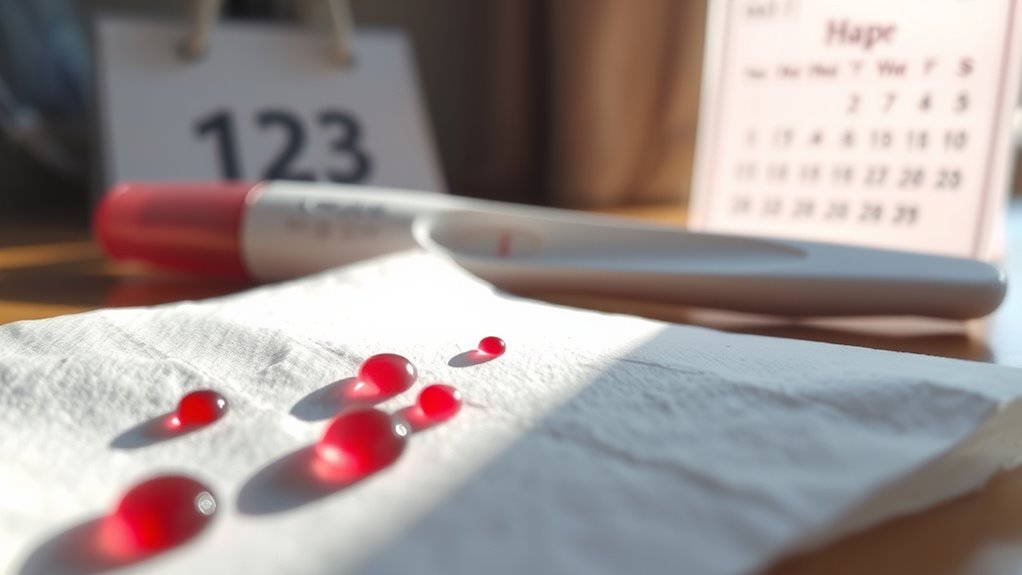
If you’re trying to conceive, you might notice something unusual around the time your period is due—implantation bleeding. This light spotting or bleeding happens when a fertilized egg attaches to the uterine lining, typically occurring about 10 to 14 days after ovulation. For many women, this can happen just a few days before their expected menstrual cycle, which might leave you wondering what’s going on. Interestingly, about 1 in 4 pregnant women experience implantation bleeding, so it’s not uncommon.
One of the first signs of implantation bleeding is the color of the blood. Unlike menstrual blood, which is usually bright red, the bleeding you might notice is often pink or rusty brown. This subtle difference can be a key indicator. Additionally, the flow is usually light, often only requiring a panty liner. If you notice blood clots, that’s a sign of menstruation rather than implantation bleeding. The duration is also shorter, typically lasting from 1 to 3 days, and any mild cramping you may experience will usually be less intense than menstrual cramps.
Another sign to look out for is the timing of the bleeding. Implantation bleeding occurs before your expected period, making it easy to confuse with the start of your cycle. If you’ve been tracking your ovulation, you’ll know that implantation happens about a week or two after that. If you experience mild cramping along with the spotting, that can further indicate implantation. You might also notice other early pregnancy symptoms like tender breasts, headaches, mood swings, or mild nausea, which can accompany the bleeding.
Finally, it’s essential to distinguish between implantation bleeding and more concerning types of bleeding. If you experience heavy bleeding or it lasts longer than three days, it’s crucial to seek medical attention. Implantation bleeding is generally not a cause for concern, but monitoring any unusual symptoms during this time is wise.
Keep in mind that not all women experience implantation bleeding, and its presence doesn’t guarantee a healthy pregnancy. If you suspect you might be pregnant, it’s always a good idea to inform your healthcare provider about any bleeding or unusual symptoms you encounter. By staying informed and aware of your body’s signals, you can navigate this exciting time with greater confidence.
pregnancy test with early detection
As an affiliate, we earn on qualifying purchases.
As an affiliate, we earn on qualifying purchases.
Frequently Asked Questions
How Long Does Implantation Bleeding Typically Last?
Implantation bleeding typically lasts from a few hours to a couple of days.
You might notice light spotting during this time, often described as pink or brown in color.
It’s usually lighter than your regular menstrual flow and won’t fill a tampon or pad.
If you experience mild cramping along with the spotting, that’s common too.
Just remember, if you’re concerned about the bleeding, it’s always best to consult with your healthcare provider.
Can Implantation Bleeding Occur After a Missed Period?
Yes, implantation bleeding can occur after a missed period, although it’s less common.
If you experience light spotting and it’s close to when your period is due, it might confuse you.
It’s best to wait a few days after this spotting to take a pregnancy test for accurate results.
If you notice heavy bleeding or severe symptoms, consulting a healthcare professional is a wise choice to ensure everything’s okay.
Is Implantation Bleeding the Same as a Light Period?
Implantation bleeding isn’t the same as a light period.
You’ll notice it’s lighter in volume and often appears as a pink or rust color. Timing can be similar to your period, but it typically doesn’t last more than a few days.
Unlike menstrual bleeding, it usually doesn’t come with severe cramps or clotting.
If you’re unsure about the bleeding, it’s best to take a pregnancy test or consult your healthcare provider.
What Color Is Implantation Bleeding Usually?
Did you know that about 25% of women experience implantation bleeding?
When it comes to color, implantation bleeding usually appears light pink or brown. This lighter shade often indicates fresh or older blood, respectively.
Unlike menstrual blood, which is typically bright red, the hues of implantation bleeding can vary, but they’re generally more muted.
Should I Be Concerned About Heavy Bleeding Instead?
If you’re experiencing heavy bleeding, it’s definitely something to be concerned about.
Heavy bleeding can signal underlying issues, like a bleeding disorder or complications during pregnancy. You should pay attention to any severe pain, dizziness, or passing clots, as these symptoms require immediate medical evaluation.
Don’t hesitate to reach out to a healthcare provider for guidance; your health and peace of mind are important.
Prioritize your well-being by seeking proper advice.
As an affiliate, we earn on qualifying purchases.
Conclusion
In conclusion, recognizing the signs of implantation bleeding can help you understand your body better. If you notice light spotting, mild cramping, or a change in your usual cycle, it might be time to take a test. Imagine Sarah, who felt a mix of hope and anxiety when she noticed a small amount of spotting. Just days later, she discovered she was pregnant, transforming her life in ways she had only dreamed of. Trust your instincts and stay informed!
ovulation and pregnancy tracking kit
As an affiliate, we earn on qualifying purchases.
As an affiliate, we earn on qualifying purchases.
mild cramping relief for early pregnancy
As an affiliate, we earn on qualifying purchases.
As an affiliate, we earn on qualifying purchases.
Cold & flu season Picks
humidifiers
As an affiliate, we earn on qualifying purchases.